 Anacortes Siding
 Siding Replacement in Oak Harbor
Oak Harbor sits on Whidbey Island, connected to the mainland by the Deception Pass Bridge and a short drive from our home base in Anacortes. It's a different piece of geography than the mainland side of Skagit County — more open to Puget Sound and the Strait of Juan de Fuca, more directly in the path of marine weather moving through the region. Homes here take a specific kind of beating over the years, and the siding on a house is usually the first material to show it.
We've worked on homes throughout the north Puget Sound area long enough to know that "coastal" doesn't mean the same thing everywhere. Oak Harbor's exposure — open water on multiple sides, wind funneling through the Strait, and a wet season that runs long even by Pacific Northwest standards — puts real demands on exterior materials. This page walks through what that means for siding specifically, and how we approach replacement work for this area.
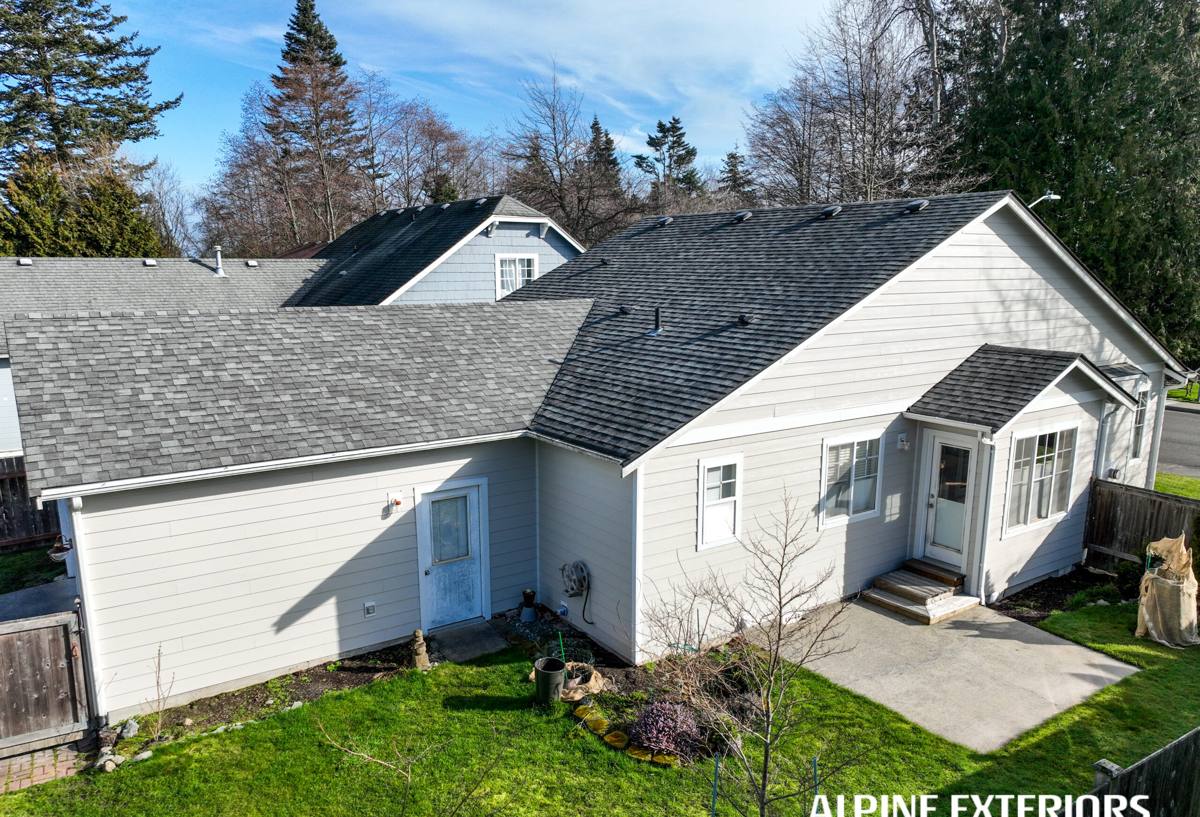
What the Climate Does to Siding Here
Salt Air
Homes closer to the water deal with airborne salt that settles on exterior surfaces and accelerates corrosion of fasteners, flashing, and any metal trim. It also interacts with certain siding finishes over time, breaking down coatings faster than the same product would wear inland. This isn't unique to Oak Harbor, but the island's exposure on multiple sides means more of the housing stock sits within that salt-air influence than in a typical inland neighborhood.
Driving Rain
Wind-driven rain is the real test for any siding system — not just how much water hits the wall, but how much of it gets pushed sideways and upward into laps, joints, and penetrations. A siding product and installation that handles vertical rainfall fine can still fail under sustained horizontal wind-rain, which is common during winter storms moving through the Strait and Rosario areas. This is where installation detail (proper flashing, correct overlaps, sealed penetrations) matters as much as the material itself.
Moss and Sustained Moisture
The long wet season here means siding, trim, and the ground-level areas of a home stay damp for extended stretches, especially on north-facing walls and shaded sides of a lot with tree cover. Moss and algae growth on siding isn't just cosmetic — it holds moisture against the surface longer than bare siding would, which shortens the life of anything that isn't dimensionally stable or properly finished.
Temperature Swings and Wood Movement
Oak Harbor doesn't see the extreme swings of drier climates, but the freeze-thaw cycles that do occur, combined with constant humidity changes, put stress on siding materials that expand and contract with moisture rather than temperature alone. Wood-based products are especially sensitive to this cycle.
Why We Install James Hardie Fiber Cement — and Nothing Else
We made a decision as a company to install only James Hardie fiber cement siding. We don't install vinyl, LP SmartSide, Cemplank, Allura, primed spruce, or cedar. That's not a marketing position — it's a standard we hold because of what we've seen these materials do (and not do) in exactly the kind of climate Oak Harbor sits in.
| Material | Where It Struggles Here |
|---|---|
| Vinyl siding | Can warp or crack in temperature swings, doesn't stand up well to sustained wind-driven rain at seams, limited color depth and tends to fade |
| LP SmartSide / engineered wood | Wood-strand core is vulnerable if moisture gets past the finish; edge-swell is a known risk in wet climates if caulking and paint aren't maintained |
| Cedar / primed spruce | Natural wood requires ongoing refinishing to resist moisture and moss; untreated or poorly maintained sections rot faster in sustained damp conditions |
| Cemplank / Allura fiber cement | Similar base material to Hardie, but we standardized on one manufacturer for consistent factory finish quality, warranty terms, and product engineering specific to our climate zone |
James Hardie fiber cement is non-combustible, dimensionally stable (it doesn't swell and shrink with moisture the way wood-based products do), and comes with a factory-applied ColorPlus finish that's engineered to hold color and resist the kind of weathering salt air and UV cause over time. Hardie also makes climate-specific HZ product lines — a detail that matters in a region where humidity, rain exposure, and coastal air are constants rather than occasional conditions.
None of this means other materials are junk. Vinyl is inexpensive and easy to install. Engineered wood has a natural wood look at a lower cost than real wood. Cedar is beautiful when properly maintained. Our position is narrower than "these products are bad" — it's that after years of doing this work in exactly this climate, fiber cement is what we're willing to warranty and stand behind on a home exposed to what Oak Harbor sees.
What a Siding Replacement Project Looks Like
Assessment
We start by looking at the existing siding, the sheathing underneath it, and the areas most exposed to wind and rain — typically the water-facing side of the home, corners, and anywhere trim meets siding. On older homes we're also checking for hidden moisture damage that wouldn't be visible without removing sections of the old material.
Moisture Barrier and Flashing
This is the step that gets skipped or rushed on lower-quality installs, and it's the step that determines whether a home actually resists driving rain. Proper weather-resistant barrier installation, correctly lapped and taped, along with flashing at every window, door, and penetration, does more for long-term performance than the siding material choice itself.
Installation to Manufacturer Spec
James Hardie siding has specific installation requirements — fastener spacing, clearance from grade, gapping at butt joints, and caulking practices — that directly affect the warranty and the product's real-world performance. Installing Hardie "close enough" to spec is a common source of problems; installing it correctly is what makes the material perform the way it's engineered to.
Trim, Color, and Finish Details
ColorPlus finishes come pre-finished from the factory, which means less reliance on field-applied paint holding up against salt air and moisture over the years. We work through color and trim options as part of planning the project, matching the home's style while keeping the practical performance considerations front and center.
Roofing, Windows, and Decks — Same House, Same Exposure
Siding doesn't fail in isolation. A roof that's letting moisture into the attic, windows with failed seals, or a deck that's trapping water against the house all interact with siding performance. We handle roofing, windows, and decks in addition to siding because on a coastal property like Oak Harbor, these systems are connected — a leak at a window head or a roof valley often shows up as siding or trim damage below it. Addressing the whole exterior picture, rather than just the visible siding problem, is usually the more honest and more cost-effective approach.
Signs Oak Harbor Homeowners Should Watch For
- Visible warping, buckling, or gaps at siding seams, especially on the water-facing side of the home
- Persistent moss or algae growth that returns quickly after cleaning
- Soft spots or discoloration at the base of walls, near ground level, or below window sills
- Paint or finish that's peeling, chalking, or fading unevenly across different sides of the house
- Rising energy bills that may point to compromised insulation behind failing siding
- Visible fastener corrosion or rust streaking down from nail heads or trim screws
- Soft or spongy trim boards, particularly around window and door casings
Cost Factors for Siding Replacement
| Factor | Why It Matters |
|---|---|
| Home size and wall complexity | More corners, dormers, and trim details increase both material and labor |
| Extent of existing damage | Rot or sheathing damage found during tear-off adds repair work before new siding goes on |
| Siding profile chosen | Lap width, shingle-style panels, and trim options vary in material and installation cost |
| Color and finish | Factory ColorPlus finishes vs. field-painted options affect long-term maintenance cost |
| Access and site conditions | Waterfront lots, steep grades, or limited access can affect scheduling and labor |
We don't publish blanket price lists because every home is different, but we walk through these factors during an on-site estimate so homeowners understand where their project's cost is coming from before any work starts.
Why a Local Crew Matters
A contractor working out of Anacortes and serving Oak Harbor and the rest of Whidbey Island isn't guessing at what this climate does to a house — we see it repeatedly, on homes with similar exposure to wind, salt, and rain. That familiarity shapes how we flash a window, how we detail a butt joint, and where we tell a homeowner to expect trouble first. It also means we're a short drive away if a warranty question or follow-up visit comes up down the road, not a crew that did one job in the area and moved on.
Get a Free, No-Pressure Estimate
If your Oak Harbor home's siding is showing wear, or you're planning ahead before it becomes an urgent repair, we're happy to take a look and walk through your options. There's no pressure and no obligation — just a straightforward assessment and an honest recommendation. Use the form below to request a free estimate.