 Anacortes Siding
 Exterior Work Built for Burlington's Skagit Valley Climate
Burlington sits in the Skagit River delta, a few miles inland from the salt water of Padilla Bay and Fidalgo Island, but close enough that homes here still feel the marine layer roll in off the Sound. Add in the valley's flat, open exposure to wind and the near-constant moisture that settles over Skagit County for much of the year, and you get a set of conditions that are genuinely tough on a house's exterior. Siding, trim, roofing, and windows in this area aren't just cosmetic — they're the barrier standing between a home and a climate that rarely lets up.
We work throughout the Anacortes and Skagit County area, and Burlington homes show a consistent pattern: moisture intrusion at weak points, moss and algae staining on north-facing walls and rooflines, and paint or caulking that fails years before it should because it was never matched to what this climate actually does to a building.
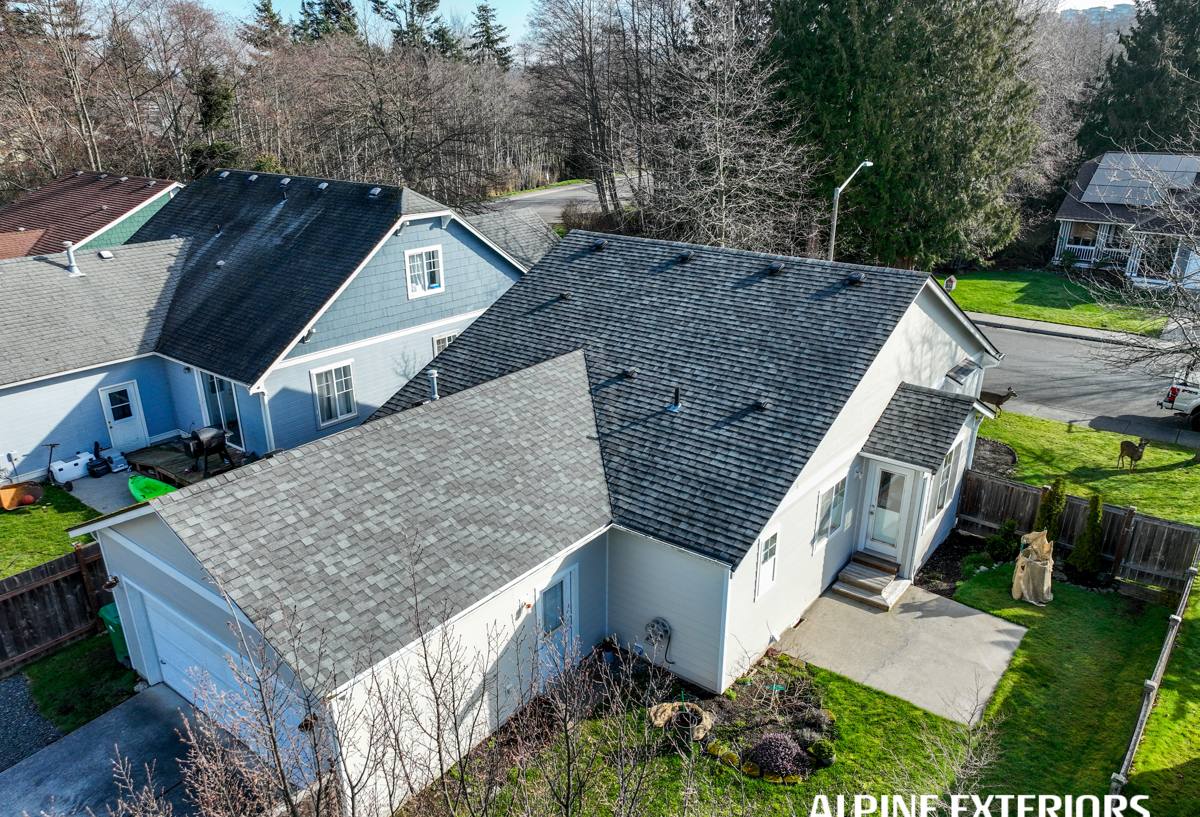
What Local Homes Are Up Against
Driving Rain and Wind-Driven Moisture
Skagit Valley storms often come with real wind behind them, especially in the fall and winter months. That combination pushes rain sideways into siding laps, window flashing, and trim joints in a way that light, still-air rain never would. Products and installation details that work fine in a sheltered spot can fail here if they weren't built or installed with wind-driven rain in mind.
Salt-Influenced Air
Burlington isn't right on the water, but the marine air off Padilla Bay and the greater Salish Sea still reaches inland across the flat delta. Over years, that salt-tinged moisture accelerates corrosion on fasteners and metal flashing, and it keeps wood-based siding products damp longer than a drier inland climate would.
Moss, Algae, and a Long Wet Season
Skagit County's moss season runs long — shaded walls, north exposures, and anything under tree cover can stay damp for months at a stretch. That constant moisture feeds algae and moss growth on siding and roofing, and it's exactly the kind of environment where lower-grade materials and unsealed edges start to break down from the inside out.
Temperature Swings and Material Movement
The Skagit Valley sees real seasonal swings — cool, wet winters and warmer, drier summers. Siding materials expand and contract with those changes. Products that aren't dimensionally stable can develop gaps, cracks, or warping over time, which becomes an entry point for moisture.
Why We Install Only James Hardie Fiber Cement Siding
We made a deliberate decision to install James Hardie fiber cement exclusively, and we don't install vinyl, LP SmartSide, Cemplank, Allura, or primed spruce or cedar siding. That's not a marketing position — it comes from what we've seen hold up in this climate and what we're willing to warranty our work on.
- Non-combustible core. Fiber cement doesn't feed a fire the way wood-based products can, which matters for insurance considerations and long-term peace of mind.
- Factory-applied ColorPlus finish. The finish is baked on at the factory under controlled conditions, rather than painted on-site where weather and timing can compromise the coat. That matters a lot in a region where you can't count on a dry stretch of weeks for proper curing.
- Climate-engineered HZ product lines. Hardie makes region-specific formulations (HZ5, HZ10) engineered for moisture and freeze-thaw conditions rather than a one-size-fits-all product.
- Dimensional stability. Fiber cement resists the swelling, cupping, and warping that wood-based and engineered wood products can experience with repeated wet-dry cycles.
- A strong, transferable warranty that reflects genuine confidence in the material's long-term performance.
We're honest about the trade-offs of the products we don't install rather than dismissing them outright — vinyl is inexpensive and low-maintenance in mild climates, LP SmartSide has a lower material cost, and cedar has real aesthetic appeal. But when we weigh installation sensitivity, long-term moisture behavior in a marine climate, and warranty structure, fiber cement is what we're willing to stand behind on a Skagit County roof.
Our Siding Process in Burlington
Inspection and Assessment
We start by walking the exterior and looking specifically at the things this climate stresses: flashing at windows and doors, the condition of existing siding at grade level, moss and staining patterns, and any soft spots that suggest moisture has already gotten behind the current cladding.
Moisture Barrier and Flashing Detail
Given how much wind-driven rain this valley sees, the water-resistive barrier and flashing details around every penetration — windows, doors, hose bibs, light fixtures — get particular attention. This is the step that determines whether a siding job holds up for decades or starts leaking within a few years.
Installation to Manufacturer Spec
James Hardie siding is only as good as its installation. Correct fastening, clearances at grade and roofline, proper caulking at joints, and correct overlap on laps all affect both performance and whether the manufacturer's warranty stays valid. We install to those specifications, not shortcuts.
Final Walkthrough
We finish with a walkthrough so you understand what was done, what the maintenance expectations are, and what the warranty actually covers.
Comparing Siding Options for This Climate
| Material | Moisture Performance in Wet Climates | Maintenance | Fire Resistance |
|---|---|---|---|
| James Hardie Fiber Cement | Engineered for moisture resistance; HZ lines address regional climate | Low — factory finish resists fading and moisture damage | Non-combustible |
| Vinyl Siding | Can warp or crack; seams can allow moisture behind panels | Low, but prone to fading and brittleness over time | Combustible, can melt or deform near heat |
| LP SmartSide | Engineered wood; vulnerable at cut edges and joints if not sealed properly | Moderate — edge sealing and caulk maintenance matter | Combustible |
| Cedar / Primed Spruce | Natural wood; absorbs moisture, prone to rot without diligent upkeep | High — regular refinishing and sealing required | Combustible |
Roofing, Windows, and Decks — The Rest of the Building Envelope
Siding doesn't work in isolation. A roof with failing flashing or worn material sends water down behind the siding it's supposed to protect. Windows with degraded seals let moisture into wall cavities regardless of how good the siding is. Decks exposed to this climate's rain and moss growth need materials and fastening that account for constant dampness. We handle all four — siding, roofing, windows, and decks — because a Burlington home's exterior needs to be addressed as one connected system, not a set of disconnected projects.
Why a Local Crew Matters Here
Skagit County's mix of delta flatland, marine air, and heavy moss season isn't the same as what a crew based in a drier or more sheltered part of the state deals with day to day. A crew that works this region regularly knows which details actually matter here: where wind-driven rain tends to find gaps, which north-facing walls need extra attention for moss and algae, and how long this area's wet season really runs when planning a project timeline. That local familiarity shows up in the small decisions — flashing details, product selection, scheduling around weather — that determine how a job performs ten years down the road, not just how it looks the day it's finished.
What to Check Before Hiring an Exterior Contractor
- Ask exactly which siding products they install and why — and whether they'll explain trade-offs honestly, not just push what's cheapest for them to install.
- Confirm they carry proper licensing and insurance for work in Washington State.
- Ask how they handle flashing and moisture barrier detail specifically, not just "we follow code."
- Get a clear explanation of what the manufacturer's warranty covers versus what's dependent on correct installation.
- Ask about their experience with Skagit County's specific climate conditions, not just general Pacific Northwest experience.
- Get the scope, materials, and timeline in writing before work begins.
Signs Your Burlington Home May Need Exterior Attention
A few patterns come up often in this area: persistent moss or algae staining that keeps returning no matter how often it's cleaned, caulking and trim that's cracked or pulling away, soft or discolored siding near ground level, and paint that's peeling or bubbling on wall sections that get the least sun. Any of these can indicate moisture is already working its way behind the exterior surface, and they tend to get more expensive to address the longer they're left alone.
If you're noticing any of these signs, or you're simply ready to plan ahead for your home's exterior, we're happy to walk the property with you and give you a straightforward, no-pressure estimate. There's a form below to get that scheduled.