 Anacortes Siding
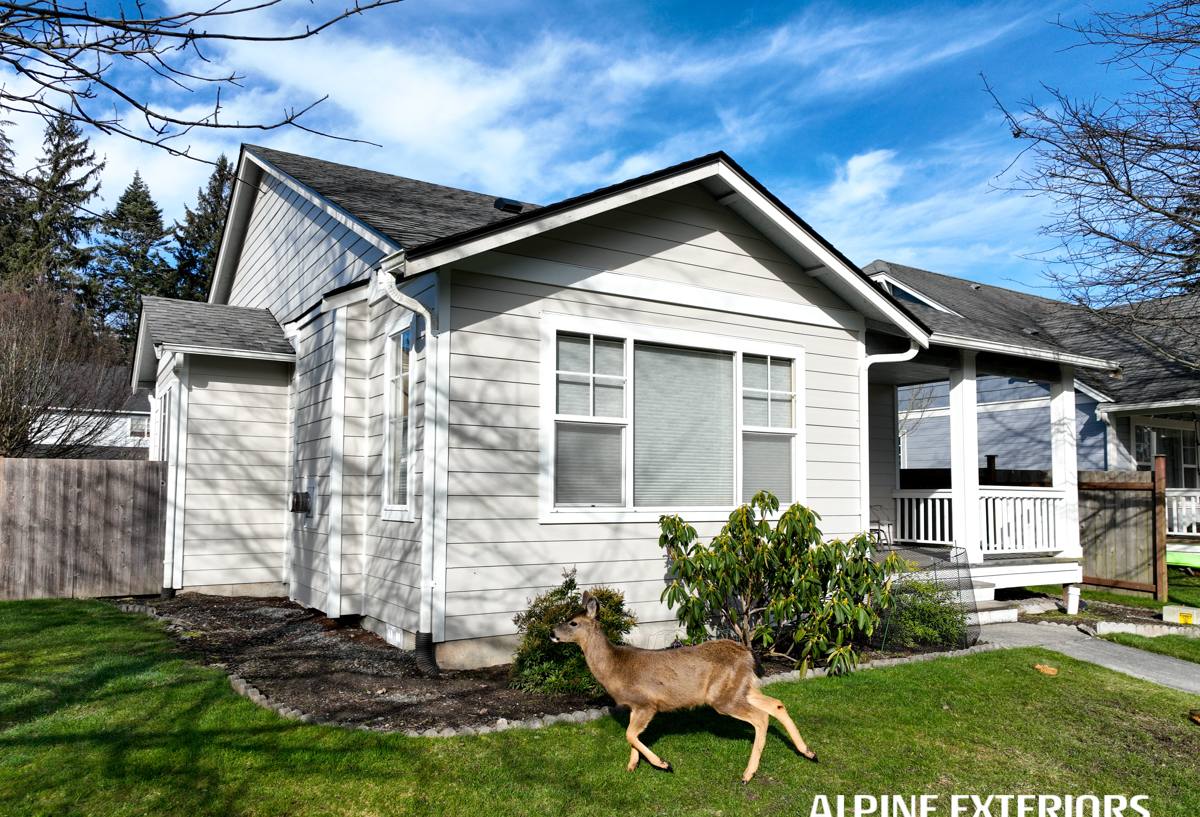
 Siding Replacement in Skyline, Anacortes
Skyline is one of the more exposed residential pockets on Fidalgo Island — elevated in places, close to open water, and on the receiving end of whatever weather comes off the Strait of Juan de Fuca and Rosario Strait. Homes here take a different kind of beating than a house tucked into a sheltered inland lot. If you're looking at your siding and wondering whether it's time to replace it, the climate here is probably a bigger factor than the age of the house.
We're a siding, roofing, window, and deck contractor based in Skagit County, and Anacortes is core service territory for us, not a stretch assignment. We know what salt air does to fasteners and trim, what a wet Pacific Northwest winter does to anything with a seam or a soft spot, and what a shaded north wall looks like after a few years of moss creeping up from the ground. That local knowledge shapes how we spec, flash, and install every job — not just what material goes on the wall.
What Skyline's Climate Actually Does to Siding
Three things drive most of the siding failures and premature repaints we see on Fidalgo Island homes, and Skyline gets a healthy dose of all three.
Salt Air
Even a mile or two inland from the water, airborne salt accelerates corrosion on fasteners, flashing, and any metal trim components. It also degrades certain paints and coatings faster than manufacturers' inland test data would suggest. Products and hardware that aren't rated for coastal exposure tend to show their age early — chalking, pitting, or rust bleed at nail heads and seams.
Driving Rain
Anacortes doesn't get the heaviest rainfall totals in Western Washington, but wind-driven rain off the water is a real factor on exposed elevations. Wind-driven rain doesn't just fall on siding, it gets pushed sideways and upward into laps, seams, and butt joints. A siding system with a weak water-management design — poor lap coverage, no rainscreen gap, or caulked joints doing structural work they were never meant to do — will eventually let moisture behind the cladding, where it causes the real damage: sheathing rot, framing decay, and mold you can't see until it's expensive.
Moss Season
Shaded and north-facing walls, tree-lined lots, and the long stretch of damp months from fall through spring all add up to a real moss and algae season on this part of the island. Moss holds moisture against a wall surface far longer than open air would, and on porous or absorbent siding materials that constant dampness is what eventually leads to swelling, soft spots, and paint failure.
Why We Install Only James Hardie Fiber Cement
We made a decision years ago to install one siding system, not a menu of options: James Hardie fiber cement. We don't install vinyl, LP SmartSide, primed spruce or cedar lap, or other fiber cement brands like Cemplank or Allura. That's not a marketing position, it's a maintenance and durability call based on what actually holds up in this climate over decades, not just through the first inspection.
Fiber cement as a category resists the two things that do the most damage to siding here — moisture absorption and pest activity — better than wood-based products. And within fiber cement, James Hardie is the manufacturer that engineers its products specifically for regional climate conditions, backs them with a factory finish warranty, and has the longest track record of any fiber cement brand in North American residential construction. When we're the crew responsible for what goes on your wall and how long it lasts, we want a product we can stand behind without qualifications.
The James Hardie Product Lines We Use
HardiePlank Lap Siding
The most common product on Northwest homes — horizontal lap boards in a range of widths and textures (smooth, cedarmill, beaded). It's the workhorse choice for most Skyline replacement projects.
HZ5 Engineered for Your Climate Zone
James Hardie engineers its HZ product line to specific climate zones rather than shipping one formulation nationwide. Western Washington falls in a wet-climate zone, and the HZ5 formulation is built with that moisture exposure in mind — different from what would ship to a dry desert market.
ColorPlus Factory Finish
Rather than field-painting siding after install, ColorPlus finish is baked on at the factory in a controlled environment, which produces better adhesion and more even coverage than job-site painting, especially in a region where painting conditions are rarely ideal. It also comes with its own finish warranty separate from the substrate warranty.
HardieTrim and Accessories
Corner boards, fascia, and trim pieces in the same fiber cement system, so the whole exterior envelope — not just the field siding — is built from a single, compatible material rather than mixing wood trim with fiber cement panels.
What Correct Installation Actually Involves
Fiber cement's reputation is only as good as the installation behind it. A lot of the moisture problems people blame on "bad siding" are actually installation shortcuts — and in a driving-rain, salt-air environment like Skyline, those shortcuts show up faster than they would somewhere milder.
- Correct nail placement and fastener depth — over-driven or under-driven nails both cause problems down the line
- Proper lap overlap at every course, not just the visible ones
- Rainscreen or drainage gap behind the siding where the wall assembly calls for it
- Flashing integrated at windows, doors, decks, and roof-to-wall intersections — not just caulk covering a gap
- Corrosion-resistant, coastal-rated fasteners and trim hardware given the salt air exposure here
- Proper clearance between the bottom of the siding and grade, decking, or roofing to avoid wicking moisture
- Factory-cut edges primed or sealed per manufacturer spec at every field cut
This is also where a local crew earns its keep. Installers who work Fidalgo Island and Skagit County exteriors regularly know which details matter most for this specific exposure — they're not applying a generic install checklist written for a different climate.
What Drives the Cost of a Siding Replacement
Every home is different, but the factors below are what typically move the price on a Skyline siding project. We won't quote a number without seeing the house, but this is the honest breakdown of what's in play.
| Factor | Why It Matters |
|---|---|
| Home size and wall complexity | More corners, dormers, and roof-to-wall intersections mean more cutting, flashing, and labor time |
| Existing siding removal | Tear-off and disposal of old material adds cost versus a bare-sheathing new build |
| Sheathing and moisture damage | Rot found once old siding comes off has to be repaired before new siding goes on — this is the most common source of a mid-project change order |
| Siding profile and finish | Plank width, texture, and ColorPlus color selections vary in material cost |
| Trim and accessory scope | Full trim replacement versus reusing sound existing trim changes both material and labor |
| Access and site conditions | Slopes, tight lot lines, and staging space on Skyline's terrain can affect equipment and labor time |
Beyond Siding: Roofing, Windows, and Decks
Siding rarely fails in isolation. A roof that's shedding water improperly, windows with failed flashing, or a deck ledger board tying directly into the wall assembly can all be the actual source of moisture problems that show up as siding damage. Because we handle roofing, windows, and decks in addition to siding, we can look at the whole exterior envelope on a Skyline home rather than treating each system as someone else's problem. That matters most at the intersections — where a deck meets the wall, where a window opening meets the siding plane, where a roof edge meets a wall above a lower roofline. Those transition points are where most real-world leaks originate, and they only get solved correctly when one crew understands how all the pieces are supposed to work together.
Why a Local Crew Matters in Skyline
Anacortes and the rest of Skagit County have their own microclimate quirks — this isn't generic "Pacific Northwest rain" advice copied from a regional franchise playbook. A crew that works this island regularly knows which elevations catch the worst of the driving rain, which lots hold onto moss longest, and how salt exposure varies even within a few miles of the water. That local pattern recognition shows up in small decisions during a job — where to add extra flashing, which side of the house needs the most attention to drainage — that don't show up on a generic spec sheet.
It also matters for warranty follow-through. James Hardie's product warranty is strong, but a workmanship warranty is only as good as the contractor standing behind it. A local company with a physical presence in the area has a reason to get callbacks right the first time.
What to Look for When Hiring a Siding Contractor
- Manufacturer training or certification specific to fiber cement installation, not just general siding experience
- A written scope that specifies flashing details, not just "install siding"
- Willingness to inspect and address sheathing condition before quoting a final price
- Local references or a local physical presence, not just a regional call center
- Clear separation between the manufacturer's product warranty and the contractor's workmanship warranty
- A plan for matching or upgrading trim, not just replacing field siding
If you're weighing a siding replacement for a Skyline home, we're happy to take a look and walk through what your specific house needs — no pressure, no obligation. Use the form below to request a free estimate.