 Anacortes Siding
 Siding Built for Conway's Skagit Valley Conditions
Conway sits in the lower Skagit Valley, a low-lying farming community where river bottomland meets the tidal influence of Skagit Bay. It's a different exposure than the bluffs and shoreline of Anacortes proper, but the underlying challenge for exterior building materials is the same one that shapes every siding decision we make across Skagit County: near-constant moisture, a long wet season, and air that carries enough salt and humidity to matter. Homes in and around Conway deal with driving rain off the valley, heavy morning fog rolling up from the river and delta flats, and a moss and algae season that can stretch from fall through spring if siding isn't holding up its end of the bargain.
We've worked on homes throughout this corridor and understand what the valley does to exterior materials over time. That experience is why we install one product system — James Hardie fiber cement siding — and why we're upfront about why we don't install several of the alternatives homeowners ask about.
What the Conway Climate Actually Does to a House
Moisture Load
The Skagit Valley gets a lot of rain, and Conway's position near the river and delta means humidity and fog linger longer here than in drier upland areas. Wood-based and wood-adjacent siding products absorb ambient moisture even when rain isn't falling directly on them, and that slow absorption cycle — wet, dry, wet, dry — is what eventually causes swelling, checking, and paint failure at seams and edges.
Driving Rain and Wind Exposure
Open valley terrain means less windbreak than a heavily treed lot might offer. Wind-driven rain finds its way into lap joints, butt seams, and anywhere flashing or caulking has started to fail. Over the years this is usually where we find the worst hidden damage on a home — not on the broad flat wall, but at the corners, around window trim, and at the bottom courses closest to grade.
Moss, Algae, and Organic Growth
Shaded, moisture-retaining surfaces in this part of Washington grow moss and algae readily. It's a cosmetic problem at first, but organic growth that's allowed to sit against porous or absorptive siding materials holds moisture against the substrate longer, which accelerates whatever underlying moisture damage is already happening.
Salt and Airborne Minerals
Conway isn't waterfront, but it sits within the broader Skagit Bay and Puget Sound air system, and homes throughout this region see some level of salt-influenced air, especially on breezy days off the water. Salt exposure accelerates corrosion of fasteners and metal flashing and can affect how certain coatings age over time.
Why We Only Install James Hardie Fiber Cement
We get asked regularly about vinyl, LP SmartSide, primed wood, and cedar. Each of those products has a place in the market and each has real strengths. Our decision to install only James Hardie isn't about calling those products bad — it's about what we've found holds up best, with the least maintenance burden, in exactly the conditions Conway and the rest of Skagit County deal with every year.
Fiber Cement vs. the Alternatives
| Material | Moisture Behavior | Maintenance | Fire Resistance |
|---|---|---|---|
| James Hardie Fiber Cement | Engineered to resist moisture-related swelling and cracking | Low — factory finish holds up for years | Non-combustible |
| LP SmartSide (engineered wood) | Treated wood strand product; still wood-based at the core | Moderate — seams and cut edges need diligence | Combustible, treated |
| Vinyl | Doesn't absorb water but can warp, fade, and crack in temperature swings | Low, but limited repair options when damaged | Combustible |
| Primed Spruce / Cedar | Natural wood movement; absorbs and releases moisture constantly | High — regular painting and caulking required | Combustible |
James Hardie's fiber cement is made from cellulose fiber, sand, and cement, engineered specifically to resist the swelling, cracking, and moisture intrusion that wood-based products are more prone to over time. It's non-combustible, which matters more each year as wildfire smoke and dry-season risk become part of the conversation even in wetter parts of the state. And it comes from the factory with a ColorPlus finish baked on and warrantied, rather than depending on a field-applied coat of paint to hold up against valley weather.
What We Tell Homeowners About Vinyl and LP SmartSide
Vinyl is inexpensive and low-maintenance in the sense that it never needs painting, but it's a thin plastic product that can crack in impact and distort in heat, and repairs almost always mean replacing whole sections rather than patching. LP SmartSide performs reasonably well when installed and maintained correctly, but it's still an engineered wood product — the strand-based core can swell at cut edges and seams if water gets past the coating, which is exactly the kind of slow, hidden moisture entry that's hard to catch in a wet climate like this one until the damage is already done.
The Hardie Product Lines We Install
James Hardie makes climate-engineered product lines, and for the Skagit Valley's wet, marine-influenced conditions we typically recommend their HZ5 formulation, engineered for wetter, harsher climates rather than the drier HZ10 formulation used in the Southwest and other arid regions. Beyond the core panel or plank product, Hardie's lineup includes:
- HardiePlank lap siding — the most common choice, available in multiple textures including smooth and cedar-grain
- HardiePanel vertical siding — often used for accent sections, gables, or a modern board-and-batten look
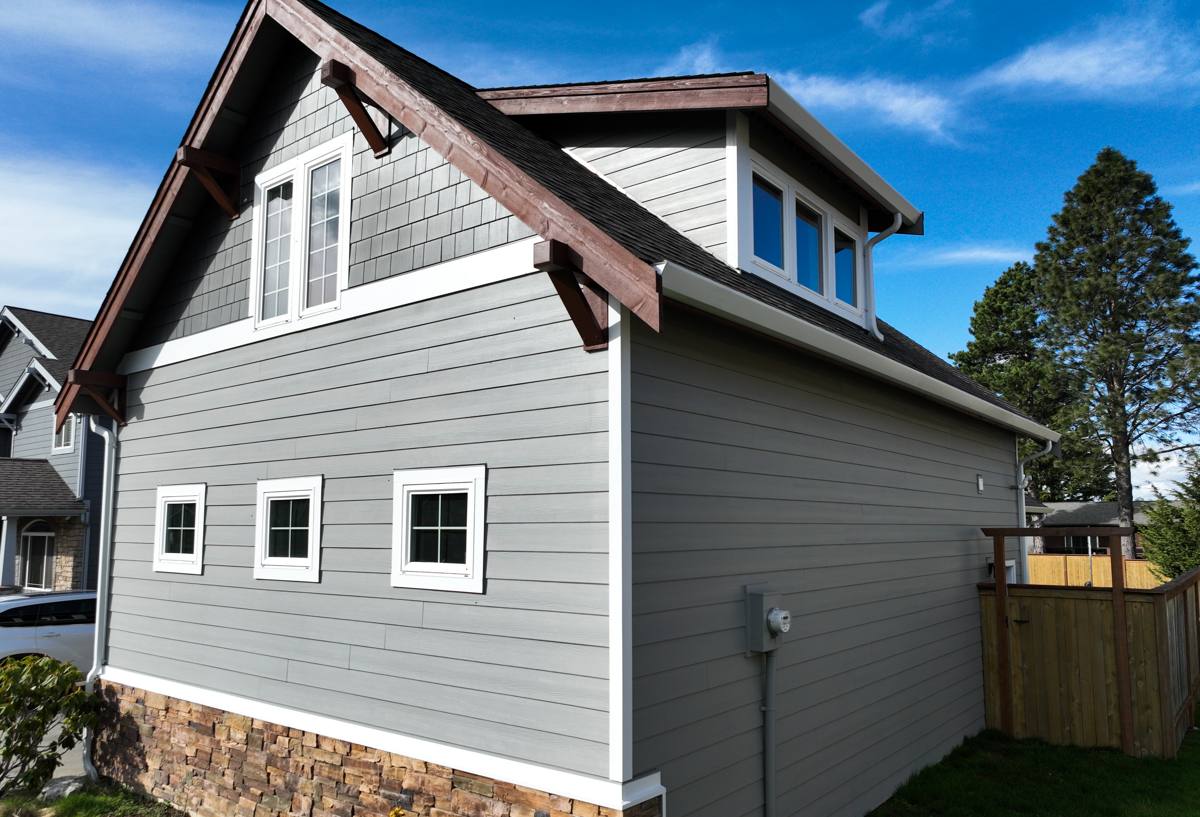
- HardieShingle siding — a shingle-profile option for homes wanting a traditional Pacific Northwest look without the maintenance of real cedar shingles
- HardieTrim boards — matching trim for corners, window and door surrounds, and fascia
All of it comes with ColorPlus Technology as an option — a factory-applied, baked-on finish that carries its own finish warranty and is formulated to resist fading and chipping better than field-applied paint, which matters in a climate where painting crews don't get many dry stretches to work with.
What Correct Installation Looks Like
Fiber cement siding is only as good as its installation. Hardie's own specifications call for specific clearances, fastener patterns, and flashing details, and skipping them is the single biggest reason any siding job — Hardie or otherwise — fails early in a wet climate. On every Conway-area project we pay close attention to:
- Proper water-resistive barrier and house wrap installation before siding goes up
- Correct flashing at windows, doors, and roof-to-wall transitions
- Minimum clearance between the bottom siding course and grade, decks, or roofing to prevent wicking
- Manufacturer-specified fastener spacing and type, matched to local exposure conditions
- Properly sealed and caulked joints, using products rated for the intended exposure
None of this is exotic. It's disciplined, by-the-spec work — but it's exactly the step that gets rushed on jobs that go wrong, and it's the difference between siding that lasts its full service life and siding that starts showing problems in five years.
Beyond Siding: Roofing, Windows, and Decks
Siding rarely fails in isolation. A roof that's shedding water incorrectly, windows with failed flashing, or a deck ledger board holding moisture against the wall will all undermine even a well-installed siding job. We handle roofing, windows, and decks alongside siding so we can look at a Conway home's whole exterior envelope rather than treating each component as a separate problem. That's especially relevant on older valley homes where roofing, trim, and siding may all be original and aging together.
Why a Local Crew Matters Here
Skagit County's mix of river-bottom flatland, tidal-influenced air, and open valley wind exposure isn't identical to conditions twenty miles inland or up in the foothills. A crew that works this specific region regularly knows where moisture tends to collect on a Conway-area home, how far to plan for wind-driven rain at exposed corners, and how the local moss and algae season affects long-term siding performance. That local knowledge shows up in the small decisions — flashing details, clearance heights, fastener choices — that determine whether a siding job holds up for decades or needs attention again in a few years.
What a Conway Siding Project Typically Involves
Assessment and Removal
We start by evaluating the existing siding and the sheathing and framing underneath it, since siding replacement is often the first time hidden moisture damage from years of prior exposure becomes visible. Any compromised sheathing gets addressed before new material goes up — installing new siding over damaged substrate just locks the problem in.
Weather Barrier and Flashing
A correctly installed water-resistive barrier and flashing system is what actually keeps water out of the wall assembly — the siding itself is the second line of defense, not the first. This step gets extra attention on every job we do in this climate.
Installation and Finish
Hardie boards go up to manufacturer spec, with attention to clearances, fastener patterns, and joint sealing. If ColorPlus factory-finished product is used, there's no field painting required for the color coat itself, just proper caulking and touch-up at cut ends.
Cost Factors for Conway Homeowners
| Factor | Why It Affects Cost |
|---|---|
| Home size and wall complexity | More corners, dormers, and trim details mean more labor and material cuts |
| Existing siding removal | Tear-off and disposal of old material adds labor beyond a straightforward install |
| Hidden sheathing repair | Moisture-damaged sheathing found during removal needs to be replaced before new siding goes up |
| Product line and finish | ColorPlus factory-finished boards cost more upfront than primed boards but skip the field-painting cost and labor |
| Trim and accessory work | Matching HardieTrim, corner boards, and detail work adds to material and labor totals |
A Simple Checklist Before You Commit
- Ask what siding material is being proposed and why — and whether it's rated for a wet, marine-influenced climate
- Confirm whether the contractor is a certified installer for the product they're proposing
- Ask how they plan to handle flashing at windows, doors, and roof transitions
- Get clarity on what happens if hidden sheathing damage is found once old siding comes off
- Understand what's covered under the material warranty versus the workmanship warranty, and for how long
If your Conway-area home is due for new siding, or you're not sure whether what's on the walls now is holding up the way it should, we're happy to take a look and walk you through what we're seeing. Reach out for a free, no-pressure estimate — no obligation, just a straight assessment of where things stand and what your options are.