 Anacortes Siding
 Siding Replacement Serving Sedro-Woolley
Sedro-Woolley sits inland along the Skagit River, at the edge where the valley starts climbing into the Cascade foothills — a different setting than our home base on the coast in Anacortes, but part of the same Skagit County exterior contracting territory we've worked for years. We send the same crews, the same product line, and the same installation standards out to Sedro-Woolley that we use on jobs closer to the water.
That distinction matters more than it might seem. A lot of exterior contractors treat every Skagit County job the same way, regardless of whether the house sits on a coastal bluff or twenty miles up the valley. The climate loads aren't identical, and the siding decisions shouldn't be either.
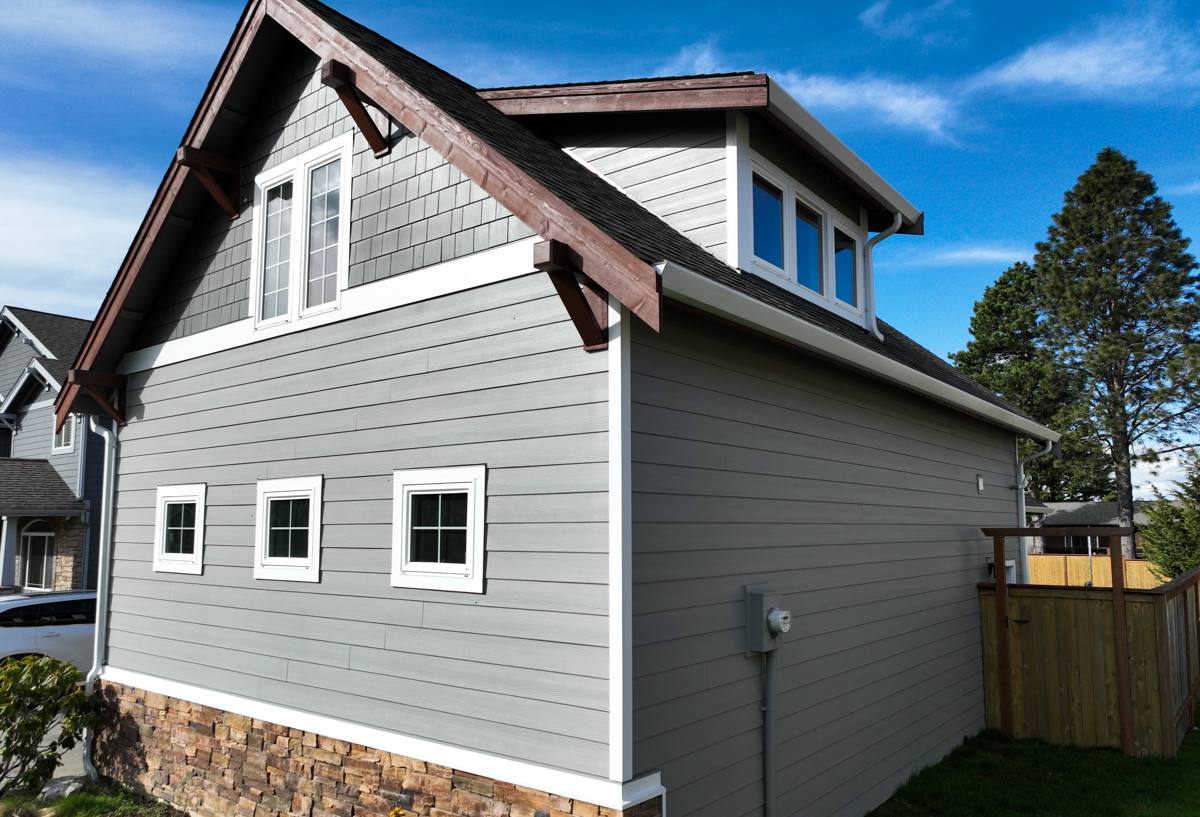
What the Skagit Valley Climate Does to Siding
Sedro-Woolley doesn't get the direct salt air that homes closer to Anacortes and the water deal with, and that's worth being upfront about — salt-driven corrosion of fasteners and trim is less of a factor here than it is on the coast. What Sedro-Woolley shares with the rest of the county is the rain, the humidity, and the moss.
The Skagit River valley traps moisture. Fog sits longer in the low ground, tree cover across much of the area keeps siding shaded and damp longer after a storm, and the long wet season here runs from fall through spring with very little drying time in between. Add in the driving rain that comes through with Pacific storm systems, and siding on the north and west-facing walls of a Sedro-Woolley home takes a real beating — even without salt in the mix.
The Big Three Local Stressors
- Sustained moisture exposure — long wet seasons and valley fog give siding fewer chances to fully dry out between storms
- Moss and algae growth — shaded, moisture-retentive siding surfaces grow moss faster here than in drier or more open parts of the county
- Freeze-thaw cycling — Sedro-Woolley's inland, slightly higher elevation gets more frost events than the immediate coastline, which stresses siding that's already holding moisture
None of that is exotic or unusual for western Washington. But it's exactly the kind of steady, unglamorous wear that determines whether a siding job still looks and performs well in fifteen years or starts failing in five.
Why We Only Install James Hardie Fiber Cement
We made a decision as a company to install one siding system: James Hardie fiber cement. We don't install vinyl, LP SmartSide, Cemplank, Allura, primed spruce, or cedar — not because those products have no place in the market, but because we'd rather stand fully behind one system we trust than offer several we have reservations about.
Vinyl siding is inexpensive and low-maintenance in the short term, but it's a petroleum-based product that expands, contracts, and can become brittle over time — especially with the kind of temperature swings and moisture cycling common in the Skagit Valley. Wood products like cedar and primed spruce look great fresh off the truck, but they demand ongoing maintenance to hold up against sustained moisture, and a missed repainting cycle in a wet climate can shorten their life fast. Fiber cement alternatives to Hardie exist and some are reasonable products, but we standardized on one manufacturer so our crews install to one spec, one set of details, and one warranty structure — every time.
James Hardie fiber cement is non-combustible, dimensionally stable, and doesn't rot, warp, or attract pests the way wood-based siding can. It holds a factory-applied finish that's engineered to handle exactly the kind of wet, humid, moss-prone conditions we see across Skagit County.
The Right Hardie Products for This Area
James Hardie builds its siding in different formulations for different climates through what it calls the HardieZone system. Homes in western Washington — including Sedro-Woolley — fall into the colder, wetter HZ5 zone rather than the milder HZ10 formulation used in warmer, drier regions. That distinction affects the product's engineered resistance to moisture and freeze-thaw stress, which is exactly what this valley puts siding through.
On top of the base formulation, every board comes with the ColorPlus factory finish — a baked-on finish applied under controlled conditions rather than painted on-site. That matters in a place where a traditional field-applied paint job has to compete with rain interruptions and slow drying windows for much of the year.
Common Product Choices
- HardiePlank lap siding — the standard horizontal look for most Sedro-Woolley homes, available in several exposure widths and textures
- HardieShingle — a shaped-shingle profile for homes going for a more traditional Pacific Northwest look
- HardiePanel — vertical panel siding, often used for accents, gables, or a more modern exterior
- HardieTrim — matched trim boards so fascia, corners, and window surrounds age at the same rate as the field siding
Why a Local Crew Matters
A siding crew that works across Skagit County regularly — rather than one dispatched from out of the area for a single job — knows things that don't show up in a spec sheet: which wall orientations in a given neighborhood take the worst weathering, how far off the ground starter courses need to sit given local drainage patterns, and what flashing and moisture-barrier details actually hold up through a full Skagit Valley winter rather than just looking right on installation day.
That local knowledge also shows up in smaller, practical ways — knowing which permitting office to work with, understanding typical lot setbacks and older home construction common to the area, and being available for a warranty callback without a long drive being part of the equation.
More Than Siding: A Full Exterior Approach
Siding is rarely an isolated problem. On a lot of Sedro-Woolley homes, the same moisture and age factors that wear down siding are also affecting the roof, windows, and any exterior decking. We handle all four:
- Roofing — replacement and repair, since a compromised roof edge is one of the most common hidden causes of siding damage below it
- Windows — replacement done in coordination with siding work so flashing and water management are handled as one system, not two separate jobs that don't quite line up
- Decks — built and repaired to handle the same wet-climate demands as the rest of the exterior
When we're already on-site for a siding project, it's often more efficient — and cheaper in the long run — to address a failing roof edge or a rotted window sill at the same time, rather than paying for a second mobilization down the road.
What Drives Cost on a Sedro-Woolley Siding Job
Every home is different, but the same handful of factors tend to move the price up or down on siding projects in this area.
| Factor | Why It Matters Here |
|---|---|
| Extent of existing damage | Hidden moisture damage behind old siding is common in humid, shaded valley lots and can add sheathing repair to the scope |
| Home size and wall complexity | More corners, gables, and dormers mean more cutting, trim work, and labor time |
| Siding profile chosen | Lap, shingle, and panel products carry different material and install costs |
| Access and tree cover | Wooded lots common in this area can require extra staging or clearance work |
| Trim and detail work | Matching trim, fascia, and window surrounds adds material but keeps the whole exterior aging consistently |
Signs Your Sedro-Woolley Home May Need New Siding
Given the moisture load this area sees, a few warning signs are worth catching early rather than waiting until the damage spreads.
- Soft or spongy spots when you press on siding, especially near the bottom courses or under windows
- Persistent moss or dark streaking that keeps coming back after cleaning
- Visible warping, cupping, or separated seams on wood-based siding
- Peeling or bubbling paint that returns within a year or two of repainting
- Musty smells or visible staining on interior walls that back up to exterior siding
What to Expect From the Process
We keep the process straightforward and try to minimize surprises once work starts.
- On-site walkthrough and honest assessment of your current siding's condition
- Written estimate with product options and a clear scope of work
- Removal of old siding and inspection of the sheathing and moisture barrier underneath
- Repair of any hidden damage found before new siding goes on
- Installation to James Hardie's specifications, including proper clearances and flashing details for this climate
- Final walkthrough and warranty paperwork
If you're weighing a siding replacement for a home in Sedro-Woolley, we're happy to come take a look and give you a straight, no-pressure estimate — including an honest read on whether your current siding has years left in it or is past the point of patching.