 Anacortes Siding
 March Point's Climate Is Harder on Siding Than Most Homeowners Realize
March Point sits out on the water, with Fidalgo Bay and Padilla Bay both close by. That kind of exposure is part of what makes the area beautiful, and part of what makes it tough on a house. Homes here deal with a combination that inland Skagit County properties don't see nearly as much: salt-laden marine air, wind-driven rain coming off open water, and long stretches of gray, damp weather that keep north- and shade-facing walls wet for days at a time. Add in the tree cover common to this part of Fidalgo Island and you get a near-permanent moss and mildew season on top of everything else.
None of that is unusual for the region — it's just the Pacific Northwest coastal reality. But it means the siding on a March Point home is doing more work, more often, than siding on a house twenty miles inland. Products, fasteners, flashing details, and even paint chemistry that hold up fine elsewhere can fail faster out here if they weren't chosen with this specific exposure in mind.
Salt Air and Marine Exposure
Salt in the air accelerates corrosion on fasteners, trim, and any metal components tied into the siding system. It also breaks down cheaper coatings and finishes faster than a standard warranty rating usually assumes. Over years, a siding product that wasn't engineered for coastal conditions can start to show chalking, fading, or edge deterioration well ahead of schedule.
Driving Rain and Wind-Driven Moisture
Open water exposure means rain doesn't always fall straight down — it gets pushed sideways into walls, especially on the west- and south-facing sides of a home. That puts real pressure on seams, laps, and butt joints. If those details weren't installed correctly the first time, water finds its way behind the siding, and that's when rot and hidden damage start, often long before anything is visible from the outside.
Moss, Mildew, and the Shade Factor
Wherever tree cover or building shade keeps a wall damp for extended periods, moss and mildew take hold. On some siding materials that's mostly cosmetic. On others — particularly wood-based products — sustained moisture and organic growth can work into the material itself and shorten its usable life considerably.
Why Siding Choice Matters More Here Than Inland
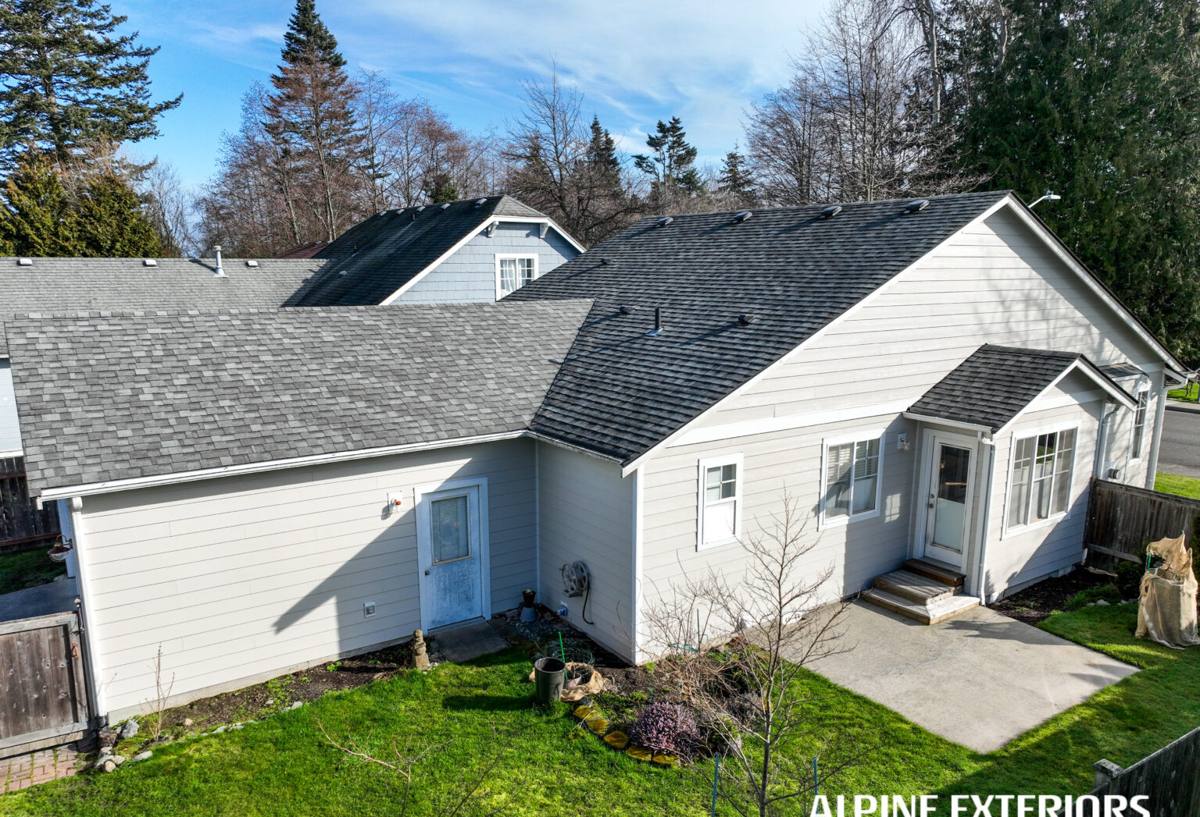
A siding product that's marginal in a drier, more sheltered location can become a real maintenance headache on a point of land surrounded by water. That's the lens we use when we talk to March Point homeowners about materials. We're not selling based on what's cheapest to install or what looks best on day one — we're thinking about what a wall assembly will be dealing with in year five, year ten, and year twenty of Skagit County weather.
Our Approach: James Hardie Fiber Cement, Installed to Spec
We install James Hardie fiber cement siding exclusively. We don't install vinyl, LP SmartSide, Cemplank, Allura, or primed wood siding like spruce or cedar. That's a deliberate standard, not a limitation on options we happen to offer.
Why We Standardized on One Product
Each of the alternatives has real strengths — vinyl is inexpensive and low-maintenance in mild climates, engineered wood products offer a traditional look at a lower cost than fiber cement, and cedar has a natural appeal that some homeowners genuinely prefer. But in a marine climate like ours, each comes with trade-offs that matter: vinyl can warp or become brittle with age and UV exposure, wood-based products are more sensitive to sustained moisture and require more diligent maintenance to avoid rot, and natural wood siding needs ongoing sealing, staining, and inspection to hold up against the kind of driving rain and salt air March Point sees. We got tired of watching homeowners deal with those maintenance cycles and premature repairs, so we made a call: one product, installed correctly, every time.
Built for This Region
James Hardie is fiber cement — a mix of cellulose fiber, sand, and cement that's non-combustible and dimensionally stable, meaning it doesn't expand and contract with moisture the way wood-based products can. Hardie's HZ5 product line is engineered specifically for climates with significant moisture exposure, which is exactly the category Anacortes and the rest of Skagit County fall into. The factory-applied ColorPlus finish is baked on under controlled conditions, which holds color and resists the chalking and fading that field-applied paint is more prone to — a real advantage on a west-facing wall that's catching salt spray and direct weather off the water. Hardie also backs its products with a strong transferable warranty, which matters if you ever sell the home.
What a Siding Replacement Project Actually Involves
Replacing siding on a March Point home isn't just pulling off the old material and nailing up new panels. Done right, it's a multi-step process where the details under the siding matter as much as the siding itself.
Inspection and Assessment
We start by pulling back existing siding in problem areas to check for hidden moisture damage, especially around windows, doors, and any wall sections that stay shaded or face prevailing wind and rain. This tells us what we're actually dealing with before we quote a scope of work.
Moisture Barrier and Flashing
This is the step that determines whether siding lasts 30 years or fails in 8. Proper weather-resistant barrier installation, correctly lapped and sealed flashing at every window, door, and penetration, and attention to how water is meant to shed off the wall — these details matter more in a wind-driven rain environment than almost anywhere else.
Installation to Manufacturer Spec
James Hardie siding has specific fastening, clearance, and caulking requirements. Installed off-spec, it can still fail early — the material isn't magic, the installation has to match the engineering behind it. We follow Hardie's installation guidelines because that's what keeps the warranty valid and the wall performing the way it's supposed to.
Beyond Siding: The Rest of the Exterior
Siding doesn't work in isolation — it's one part of an exterior envelope that also includes the roof, windows, and any exterior structures like decks. We handle all four because they interact. A roof with failing flashing can send water down behind siding that's otherwise in great shape. Windows with worn seals let moisture into wall cavities regardless of how good the siding is. And decks exposed to the same salt air and rain cycles need materials and fastening details suited to the same coastal conditions. For March Point homeowners, having one crew that understands how these systems fit together — rather than coordinating separate contractors for each — usually means fewer gaps in the work and fewer surprises down the line.
Cost Factors for March Point Siding Projects
Every home is different, but a few factors consistently drive cost on projects in this area:
| Factor | Why It Matters Here |
|---|---|
| Extent of hidden moisture damage | Homes with long-term wall exposure to driving rain may need sheathing or framing repair before new siding goes on |
| Home size and wall complexity | Multiple stories, dormers, and cut-up wall lines all add labor time |
| Siding profile and trim details | Lap width, trim style, and color selection affect material cost |
| Access and site conditions | Waterfront or wooded lots can affect staging, scaffolding, and material delivery |
| Removal and disposal of old siding | Varies by what's being removed and how much of it there is |
We give straightforward written estimates after an in-person look at the home — no inflated ranges meant to be negotiated down, and no pressure to sign on the spot.
Signs Your Siding Needs Attention
A lot of siding problems on March Point homes are quiet until they're not. Worth checking for:
- Soft or spongy spots when you press on the siding, especially near the bottom of walls or around windows
- Persistent moss or dark streaking that keeps coming back after cleaning
- Visible gaps, cracking, or warping at seams and corners
- Paint that's peeling or bubbling rather than just fading
- Musty smells or discoloration on interior walls that back up to exterior siding
- Siding that feels notably colder or damper to the touch than surrounding areas
Any of these are worth a look before they turn into a bigger repair. Catching moisture intrusion early is almost always cheaper than catching it late.
Why a Local Crew Matters
Anacortes and the surrounding Skagit County waterfront communities have a specific set of weather demands, and a crew that works this area regularly knows where the trouble spots tend to show up — which wall orientations take the worst of the weather, where moss builds up fastest, and how local permitting and inspection processes work. That local knowledge shapes how we scope and install every project, not just on paper but in the details that actually determine how a house holds up over the next twenty winters.
If your March Point home's siding is showing its age, or you're planning ahead rather than waiting for a problem, we're happy to take a look and walk you through what we see — no pressure, no obligation. Use the form below to request a free estimate.