 Anacortes Siding
 Siding Built for the Cap Sante Waterfront
Cap Sante sits close to the water, and that proximity is exactly what makes it one of the more demanding stretches of exterior real estate in Skagit County. Homes here catch salt-laden air off the water, take on driving rain angled sideways by wind, and spend a long stretch of the year damp enough to grow moss on anything that holds moisture. It's a beautiful place to live and a tough place to keep a house looking good. That combination is why we treat siding replacement in this neighborhood differently than a job on a sheltered inland lot.
We're not a national franchise cycling crews through Anacortes for a season. We work Skagit County exteriors year-round, which means we've seen how different products and installation choices actually hold up here over five, ten, twenty years — not just how they look on installation day.
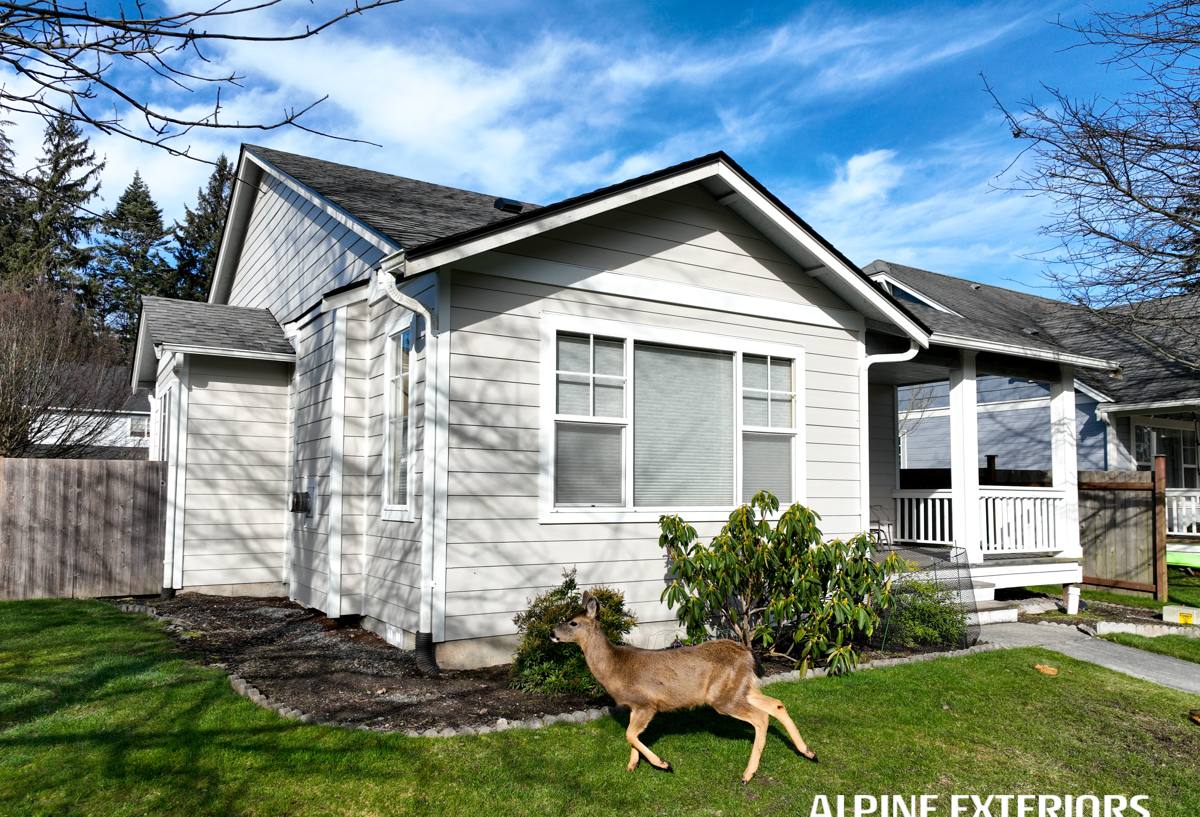
What the Cap Sante Climate Does to a House
Three things define the exterior environment around Cap Sante, and each one attacks siding in a different way:
- Salt air: Airborne salt from the marine environment accelerates corrosion on fasteners, hardware, and any metal trim that isn't properly rated or protected. It also degrades cheaper paint finishes faster than it would a few miles inland.
- Driving rain: Wind off the water doesn't just drop rain straight down — it pushes it sideways into wall assemblies, seams, and butt joints. Any siding product with weak water-shedding details or poor caulking discipline will eventually let moisture behind the cladding.
- Moss and prolonged dampness: Anacortes doesn't dry out quickly between storms. North-facing and shaded walls, in particular, stay damp for extended stretches, which is exactly the environment moss, algae, and mildew need to take hold on porous or wood-based siding.
None of this means a house near Cap Sante is doomed to constant repairs. It means the siding material and the installation details matter more here than they would in a drier, calmer part of the state.
Why This Matters More on a Waterfront Lot Than an Inland One
A house set back from the water in a sheltered inland pocket might go a decade with only cosmetic wear on its siding. A comparable house closer to Cap Sante, exposed to open water and prevailing wind, will show the difference in cladding choice much sooner — cupping, staining, soft spots, or paint failure show up years earlier on products that aren't built to handle sustained moisture and salt exposure.
Why We Install Only James Hardie Fiber Cement
We made a deliberate decision a while back to standardize on James Hardie fiber cement siding and stop installing other cladding materials — no vinyl, no LP SmartSide, no Cemplank, no Allura, no primed spruce or cedar lap. That's not a marketing angle; it's a practical response to what we see on siding replacement calls throughout this region.
Fiber cement is a cement-and-cellulose composite that is non-combustible and dimensionally stable in a way wood and wood-composite products aren't. It doesn't swell and shrink with moisture the way engineered wood does, and it doesn't need the same vigilance around cut-edge sealing that vinyl and wood products demand near salt air. James Hardie's HZ5 product line is specifically engineered for climates with sustained moisture exposure — the Pacific Northwest is exactly the environment it's built for.
Hardie's ColorPlus finish is baked on at the factory under controlled conditions, rather than field-painted, which gives it more consistent adhesion and color retention than a job-site paint job — a real advantage on a house that's going to spend years absorbing salt air and driving rain. It also carries a transferable limited warranty, which matters on the coast, where buyers and inspectors alike look closely at exterior condition.
We're happy to talk through the trade-offs of other products if you're weighing options — we'd rather you understand why we made this call than just take our word for it.
How We Approach a Cap Sante Siding Job
Assessment First
Every job starts with a walk of the exterior, not a sales pitch. We look at what's actually happening behind the current siding where we can access it, check trim and flashing condition, and note any areas showing the telltale signs of trapped moisture — soft sheathing, staining, or persistent moss growth in shaded corners.
Water Management Before Cladding
On a site this exposed, the housewrap, flashing, and window/door integration matter as much as the siding itself. We install proper weather-resistive barriers and flash penetrations correctly before a single piece of Hardie goes up — this is the layer that actually keeps driving rain out of the wall assembly, and it's the step that gets rushed on lower-budget jobs.
Fastening and Clearances
James Hardie publishes specific fastener, clearance, and gapping requirements, and they exist for a reason — get them wrong and you invite the exact moisture problems fiber cement is otherwise resistant to. We follow manufacturer installation specs closely, including ground clearance and roof-line clearances that matter on a lot with heavy rain runoff.
Finish Details
Corners, trim, and caulk joints are where most siding failures start, not in the field of the wall. We pay particular attention to these details on waterfront-adjacent homes, since they're the first place driving rain finds a way in.
Siding Doesn't Work in Isolation
A house is a system. Siding, roofing, windows, and decks all interact, and on a site exposed to wind-driven rain, weak points in any one of them can undermine the others. We handle all four, which means:
- Roof flashing and siding termination points are coordinated by the same crew, not two separate contractors guessing at each other's work.
- Window replacement and siding replacement can be scheduled together, so flashing and integration around openings is done once, correctly, rather than patched twice.
- Deck ledger connections and the siding around them get the same moisture-management attention, since ledger boards are a common spot for hidden rot on coastal homes.
You don't have to replace everything at once. But if you're already planning a siding project on a Cap Sante-area home, it's worth a conversation about whether other parts of the exterior are due for attention in the same visit — it often saves money and avoids redoing trim twice.
What Drives the Cost of a Siding Project Here
| Factor | Why It Matters in This Area |
|---|---|
| Extent of moisture damage found | Sheathing or framing repair adds cost but is common on older waterfront-exposed homes and shouldn't be skipped |
| Home size and wall complexity | More corners, dormers, and roof lines mean more flashing and trim detail work |
| Siding profile chosen | Lap, shingle, and panel Hardie profiles vary in material and labor cost |
| Trim and accessory scope | Fascia, soffit, and trim board replacement is often bundled in for a consistent, weathertight result |
| Access and site conditions | Steep lots, tight setbacks, or limited staging area near the water can affect labor time |
We give firm, itemized estimates after an in-person look at the house — not a phone-quote guess — because on a site like Cap Sante, hidden damage behind old siding is common enough that we'd rather see it before pricing it.
Permits and Local Requirements
Siding replacement in the City of Anacortes generally requires review through the city's building department, and homes closer to the shoreline may fall under additional shoreline or design-review considerations depending on the specific parcel. We handle the permitting conversation as part of the project rather than leaving it for the homeowner to sort out, since local requirements can vary block to block near the water.
Signs Your Siding May Already Be Struggling
- Persistent moss or dark streaking on north- or shade-facing walls that comes back soon after cleaning
- Soft or spongy spots when pressed, especially near the bottom courses or around window sills
- Paint or finish peeling, chalking, or bubbling faster than it should for its age
- Visible gaps, warping, or cupping in lap boards
- Rusting fasteners or trim hardware showing through the finish
- Musty smell or interior wall staining near exterior walls, which can indicate moisture has already gotten behind the cladding
Any one of these on its own isn't necessarily an emergency, but on a Cap Sante-area home it's worth having someone look before the next storm season.
Maintaining Hardie Siding on a Waterfront Lot
Fiber cement is low-maintenance compared to wood or vinyl, but "low-maintenance" isn't "no-maintenance," especially this close to the water. A simple annual routine goes a long way:
- Rinse down siding once or twice a year to clear accumulated salt residue and organic growth, particularly on shaded or north-facing walls
- Keep gutters clear so overflow isn't running down the wall face during heavy storms
- Trim back vegetation and tree cover that keeps a wall section shaded and damp longer than the rest of the house
- Have caulking at trim joints and penetrations checked every few years and refreshed as needed
- Address any small paint chips or dings promptly so bare edges aren't left exposed
A Crew That Knows This Neighborhood
Working Skagit County exteriors regularly means we're not learning Cap Sante's climate on your dime. We know which wall orientations take the worst of the driving rain, which details tend to fail first on older homes in this area, and how James Hardie's product lines perform once they've had a few real Northwest winters to prove themselves. That local track record is part of what you're paying for when you hire a crew that isn't passing through.
If you're noticing wear on your siding, planning ahead for a remodel, or just want an honest read on where your exterior stands, we're glad to come take a look. Estimates are free, there's no pressure, and you'll get a straight answer about what your house actually needs.