 Anacortes Siding
 Siding in Similk Beach
Similk Beach sits along the water on the south end of Fidalgo Island, close enough to Similk Bay and the Swinomish Channel that salt air and wind off the water are part of daily life for the homes out there. It's a quieter corner of the Anacortes area, but the exterior of a house in Similk Beach works just as hard as one closer to town — arguably harder, given the direct water exposure many of these lots have. We've replaced and repaired siding on enough Skagit County waterfront and near-waterfront homes to know that what holds up in a sheltered inland neighborhood doesn't always hold up here.
This page covers what we see on Similk Beach homes, how we approach siding replacement in that environment, and why our crews only install James Hardie fiber cement — not vinyl, not LP SmartSide, not cedar. We also handle roofing, windows, and decks, because the exterior of a house is one connected system and problems in one area usually show up in another.
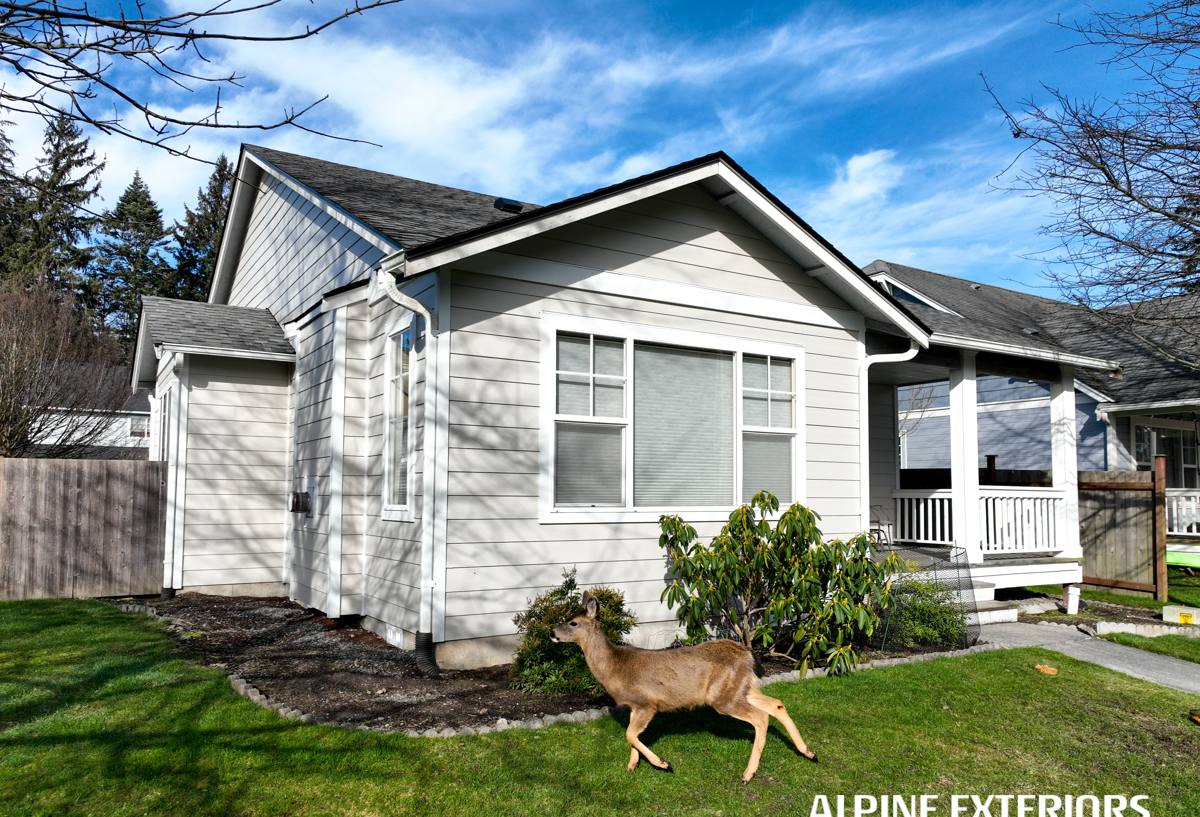
What the Climate Does to Homes Out Here
Salt Air and Corrosion
Homes near Similk Bay and the surrounding shoreline take on airborne salt that settles on siding, trim, fasteners, and metal flashing. Over years, that salt exposure accelerates corrosion in unprotected fasteners and can degrade coatings that aren't built to handle it. It's a slow process, which is exactly why it's easy to underestimate until you're looking at streaking, pitting, or a paint job that's failing years ahead of schedule.
Driving Rain and Wind-Driven Moisture
Anacortes gets a lot of rain, but the driving, sideways rain that comes with wind off the water is a different problem than a straight-down shower. Wind-driven rain finds gaps at seams, trim, and penetrations that would stay dry in a calmer setting. Siding and flashing details that aren't installed with that in mind are the ones that fail first — usually with water damage happening behind the wall before anyone notices a problem on the surface.
A Long Moss and Mildew Season
Skagit County's mild, damp climate means moss, algae, and mildew have most of the year to establish themselves on north-facing walls, shaded siding, and anywhere moisture lingers. Some siding materials resist this better than others. Surfaces that stay damp longer or have a paper or wood component tend to host growth faster and hold onto it longer, which shows up as ongoing cleaning and maintenance for the homeowner.
Why the Siding Material You Choose Matters More Here
In a drier, more sheltered climate, the gap between siding products narrows — almost anything holds up reasonably well. On Fidalgo Island's waterfront and near-waterfront areas, that gap widens fast. A few honest trade-offs worth knowing before you choose a material:
- Vinyl siding is affordable and low-maintenance in mild conditions, but it can warp or crack in temperature swings, fades over time in UV exposure, and its seams and panels are more vulnerable to wind-driven rain intrusion than a properly installed fiber cement system.
- LP SmartSide is an engineered wood product with a resin-treated strand design that performs well when installed and maintained correctly, but it's still wood-based — meaning cut edges, seams, and any breach in the factory coating need diligent caulking and repainting to keep moisture out over the long run.
- Cedar and primed wood siding can look great, but they demand a real maintenance commitment — repainting or restaining on a cycle, and vigilance against rot and moisture, especially in a climate that stays damp as long as this one does.
- Fiber cement (James Hardie) is non-combustible, doesn't expand and contract the way wood or vinyl do, and its factory-applied ColorPlus finish is engineered to hold color and resist the kind of moisture and UV cycling this region delivers.
None of these products are "bad" — they're built for different priorities and different climates. Our decision to install only James Hardie comes down to what we've seen hold up on Skagit County's exterior-facing, salt-air, high-moisture homes over time, and what we're willing to put our name behind.
Why We Install Only James Hardie
James Hardie fiber cement is engineered specifically for climate durability, which is why the company builds region-specific HZ5 product formulations for areas like the Pacific Northwest. A few reasons it's the standard we hold to:
- Non-combustible core — fiber cement doesn't feed a fire the way wood-based sidings can.
- Dimensionally stable — it doesn't swell, warp, or crack from moisture cycling the way wood and some engineered products can over time.
- Factory-baked ColorPlus finish — a coating applied and cured under controlled conditions, which holds up better against fading and chalking than field-applied paint.
- Strong transferable warranty — backed by the manufacturer, and one that follows the house if it sells.
- Proven track record in wet, coastal, and marine-influenced climates similar to Fidalgo Island's.
None of that matters, though, if the installation is wrong. Fiber cement is less forgiving of sloppy flashing, poor fastening, or wrong nailing patterns than some other products — which is exactly where a local, experienced crew earns its keep.
The Hardie Product Lines We Work With
| Product | Typical Use | Why It Fits Similk Beach Homes |
|---|---|---|
| HardiePlank lap siding | Most common siding profile, horizontal lap | Classic look, engineered HZ5 formulation for wet Pacific Northwest climates |
| HardiePanel vertical siding | Modern or accent applications, board-and-batten look | Clean lines for contemporary coastal-style homes |
| HardieShingle | Accent gables, dormers, texture variation | Adds detail without the maintenance burden of real cedar shingle |
| HardieTrim | Corners, window and door trim, fascia | Matches the siding's durability so trim doesn't fail before the field siding does |
Our Process for a Siding Replacement
Every project starts with a real look at the house — not a drive-by estimate. On a Similk Beach property, we're paying close attention to water-facing walls, existing flashing conditions, and any signs of moisture damage behind the current siding, since that's what tends to get missed until the old siding comes off.
- On-site inspection and honest assessment of current siding and any underlying damage
- Written estimate with product specifics — no vague "siding replacement" line item
- Removal of old siding and inspection of the sheathing and weather barrier underneath
- Repair of any rot or moisture damage found before new siding goes on
- Correct flashing and moisture-barrier detailing at every seam, window, and penetration
- Installation of James Hardie siding and trim to manufacturer specification
- Final walkthrough so you understand what was done and why
That step of repairing what's underneath before covering it back up is where a lot of corners get cut in this trade. It's also the step that determines whether the new siding actually lasts.
Beyond Siding: Roofing, Windows, and Decks
Siding doesn't work in isolation. A roof that's shedding water onto a wall, windows that aren't flashed correctly, or a deck ledger that's trapping moisture against the house can undermine even a well-installed siding job. We handle roofing, window replacement, and decks alongside siding for exactly that reason — when we're on a Similk Beach property, we're looking at the whole exterior envelope, not just one component of it.
Why a Local Crew Matters
Anacortes and the surrounding Fidalgo Island and Skagit County area have their own microclimates — a house two miles inland doesn't take the same weather as one facing open water near Similk Bay. A crew that works this region regularly knows to check flashing details more closely on water-facing walls, knows which sides of a house tend to hold moss and moisture longest, and isn't guessing at how James Hardie's HZ5 products perform locally because they've installed them here before. That local knowledge shows up in the details — the ones that determine whether a siding job holds up for decades or needs attention again in five years.
Cost Factors to Expect
| Factor | Why It Affects Cost |
|---|---|
| Home size and number of stories | More surface area and access complexity (scaffolding, lifts) add labor |
| Existing damage found during removal | Rotted sheathing or framing needs repair before new siding goes on |
| Siding profile and trim detail | Board-and-batten, shingle accents, and custom trim take more labor than plain lap siding |
| Site access | Waterfront lots and tight or sloped sites can affect staging and equipment access |
| Paint/color selection | Standard ColorPlus colors versus custom options can shift pricing |
We don't quote a flat per-square-foot number over the phone, because the honest answer depends on what we find once we're actually looking at the house. That's what the estimate is for.
If you're weighing a siding replacement — or want a second opinion on a repair versus replace decision — for your Similk Beach home, we're happy to come take a look. The estimate is free, there's no pressure, and you'll walk away with a clear, honest picture of what your house needs and what it would take to fix it right.