 Anacortes Siding
 Windows Built for March Point's Waterfront Weather
March Point sits right up against the marine air coming off Fidalgo Bay and the surrounding waterways, which means homes here take a different kind of beating than houses ten miles inland. Salt-laden air corrodes hardware and finishes faster, wind-driven rain finds its way into gaps that would stay dry elsewhere, and the long stretch of gray, damp months every year gives moss and algae plenty of time to take hold on anything that stays wet. Windows are one of the first places all of that shows up — cloudy glass seals, swollen sashes, pitted hardware, and trim that's gone soft around the frame.
Custom window replacement for a March Point home isn't just picking a size off a shelf. It means choosing materials and installation details that specifically account for salt exposure, sustained rain, and moisture that lingers instead of evaporating. That's the lens we bring to every window job out here, and it's different from how we'd approach the same house set back from the water in a drier microclimate.
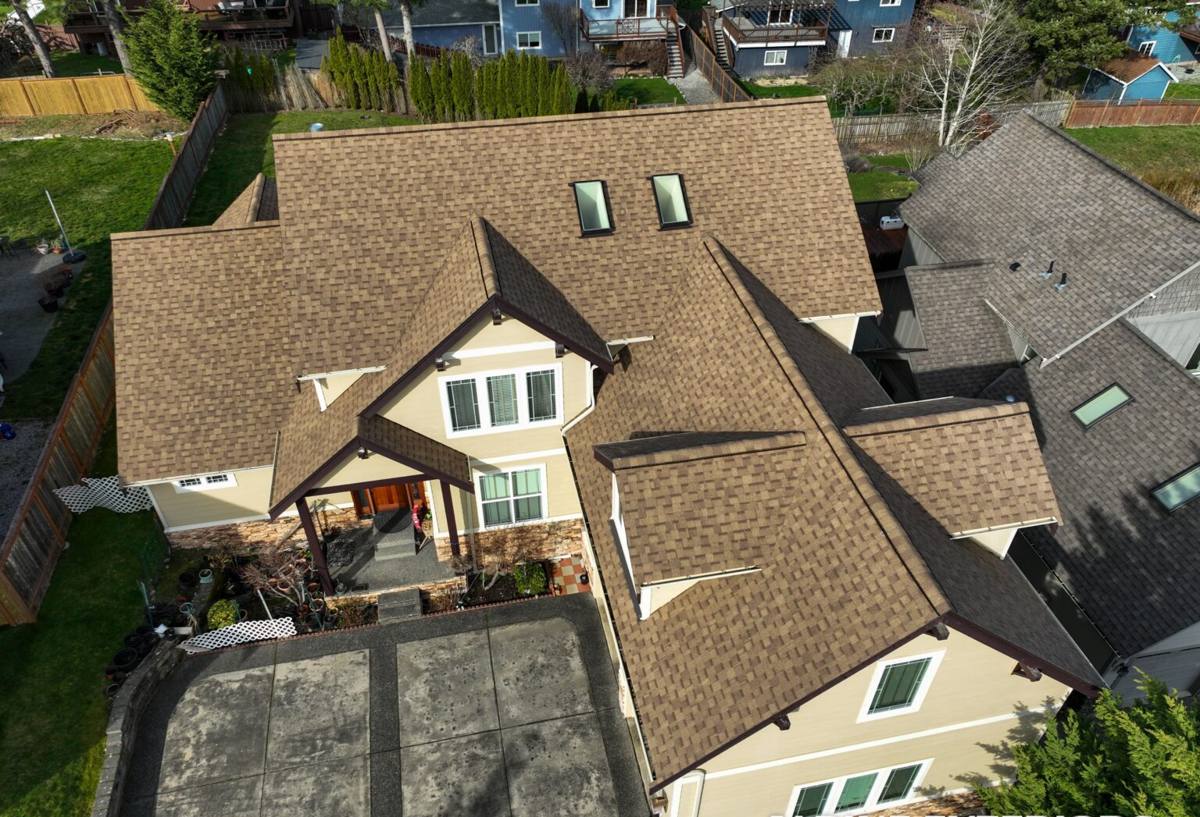
What Salt Air and Driving Rain Actually Do to Windows
Corrosion and Hardware Fatigue
Salt in the air accelerates corrosion on anything metal — hinges, cranks, locks, and screws. On a standard window with basic hardware, that shows up within a handful of years as stiff cranks, pitted latches, and streaking on the sill from rust runoff. It doesn't mean the window has failed structurally, but it does mean the moving parts wear out faster than the glass or frame does.
Wind-Driven Rain and Water Intrusion
Rain that falls straight down is one thing; rain that's being pushed sideways by wind off the water is another. It gets forced into any gap in the flashing, caulking, or window-to-wall transition that a calmer climate might never test. Most water intrusion problems we find in older windows aren't glass failures — they're flashing and sealant details that were adequate for a mild install but not for sustained, wind-driven exposure.
Moss, Algae, and Trapped Moisture
Skagit County's moss season runs long, and anywhere water sits — sills, the bottom of a frame, behind trim that's started to separate — becomes a place for moss and algae to establish. That growth holds moisture against the wood or composite, which speeds up rot and paint failure. It's a slow problem, which is exactly why it gets ignored until a sill is soft enough to push a screwdriver into.
Choosing the Right Window for This Exposure
There's no single "best" window material — it depends on how much direct weather exposure a given wall or opening actually gets, and what the homeowner wants to maintain.
| Material | How It Handles Salt Air & Rain | Maintenance |
|---|---|---|
| Vinyl | Won't corrode or rot; seams and hardware are the weak points to watch | Low — occasional cleaning, no repainting |
| Fiberglass | Very stable in temperature and moisture swings; holds up well to sustained wet exposure | Low to moderate |
| Wood-clad (exterior composite or vinyl over wood core) | Good performance if cladding and seals stay intact; interior wood look preserved | Moderate — watch cladding seams for gaps |
| Solid wood | Handsome, but requires diligent upkeep in this exposure; most vulnerable to moss and rot if paint fails | High — regular repainting and sealing |
| Aluminum | Durable but conducts cold and can corrode over time without a quality finish | Moderate |
For most March Point homes, we steer toward vinyl or fiberglass on the walls that take the brunt of the weather, and reserve solid wood for interior-facing rooms or covered areas where a homeowner specifically wants that look and is willing to keep up with it. That's not a knock on wood windows — it's just matching the material to the exposure.
Glass and Seal Considerations
- Dual-pane, argon-filled glass is the practical minimum for this climate — it manages both the cold and the constant humidity swings better than single-pane or basic dual-pane without gas fill
- Low-E coatings help control heat loss without darkening the room, useful given how many gray days this area gets
- Warm-edge spacer systems (instead of older aluminum spacers) resist condensation forming at the edge of the glass, which is where we see fogging start first on older installs
- Impact-resistant or laminated glass is worth discussing for exposures that take direct wind-driven rain and debris, though it's not necessary on every elevation of every house
What a Correct Installation Actually Involves
The window unit itself is maybe half the job. The other half — the part that determines whether it leaks in five years — is how it's tied into the wall.
Flashing and Water Management
Proper flashing creates a shingled, water-shedding path so any moisture that gets past the exterior trim is directed back out, not into the wall cavity. On a March Point home, we pay particular attention to the sill pan and the head flashing, since those are the details most likely to be undersized or skipped on a fast, budget install.
Sealant Selection and Placement
Not every gap should be caulked solid — some need to stay as a drainage path, and sealing them shut traps water instead of letting it escape. We use sealants rated for sustained UV and moisture exposure, and we're deliberate about where a bead goes and where it doesn't.
Insulation Around the Frame
Gaps around a new window frame need to be filled with a low-expansion foam or backer rod and sealant — not stuffed with fiberglass batting, which can wick moisture and does little to stop air movement. This is a small detail that gets skipped often and shows up later as drafts or condensation on the interior frame.
Our Process for a March Point Window Project
- On-site assessment — we look at each opening individually, since sun exposure, wind direction, and existing water damage can vary window to window on the same house
- Material and glass recommendation — matched to that specific opening's exposure, not a one-size answer for the whole house
- Removal and inspection — once the old window is out, we check the framing and sill for hidden rot or moisture damage before anything new goes in
- Flashing and sill pan installation — built correctly the first time, since this is the part that's expensive to fix later and invisible once trim goes back on
- Window installation and air-seal — set plumb and level, insulated and sealed with materials suited to sustained moisture exposure
- Exterior trim and finish — completed and inspected for any gap or transition that could become a future entry point for water
Signs a March Point Home Needs Window Attention
- Fogging or moisture between the glass panes (a sign the seal has failed)
- Soft or discolored trim and sills, especially where moss or algae has taken hold
- Cranks, locks, or hinges that are stiff, rusted, or no longer catch properly
- Drafts near the frame even when the window is fully latched
- Visible gaps or cracked caulk lines around the exterior trim
- Paint peeling or bubbling specifically around the window opening rather than the broader wall
Why a Local Crew Matters for This Job
A crew that regularly works in and around Anacortes and Skagit County has already seen how salt air, wind-driven rain, and moss season play out on real houses in this exact environment — not a textbook version of coastal weather, but the specific way it shows up on homes near Fidalgo Bay. That matters when it comes to picking hardware finishes that won't pit in a season or two, choosing flashing details sized for real wind-driven rain events, and knowing which materials hold up without turning into a maintenance chore.
It also means someone who's still local if a question comes up after the install — about a seal, a warranty item, or how a particular window is holding up through its first wet winter. That kind of accountability is harder to get from a crew that installed once and moved on to the next region.
Cost Factors to Expect
Window project costs vary a lot based on size, material, glass package, and how much flashing or framing repair is needed once the old window comes out — especially if there's hidden moisture damage. Rather than quote a number that won't reflect your actual house, we walk each opening and give a written estimate based on what we find, with the reasoning behind each recommendation so you know what you're paying for and why.
If you're seeing fogged glass, stiff hardware, or soft trim on a March Point home, it's worth having a straightforward look before those small issues turn into a bigger repair. We offer a free, no-pressure estimate — use the form below to get a time on the calendar.