 Anacortes Siding
 Roof Repair Built Around the Sedro-Woolley Climate
Homes in Sedro-Woolley sit in a part of Skagit County that gets hit from two directions. Marine air moving in off Puget Sound and the Salish Sea carries salt and moisture that settles on every exposed surface, while the valley's damp, shaded pockets keep roofs wet for days after a storm passes. Add in the driving rain that comes sideways during winter fronts, and a roof here works harder than one in a drier inland climate. Roof repair in this area isn't just patching a leak — it's understanding why that specific spot failed first, and making sure the fix holds up through the next wet season, not just the next dry spell.
We work on roofs throughout this part of Skagit County regularly, which means we're not guessing at how local weather behaves. We know which slopes hold moss longest, which valleys collect needle litter from nearby conifers, and which flashing details tend to fail first when a house has been through a few decades of freeze-thaw and salt-laden rain.
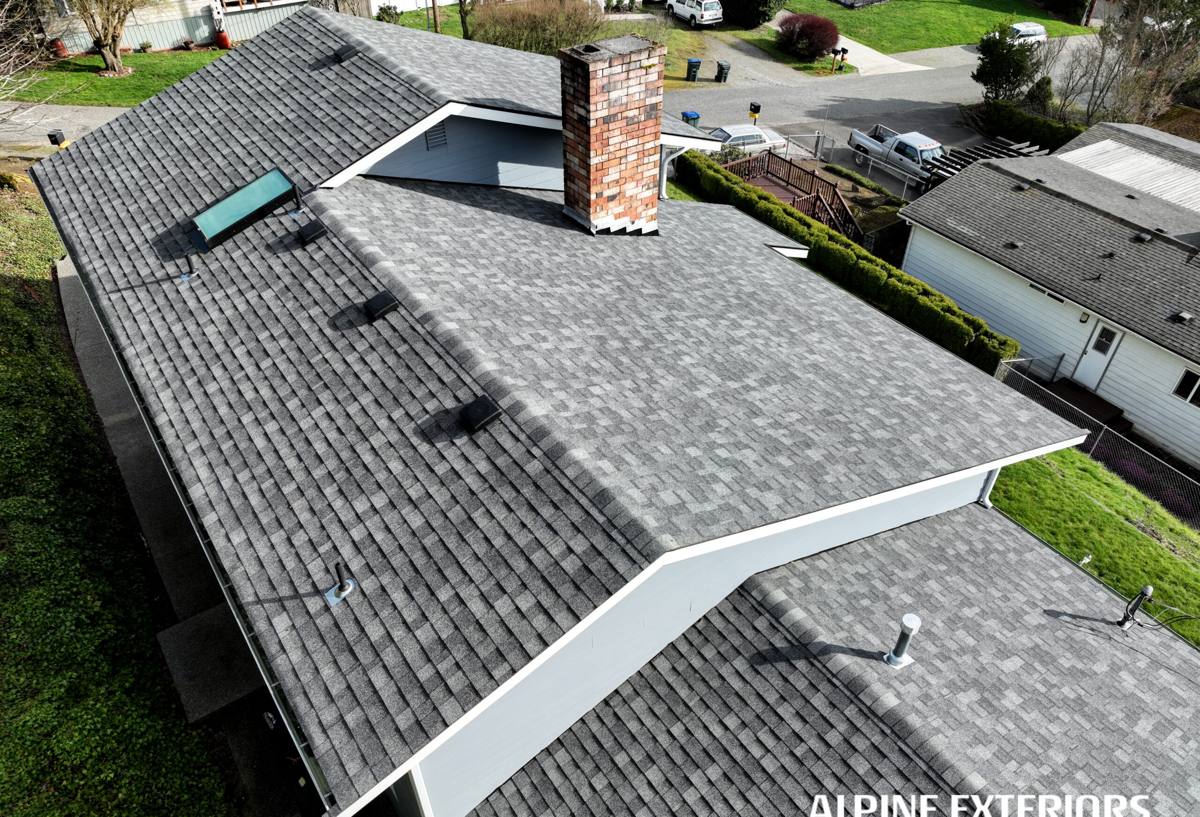
Why Moss Is the Root of So Many Sedro-Woolley Roof Repairs
Moss gets blamed for cosmetic ugliness, but the real damage is structural. Moss holds water against the roofing surface long after the rest of the roof has dried out. On asphalt shingles, that constant moisture accelerates granule loss and lets water wick under shingle edges. On wood or older composition roofs, it can hold enough moisture to promote rot in the decking underneath. Skagit County's combination of shade, humidity, and a long wet season from fall through spring makes moss less of an occasional nuisance and more of a permanent maintenance item for most roofs in the area.
How Moss Actually Damages a Roof
- Roots and rhizoids lift shingle edges and tab granules, creating small gaps water can enter
- Moss mats trap leaf litter and needles, which hold even more water against the surface
- Prolonged dampness accelerates granule loss, exposing the asphalt mat underneath to UV and rain
- On north-facing or heavily shaded slopes, moss can regrow within a season if not properly treated
A roof repair that only patches the visible leak but leaves the moss problem in place is a repair that will need to be redone. Part of doing this job correctly in Sedro-Woolley is addressing the moss itself — safe removal, treatment, and identifying whether zinc or copper strips make sense for that particular roof — not just fixing the hole it caused.
What Correct Roof Repair Actually Involves
A roof leak rarely shows up where the water actually entered. Water travels along the underlayment, decking, and rafters before it finds a gap in the ceiling or a stain on a wall, so tracing a leak back to its true source is the most important — and most often rushed — part of a repair job.
Our Diagnostic Process
- Inspect the roof surface and interior attic space (when accessible) to trace water paths back to the actual entry point
- Check all penetrations first — vent boots, chimney flashing, skylight curbs — since these fail far more often than open field shingle
- Examine valleys and eaves, where debris buildup and ice-damming-style water backup are common in this climate
- Assess the decking condition around the leak, not just the surface, since soft or delaminated plywood needs to be addressed before new shingles or flashing go back on
- Confirm the repair scope with the homeowner before work starts — including photos of any hidden damage found along the way
Skipping straight to "replace the shingles you can see" without this process is how homeowners end up calling a contractor back out six months later for the same leak in a slightly different spot.
Common Repair Issues on Sedro-Woolley Roofs
Certain problems show up again and again on roofs in this area, largely driven by the same climate factors: sustained moisture, wind-driven rain, and tree cover.
| Issue | Typical Cause | What the Repair Involves |
|---|---|---|
| Flashing leaks at chimneys/skylights | Sealant breakdown, metal fatigue, thermal movement over years of freeze-thaw | Remove and replace flashing, re-integrate with underlayment, not just re-caulk |
| Valley leaks | Debris and moss buildup slowing water flow, undersized or aging valley material | Clear debris, inspect underlayment, replace valley metal or membrane as needed |
| Granule loss / soft spots | Prolonged moss and moisture exposure accelerating shingle wear | Replace affected shingles and check decking underneath for rot |
| Wind-lifted or torn shingles | Driving rain and gusts common in fall/winter storm fronts | Re-secure or replace damaged shingles, reseal exposed nail lines |
| Gutter/eave backup leaks | Needle and leaf debris from surrounding tree cover clogging drainage | Clear drainage path, inspect eave underlayment and fascia for water damage |
Repair vs. Replacement: How We Help You Decide
Not every leak means a new roof, and not every roof with a few problem areas is worth patching indefinitely. The right call usually comes down to the roof's age relative to its material's expected service life, how widespread the damage is versus isolated to one or two areas, and whether the decking underneath is still sound.
- Repair usually makes sense when: the roof is under roughly two-thirds of its expected lifespan, damage is isolated to a specific area (one valley, one flashing point, storm damage to a section), and the decking underneath is solid
- Replacement is usually the better long-term value when: multiple areas are failing at once, granule loss is widespread rather than localized, or repeated repairs are being needed in different spots each season
We'll tell you honestly which situation your roof is in. A repair-only recommendation when that's genuinely the right call is worth more to a homeowner than a full-replacement upsell — and it's also what keeps people calling us back for the next real issue instead of finding someone else after feeling oversold.
Materials and Methods We Use for Repairs
Repair materials need to match — or safely integrate with — what's already on the roof. Using the wrong flashing metal, incompatible sealant, or a mismatched shingle profile can create a repair that looks fine for a season and fails at the seam between old and new material.
What We Pay Attention To
- Matching or compatible shingle type, weight, and where possible, color, so the repair blends rather than creating an obvious patch
- Corrosion-resistant flashing metal appropriate for the coastal-influenced air in this part of Skagit County
- Proper underlayment integration at repair edges, not just surface-level shingle replacement
- Sealants and fasteners rated for the temperature swings and sustained moisture typical of our wet season
We don't push a specific manufacturer as the only acceptable option — the right material depends on what's already on your roof, its age, and your budget. What we won't do is use a quick-fix product or method that trades a durable repair for a faster one, since on a roof exposed to this much rain, shortcuts show up again fast.
Our Repair Process, Start to Finish
- Free on-site assessment — we inspect the roof and, where safely possible, the attic to trace the actual leak source
- Written scope and estimate — what we found, what we recommend, and why, before any work begins
- Repair work — completed by a crew that treats moss, debris, and drainage as part of the fix, not an afterthought
- Cleanup and walkthrough — we clear debris from the work area and show you what was done
- Follow-up guidance — honest advice on maintenance timing (moss treatment, gutter clearing) so the repair lasts
Ongoing Roof Maintenance for This Climate
A well-done repair still needs some upkeep in a climate like this. Roofs in Sedro-Woolley and the surrounding Skagit County area generally benefit from a moss check and gutter/valley clearing at least once a year — more often on heavily shaded lots — since debris and moss buildup are the leading cause of the same leaks recurring. If you had storm damage from wind-driven rain, it's also worth a quick inspection after any particularly severe front moves through, since flashing and shingle edges are the first things to loosen.
Why It Matters to Hire a Crew That Already Works This Area
A contractor who works roofs across the wider region day in and day out has already seen how local weather patterns affect roofing — where moss tends to concentrate, which flashing details age fastest under sustained coastal moisture, and how driving rain finds its way into aging valleys. That familiarity means less time spent guessing and more time spent fixing the actual problem correctly the first time. It also means a crew that's still reachable if a repair needs a follow-up look, rather than a traveling outfit that's moved on to the next region.
If you're dealing with a leak, missing shingles, or a roof that's showing its age after another wet Skagit County winter, we're happy to take a look. Reach out for a free, no-pressure estimate using the form below — we'll give you an honest read on what your roof actually needs.