 Anacortes Siding
 Oak Harbor's Coastline Is Rough on Siding
Homes near the water in Oak Harbor take a different kind of beating than homes ten miles inland. Salt air off the water works into seams, fastener heads, and unpainted cut edges, and it doesn't stop working just because the weather looks calm. Add driving rain that comes sideways off Puget Sound during a fall or winter blow, and any weak point in a siding system — a gap in caulking, a missing piece of flashing, a butt joint that wasn't sealed — becomes the spot where water gets in first.
Then there's moss. This part of Washington stays damp enough, long enough, that anything shaded or north-facing grows a green film if it isn't built and finished to shed water and dry out between rains. Moss and algae aren't just cosmetic — a siding surface that stays wet under organic growth breaks down faster, and paint or factory finish holds up worse underneath it. A siding job done for a drier climate, or done to a lower standard because "it's just siding," doesn't hold up here the way it should.
What a Correct Installation Actually Requires
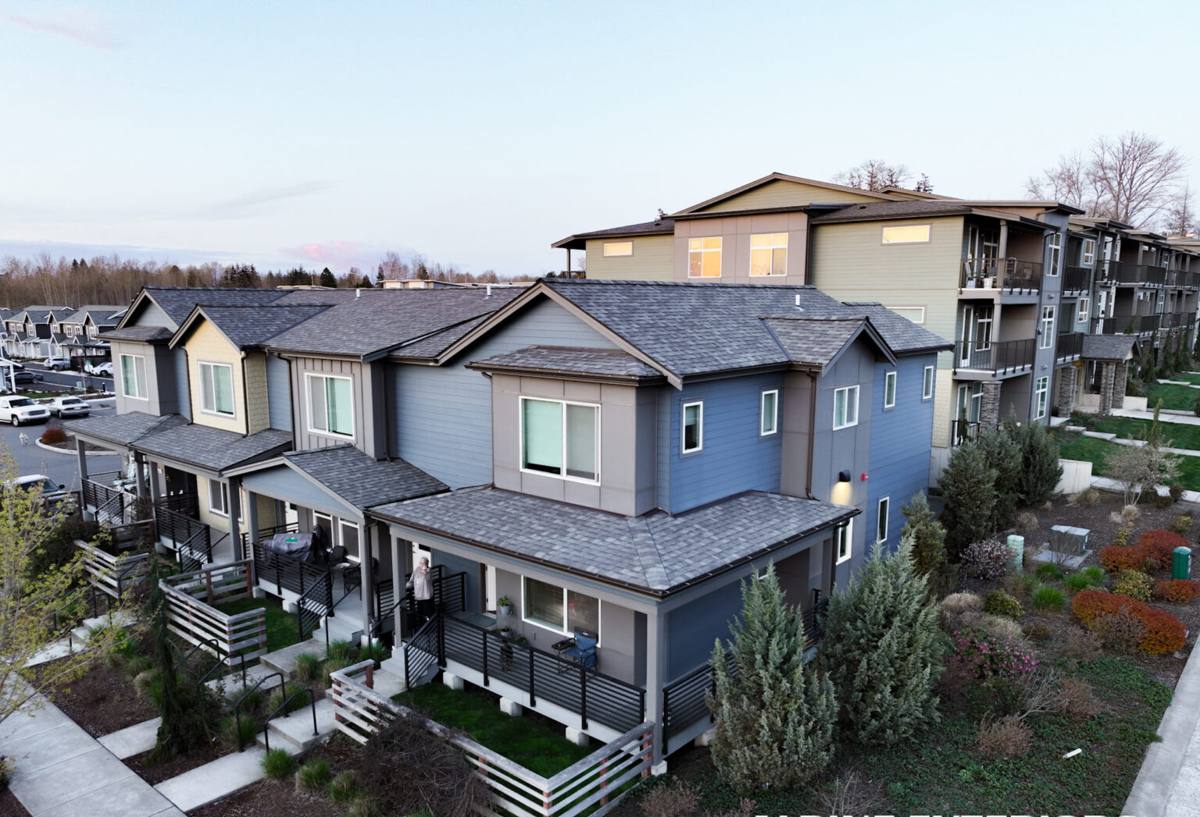
Fiber cement is a genuinely good material for this environment — it doesn't rot, it doesn't feed insects, and it's dimensionally stable in wet-dry cycles. But the material only performs as well as the install. In a salt-air, high-moisture area like Oak Harbor, a handful of details separate a siding job that lasts decades from one that starts showing problems in five to eight years.
Rainscreen and Drainage Behind the Siding
Siding is not the waterproofing layer of a house — it's the first line of defense, and some water always gets behind it. A proper install includes a drainage gap (a rainscreen) between the siding and the weather-resistive barrier so any moisture that gets past the face of the siding has somewhere to go besides straight into the sheathing. On a home exposed to steady wind-driven rain off the water, skipping this detail is one of the most common reasons siding fails early.
Flashing at Every Penetration
Every window, door, hose bib, light fixture, and deck ledger is a place water can find a way in if it isn't flashed correctly. That means proper head flashing over openings, kick-out flashing where a roofline meets a wall, and z-flashing at horizontal trim — installed in the right order, before the siding goes on, not caulked over afterward as a substitute.
Fastening, Gapping, and Sealing to Spec
Fiber cement has manufacturer-specified fastener patterns, minimum gaps at butt joints and trim, and specific sealant requirements at cut edges and penetrations. Cutting corners on any of these — over-driving nails, tight-butting boards with no gap, leaving a factory or field cut edge unsealed — creates the exact weak points that salt air and driving rain will find first.
Why We Install Only James Hardie
We don't install vinyl, LP SmartSide, cedar, primed spruce, or other fiber cement brands. We install James Hardie exclusively, and we did that on purpose. Hardie's fiber cement is non-combustible, it's engineered in region-specific HZ formulations for climates like ours (wet, marine, freeze-thaw at the margins), and it comes with a factory-applied ColorPlus finish that's baked on under controlled conditions rather than field-painted on site. That finish is a big part of why it holds color and resists the kind of fading and moss-friendly surface breakdown that field-applied paint struggles with in a damp coastal climate.
Standardizing on one product also means our crew installs it the same correct way, every time, on every job — not switching techniques between three or four different manufacturer specs. That consistency is part of what keeps a warranty valid and a wall assembly dry.
Choosing the Right Hardie Product for an Oak Harbor Home
Hardie makes several product lines, and the right one depends on the home's style, exposure, and what look the owner wants. Here's how the main options compare for a house dealing with salt air and steady rain:
| Product | Best For | What to Know |
|---|---|---|
| HardiePlank Lap Siding | Most homes, traditional and modern styles | The most common choice; wide range of widths and textures, straightforward to detail correctly around openings |
| HardieShingle | Accent gables, cottage or craftsman-style homes | Gives a cedar-shake look without the moisture and maintenance issues real shake carries in a wet climate |
| HardiePanel | Modern facades, accent walls, garages | Large-format vertical panels; fewer joints but requires careful battening and flashing at seams |
| HardieTrim | Corners, window and door trim, fascia | Matched to the siding line so trim and field don't age or expand differently over time |
Our Process, Start to Finish
The steps don't change much from house to house, but the details we check for do change based on a home's exposure to wind and water.
- On-site assessment: We look at current siding condition, wall sheathing where accessible, drainage paths, roofline intersections, and how exposed the home is to prevailing wind and rain.
- Scope and product selection: We recommend the Hardie products and profile that fit the home and the budget, and explain the trade-offs plainly.
- Written estimate: A clear, itemized quote — no vague allowances hiding the real cost of doing the job right.
- Tear-off and inspection: Once old siding comes off, we can actually see the sheathing and framing condition, which sometimes changes the plan — we tell you before we proceed, not after.
- Weather barrier and rainscreen installation: This is the layer most homeowners never see and most cut-rate jobs skip or shortcut.
- Flashing and siding installation: Installed to Hardie's fastening and gapping specifications, house by house, opening by opening.
- Final walkthrough: We go over the finished job with you before we call it done.
What Oak Harbor Siding Projects Typically Cost
Every home is different, and we won't quote a number without seeing the house, but these are the factors that move the price up or down on most jobs in this area:
| Factor | Why It Matters |
|---|---|
| Home size and wall complexity | More corners, dormers, and roof-to-wall intersections mean more flashing detail and labor time |
| Current siding removal | Tear-off of old siding (and disposal) adds cost versus a bare-sheathing new build |
| Sheathing or framing repair | Water damage found during tear-off has to be fixed before new siding goes on — this is the most common source of change orders |
| Product line and profile | Lap, shingle, and panel products carry different material and labor costs |
| Trim and accent work | Matched HardieTrim, window/door detailing, and accent gables add scope |
| Site access | Waterfront lots, steep grades, or tight setbacks affect staging and scaffolding time |
Living With Fiber Cement Siding in a Moss-Prone Climate
Correctly installed Hardie siding is low-maintenance, not no-maintenance. A little seasonal attention keeps it looking right and keeps small issues from becoming expensive ones:
- Rinse the siding once or twice a year, especially shaded and north-facing walls where moss and algae take hold first
- Keep gutters clear so overflow doesn't run down the face of the siding repeatedly
- Trim back shrubs and trees that keep a section of wall shaded and damp
- Check and re-caulk around windows, doors, and trim every few years as sealants age
- Have any impact damage or cracked boards repaired promptly rather than left to let water in
- Walk the exterior after a bad storm and look for anything knocked loose, especially trim and flashing
Why It Matters That We Already Work This Area
Anacortes and Oak Harbor sit in the same weather system — the same salt air, the same wind-driven rain events, the same long stretch of damp months that grows moss on anything that doesn't dry out. A crew that installs siding across this stretch of Skagit and Island County water knows which walls on a given lot orientation take the worst of it, which flashing details actually matter here versus a drier climate, and what "correctly sealed" looks like after a winter of real weather has tested it — not just on install day.
That's different from a crew that mostly works inland and treats every job the same regardless of exposure. The building code minimums are the same everywhere; what changes is how much margin you build in above that minimum, and that's a judgment call that comes from having actually maintained siding through this climate, not just installed it once.
If your Oak Harbor home needs new siding, or you want an honest read on whether your current siding is holding up the way it should, we're happy to walk the exterior with you and give you a straight answer. The estimate is free, there's no pressure, and you'll get a clear explanation of what we see and what we'd recommend.