 Anacortes Siding
 Siding Replacement for Oak Harbor Homes
Oak Harbor sits on Whidbey Island, connected to our home base on Fidalgo Island by the Deception Pass Bridge, and the drive over is one we make often. We treat Oak Harbor as one of our regular service areas, not an afterthought tacked onto a route between bigger jobs. That matters more than it sounds like it should, because siding work in this part of Island and Skagit County is not the same job you'd do in Spokane or Bellevue. The exposure is different, the moisture load is different, and the mistakes that cause callbacks are different.
This page is specifically about siding replacement for Oak Harbor properties — what the local climate does to siding over time, what a correctly done replacement actually involves, and why we install only James Hardie fiber cement rather than the vinyl, LP SmartSide, or cedar products you'll see offered elsewhere.
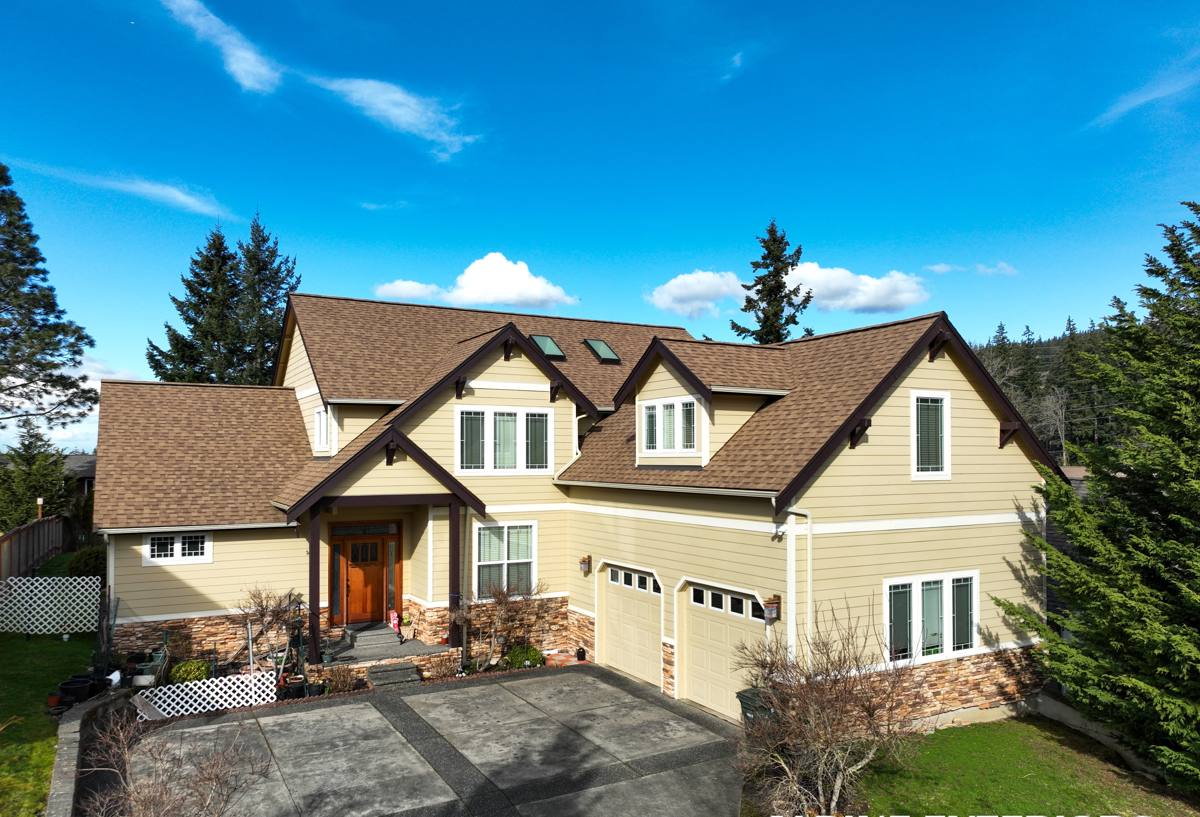
What Oak Harbor's Climate Does to Siding
Oak Harbor sits close to Puget Sound and Saratoga Passage, which means homes here take on a steady diet of salt-laden air, wind-driven rain, and long stretches of damp, low-sun weather through fall and winter. None of that is exotic for western Washington, but it adds up differently on siding than on, say, a roof or a deck.
Salt Air and Metal Fasteners
Salt air accelerates corrosion on exposed or under-driven fasteners and on any trim metal that isn't rated for coastal exposure. Over years, corroding fasteners can streak the siding face and eventually loosen their grip, which is one reason fastener spec and placement matter more here than in an inland neighborhood.
Driving Rain and Wind Exposure
Wind off the water pushes rain sideways into wall assemblies, especially on west- and southwest-facing elevations. Siding systems that rely on tight seams or caulk to stay watertight — rather than proper lapping, flashing, and drainage behind the cladding — tend to show trouble first on exposed sides of the house.
Moss, Shade, and Slow Drying
Tree cover and long overcast stretches keep north-facing and shaded walls damp for extended periods. That's prime territory for moss and algae growth on siding surfaces, and it means whatever material is on the wall needs to tolerate sustained moisture contact without swelling, softening, or losing its finish.
None of this is a reason to panic about your home's exterior. It's just the baseline any siding replacement in this area has to be planned around.
Signs Oak Harbor Homeowners Should Watch For
- Soft or spongy spots when you press on siding, especially near the bottom courses or around window trim
- Visible cupping, warping, or delaminating on wood-based or composite siding panels
- Persistent moss or dark streaking on shaded or north-facing walls that pressure washing doesn't keep off for long
- Paint that's failing faster than the repaint cycle you're used to, or peeling in sheets rather than fading evenly
- Rust streaks below fasteners or trim metal
- Gaps opening up at butt joints, corners, or where siding meets window and door trim
- A musty smell or visible staining on interior walls that back up to exterior siding
Any one of these on its own might just mean routine maintenance. Several together, especially on a home more than 15-20 years old, usually means the siding system itself is reaching the end of what it can reasonably protect.
Why We Install James Hardie — Not Vinyl, LP SmartSide, or Cedar
We get asked regularly why we don't offer vinyl siding or engineered wood products like LP SmartSide, since both are common and both have legitimate uses. Here's the honest version.
Vinyl
Vinyl is inexpensive and low-maintenance in mild, dry climates. In a marine environment like Oak Harbor's, wind-driven rain and temperature swings can work at vinyl's seams and fastening slots over time, and vinyl can become brittle and crack in the cold snaps we do get. It also can't be painted to refresh a look without specialty products, and it doesn't offer the same fire resistance as fiber cement.
LP SmartSide and Engineered Wood
Engineered wood siding has improved a lot over the years and performs reasonably well when installation is flawless — caulking, flashing, and paint maintenance all have to stay on schedule. In a climate with this much sustained moisture exposure, the margin for installation or maintenance error is thin, and the failure mode when moisture does get in — swelling, delamination — can be expensive to catch early.
Cedar
Cedar looks great and is a genuinely good natural material, but it demands an ongoing maintenance commitment: refinishing, sealing, and vigilance against moisture and insects. In a moss-prone, damp climate, that maintenance burden is real and recurring, not a one-time cost.
Why James Hardie
James Hardie fiber cement is non-combustible, dimensionally stable in wet-dry cycling, and factory-finished with ColorPlus technology so the color coat is baked on rather than field-applied — which matters a lot when your painting window is limited by weeks of rain. Hardie's HZ5 and HZ10 product lines are engineered for exactly this kind of climate exposure, and the manufacturer backs the product with a strong, transferable warranty. It's not the cheapest option on day one, but it's the one we're willing to put our name behind here.
| Factor | Vinyl | Engineered Wood (LP) | Cedar | James Hardie Fiber Cement |
|---|---|---|---|---|
| Moisture tolerance | Moderate | Moderate, installation-sensitive | Requires ongoing sealing | High, engineered for wet climates |
| Fire resistance | Low | Moderate (treated) | Low | Non-combustible |
| Finish durability | Fades, not repaintable easily | Field-painted, needs upkeep | Needs refinishing regularly | Factory ColorPlus finish, long repaint interval |
| Cold/wind brittleness | Can crack in cold snaps | Low | Low | Low |
| Typical maintenance | Low but limited repair options | Moderate to high | High | Low |
What a Correct Siding Replacement Involves
Replacing siding isn't just pulling off old panels and nailing up new ones. Done right, especially in a climate like this one, it's a system:
Tear-Off and Inspection
Removing the old siding is also our first real look at the sheathing underneath. Any water damage, soft wood, or existing mold gets identified and addressed before anything new goes up — covering a problem is worse than finding it.
Water-Resistive Barrier and Flashing
A proper weather-resistive barrier, correctly lapped and taped, along with flashing at every window, door, and penetration, is what actually keeps wind-driven rain out of the wall assembly. The siding itself is the second line of defense, not the only one.
Rainscreen or Proper Drainage Gap
Where appropriate, a drainage gap behind the siding lets any moisture that does get past the cladding drain and dry out rather than sitting against the sheathing — important in a climate where walls don't get long dry stretches to recover.
Fastening to Spec
James Hardie publishes specific fastener type, spacing, and placement requirements. Following them isn't optional — it's what determines whether the siding stays tight and watertight through decades of wind and rain.
Trim, Caulking, and Finish Details
Corners, trim boards, and joints are where most siding failures actually start. Careful detailing here is the difference between a job that looks good for one season and one that performs for decades.
Our Process for Oak Harbor Jobs
- On-site assessment of current siding condition, sheathing, and problem areas specific to your home's exposure
- Written estimate covering material, labor, and any sheathing repair contingencies, with no surprise change orders for known conditions
- Product and color selection from James Hardie's HZ5/HZ10 lines and ColorPlus palette
- Tear-off, sheathing inspection and repair as needed, weather barrier and flashing installation
- Siding installation to manufacturer fastening spec, with attention to trim and joint detailing
- Final walkthrough before we consider the job done
Why Hire a Crew That Already Works Oak Harbor
A crew that works Oak Harbor regularly already knows which elevations on a given lot take the worst of the wind, how moss builds up on shaded walls locally, and what the salt air does to fasteners and trim metal over a few winters. That's not something you can fully substitute with a generic install checklist. It also means straightforward logistics — no long mobilization from across the state, and no unfamiliarity with the permitting and inspection norms in this part of Island and Skagit County.
If your siding is showing its age, or you're planning ahead rather than reacting to a problem, we're happy to take a look and give you a straightforward assessment — no pressure, no sales script. Reach out for a free estimate using the form below.