 Anacortes Siding
 Guemes Island's Siding Problem Is Different From the Mainland's
Guemes Island sits just off Anacortes, separated from the mainland by the ferry crossing, and that separation matters more than people expect when it comes to exterior building materials. Homes here take a steadier dose of marine exposure than homes even a few miles inland — salt-laden air off the water, wind-driven rain that hits siding at an angle instead of falling straight down, and a shaded, tree-heavy landscape in a lot of spots that keeps north and west walls damp long after a storm has passed. Add in Skagit County's long, wet shoulder seasons, and you get siding conditions that punish anything not built for sustained moisture cycling.
None of this means Guemes Island is uniquely harsh — it just means the margin for error is smaller. A siding product or installation detail that would coast along fine in a dry inland climate can start showing problems here in a fraction of the time. That's the lens we bring to every fiber cement job on the island: what does this wall actually face, and does the product and the install match that reality?
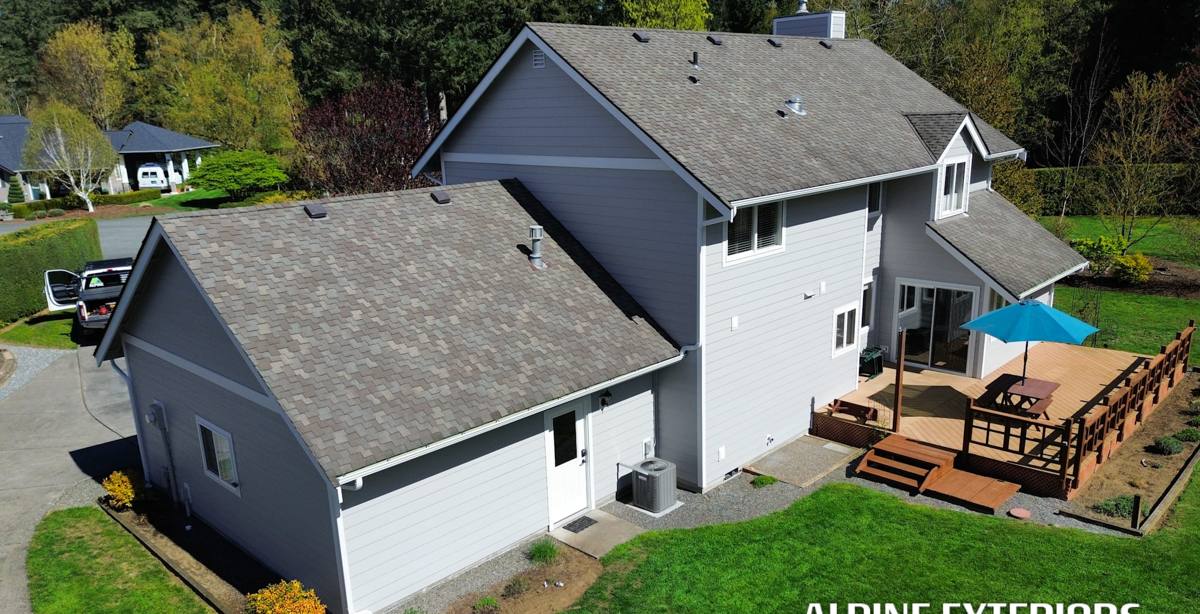
What the Local Climate Actually Does to Siding
Salt Air and Metal Fasteners
Airborne salt accelerates corrosion on anything metal — fasteners, flashing, trim connectors. Siding that relies on exposed or under-protected steel components tends to show rust streaking and weakened attachment points years before an inland install would. This is one of the reasons fastener choice and flashing detail matter as much as the siding panel itself on the island.
Driving Rain and Wall Assemblies
Wind off the water pushes rain sideways into siding laps, corner boards, and window trim instead of letting gravity do the work of shedding it. A wall assembly that isn't built with a proper drainage plane and correctly lapped flashing will eventually let that water find its way behind the siding, where it does the real damage — to sheathing, framing, and insulation, long before anyone sees a stain on the outside.
Moss, Shade, and a Long Wet Season
Skagit County's siding season runs damp for a good chunk of the year, and shaded or north-facing walls on tree-covered lots can stay wet for days after a storm. That's exactly the environment moss and mildew need. Moss doesn't just look bad — its root structure holds moisture against the surface underneath it, which is a slow, steady problem for any siding material that isn't dimensionally stable and properly finished.
Why Fiber Cement Is the Right Material for This Exposure
Fiber cement siding is cement, sand, and cellulose fiber pressed and cured into a dense, stable board. It doesn't absorb water the way wood does, it doesn't degrade in UV and salt exposure the way vinyl can over time, and it holds paint and factory finishes far longer than wood substrates. For a marine-exposed, moss-prone site like Guemes Island, that combination of moisture resistance and dimensional stability is what actually keeps a wall performing year after year — not just looking good in photos on install day.
We install James Hardie fiber cement exclusively, and we're upfront about why: it's the product line we trust to hold up to this specific climate over decades, not just survive the warranty period. Hardie's HZ5 product designation is engineered for wet, freeze-prone climates, and the ColorPlus factory finish is baked on under controlled conditions rather than field-applied — which matters a lot when you're trying to keep a finish intact through repeated wet-dry cycling and salt exposure. We don't install LP SmartSide, vinyl, or other fiber cement brands, and that's a deliberate standard, not a sales position — we'd rather stand behind one system we know cold than spread our warranty knowledge and install experience across several.
What a Correct Installation Involves Here
Water Management Comes First
On a site like Guemes Island, the water-resistive barrier and flashing details matter more than the siding color choice. That means a continuous drainage plane behind the siding, properly lapped house wrap, correctly integrated window and door flashing, and kick-out flashing wherever a roofline meets a wall. Skipping or rushing these details is the single biggest reason siding jobs fail early in wet marine climates — the siding itself can be flawless and the wall will still fail if water gets behind it and can't get back out.
Fastening and Clearance
Fiber cement needs to be fastened per the manufacturer's specification — correct nail or screw type, correct spacing, correct penetration depth into structural framing. Given the salt exposure here, we pay close attention to fastener material to avoid the premature corrosion that shows up faster on the island than it would inland. We also hold proper clearance between the bottom edge of the siding and grade, decks, patios, and roof lines, since tight clearances trap moisture and invite the rot and moss growth that damp, shaded sites are already prone to.
Caulking Philosophy
We use sealant where the manufacturer specifies it and rely on flashing and lapping for water management everywhere else. Caulk is a maintenance item, not a substitute for correct water-shedding detail — a wall that depends on a perfect bead of caulk to stay dry is a wall that's going to leak the day that caulk fails.
Our Process From Estimate to Finished Wall
- On-site assessment. We look at existing siding condition, wall assembly, moisture history (moss buildup, rot at trim, staining), and sun/shade exposure on each elevation.
- Scope and product selection. We walk you through Hardie plank, panel, or shingle options and the HZ5 climate designation, and explain what's driving each recommendation for your specific walls.
- Tear-off and inspection. Removing old siding lets us actually see the sheathing and framing underneath — this is where hidden moisture damage from years of exposure gets caught before it's covered back up.
- Water-resistive barrier and flashing install. This is the step that determines how the wall performs for the next 30 years, and it happens before a single piece of visible siding goes up.
- Siding installation to manufacturer spec. Correct fastening, spacing, lapping, and clearances, elevation by elevation.
- Trim, caulking, and final inspection. We walk the finished job with you before calling it done.
Ferry Access and Scheduling
Guemes Island is reached by ferry from Anacortes, and that changes how a siding project gets scheduled compared to a mainland job. Material deliveries, crew transport, and equipment all have to work around ferry timing, so a contractor who hasn't planned for that can end up with slower project timelines or scattered work days. We factor ferry logistics into scheduling up front so the project moves at a predictable pace instead of stalling out waiting on materials or crew that missed a sailing.
Cost Factors for a Guemes Island Fiber Cement Project
| Factor | Why It Affects Cost |
|---|---|
| Tear-off and disposal | Removing and hauling old siding (and any hidden rot repair) adds labor and disposal costs, and ferry-based material/waste hauling can add modest logistics cost |
| Wall condition underneath | Sheathing or framing repair from long-term moisture exposure is common on shaded, wet-prone elevations and isn't visible until tear-off |
| Siding profile | Lap plank, shingle-style, and panel systems have different material and labor costs; shingle-style takes more install time |
| ColorPlus vs. field paint | Factory-finished ColorPlus costs more upfront but avoids the maintenance and repainting cycle of field-applied finishes |
| Trim and flashing detail | Complex rooflines, multiple window/door penetrations, and corners all add flashing labor that's non-negotiable on this site |
| Access and logistics | Ferry scheduling and site access (driveway grade, staging space) factor into labor time |
Choosing a Contractor Who Already Works Guemes Island
A crew that's worked on Guemes Island before already understands the ferry logistics, has a feel for how exposed each elevation typically is on island lots, and has seen firsthand what happens when water management gets rushed in this climate. That experience shows up in fewer surprises during tear-off, more realistic scheduling, and installation details that are actually matched to the exposure the wall will face — not a generic install that happens to look fine on install day.
When you're vetting a siding contractor for the island, a few things are worth checking regardless of who you hire:
- Are they a certified or factory-trained installer for the specific fiber cement product they're proposing?
- Will they show you the water-resistive barrier and flashing plan before siding goes up, not just the finished product?
- Do they carry proper licensing and insurance for exterior work in Washington state?
- Can they explain fastener spacing and clearance requirements specific to your siding profile, not just quote a price?
- Have they scheduled ferry-dependent projects before, or is this their first island job?
- Does their warranty cover workmanship separately from the manufacturer's material warranty, and is that spelled out in writing?
Living With Fiber Cement Siding on the Island
Fiber cement is low-maintenance compared to wood, but "low-maintenance" doesn't mean "no maintenance," especially in a moss-prone marine climate. A rinse-down once or twice a year to clear salt residue, pollen, and early moss growth on shaded walls goes a long way. Keep gutters clear and functioning so roof runoff isn't sheeting down siding it wasn't designed to handle, and keep an eye on caulked joints around trim and penetrations so small gaps get resealed before they become water paths. None of this is heavy lifting, but on a site with this much moisture exposure, staying ahead of it is what keeps a well-installed fiber cement job looking and performing like new well past the ten-year mark.
If you're weighing a siding replacement or repair on Guemes Island, we're glad to come take a look and give you a straightforward, no-pressure estimate — what your walls actually need, what it'll cost, and why.