 Anacortes Siding
 Why Roofs Wear Differently Along This Coastline
A roof in Oak Harbor doesn't age the same way a roof does forty miles inland. The combination of salt-laden air off the water, long stretches of driving rain, and a moss season that can run eight or nine months out of the year puts a different kind of stress on shingles, flashing, and fasteners than most manufacturers design for. It's not that the materials are bad — it's that the installation details matter more here than they do in drier, calmer climates.
Salt air is corrosive to exposed metal. Nails, flashing, and roof vents that would last decades in a dry climate can start rusting and failing years early if they're not rated for coastal exposure or properly sealed. Driving rain, especially the sideways kind that comes off Puget Sound during fall and winter storms, finds its way into gaps that a calmer climate would never expose. And moss doesn't just look bad — it lifts shingles, holds moisture against the roof deck, and shortens the life of even a well-installed roof if it's left unchecked.
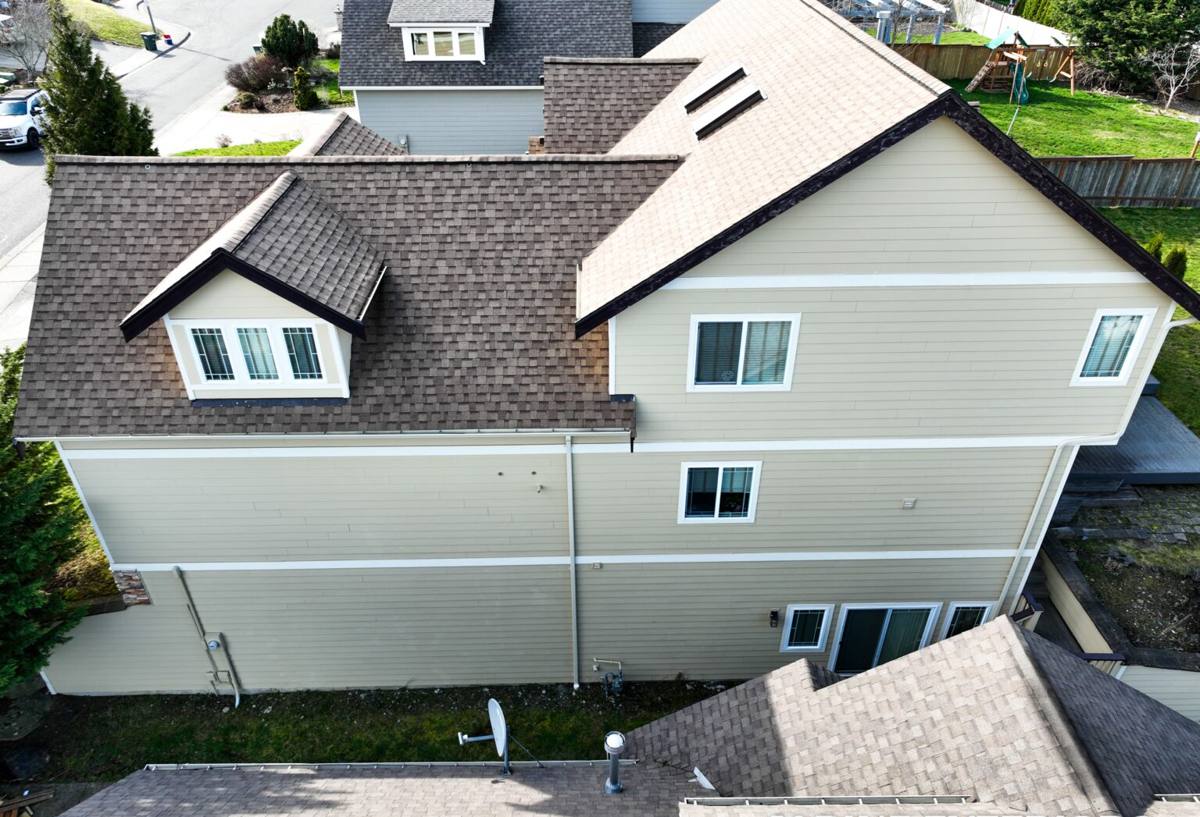
Signs an Oak Harbor Roof Needs Replacing, Not Just Repair
Not every roof problem calls for a full tear-off. But there's a point where patching becomes a losing game — you're spending real money to buy a few more seasons on a roof that's already compromised underneath. Here's how we tell the difference:
Repair is usually still the right call when:
- The issue is isolated to one area — a single damaged section of flashing, a few cracked shingles, a localized leak
- The roof is less than two-thirds through its expected lifespan
- The decking underneath is still solid and dry
Replacement is usually the right call when:
- Shingles are curling, cracking, or losing granules across large sections, not just one spot
- You're seeing moss growth in the mat of the shingle itself, not just on the surface
- There's soft or spongy decking, staining on interior ceilings, or daylight visible through the attic
- The roof has already been patched multiple times in the same areas
Because of the moisture load this area sees, a roof that's borderline often doesn't stay borderline for long. Once water gets past the shingle layer and into the decking, the clock speeds up.
What a Correct Roof Replacement Actually Involves
A roof replacement is more than swapping old shingles for new ones. Done right, it's a full rebuild of the roof's ability to shed water and resist the elements. For a home in Oak Harbor, that means paying close attention to a few things that matter more here than elsewhere:
Tear-off and deck inspection
We remove the old roofing down to the deck rather than layering over it. That's the only way to actually see what's underneath — soft spots, rot, or hidden moisture damage that's common on homes that have taken on years of driving rain. Any damaged decking gets replaced before anything new goes down.
Underlayment built for wet climates
A synthetic or self-adhered underlayment gives the roof a second line of defense if wind-driven rain ever gets under the shingles. In a coastal climate, this layer isn't optional extra protection — it's a core part of the system.
Flashing and fastener selection
Every point where the roof meets a wall, chimney, vent, or skylight is a potential leak path. We use corrosion-resistant flashing and fasteners rated for coastal exposure, and we pay extra attention to sealing these transitions since they're the first places salt air and driving rain will find a weakness.
Ventilation
Proper intake and exhaust ventilation keeps moisture from building up in the attic, which matters year-round in a climate this damp. Poor ventilation shortens shingle life from underneath, which is easy to miss until the roof is already failing.
Choosing a Roofing Material for This Climate
There's no single "best" roofing material — the right choice depends on your budget, your home's style, and how much long-term maintenance you're willing to take on. Here's an honest comparison of the options we install most often on homes in this area:
| Material | Moss & Moisture Resistance | Typical Lifespan | Relative Cost |
|---|---|---|---|
| Architectural asphalt shingle | Good, especially with algae-resistant granules | 25–30 years | $ |
| Standing seam metal | Very good — sheds moss and water fast | 40–50+ years | $$$ |
| Synthetic/composite shingle | Good, low maintenance | 30–40 years | $$ |
| Cedar shake | Requires regular upkeep to resist moss and rot | 20–30 years with maintenance | $$–$$$ |
Architectural asphalt with algae-resistant granules is the most common choice we install here, and for good reason — it balances cost, appearance, and performance well for this climate. Metal roofing sheds moss and moisture better than anything else on this list, which is why we see more homeowners asking about it, but it's a bigger upfront investment. Cedar shake can look great, but we're upfront with clients that it needs consistent maintenance to hold up against the moss pressure in this region — it's a higher-commitment product, not a low-maintenance one, and we frame that as a trade-off to plan for rather than a reason to rule it out.
Moss, Algae, and What Actually Keeps a Roof Clean
Moss is close to unavoidable in this part of Washington, but a well-installed roof handles it a lot better than one that wasn't set up to. A few things make a real difference:
- Zinc or copper strips installed near the ridge let rain carry trace metal down the roof, which slows moss regrowth over time
- Keeping tree limbs trimmed back reduces both shade and debris buildup, both of which feed moss
- Clear gutters matter more here than in drier climates — a clogged gutter backs water up under the shingle edge during heavy rain
- Gentle, low-pressure cleaning (never pressure-washing directly on shingles) removes moss without stripping granules
None of this replaces a properly installed roof, but paired with one, it can meaningfully extend the life of the investment.
Our Process, Start to Finish
- On-site inspection: We walk the roof and the attic, not just look from the ground, and take note of decking condition, ventilation, and existing flashing.
- Written estimate: You get a clear breakdown of materials, scope, and cost — no vague allowances that turn into surprise charges.
- Scheduling around weather: Roof replacements in this region get planned with rain windows in mind. We don't leave a roof open to the weather overnight if we can avoid it.
- Tear-off and deck repair: Old roofing comes off, the deck gets inspected, and any damaged sections are replaced before we move forward.
- Underlayment, flashing, and new roofing installed: Each layer goes down in the order and manner that actually protects the home, not the fastest way to get it done.
- Cleanup and final walkthrough: We use magnetic sweeps for stray nails and walk the finished roof with you before calling the job done.
What Drives the Cost of a Roof Replacement
Every roof is priced based on its own specifics, but the main factors that move the number are consistent:
| Factor | Why It Matters |
|---|---|
| Roof size and pitch | Steeper roofs take longer and require more safety setup |
| Number of layers to remove | Homes with existing layered roofing take more labor to strip |
| Deck condition | Rotted or soft decking found during tear-off adds material and labor |
| Material choice | Asphalt, synthetic, and metal carry different material and install costs |
| Roof complexity | Valleys, dormers, skylights, and chimneys all add flashing work |
We don't quote a job until we've actually seen the roof and, where possible, the attic. Estimating from a satellite photo alone misses the details that actually drive cost — and surprises during the job are exactly what a thorough inspection up front is meant to prevent.
Why It Matters That We Already Work in Oak Harbor
A crew that regularly works this stretch of coastline isn't guessing about how to handle it. We know to schedule around the rain patterns instead of hoping a dry window holds, we know which flashing and fastener specs actually hold up against salt air over time, and we know that a roof here needs to be sealed tight the first time — this isn't a climate that's forgiving of shortcuts. Being based out of Anacortes and working across Skagit County and the surrounding coastal communities means we're not learning the local conditions on your roof; we're applying what we've already seen hold up and what we've seen fail.
Questions to Ask Before You Hire a Roofer Here
- Do you tear off the old roof completely, or do you ever install over existing layers?
- What underlayment and flashing do you use, and are they rated for coastal, high-moisture conditions?
- Will you inspect the attic and decking, not just the roof surface, before giving a final price?
- What's your plan if rain moves in mid-job?
- Is the warranty from the manufacturer, from you as the installer, or both — and what does each actually cover?
- Can you walk me through the full scope in writing before work starts?
A contractor who answers these clearly and specifically, without vague reassurances, is usually one who's done the work enough times to know exactly what it takes.
If your roof is showing its age, or you just want an honest read on where it stands, we're happy to come take a look. The estimate is free, there's no pressure attached to it, and you'll walk away with a clear picture of your options — just fill out the form below to get started.