 Anacortes Siding
 Board & Batten Siding for Oak Harbor Homes
Board and batten has become one of the most requested looks for homes in and around Oak Harbor, and it's easy to see why. The vertical lines read as clean and modern on newer builds, but the same profile also works on older farmhouse-style homes that were originally sided with real board and batten decades ago. What most homeowners don't realize until they start researching is that board and batten is not just a style choice — it's a different water-management system than lap siding, and in a marine climate like ours, that difference matters more than the aesthetics do.
We're an Anacortes-based crew, and Oak Harbor is inside our regular service area, not a stretch job we drive an hour for once a year. That matters for a siding project more than people expect, and we'll get into why further down.
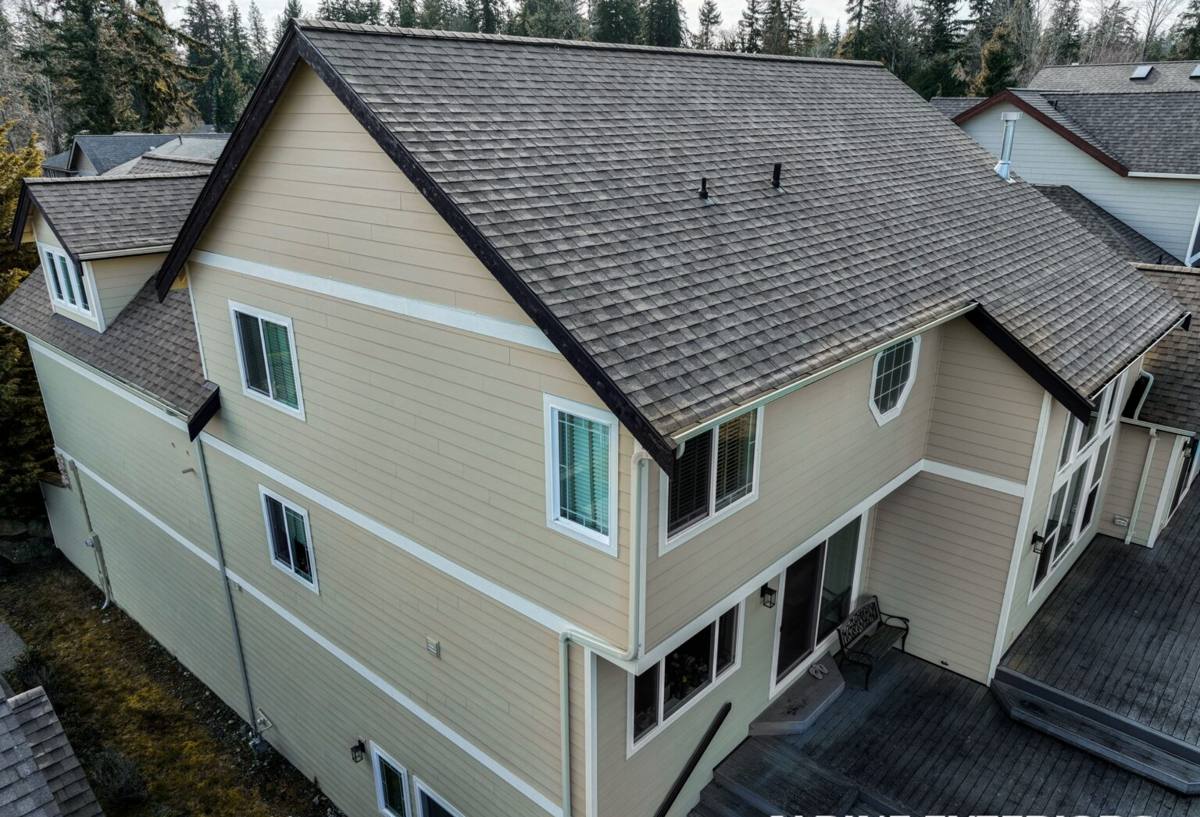
Why Board & Batten Behaves Differently Near the Water
Board and batten siding relies on wide vertical panels with narrower strips (battens) covering the seams between them. Done right, it sheds water cleanly down the face of the panel. Done wrong — or done with the wrong material — it traps moisture right at those seams, which is exactly where you don't want standing water on a home that sits in a marine environment.
Homes around Oak Harbor deal with a specific combination of conditions:
- Salt air: airborne salt accelerates corrosion on fasteners and hardware, and it degrades paint films faster than it does further inland.
- Driving rain: wind-driven rain off the water doesn't just fall straight down — it hits siding at an angle, which pushes water into laps, seams, and batten joints that vertical siding is more exposed to than horizontal lap siding.
- Long moss season: shaded north- and west-facing walls stay damp for extended stretches, which is exactly where moss and algae take hold on a siding product that can absorb moisture.
None of that means board and batten is a bad choice for this area. It means the material and the installation details have to account for those conditions, or the siding will show problems years before it should.
What Happens When It's Installed Wrong
The most common failure we see on vertical siding in this climate isn't the panel itself — it's what's underneath and behind it. Batten strips nailed directly through both layers without accounting for expansion, seams that weren't flashed or caulked correctly, and house wrap that wasn't lapped correctly behind the battens all lead to the same result: moisture gets in, has nowhere to go, and starts working on the wall assembly from the inside. By the time it shows on the surface — staining, soft spots, paint failure at the seams — the damage is usually already behind the siding, not just on it.
Why We Only Install James Hardie for This Application
We install James Hardie fiber cement exclusively — no vinyl, no LP SmartSide, no primed wood, no other fiber cement brands. For board and batten specifically, that decision matters even more than it does for standard lap siding, because the batten application is less forgiving of a material's weaknesses.
| Factor | Why It Matters for Board & Batten in a Marine Climate |
|---|---|
| Non-combustible composition | Fiber cement doesn't feed a fire the way wood-based products can — a real consideration with dry brush and wildfire smoke seasons even in the Pacific Northwest. |
| Dimensional stability | Hardie panels don't swell and shrink with moisture the way engineered wood or real wood battens do, so seams stay tight instead of opening up gaps over a few seasons. |
| Factory-applied ColorPlus finish | The finish is baked on at the factory rather than field-applied, which gives far more consistent coverage on the cut edges and batten strips that get the most weather exposure. |
| Moisture behavior | Fiber cement doesn't absorb and hold water the way wood-based siding can, which matters directly on a wall that's shaded and damp much of the year. |
| Transferable warranty | A real manufacturer warranty that follows the house, not just the original owner, backed by a company that's been making the product for decades. |
We're honest that other products have upsides — vinyl and engineered wood are both less expensive upfront, and some homeowners like that. But we've made a professional decision to stand behind one system we can install correctly and warranty with confidence, rather than juggling multiple products with different failure modes and different fixes.
What Correct Installation Looks Like
Board and batten done right isn't a different skill than lap siding — it's the same fundamentals applied to a less forgiving profile. On every board and batten job we do, that includes:
- A properly lapped weather-resistive barrier behind the panels, with all seams sealed before the first board goes up.
- Correct fastening pattern for the panel width and batten spacing, following Hardie's engineered fastening schedule rather than a generic nailing pattern.
- Rainscreen or furring where the wall assembly calls for it, giving water a path to drain and the wall a chance to dry instead of trapping moisture flat against the sheathing.
- Sealed and flashed penetrations at every window, vent, and fixture — the places water actually finds its way in.
- Batten spacing and fastening that accounts for expansion so seams don't telegraph or crack open over time.
Skip any one of these and the siding can still look right on install day. The problems show up two, five, or ten years later — which is exactly why installation quality matters more than most homeowners are told when they're shopping on price alone.
Our Process for an Oak Harbor Job
1. Walkthrough and Assessment
We look at the existing wall assembly, not just the old siding. That means checking for trapped moisture, sheathing condition, and how the home is currently handling water at trim, windows, and roof lines. Board and batten replacement is a good opportunity to fix any of those issues before they get sealed behind new siding.
2. Straightforward Estimate
You get a written estimate that spells out material, labor, and any wall-prep work needed — no vague allowances that turn into surprise change orders once the old siding comes off.
3. Tear-Off and Prep
Old siding comes off, the wall gets inspected and repaired as needed, and the weather-resistive barrier goes on correctly — lapped, sealed, and ready for the new panels.
4. Installation to Manufacturer Spec
Panels and battens go up following Hardie's fastening and spacing requirements for our climate zone, with attention to every seam, corner, and penetration.
5. Final Walkthrough
We walk the job with you before we call it done, so you know exactly what was done and why.
Why a Local Crew Matters for This Job Specifically
Oak Harbor sits close enough to Anacortes that we work in the area regularly, not as a one-off. That matters in a few concrete ways:
- We already know which wall orientations in this area tend to hold moisture and moss longest, and we plan drainage and ventilation details accordingly instead of guessing.
- If a warranty question or a minor issue comes up after the job, we're not driving in from three counties away to look at it.
- We're not learning Skagit County and North Puget Sound weather patterns on your house — we've already seen how salt air and driving rain affect siding on homes like yours.
Cost Factors to Expect
Every board and batten job prices out differently depending on the home, but the main variables are consistent:
| Factor | Why It Affects Cost |
|---|---|
| Wall condition | Hidden moisture damage found during tear-off means additional sheathing or framing repair before new siding goes on. |
| Home size and wall complexity | More corners, gables, and dormers mean more cutting, more seams, and more labor hours. |
| Panel size and batten spacing | Wider reveals use less material but require more precise layout; narrower spacing uses more batten material. |
| Trim and accessory work | Window and door trim, corner boards, and fascia detailing add scope beyond the flat wall area. |
| Access | Multi-story sections, tight lot lines, or landscaping that limits equipment access can add labor time. |
Signs It's Time to Replace, Not Patch
- Soft or spongy spots when you press on the siding, especially near the ground or under windows
- Persistent moss or algae staining that comes back within a season of cleaning
- Visible gaps opening at batten seams or panel joints
- Paint or finish failing unevenly, especially on shaded walls
- Interior signs like musty smells or staining on walls that back up to exterior siding
If you're seeing any of these, it's worth having someone look at the wall assembly, not just the surface — patching over a moisture problem usually just delays a bigger repair.
If you're considering board and batten siding for a home in Oak Harbor, we're happy to take a look and give you a straightforward, no-pressure estimate — just fill out the form below.