 Anacortes Siding
 Why Composite Decking Fits Old Town Anacortes
Old Town Anacortes sits close to the water, with the kind of exposure that wears out a deck faster than it wears out most of the house. Salt-laden air off the surrounding channels, long stretches of driving rain, and a moss season that can run from fall through spring all work against wood decking in particular. Composite decking was developed largely to solve this exact problem: a board that doesn't need annual staining, doesn't cup or splinter as it dries and re-wets, and holds up to years of damp shade without rotting from the inside out.
That said, "composite" is not one product. There's a wide range of quality, core construction, and capping technology on the market, and the difference matters more here than it would in a dry inland climate. A board that's rated fine for general use can still underperform on a shaded, water-facing lot in Skagit County. Part of our job is steering homeowners toward the products and construction details that actually hold up in this specific environment, not just whatever is cheapest at the yard.
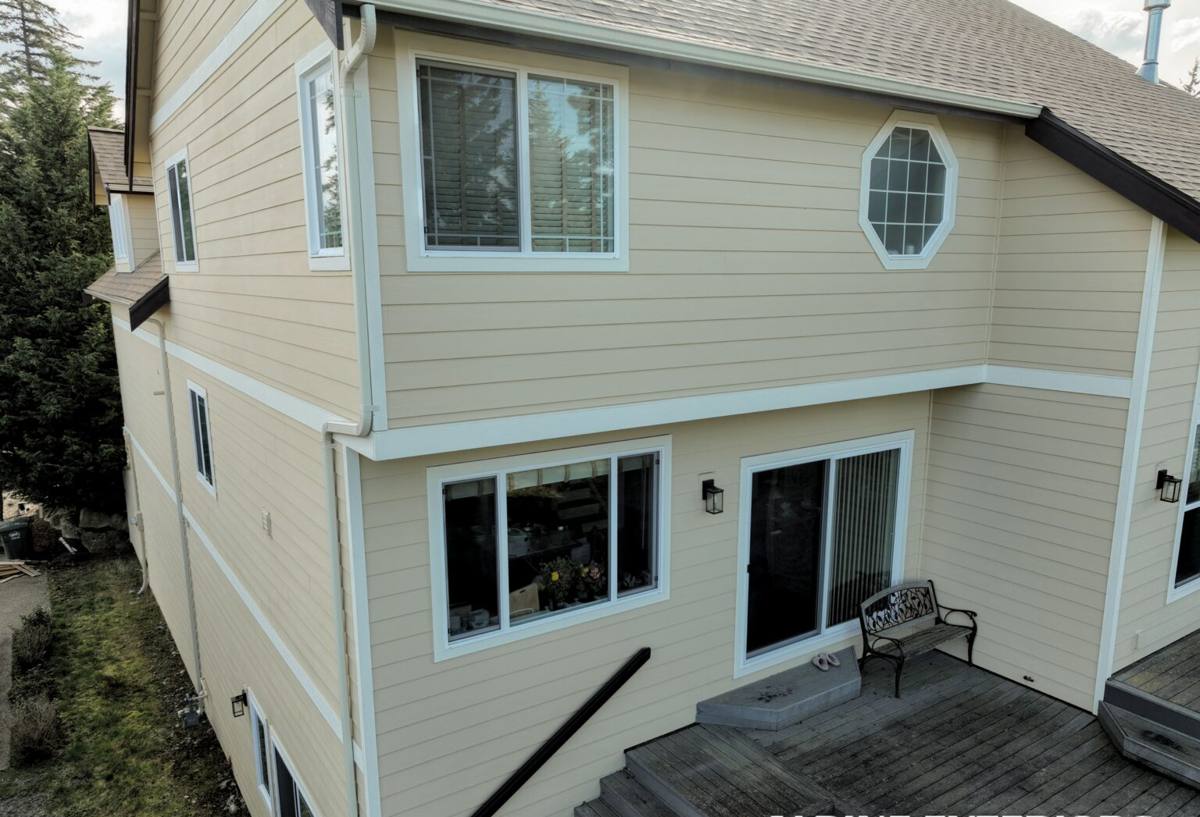
What Salt Air, Rain, and Moss Actually Do to a Deck
Salt air and hardware
Airborne salt accelerates corrosion on anything metal — fasteners, joist hangers, railing brackets, and structural screws. On an older deck we tear out, it's common to find rusted-through hangers or fasteners that have lost most of their holding strength long before the decking itself failed. Composite boards don't corrode, but the metal holding the structure together underneath them absolutely can, so material selection below the deck surface matters as much as the decking on top.
Driving rain and water management
Wind-driven rain off the water doesn't just fall straight down — it gets pushed sideways into ledger boards, under rail posts, and into any gap where flashing was skipped. Most deck failures we see aren't the decking boards themselves; they're rot in the ledger board or rim joist where the deck attaches to the house, caused by water that was never properly flashed or diverted away from the structure.
Moss and organic growth
A long, wet, shaded moss season means algae and moss get a real foothold on any horizontal surface that stays damp — and decking is about as horizontal as it gets. Moss holds moisture against the board surface, makes the deck slick and unsafe underfoot, and on lower-quality composite can work into surface texture over time. Airflow underneath the deck and a board with genuine mold/mildew resistance in its cap layer both make a measurable difference here.
What a Correct Composite Deck Install Involves
Composite decking is often sold as low-maintenance, and the boards themselves are — but a deck is a system, and every part of that system has to be right for the low-maintenance promise to hold true.
- Ledger flashing where the deck meets the house — this is the single most common source of hidden rot and the detail most often shortcut on older or DIY-built decks.
- Joist tape or a moisture barrier over the framing lumber, protecting the wood substructure from the water that inevitably gets between and through composite boards.
- Proper under-deck ventilation so air can move and moisture doesn't sit trapped against the framing — especially important on lower decks close to grade.
- Hidden fastener systems or properly spaced screws, set to the manufacturer's gap tolerances so boards can expand and contract with temperature and moisture without buckling.
- Corrosion-resistant hardware throughout — hangers, screws, and brackets rated for coastal or treated-lumber contact, not standard interior-grade fasteners.
- Correct fascia and picture-frame trim detailing so cut board ends (which are more absorbent than the capped face) aren't left exposed to standing water.
Skip any one of these and you can end up with a deck surface that looks fine for years while the structure underneath quietly fails — which is a common story on older homes in this area that were decked or re-decked without full attention to the substructure.
Comparing Decking Materials for This Climate
Homeowners usually compare on price first, but in a marine climate the maintenance burden and moisture behavior over the life of the deck matter just as much. Here's how the main options stack up for a property like yours:
| Material | Upfront Cost | Maintenance | Moisture/Rot Behavior | Moss & Algae Resistance | Typical Lifespan |
|---|---|---|---|---|---|
| Pressure-treated wood | Lowest | Annual cleaning, periodic stain/seal | Prone to cupping, splintering, and rot at fastener points over time | Low — porous surface holds moisture and organic growth | 10–15 years before major repair or replacement |
| Cedar | Moderate | Regular sealing to hold color and resist moisture | Better than treated pine but still absorbs water and grays without upkeep | Low to moderate | 15–20 years with consistent maintenance |
| Capped composite | Higher | Occasional soap-and-water wash | Core resists rot; quality varies by brand and cap thickness | Good, especially on higher-tier lines with mold-resistant capping | 25–30+ years, often with a manufacturer warranty |
| PVC/vinyl decking | Highest | Minimal — wipe down as needed | Fully synthetic, essentially immune to rot | Very good | 25–30+ years |
For most Old Town Anacortes homes, capped composite is the sweet spot — meaningfully better moisture and moss performance than wood without the premium price ceiling of full PVC systems. We'll talk through the real trade-offs for your specific deck rather than defaulting to the most expensive option.
Composite tiers: why not all composite is equal
Entry-level composite boards sometimes use a thinner cap layer or a core that absorbs more moisture at cut ends and fastener holes. In a climate this wet, that shows up as swelling, mold in shaded areas, or fading faster than advertised. Mid- and upper-tier lines generally have a fuller cap wrap (including the underside), better fade warranties, and cleaner color-fastness in constant damp shade — which is common on tree-covered or north-facing lots in this neighborhood. We'll point out where spending a bit more on the board itself saves real maintenance headaches later.
Our Process
1. On-site assessment
We look at the existing deck or ground conditions, check for rot at the ledger and any existing framing, assess drainage and sun/shade exposure, and talk through how you actually use the space.
2. Demo and substructure evaluation
If we're replacing an existing deck, removal lets us see the framing underneath — this is where hidden rot or corroded hardware from years of salt exposure usually turns up, and we'll flag it before quoting final framing repairs.
3. Framing and flashing
Any compromised framing gets replaced, ledger flashing is installed or corrected, and joist tape goes down before a single composite board is laid.
4. Composite installation
Boards go down per manufacturer spec — correct gapping, fastener pattern, and trim detailing — so the warranty is actually valid if you ever need it.
5. Final walkthrough
We walk the finished deck with you, point out any maintenance basics specific to the product installed, and make sure railings, stairs, and fasteners are solid.
Living With Composite Decking Through a Long Moss Season
Composite decking cuts maintenance dramatically compared to wood, but "low-maintenance" isn't "no-maintenance" — especially with the amount of moisture this area sees for months at a time.
- Sweep off leaves, needles, and standing debris regularly through fall and winter so moisture doesn't sit against the board surface.
- Wash the deck surface with soap and water (or a manufacturer-approved deck cleaner) once or twice a year to keep moss and algae from getting a foothold in board texture.
- Keep gutters and downspouts clear so roof runoff isn't dumping extra water directly onto or near the deck.
- Check that under-deck ventilation gaps and skirting vents stay clear of soil buildup or dense plantings that block airflow.
- Inspect railing posts and stair connections once a year for movement — hardware is the part most likely to need attention, even when the boards themselves look fine.
- Avoid pressure-washing at close range or high PSI directly into board grooves, which can force water where it shouldn't go and damage the cap surface.
Why a Crew That Already Works Old Town Anacortes Matters
A deck built the same way everywhere doesn't account for what's actually different about building on Fidalgo Island. Lot grading near the water, wind exposure patterns off the channel, older homes with framing and setbacks that don't always match modern code minimums, and permitting through the City of Anacortes are all things that come up regularly on jobs in this area. A crew that's done this work locally isn't guessing at flashing details or hardware specs for a "generic" climate — those decisions are made based on what actually holds up a few blocks from saltwater, not what holds up in a catalog photo.
Local experience also means fewer surprises mid-project. We know what kind of hidden rot tends to show up when we open an older Old Town deck, what drainage issues are common on this terrain, and how to sequence work around this area's wet-season weather windows so a project doesn't stall out.
Cost Factors to Expect
Every deck is different, but the line items that most affect price are consistent. This isn't a quote — it's a starting point for the conversation.
| Factor | Why It Matters |
|---|---|
| Deck size and shape | More square footage and more cuts (angles, curves, multi-level) increase both material and labor |
| Substructure condition | Rot or corroded hardware found during demo adds framing repair costs before decking goes down |
| Composite tier chosen | Entry-level to premium capped composite can vary significantly in per-square-foot material cost |
| Railing system | Composite, cable, or metal railing systems price very differently from basic wood or composite balusters |
| Height and stairs | Elevated decks and stair runs add framing complexity and code requirements (guardrails, footings) |
| Site access | Tight lots or waterfront-adjacent access can affect equipment use and material staging |
Getting Started
If your current deck is showing gray, spongy, or slick spots, or you're planning a new deck and want it built to actually hold up to this area's salt air and rain, we're happy to take a look. We'll give you a straightforward, no-pressure estimate based on your specific deck, lot, and how you plan to use the space — just fill out the form below to get started.