 Anacortes Siding
 Board & Batten Siding in Mount Vernon's Skagit Valley Climate
Board and batten is one of the most requested siding profiles in Skagit County, and for good reason. The vertical lines read as clean and modern on newer builds, but the same profile also suits farmhouses, craftsman homes, and the barn-style architecture that's common throughout the valley. For homeowners in Mount Vernon, though, the look is only half the decision. The other half is whether the siding underneath that look can actually hold up to what this part of Western Washington throws at a house year-round.
Skagit County sits in a marine-influenced climate corridor. Even inland from the coast, homes in Mount Vernon get the same driving rain events that roll off the Sound, the same damp, low-sun stretches that keep exterior surfaces wet for days at a time, and the same long moss season that starts creeping across north-facing walls and trim by late fall and doesn't fully let go until summer. Add in the salt-laden air that moves up the valley from Anacortes and the Sound on windy days, and you've got an environment that's genuinely tough on siding materials that weren't built with moisture management as the top priority.
Board and batten siding, done right, handles all of this well. Done wrong — with the wrong material, the wrong drainage plane, or battens fastened straight to the wall with no gap behind them — it becomes one of the faster-failing siding styles in this climate. The batten seams create more joints, more fastener penetrations, and more places for water to find its way behind the cladding than a standard lap profile. That's not a reason to avoid the look. It's a reason to be particular about how it's built.
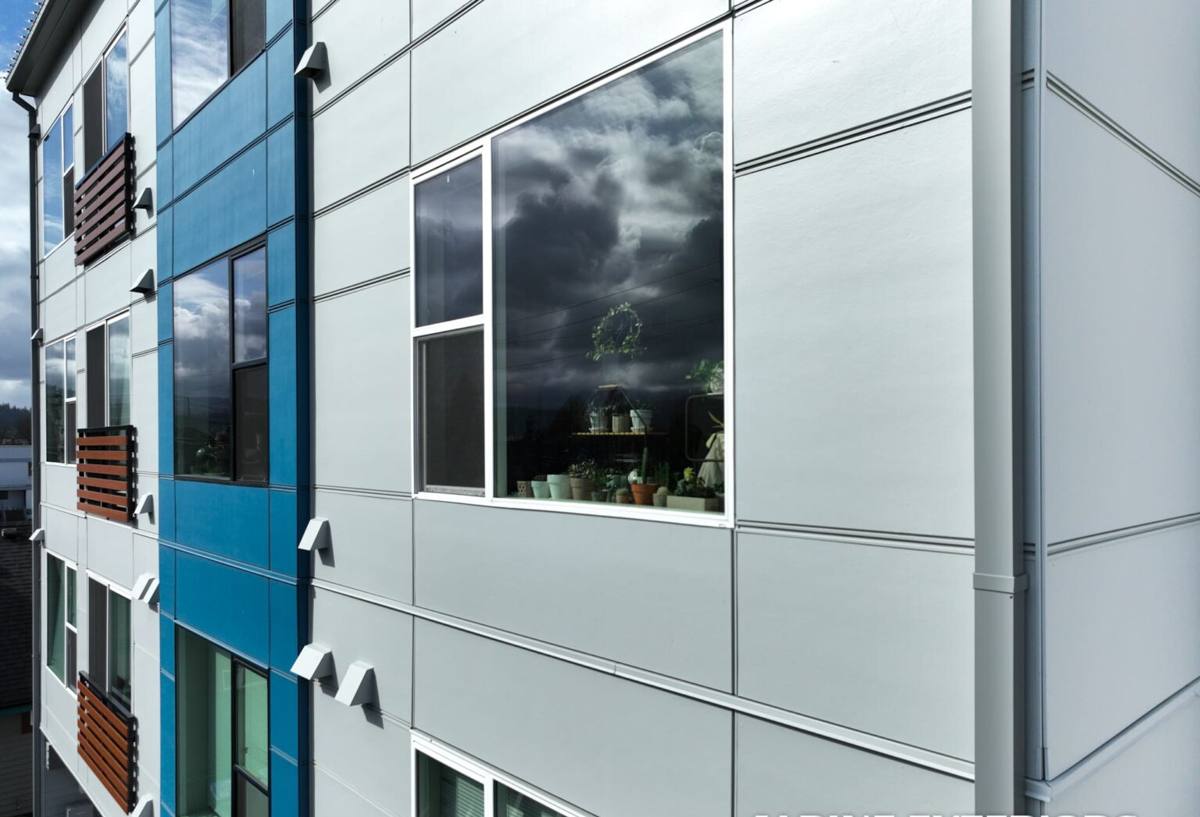
What Correct Board & Batten Construction Requires
Drainage Plane and Rainscreen Gap
The single biggest factor in whether board and batten siding lasts in Skagit County is what happens behind the panel, not what you see from the street. A correctly installed system starts with a continuous water-resistive barrier over the sheathing, properly lapped and taped at every seam, with flashing integrated at every window, door, and horizontal transition. Over that barrier, the panels get installed with a drainage gap — either furring strips or a manufactured rainscreen product — so that any water that does get past the outer surface has somewhere to go and can dry out instead of sitting against the wall assembly.
Skip the rainscreen gap and you're relying entirely on the face of the siding to keep every drop of water out, permanently, in a climate that doesn't give a wall assembly much of a break. That's an unreasonable ask of any material, no matter how good it is.
Fastening and Batten Layout
Batten spacing has to match the panel width and framing layout underneath, not just look even from the sidewalk. Fasteners need to hit solid framing or blocking, be set at the manufacturer's specified edge distance, and be corrosion-resistant given the salt air moving through this part of the county. Battens that are only glued or face-nailed through the panel without proper backing tend to work loose over a few Pacific Northwest winters of freeze-thaw and wind-driven rain.
Why We Only Install James Hardie for This Look
Board and batten can be built from several different materials, and we get asked about most of them. Our answer is the same one we give on every job in Mount Vernon: we install James Hardie fiber cement, and nothing else, because it's the only option we've found that consistently holds up to this climate without turning into a maintenance project a few years down the road.
The HardiePanel Vertical System
For board and batten, we use HardiePanel vertical siding — a fiber cement panel installed with vertical battens over the seams to create the traditional look — engineered specifically for Pacific Northwest moisture conditions under Hardie's HZ5 climate designation. Fiber cement doesn't absorb water into its core the way wood-based products can, it doesn't provide the same organic surface that moss and mildew latch onto as readily, and it's non-combustible, which matters more every wildfire season even on the wet side of the state.
ColorPlus Finish and Color Options
We install panels with Hardie's ColorPlus factory finish whenever the homeowner's design allows for it. It's baked on in a controlled factory environment rather than sprayed on-site, which gives more even coverage and a finish that holds up longer against the UV and moisture cycling that breaks down field-applied paint over time in this climate. For homeowners who want a specific custom color, primed panels with quality field paint are still an option — we'll walk through both during the estimate.
Board & Batten Material Comparison
| Material | Moisture Behavior in Skagit County | Maintenance Over Time |
|---|---|---|
| James Hardie fiber cement | Does not absorb moisture into the core; resists moss and rot with proper drainage detailing | Occasional wash; ColorPlus finish holds color for years |
| Primed spruce / cedar boards | Wood substrate absorbs moisture; prone to cupping and rot at battens and ground contact | Repainting and caulk touch-up on a recurring cycle |
| Engineered wood (LP-style) | Better than raw wood but still wood-based; edge swelling is a known risk if the seal is compromised | Periodic inspection of seams and edges |
| Vinyl board and batten look | Doesn't rot, but seams and battens can flex, warp in sun, and trap moisture behind panels | Low, but limited repair options if damaged or faded |
We're not going to tell you cedar looks bad or vinyl is junk — plenty of homes wear both. Our position is simpler: we've standardized on the one material that lets us give a strong transferable warranty and stand behind the installation for the long haul in this specific climate, and that's fiber cement.
Signs Your Current Siding Is Losing the Fight with Skagit County Weather
If you're not sure whether it's time to replace your board and batten siding, a walk around the exterior on a dry day will usually tell you. Watch for:
- Persistent moss or black streaking on north- and west-facing walls that comes back within weeks of cleaning
- Soft or spongy spots when you press on boards or battens near the bottom of the wall
- Visible gaps opening up between battens and panels, or battens that have started to bow away from the wall
- Paint that's peeling or bubbling in sheets rather than just fading evenly
- Warping, cupping, or delamination at panel edges and seams
- A musty smell near exterior walls inside the home, which can point to moisture already working its way through
Any one of these on its own might just need a repair. Several of them together, especially on a home that's more than 15-20 years old, usually means the underlying material or the original installation is the real problem, not just the surface.
Our Process for a Mount Vernon Board & Batten Job
- On-site assessment. We look at the existing siding, sheathing condition, and any trouble spots — trim, window flashing, ground clearance — before we ever talk product.
- Tear-off and sheathing check. Old siding comes off and we inspect the sheathing underneath for rot or damage that needs to be addressed before anything new goes up.
- Water-resistive barrier and flashing. A continuous barrier goes on with proper laps and taped seams, and flashing gets integrated at every penetration and horizontal transition.
- Rainscreen and panel installation. Panels go up over a drainage gap, fastened to code with corrosion-resistant fasteners, followed by battens set to the correct layout.
- Trim, caulking, and finish work. Corners, trim boards, and any field-painted surfaces get finished and inspected before we consider the job done.
- Final walkthrough and cleanup. We walk the job with the homeowner, and the site gets cleared of debris and old material.
What Drives the Cost of a Board & Batten Project
| Factor | Why It Matters |
|---|---|
| Home size and wall area | More square footage means more material, labor, and fastening time |
| Tear-off complexity | Removing multiple layers of old siding or dealing with rot takes longer than a clean tear-off |
| Trim and architectural detail | Gables, dormers, and mixed-material trim add cutting and fitting time |
| Story height and access | Two-story walls and tight lot lines need more scaffolding or lift time |
| Finish choice | Factory ColorPlus finish versus primed panels with field paint changes both material and labor cost |
We don't publish flat prices because these variables genuinely swing the number from house to house — but we'll walk your specific home and give you real figures before any work starts.
Why Hiring a Crew That Already Works Mount Vernon Matters
Skagit County's building departments, wind and moisture conditions, and typical wall assemblies aren't identical from town to town, and a crew that's already done work in Mount Vernon isn't guessing at how a wall here needs to be detailed. We know what the moss and rain cycle here does to a poorly ventilated wall assembly, and we build every board and batten job assuming this climate is going to test it — because it will, every single winter. That's a different starting point than a crew that installs siding somewhere dry and treats every coastal Washington job the same way.
It also means we're a known quantity locally rather than a company that shows up for one job and disappears. If a warranty question comes up five years from now, we're still working in this county.
If you're weighing board and batten for a home in Mount Vernon, we're happy to take a look and give you a straight answer on what your walls actually need — no pressure, no hard sell. Use the form below to request a free estimate.