 Anacortes Siding
 The Oak Harbor Roofing Climate Problem
A roof in Oak Harbor works harder than a roof almost anywhere inland. The home sits close to Puget Sound and the waters around Whidbey Island, which means salt-laden air moving across every shingle, nail, and flashing detail nearly year-round. Add the wind-driven rain that comes off the Strait during fall and winter storms, and the long, wet, low-sun stretch that lets moss and moisture-loving growth take hold on north-facing slopes, and you have three separate stresses working on the same roof at the same time. None of them are dramatic on their own. Together, over ten or fifteen years, they're what turns a roof that looked fine into one that's leaking at the valleys and rotting at the eaves.
Salt Air and Metal Fasteners
Salt in the air accelerates corrosion on anything metal — nails, flashing, drip edge, valley metal, even the fastener heads holding shingles down. A roof built with standard fasteners in a coastal zone can show rust streaks and loosened fasteners well before the shingles themselves are worn out. This is a materials and hardware decision, not a shingle-brand decision, and it's one of the first things we correct when we replace a roof out here.
Driving Rain and Wind-Driven Uplift
Rain that falls straight down is easy for a roof to shed. Rain that's being pushed sideways by wind coming off the water finds every gap in a lapped shingle, every under-sized nail pattern, and every place where flashing was cut short to save time. Oak Harbor's exposure means we install with wider ice-and-water membrane coverage at eaves and valleys and tighter fastening patterns than a builder-grade job in a sheltered inland neighborhood would use.
The Long Moss Season
Skagit County's wet season runs long, and shaded, north-facing roof slopes stay damp for months at a stretch. Moss doesn't just sit on top of shingles looking bad — its root structure lifts shingle edges and holds water against the roof deck, which is exactly the condition that leads to soft plywood and slow leaks. A new roof installed correctly won't eliminate moss forever, but the right materials, ventilation, and edge details buy years of extra time before it becomes a problem again.
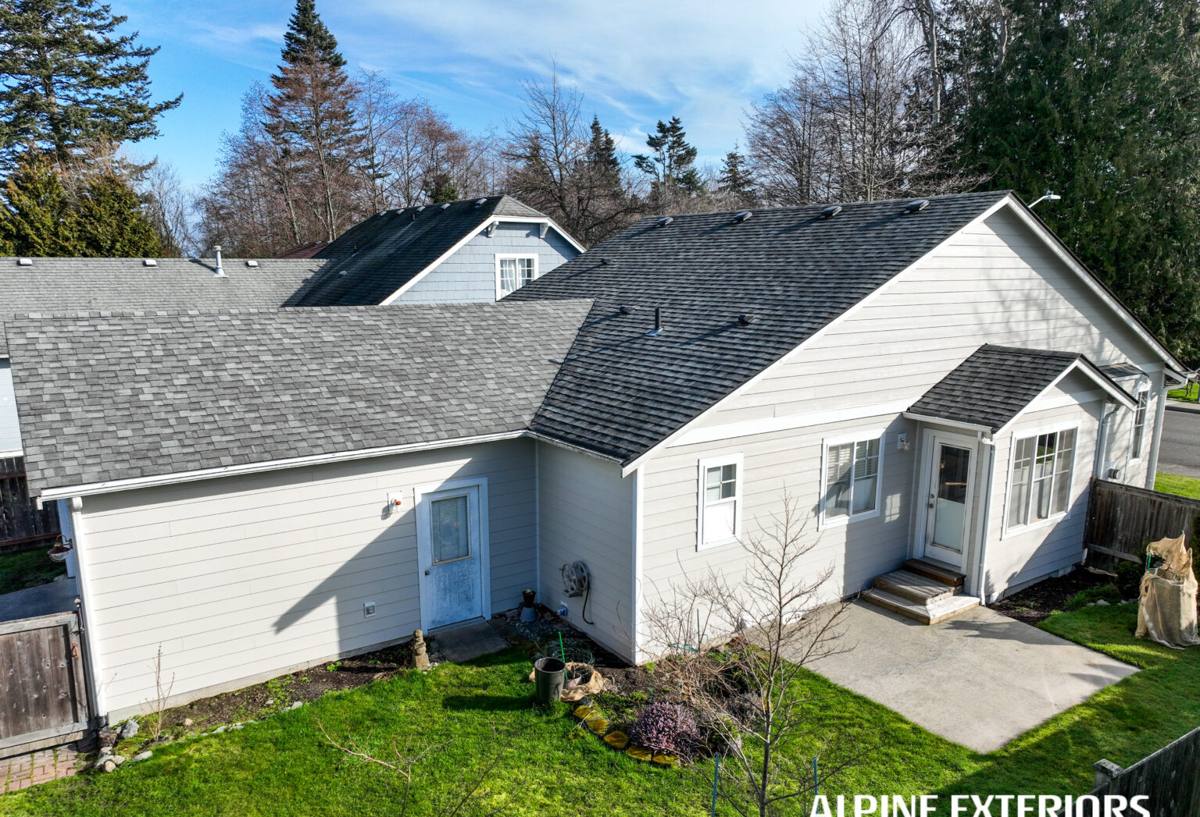
Signs Your Oak Harbor Roof Needs Full Replacement
Not every roof problem calls for a full tear-off. But in this climate, certain signs mean patching is throwing money at a roof that's already lost the fight against moisture. Before we recommend a full replacement, we look for:
- Shingles that are cupping, curling, or losing granules in visible patches, especially on the sides that face the water or the prevailing weather
- Soft spots or sagging in the roof deck when walked, which usually means water has already reached the plywood
- Moss or moisture-dark streaking that comes back within a season or two of being cleaned off
- Daylight visible through the attic roof boards, or damp insulation below the deck
- Flashing around chimneys, skylights, or vent pipes that's rusted, lifted, or was never properly stepped into the roofing layers
- A roof that's approaching or past the manufacturer's expected service life for this climate, which tends to run shorter here than the national average quoted on the shingle wrapper
- Interior ceiling stains, especially ones that appear after wind-driven storms rather than steady rain
If a roof only shows one or two of these and the deck underneath is still sound, a repair may be the honest answer. We'll tell you that plainly — a full replacement is a bigger job and we don't sell one where it isn't needed.
Roofing Materials: What Holds Up Near Salt Water and Moss
There's no single "best" roofing material for every home — it depends on the roof's pitch, the budget, and how much the house is exposed to wind and salt air. Here's how the common options actually perform in Oak Harbor's specific conditions:
| Material | Salt air / corrosion | Moss resistance | Wind-driven rain performance | Maintenance |
|---|---|---|---|---|
| Architectural asphalt shingle | Good, with corrosion-resistant fasteners and flashing | Moderate — benefits from a zinc or copper strip at the ridge | Good when installed with proper nailing pattern and starter courses | Low; periodic moss treatment on shaded slopes |
| Standing seam metal | Very good with marine-grade coatings and fasteners | Very good — smooth surface sheds debris and dries fast | Excellent; few horizontal laps for water to find | Very low |
| Cedar shake | Fair; needs regular treatment near salt air | Poor without diligent upkeep — organic material holds moisture | Fair; more seams and reliance on proper spacing | High; the trade-off is a maintenance schedule, not a defect |
| Synthetic composite shingle | Good; non-organic and doesn't corrode | Good; sheds moisture like asphalt but resists rot | Good with proper installation | Low |
For most Oak Harbor homes, a well-installed architectural asphalt shingle with upgraded coastal-grade fasteners and flashing gives the best balance of upfront cost and long-term performance. Standing seam metal is a strong option for homes with heavy tree cover or steep exposure to the water, where its smooth, seamless surface really pays off. We don't push cedar shake in this climate as a first recommendation — not because it's a bad product, but because the maintenance commitment needed to keep it performing near salt air and shade is more than most homeowners want to sign up for. That's an honest trade-off conversation we're happy to have on-site.
Ventilation, Underlayment, and Flashing: The Parts You Don't See
The shingle color is what a homeowner picks. The parts that actually determine whether the roof lasts fifteen years or thirty are the ones underneath it, and they matter more in a wet, salt-exposed climate than almost anywhere else in the state.
Underlayment
A synthetic underlayment across the full deck, with self-adhering ice-and-water membrane at eaves, valleys, and around every penetration, is standard on every roof we install here — not an upgrade option. In a climate with this much wind-driven rain, the underlayment is the actual waterproofing layer; the shingles are the wear surface on top of it.
Ventilation
A roof that can't breathe traps moisture in the attic, and trapped moisture is what rots decking from underneath even when the shingles above look fine. Balanced intake at the eaves and exhaust at the ridge keeps the deck dry and cool, which also slows moss growth on the shaded side of the roof, since a warmer, drier deck holds less of the moisture moss needs to establish itself.
Flashing
Every chimney, skylight, vent pipe, and roof-to-wall transition is a place water can get in if the flashing isn't stepped, layered, and sealed correctly. We replace flashing as part of every full roof installation rather than reusing old pieces — reused flashing is one of the most common causes of "new roof, old leak" calls we get.
Our New Roof Installation Process, Step by Step
- On-site inspection and honest scope. We check the deck, attic ventilation, flashing points, and roof pitch before quoting anything — not just from the ground.
- Written estimate with material options. You see the shingle or panel choice, underlayment spec, and fastener/flashing grade in writing, not just a total price.
- Tear-off and deck inspection. Old roofing comes off down to the deck so we can find and replace any soft or water-damaged plywood before it's covered up again.
- Underlayment and flashing installation. Ice-and-water membrane at vulnerable areas, synthetic underlayment across the field, and new flashing at every penetration and transition.
- Roofing material installation. Installed to the fastening pattern and exposure specs the manufacturer requires for high-wind, coastal conditions — not the minimum pattern used in sheltered areas.
- Ventilation check and correction. Intake and exhaust balanced to the attic's actual size, adding vents where the existing setup falls short.
- Cleanup and final walk-through. Magnetic sweep for nails, gutter check, and a walk-through so you know exactly what was done and where.
What Affects the Cost of a New Roof in Oak Harbor
Every roof is priced on its own specifics, but the same handful of factors drive most of the difference between bids on similar-sized homes:
| Factor | Why it matters here |
|---|---|
| Roof size and number of planes | More valleys, hips, and dormers mean more flashing and labor, not just more material |
| Deck condition | Rot found during tear-off has to be replaced before new roofing goes on — this is the most common reason a final price differs from the initial estimate |
| Material choice | Asphalt, metal, and synthetic options carry different material costs and different long-term maintenance costs |
| Fastener and flashing grade | Coastal-grade, corrosion-resistant hardware costs more up front and less over the roof's life |
| Ventilation upgrades | Adding proper intake or exhaust vents where none existed is a smaller cost during a full tear-off than as a standalone project later |
| Access and pitch | Steep roofs or homes with limited equipment access take longer and require more safety setup |
We don't quote a per-square-foot number over the phone for this reason — the honest price depends on what we find on the deck and the roof's actual complexity, not just its footprint.
Why a Local Anacortes-Based Crew Matters for Oak Harbor Homes
Roofing crews that mostly work drier, inland areas don't always default to coastal-grade fasteners, full membrane coverage, or the fastening patterns that matter most in wind-driven rain — because most of their jobs don't require it. Working across Skagit County and the surrounding Whidbey Island communities means we build every roof to the standard the local weather actually demands, not the minimum code allows. It also means we're a short drive away if a storm exposes a problem after the job's done, and that we already know which details — moss strips, flashing grade, vent placement — matter most on this stretch of coastline.
If your Oak Harbor roof is showing its age or you're planning ahead of a leak rather than reacting to one, we're glad to take a look and give you a straight answer about what it needs. There's no cost and no pressure for a roof estimate — just an honest read on where your roof stands and what a correct replacement would involve.