 Anacortes Siding
 Guemes Island Windows Face a Different Climate Than the Mainland
Guemes Island sits just across the water from Anacortes, but its homes take a harder hit from the weather than most houses on the Skagit County mainland. Being surrounded by water means constant salt-laden air, exposure to wind-driven rain, and — thanks to the tree cover and dampness typical of this part of the Pacific Northwest — a long moss season that keeps siding, trim, and window sills wet for months at a time. Windows on the island don't fail the same way, or on the same timeline, as windows in a sheltered inland neighborhood.
If you own a home on Guemes Island, chances are you've already noticed it: hardware that corrodes faster than it should, wood trim that stays damp long after a storm has passed, or a window that used to seal tight but now lets in a draft you can feel from across the room. That's not bad luck. That's what salt air and sustained moisture do to windows that weren't built, installed, or maintained with that exposure in mind.
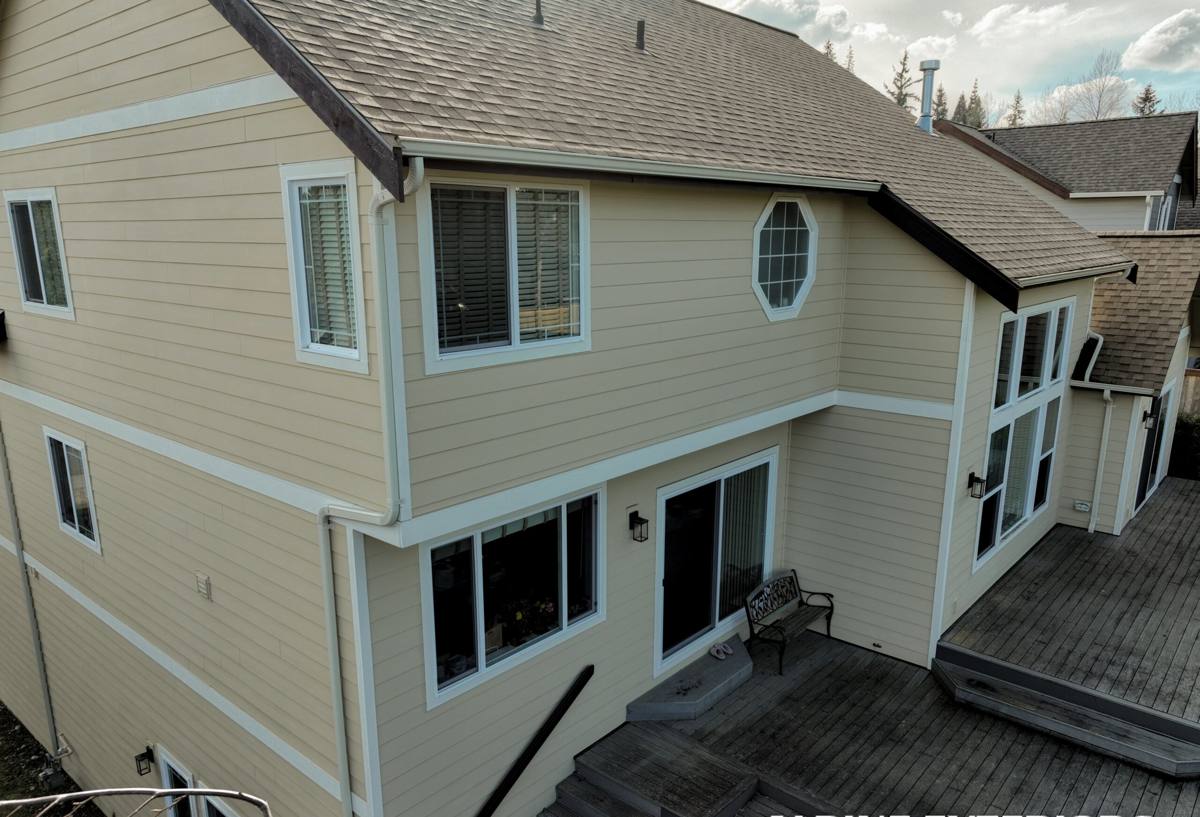
What Salt Air, Driving Rain, and Moss Do to Windows Over Time
Salt Air and Hardware
Salt in the air accelerates corrosion on anything metal — window locks, hinges, balance systems, and even some of the fasteners hidden behind the trim. Once hardware starts to pit or seize, a window stops operating smoothly long before the glass or frame shows any obvious damage.
Driving Rain and Seals
Wind-driven rain doesn't just fall straight down — it gets pushed sideways and upward into gaps a calmer climate would never test. Weep holes clog, sill areas take on more water than they were designed to shed, and factory seals that would last decades in a drier region can start failing well ahead of schedule when they're tested by sideways rain several times a winter.
Moss and Sustained Moisture
A long moss season means more than green roofs and siding. Moss and organic debris hold moisture against window sills, trim boards, and cladding, keeping wood-framed and wood-clad windows wetter for longer stretches than they were designed for. That sustained dampness is what leads to rot at the corners and sills — usually starting from the inside of the joint, where you can't see it until it's advanced.
Signs a Guemes Island Home Needs Window Replacement
Not every symptom means a full replacement, but on the island these signs tend to show up earlier and progress faster than they would in a more sheltered location:
- Windows that are hard to open, close, or lock — a sign hardware is corroding or the frame has shifted
- Visible fogging or moisture between panes, meaning the seal has failed
- Soft or discolored wood at the sill, corners, or trim
- Drafts you can feel on a windy day, even with the window latched
- Paint that bubbles or peels repeatedly in the same spot each season
- A musty smell or visible mold near the window frame
- Condensation on the interior glass most mornings, even in a well-ventilated room
If you're seeing two or more of these on the same window, it's worth having it looked at before the next round of fall rain settles in.
Choosing the Right Window Materials for Island Exposure
There's no single "best" window material for every home, but on Guemes Island the exposure narrows the field. Here's how the common options generally hold up against salt air, driving rain, and prolonged dampness:
| Material | How It Handles Island Exposure | Trade-Offs |
|---|---|---|
| Vinyl | Won't corrode or rot; handles salt air and moisture well | Lower-grade frames can warp under strong sun exposure; quality varies a lot by manufacturer |
| Fiberglass | Very stable in wet, salty conditions; holds paint and finish well | Higher upfront material cost than vinyl |
| Wood-clad | Strong appearance and performance as long as the cladding stays intact | Any breach in the cladding lets moisture into the wood core — a real risk during a long moss season |
| Aluminum | Strong and low-maintenance frame material | Poor insulator unless thermally broken; can pit over time in salt air without the right finish |
Whatever frame material a homeowner chooses, hardware matters just as much on this island. We spec corrosion-resistant hardware and fasteners as standard on Guemes Island jobs, not as an upgrade — cheaper hardware is the first thing to fail in this environment, and it's not worth saving a few dollars on parts you can't see once the window is closed up.
What a Correct Window Replacement Job Involves
A window replacement done right is mostly about what happens before the new window ever goes into the opening. On a marine-exposed home, cutting corners here is how a five-year-old window ends up performing like a fifteen-year-old one.
- Remove the old window and inspect the rough opening for hidden rot or water damage before proceeding
- Repair or rebuild any damaged framing — never install a new window into a compromised opening
- Install a proper sloped sill pan so any water that gets past the window drains back outside instead of into the wall
- Use self-adhered flashing membrane, lapped correctly so water sheds down and out, shingle-style
- Set the window level, plumb, and square, then fasten per the manufacturer's specification
- Seal and insulate the gap around the frame with the correct materials — not just spray foam and caulk everywhere
- Finish trim and flashing so the assembly sheds wind-driven rain, not just water falling straight down
Skip the sill pan or get the flashing sequence wrong, and the window itself can be flawless while the wall around it still rots — a common problem we run into when we're called out to look at a "bad window" that turns out to have been a bad installation from years earlier.
Our Process for Guemes Island Projects
Working on the island means planning differently than a job on the Anacortes mainland, and we build that into how we schedule and run every Guemes Island project.
Material Staging
Because every trip on and off the island runs on the ferry schedule, we order and stage materials before the crew ever loads the truck. A missing part on the mainland means a missed ferry, so we double-check window sizes, trim, and flashing materials against the order before we ever set an install date.
Scheduling Around the Ferry
We plan crew time in full-day blocks around the ferry schedule rather than making multiple short trips, which keeps labor costs predictable and avoids the stop-and-start delays that come from underestimating island logistics.
Weather Windows
Given how exposed the island is to wind-driven rain, we watch the forecast closely and pick installation windows that let us keep an opening protected and dry from the moment the old window comes out until the new one is sealed and trimmed.
Why Hiring a Crew That Already Works Guemes Island Matters
A contractor who's never worked on the island will either price the ferry logistics into your job as an unpleasant surprise, or skip planning for it entirely and show up short a part with no easy way to get it that day. A crew that already works Guemes Island regularly has the logistics solved before your project starts — materials staged, ferry timing built into the schedule, and a real sense of how this specific exposure treats windows over time.
There's also the permitting side. Window replacement work on Guemes Island falls under Skagit County's permitting process, and a crew that's pulled permits for island work before knows what documentation is expected and how to avoid delays that catch out-of-area contractors off guard.
What to Ask Before You Hire
- Are you licensed, bonded, and insured to work in Washington State?
- Have you done window replacement work on Guemes Island or similar waterfront exposure before?
- Will materials and crew scheduling account for the ferry, or is that left for me to sort out?
- What's included in the written estimate — flashing, sill pans, and trim, or just the window unit?
- What warranty applies to the installation itself, not just the window manufacturer's product warranty?
Cost Factors for Window Replacement on Guemes Island
Every home and project is different, so we don't quote sight-unseen prices — but these are the main factors that move the number up or down on an island job:
| Factor | Why It Affects Cost |
|---|---|
| Number and size of windows | Larger openings and custom sizes cost more in both materials and labor |
| Frame material chosen | Vinyl, fiberglass, and wood-clad carry different material costs |
| Condition of existing framing | Hidden rot found during removal adds repair time before the new window goes in |
| Access and logistics | Ferry scheduling and material staging are built into project timelines, not billed as an afterthought |
| Trim and finish work | Matching existing trim profiles or upgrading finish materials adds scope |
As a very rough starting point, homeowners should expect window replacement costs to range from a few hundred dollars per window for a straightforward like-for-like swap, up to well over a thousand per window for larger openings, upgraded materials, or jobs that turn up framing repair. The only way to get a real number for your home is a walkthrough of the specific windows in question.
Maintaining New Windows in a Marine Climate
Even a correctly installed window benefits from a little seasonal attention on Guemes Island. Rinse accumulated salt film off frames and glass a few times a year, keep weep holes clear of moss and debris so water can drain the way it's supposed to, and check caulking and seals once a year rather than waiting for a draft to tell you something's wrong. A few minutes of maintenance twice a year goes a long way toward getting the full service life out of a window in this environment.
If you're dealing with drafty, foggy, or hard-to-operate windows on Guemes Island, we're happy to take a look and put together a straightforward, no-pressure estimate — fill out the form below and we'll get in touch to schedule a time that works around the ferry.