 Anacortes Siding
 Why Oak Harbor Roofs Take a Different Kind of Beating
Oak Harbor sits close enough to Anacortes and the open water of Puget Sound that a roof here works harder than the same roof would fifty miles inland. Homes on this stretch of Whidbey Island, reached from our side of Deception Pass, deal with a steady mix of salt-laden air, wind-driven rain, and long stretches of gray, damp weather that never quite dries the roof surface out. Asphalt shingles can survive that environment for a while, but they weren't designed around it. Metal roofing, installed correctly, holds up to it a lot better — but "installed correctly" is doing a lot of work in that sentence, and it's the part that gets skipped when a crew doesn't know the area.
We work on homes in Oak Harbor regularly, not as an occasional trip out from Skagit County. That matters more with metal roofing than with almost any other exterior product, because so much of its long-term performance depends on details you can't see from the ground once the job is done.
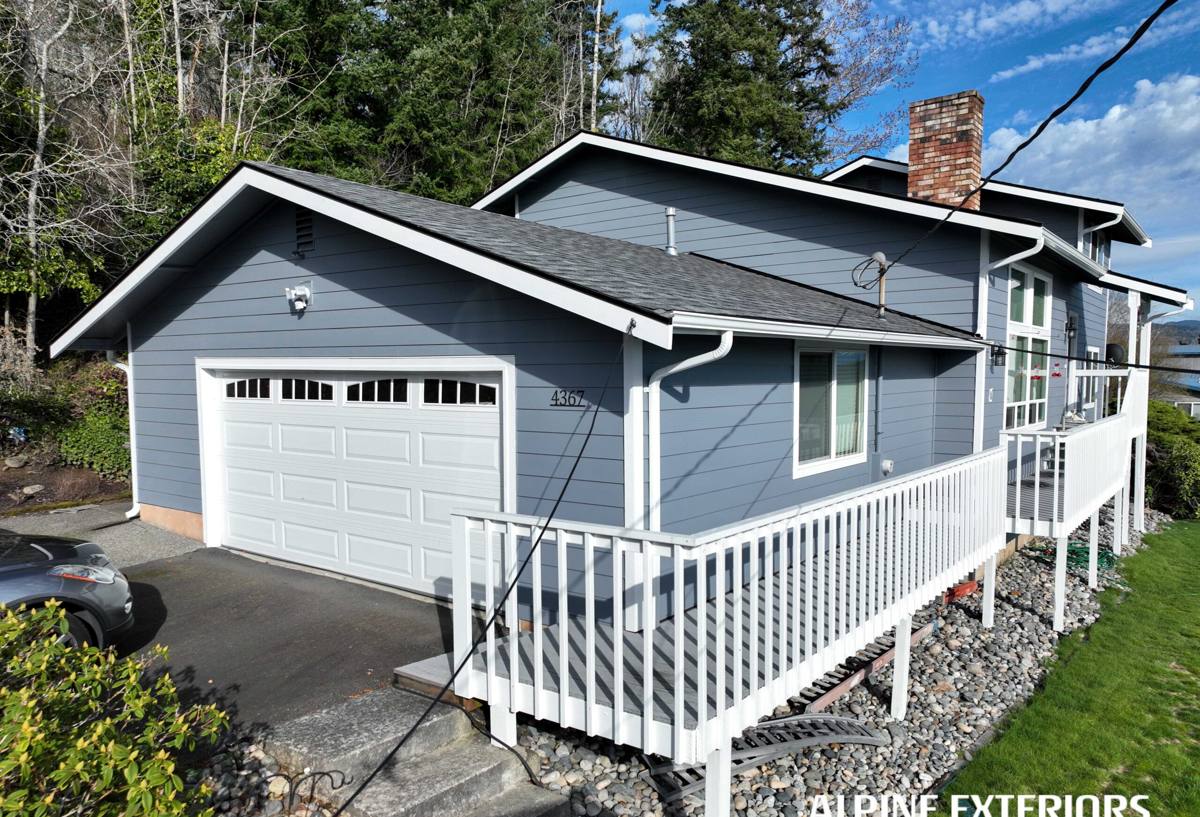
The Climate Working Against Your Roof
Salt Air and Slow Corrosion
Proximity to saltwater doesn't just mean the occasional salty breeze — it means airborne salt is landing on every exterior surface of the house, roof included, day after day. Bare or poorly coated metal fasteners, cut edges, and lower-grade panel coatings corrode faster in this environment than they would twenty miles inland. It's not dramatic or sudden; it shows up years later as rust bleeding from screw heads or streaking along a seam. The fix isn't complicated, but it has to be built in from the start: the right coating system, the right fastener material, and flashing details that don't leave exposed metal edges sitting in the weather.
Driving Rain and Water Intrusion
Storms coming off the water tend to arrive with real wind behind them, which means rain doesn't just fall on a roof here — it drives sideways into laps, seams, and penetrations. A metal roof sheds bulk water well by design, but wind-driven rain finds every gap in flashing, every underdriven fastener, and every place where an installer cut a corner around a vent pipe or chimney. Most of the leaks we get called out to inspect on metal roofs trace back to a handful of small detail failures, not the panels themselves.
A Moss Season That Doesn't Really End
Shade, moisture, and mild temperatures are a great combination for moss and algae growth, and this region gets a long season of exactly those conditions. Moss doesn't just sit on top of a metal roof — on standard shingles it holds water against the surface and works its way under tabs, but on metal it tends to gather in valleys, at panel overlaps, and anywhere debris collects, holding moisture against the coating longer than it should sit. A roof with the wrong slope, poor drainage detailing, or panels installed too tight against a shaded tree line will fight moss for its entire life. A roof designed with this climate in mind fights it a lot less.
What a Correctly Installed Metal Roof Actually Involves
Deck and Underlayment
Everything starts with the roof deck. If there's rot, soft spots, or old damage under the existing roofing, covering it with new metal just hides the problem — it doesn't fix it. A synthetic or self-adhered underlayment rated for the exposure this area gets is non-negotiable, especially at eaves, valleys, and around any penetration, since those are the spots wind-driven rain targets first.
Fasteners, Clips, and Flashing
The fasteners and clips holding a metal roof down need to be compatible with the panel metal itself — mixing incompatible metals accelerates corrosion through a reaction most homeowners have never heard of but that shows up as pitting and staining within a few years. Flashing at every valley, wall intersection, chimney, and vent has to be formed and layered correctly, not just caulked and hoped for. Caulk is a backup, not a strategy.
Ventilation and Moisture Management
Metal roofs perform best with proper attic or roof-assembly ventilation behind them. Without it, condensation can form on the underside of the panels in a damp climate like this one, leading to problems that have nothing to do with the roof's exterior performance but everything to do with how the whole system was designed together.
Choosing the Right Metal Roofing System
Not all metal roofing is the same product wearing different clothes. The differences below matter more in a salt-air, high-moisture climate than they would in a drier region.
| System | How It's Attached | Best Fit | Climate Notes |
|---|---|---|---|
| Standing seam | Concealed clips, no exposed fasteners on the field of the panel | Homes wanting the longest maintenance interval | Fewer penetration points for salt and moisture to attack over time |
| Exposed-fastener panel | Screws driven through the panel face | Budget-conscious projects, outbuildings, some homes | Fastener gaskets wear and need occasional inspection/replacement in this climate |
| Metal shingle or shake panel | Interlocking panels styled like traditional roofing | Homeowners wanting a metal roof's durability with a more conventional look | More seams and laps than standing seam, so detailing at each one matters |
We'll walk through which of these actually fits your roof's geometry, slope, and how much shade and moss pressure it deals with — a low-slope section shaded most of the day needs a different answer than a steep, sun-exposed gable.
What Drives the Cost of a Metal Roof in This Area
As a general rule in the roofing trade, a metal roof runs higher upfront than an asphalt shingle roof — often somewhere in the range of one and a half to three times the cost, depending on the system chosen. What actually moves the number on a specific Oak Harbor home usually comes down to a shorter list of factors:
| Factor | Why It Matters Here |
|---|---|
| Panel system chosen | Standing seam runs higher than exposed-fastener panel; both run higher than metal shingle in some cases |
| Roof complexity | Valleys, dormers, and multiple roof planes mean more flashing work and more labor hours |
| Existing deck condition | Salt air and long-term moisture exposure sometimes mean deck repair is needed before new roofing goes on |
| Tear-off vs. overlay | We don't recommend covering an old roof rather than removing it, but the option affects cost and is worth understanding |
| Coating and gauge | Heavier gauge metal and marine-grade coatings cost more but hold up longer against salt air |
| Access and site conditions | Steep slopes, tree cover, or tight lot access add time regardless of material |
Our Process for a Metal Roof Project in Oak Harbor
- On-site assessment. We look at the existing roof, deck condition, ventilation, and how the roof's geometry interacts with wind, shade, and drainage on your specific lot.
- System selection. We talk through standing seam versus exposed-fastener versus metal shingle options based on your roof, budget, and how much long-term maintenance you want to take on.
- Tear-off and deck inspection. Old roofing comes off so we can actually see the deck, not guess at its condition from above.
- Underlayment and flashing installation. This is where most long-term performance is decided — done right, it's not visible once the job is finished.
- Panel installation. Panels, clips, and fasteners go in matched to the metal type, with attention to every valley, penetration, and edge.
- Final walkthrough. We go over the finished roof with you, including what maintenance to expect given the moss and salt exposure specific to this area.
Living With a Metal Roof in a Salt-Air, Moss-Prone Climate
Metal roofing needs less maintenance than shingles, but "less" isn't "none." A short list of habits keeps a properly installed metal roof performing the way it's supposed to for the long haul:
- Clear debris — needles, leaves, moss fragments — from valleys and low points a couple of times a year rather than letting it build up against a seam.
- Keep overhanging branches trimmed back where practical; shade is the biggest driver of moss growth on any roof in this region.
- Have gutters checked and cleared regularly so water isn't backing up under the roof edge during driving rain.
- Watch for streaking or discoloration near fasteners or cut edges, which can be an early sign of coating wear rather than a cosmetic issue only.
- Avoid pressure washing the roof directly — it can damage coatings and force water where it shouldn't go; a soft wash or manual clearing is safer.
- Have flashing and sealant points inspected periodically rather than waiting for a visible leak inside the house.
Why Hire a Crew That Already Works in Oak Harbor
Metal roofing is unforgiving of shortcuts in a way that's easy to miss until years later. A crew that only occasionally works this side of Skagit County may not think twice about a detail that matters a lot here — like how much exposed fastener metal a salt-air environment can tolerate, or how a roof valley will actually perform once moss builds up on it through a wet fall and winter. A crew that works Oak Harbor and the surrounding area regularly has already seen what happens when those details get skipped, on other roofs, and builds around it as a matter of habit rather than an afterthought.
There's also a practical side to hiring local: warranty support, follow-up questions, and any future maintenance are a lot simpler when the crew that installed your roof isn't a long drive away and isn't guessing at your specific microclimate from a general spec sheet.
Getting Started
If you're weighing a metal roof for a home in Oak Harbor, we're happy to take a look, explain what we're seeing, and give you a straightforward, no-pressure estimate — no invented urgency, just an honest read on what your roof needs. Use the form below to get in touch and we'll go from there.