 Anacortes Siding
 Why Oak Harbor Roofs Wear Differently Than Roofs Inland
Homes in the Oak Harbor area sit close to open water, and that changes what a roof has to deal with year-round. Marine air carries salt that settles on granules and metal flashing, driving rain off the Salish Sea comes in sideways instead of straight down, and the long, mild, wet stretch from fall through spring gives moss and algae months to get established before a good drying day ever shows up. A shingle roof built for a drier, more sheltered part of the state doesn't hold up the same way out here.
None of this means asphalt shingles are the wrong choice for a coastal home — they're still one of the most practical, cost-effective roofing systems available, and they perform well in this climate when they're specified and installed correctly. The problems we get called out for almost always trace back to shortcuts taken during the original install: wrong underlayment, missed flashing details, or ventilation that was never sized for how wet the air stays here.
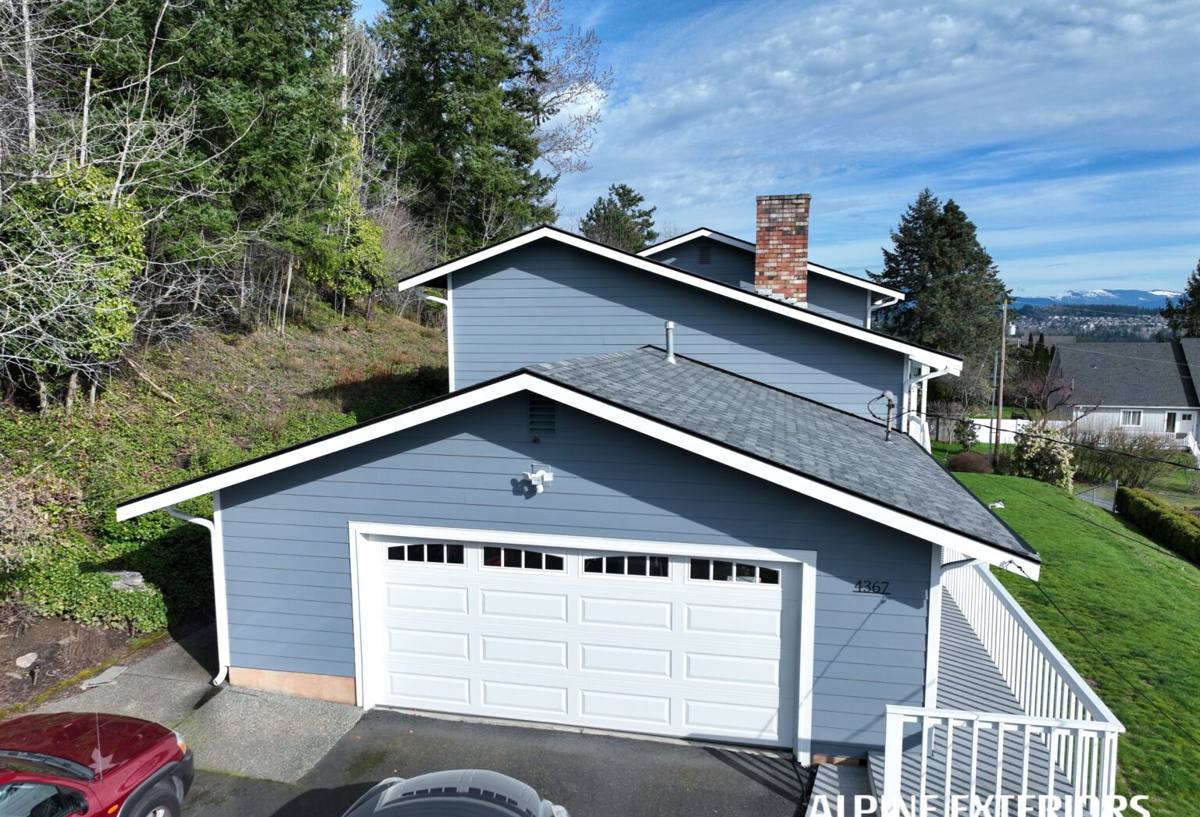
What a Correct Asphalt Shingle Job Actually Involves
"Correct" isn't a marketing word — it's a specific list of things that either got done right or didn't. On a coastal roof, a few details matter more than they would somewhere drier:
Underlayment and Eave Protection
Self-adhered ice-and-water membrane at the eaves, valleys, and around every penetration isn't optional here. It's the backup layer that keeps wind-driven rain out when it gets pushed up under the shingle edge instead of running straight down the slope, which happens regularly during winter storms off the water.
Flashing at Every Transition
Step flashing at walls, counter-flashing at chimneys, and proper metal at valleys and skylights matter more in a wet climate because a small gap that would just dry out elsewhere stays damp here long enough to find its way into the sheathing. Flashing is where most leaks actually start, not in the field of the roof.
Nailing Pattern and Wind Exposure
Open water means real wind. Shingles need to be nailed exactly where the manufacturer specifies — not high, not low — and with the right number of fasteners for the wind zone. A roof that's under-nailed can look fine for a year or two and then lose shingles in the first real storm.
Ventilation Sized for a Wet Climate
Balanced intake at the soffits and exhaust at the ridge keeps the underside of the deck dry and helps shingles shed moisture instead of holding it. Undersized or blocked ventilation is one of the biggest reasons we see premature moss growth and early granule loss on roofs that are otherwise only a few years old.
Choosing a Shingle That Makes Sense for This Climate
Not every asphalt shingle line is built the same way, and the differences matter more here than in a dry inland climate. This isn't about one brand being bad — it's about matching the product to salt air, wind, and a long algae season.
| Shingle Type | Typical Wind Rating | Algae/Streak Resistance | Best Fit For |
|---|---|---|---|
| Standard 3-tab | Lower end of the range | Basic, unless upgraded | Budget projects, secondary structures |
| Architectural / dimensional | Mid to high, depending on line | Available with algae-resistant granules | Most Oak Harbor homes |
| High-wind / impact-rated architectural | Highest available | Algae-resistant granules standard on most lines | Exposed lots, open water frontage, hilltop sites |
For most homes in this area, an architectural shingle with algae-resistant (copper- or zinc-infused) granules is the right balance of cost and performance. It costs more up front than a basic 3-tab, but it holds up longer against the exact conditions that shorten a roof's life here — and the labor cost to install it is nearly identical, so the difference is almost entirely in material.
Moss, Algae, and the Ventilation Connection
Moss doesn't just sit on top of a shingle — it holds moisture against the surface and works its way under tabs and around fasteners, which is how a moss problem eventually becomes a leak problem. North-facing slopes and roofs shaded by trees are the first to show it, and once it establishes, it comes back every wet season unless the roof gets proper airflow and periodic gentle cleaning.
We can't change how much shade a lot gets or how many months of drizzle Skagit County sees in a given year, but we can make sure the roof itself isn't working against you — correct ventilation, algae-resistant granules where it makes sense, and a roof plane that sheds water instead of holding it in low spots.
Our Process for an Oak Harbor Roof Replacement
- Inspection and estimate — we look at the current roof, the decking condition where accessible, ventilation setup, and any problem areas before quoting anything.
- Tear-off — old shingles and underlayment come off down to the deck so we can actually see what's there, not just what's visible from the ground.
- Deck inspection and repair — any soft, rotted, or delaminated sheathing gets replaced before anything new goes down. This is called out separately, not buried in the price.
- Underlayment and flashing — ice-and-water membrane at eaves and valleys, synthetic underlayment across the field, new flashing at every wall, chimney, and penetration.
- Shingle installation — installed to manufacturer spec for nailing pattern and exposure, with attention to the wind zone this area actually sees.
- Ventilation check — intake and exhaust confirmed or corrected so the finished roof can actually dry out between storms.
- Cleanup and walk-through — magnetic sweep for nails, debris hauled off, and a walk-through so you know exactly what was done and what to watch for.
What Drives the Cost of a Shingle Roof Out Here
Every roof is priced on its own specifics, but the factors that move the number are consistent. Knowing them ahead of time makes it easier to compare quotes honestly.
| Factor | Why It Matters |
|---|---|
| Roof pitch and complexity | Steeper, cut-up roofs with more valleys and planes take longer and need more flashing detail |
| Tear-off vs. layover | Removing old layers costs more up front but lets us actually inspect the deck — we don't recommend layovers on coastal homes |
| Deck repair needed | Rot or soft spots found during tear-off add material and labor, but skipping this repair undermines the whole job |
| Shingle line chosen | Basic 3-tab vs. architectural vs. impact-rated changes material cost more than labor cost |
| Number of penetrations | Chimneys, skylights, and vents each need individual flashing work |
| Access and site conditions | Steep lots, limited driveway access, or long carry distances affect labor time |
Why a Crew That Already Works This Area Matters
Oak Harbor sits across Deception Pass from Anacortes, and a crew that regularly makes that drive already has its routine down — material staging, timing around bridge traffic, and scheduling so a job isn't derailed by a half-day of travel. More importantly, a crew that's worked this stretch of coastline knows what driving rain off the water does to a roof detail that would be fine forty miles inland, and specifies flashing and underlayment accordingly instead of defaulting to a generic spec sheet.
That familiarity also shows up in smaller ways — knowing which roof orientations in this area tend to hold moss the longest, which wind exposures call for the higher-rated shingle line, and what a Skagit County winter actually does to an unfinished tear-off if weather moves in faster than planned.
A Homeowner's Maintenance Checklist Between Roofing Jobs
A correctly installed shingle roof still benefits from basic upkeep in this climate. None of this requires getting on the roof yourself:
- Have gutters cleared at least twice a year — clogged gutters back water up under the shingle edge
- Watch shaded and north-facing slopes for early moss growth and have it addressed before it spreads
- After major windstorms, do a visual check from the ground for lifted or missing shingles
- Keep overhanging branches trimmed back to cut down on shade, debris, and moss spores
- Have flashing around chimneys and skylights checked every few years, since these are the first places small leaks start
- Don't ignore a small ceiling stain — trace it early, before it turns into deck damage
If you're weighing a roof replacement or just want an honest read on how much life is left in what you've got, we're glad to come take a look. The estimate is free, there's no pressure attached to it, and you'll get a straight answer about what your roof actually needs — just fill out the form below to get started.