 Anacortes Siding
 Why West Anacortes Roofs Take a Different Kind of Beating
Homes on the west side of Anacortes sit closer to open water — Rosario Strait and Guemes Channel — and that exposure changes what a roof has to survive. Wind off the water hits harder and more often here than it does further inland in Skagit County. Salt-laden air accelerates corrosion on fasteners, flashing, and metal roofing components. Add in the long stretch of wet months where moss gets a real foothold on north-facing slopes and shaded roof sections, and you've got a roof that's working harder year-round than a similar home fifty miles east.
Storm damage repair here isn't just "patch the hole and move on." A repair that doesn't account for salt exposure, wind direction, and moss regrowth tends to fail again within a season or two. We've built our process around what actually holds up on this side of the island.
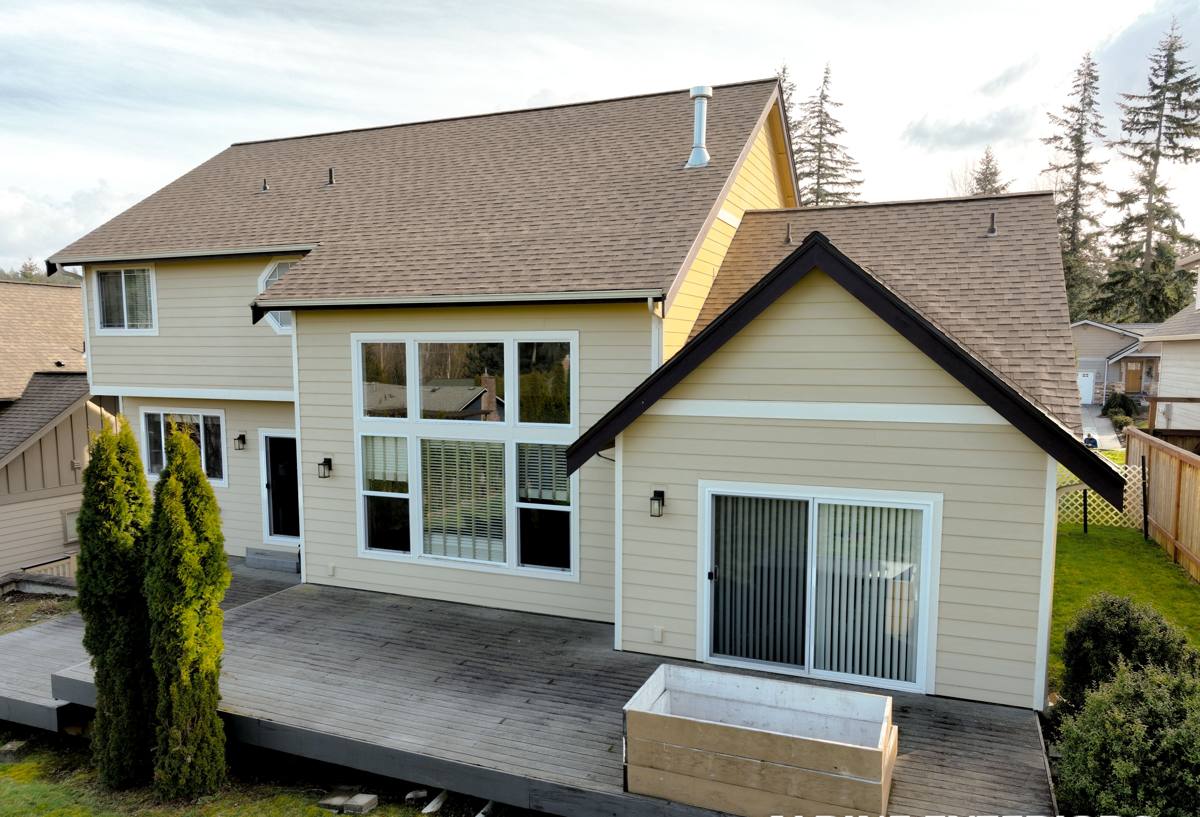
What Actually Counts as Storm Damage
Not every roof problem that shows up after a windstorm is "storm damage" in the way an insurance adjuster or an honest contractor would define it. Getting this distinction right matters for both the repair plan and any insurance claim.
Wind Damage
Gusts off the strait can lift shingle tabs, crease them, or tear them off outright — especially along ridge lines and roof edges where uplift forces concentrate. Wind can also drive fasteners loose without visibly damaging the shingle itself, which is why a surface look often misses the real problem.
Wind-Driven Rain Intrusion
Anacortes storms rarely bring rain straight down. When rain comes in sideways, it can work under shingle edges, around flashing, and through anywhere a seal has aged or a fastener has backed out — even without any visible shingle damage. This is one of the most common "invisible" storm problems we find.
Impact and Debris Damage
Branches and debris come down in windstorms, and even a glancing hit can crack shingles, dent metal flashing, or knock a vent cap loose. Impact damage is usually the most obvious kind, but it's worth having the whole roof checked, not just the spot where the branch landed — the same wind event often causes damage elsewhere too.
Moss-Related Deterioration
Moss itself isn't storm damage, but a storm can expose or worsen problems moss has already been causing — lifted shingle edges from moss roots, trapped moisture, and granule loss. When we're called out after a storm, we always check whether moss set the stage for the damage we're now repairing.
Signs Your Roof Needs a Storm Damage Inspection
Some damage is obvious from the ground. A lot of it isn't. After any significant wind or rain event, it's worth checking for:
- Shingles in the yard, gutters, or against fence lines
- Lifted, curled, or missing shingle tabs visible from the ground or a ladder
- New or worsening water stains on interior ceilings, especially near chimneys, skylights, or valleys
- Granules collecting in gutters or at downspout outlets after a storm
- Dented, bent, or displaced flashing around vents, chimneys, and roof-to-wall transitions
- Sagging or soft spots anywhere on the roof deck
- Daylight visible through the attic roof boards
- Moss mats that have shifted or pulled away from the roof surface
If you notice any of these, especially the interior water stains, it's worth getting an inspection soon. Water intrusion problems get more expensive the longer they sit, particularly in our wet season.
What a Correct Storm Damage Repair Actually Involves
A rushed storm repair is one of the most common reasons a homeowner ends up paying for the same fix twice. A repair done right includes:
A Full Roof Inspection, Not Just the Damaged Spot
Wind and rain don't damage a roof in one neat location. We check the whole roof plane, the flashing details, the attic ventilation, and the areas most exposed to prevailing weather — not just the spot the homeowner pointed out.
Matching Materials and Proper Tie-In
Patching in mismatched shingles or skipping proper step flashing at a repair edge creates a new weak point. We tie repairs into the existing roof system correctly, including underlayment overlap and flashing integration, so the repaired section performs like the rest of the roof, not like a patch.
Attention to What Made the Damage Worse
If moss growth or ventilation problems contributed to the damage, we address that as part of the repair — not as a separate upsell later. A repair that ignores the underlying cause is a repair you'll be paying for again.
Documentation
For anything that might involve an insurance claim, we document the damage with photos and a clear written scope before we start work, so there's a record that matches what the adjuster will be looking for.
Repair vs. Replacement: How We Help You Decide
Not every storm-damaged roof needs to be replaced, and not every roof can be reasonably patched. The right call depends on a few honest factors.
| Factor | Leans Toward Repair | Leans Toward Replacement |
|---|---|---|
| Roof age | Under 10-12 years, or a durable material with life left | Near or past expected service life for the material |
| Extent of damage | Isolated to one section or slope | Spread across multiple slopes or the whole roof |
| Moss and moisture history | Minor, surface-level growth | Long-term moss with underlying deck or shingle damage |
| Prior repairs | First significant repair | Multiple past patches in different spots |
| Insurance coverage | Claim covers a defined repair scope | Adjuster scope supports full slope or full roof replacement |
We'll give you a straight answer on which side of this table your roof falls on, including when a repair is genuinely the right call and replacement would be spending money you don't need to spend.
Our Process for West Anacortes Storm Repairs
Storm response works best when it's predictable. Here's how we handle it:
- Initial call and triage — we ask what you're seeing and how urgent it is (active leak vs. cosmetic damage) so we can prioritize accordingly.
- Temporary protection if needed — for active leaks or exposed decking, we get a tarp or temporary cover in place to stop further water intrusion before the full repair is scheduled.
- Full inspection and written estimate — a clear scope of work and price range, with photos of what we found.
- Insurance coordination — if you're filing a claim, we can walk the roof with your adjuster and make sure the documentation lines up.
- Repair work — done to tie properly into the existing roof, not just cover the visible damage.
- Follow-up — we check back after the next significant rain to confirm the repair is holding.
Materials and Methods Suited to Salt Air and Moss
Because West Anacortes roofs deal with both salt exposure and extended damp periods, we're deliberate about what we use in repairs:
Corrosion-Resistant Fasteners and Flashing
Standard fasteners can corrode faster this close to salt water. We use fasteners and flashing rated for coastal exposure so a repair doesn't become a rust problem in a few years.
Ice-and-Water Shield at Vulnerable Points
Valleys, eaves, and areas around chimneys and skylights get self-adhering waterproof underlayment as part of any repair in that area — these are the spots wind-driven rain finds first.
Algae- and Moss-Resistant Shingles Where Replacement Is Warranted
When a section is being replaced rather than repaired, we discuss algae-resistant shingle options with you. They don't eliminate moss on their own, but they slow regrowth on the north-facing and shaded slopes that struggle most in this climate.
Ventilation Checks
Poor attic ventilation traps moisture and speeds up moss growth and deck rot from the underside. A storm repair is a good time to confirm your intake and exhaust venting are actually working together.
Why Hiring a Crew That Already Works West Anacortes Matters
A roofer who works this specific area regularly knows which slopes take the brunt of wind off the strait, which neighborhoods see the worst moss buildup, and what flashing details tend to fail first in this microclimate. That local pattern recognition means a faster, more accurate inspection and fewer surprises once repair work starts.
It also matters for response time. After a wide storm event, contractors who have to drive in from outside the area get backed up fast. Being local to Anacortes and Skagit County means we can typically get out for an inspection or temporary tarp sooner, which matters when water is actively getting into your home.
Maintenance That Keeps Storm Damage From Getting Worse
Between storms, a little upkeep prevents small problems from turning into repair calls:
- Keep gutters and downspouts clear so wind-driven rain has somewhere to go
- Have moss treated or removed before it lifts shingle edges, not after
- Trim back branches that overhang the roof to reduce impact risk in wind events
- Schedule a roof check-up after any named windstorm, even if you don't see obvious damage
If a recent windstorm or heavy rain has you wondering about the condition of your roof, we're glad to take a look. Reach out for a free, no-pressure estimate using the form below — we'll give you a straight assessment of what's actually going on and what it would take to fix it right.