 Anacortes Siding
 Asphalt Shingle Roofing Built for Edison's Climate
Edison sits close enough to Samish Bay and the surrounding tidal flats that homes here deal with a different roofing environment than inland Skagit County properties. Salt-laden air moves through on a regular basis, driving rain comes in sideways during fall and winter storms, and the shaded, damp stretches of the year give moss and algae plenty of time to take hold. An asphalt shingle roof that's specified and installed correctly can handle all of that for decades. One that isn't will show problems early, usually starting at the edges, the valleys, and anywhere two roof planes meet.
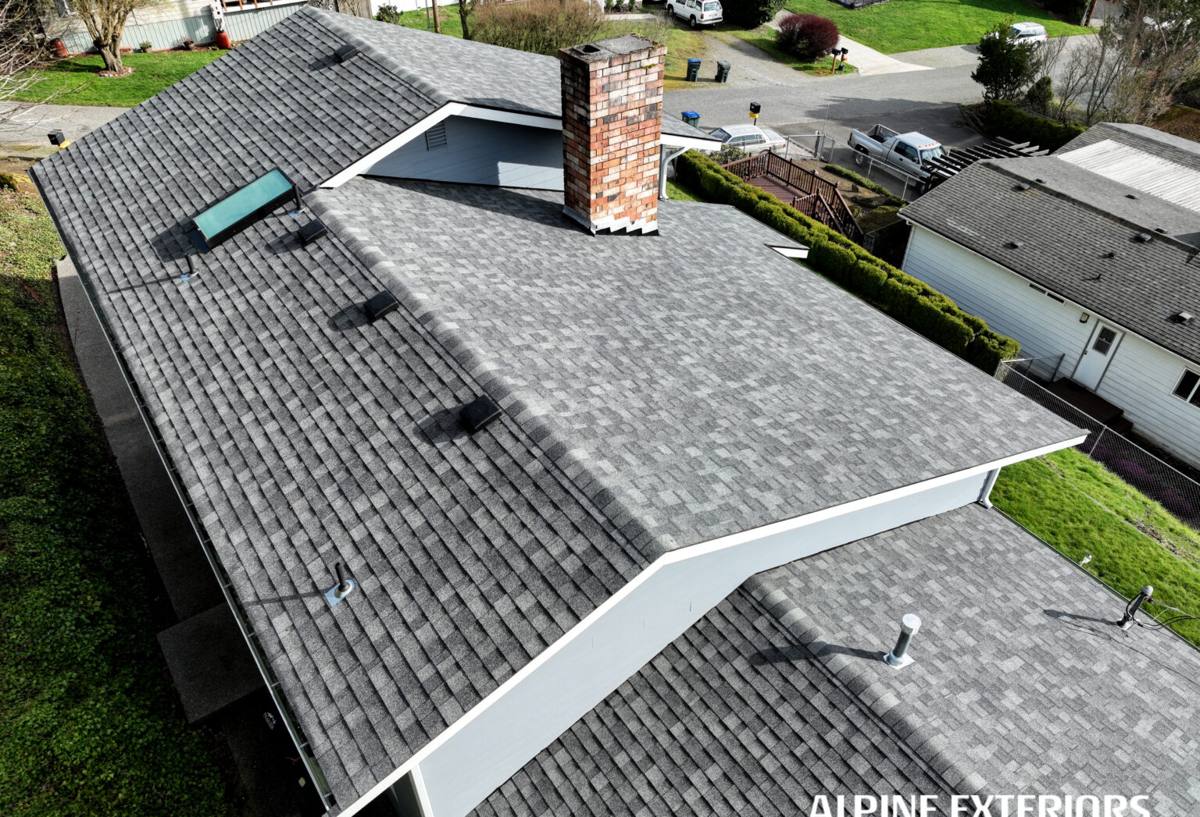
This page covers what an asphalt shingle roof needs to hold up in Edison specifically, what a correct installation or repair actually involves, and how we approach the work when we're on your roof.
What Edison's Weather Does to a Roof
Salt Air and Metal Fasteners
Homes within a few miles of the water take in salt-bearing moisture in the air even when there's no rain falling. Over time, that air accelerates corrosion on any exposed metal — nail heads, flashing edges, gutter hangers, and pipe boots with metal collars. A roof that looks fine from the ground can have fastener corrosion starting well before shingles themselves show wear. This is one reason we don't treat a "standard" shingle spec the same way we would for a drier, inland job.
Driving Rain and Wind-Driven Water
Skagit County storms off the water tend to bring rain sideways rather than straight down. That matters because wind-driven rain can work its way under shingle edges, around rake and eave trim, and through any flashing detail that was installed loose or under-lapped. A roof built for a calmer climate might perform fine for years somewhere inland and still leak here within a season if the underlayment and flashing details weren't upgraded for wind-driven exposure.
Moss, Algae, and Extended Damp Season
Edison gets long stretches of overcast, damp weather, and shaded roof sections — north-facing slopes, areas under tree cover — stay wet longer between dry spells. That's exactly the environment moss and algae need. Moss isn't just cosmetic: as it establishes, it lifts shingle edges, holds moisture against the roof deck, and accelerates granule loss. Left unaddressed for a few seasons, a moss problem turns into a decking problem.
What a Correct Asphalt Shingle Job Actually Involves
A shingle roof is a system, not just a layer of shingles nailed to plywood. Each component below has to be right for the roof to perform in this climate — skipping or downgrading any one of them is where most premature failures start.
- Deck inspection and repair: Any soft, delaminated, or water-stained sheathing gets replaced before anything else goes down. Roofing over a compromised deck just hides the problem.
- Ice-and-water shield at vulnerable zones: Eaves, valleys, and roof-to-wall transitions get a self-adhering waterproof membrane, not just standard felt, because these are the spots wind-driven rain and ice damming target first.
- Synthetic underlayment across the field: A quality synthetic underlayment sheds bulk water that gets past the shingles and holds up better than old-style felt when a roof sits exposed during install.
- Corrosion-resistant fasteners and flashing: Given the salt air, we don't cut corners on fastener and flashing material quality — this is a direct response to the corrosion issue described above, not an upsell.
- Proper valley and flashing method: Woven, closed-cut, or open metal valleys all have a correct application; step flashing at walls and counter-flashing at chimneys have to be integrated with the water-resistive barrier, not just caulked on top.
- Balanced attic ventilation: Intake at the eaves and exhaust at the ridge working together control moisture and temperature in the attic, which extends shingle life and helps prevent ice damming in cold snaps.
- Manufacturer-spec nailing pattern: Correct nail count and placement is what the wind warranty is actually based on — high-wind zones and steep pitches often require more fasteners per shingle than the minimum.
Choosing the Right Shingle for a Coastal-Influenced Roof
Not every shingle product is a good match for salt air and heavy moss pressure. We steer homeowners toward products and specs that hold up to this specific combination rather than whatever is cheapest at the yard that week.
| Factor | Standard 3-Tab | Architectural (Laminate) |
|---|---|---|
| Wind resistance | Lower rating, more prone to lifting in driving rain events | Higher wind rating, better edge adhesion in gusty coastal conditions |
| Algae/moss resistance | Available but limited color range | Widely available with copper- or zinc-infused granules that slow regrowth |
| Expected lifespan here | Shorter, given salt and moss exposure | Longer, better suited to this climate |
| Upfront cost | Lower | Moderately higher, offset by fewer moss treatments and repairs over time |
Algae-resistant shingles matter more here than in drier parts of the state. The copper or zinc granules embedded in these products slow algae and moss colonization, which directly addresses the shaded, damp conditions common around Edison. We won't push a premium product where it isn't needed, but for north-facing slopes and tree-shaded roofs, it's usually the more honest recommendation.
Repair, Recover, or Full Replacement?
Not every roof problem means a full tear-off. Part of an honest inspection is telling you which category your roof actually falls into.
Repair
Localized issues — a damaged flashing detail, a handful of wind-lifted shingles, a leak traced to one specific penetration — can usually be fixed without touching the rest of the roof, as long as the surrounding shingles and deck are still sound.
Recover (Overlay)
In limited situations, a new layer can go over sound existing shingles. We're conservative about recommending this in Edison specifically, because an overlay traps whatever moisture or moss issue already exists underneath, and it doesn't let us inspect or upgrade the deck and underlayment where salt air and wind-driven rain do the most damage.
Full Replacement
Once shingles show granule loss across the field, moss has been established for more than a season or two, or the roof is past its expected service life, a full tear-off is the more honest recommendation. It's the only way to properly address deck condition, upgrade underlayment and flashing, and reset the ventilation balance — all the things that actually determine how long the next roof lasts in this environment.
How We Handle a Roofing Project in Edison
- On-site inspection: We walk the roof (or use a lift/drone where pitch or access requires it) and check the attic from inside, looking at ventilation, deck condition, and any moisture staining.
- Written estimate: You get a clear scope — what's being replaced, what materials are specified and why, and what the timeline looks like — before any work starts.
- Material staging and deck prep: Old roofing comes off in sections to limit exposure time, and any deck repairs happen before new underlayment goes down.
- Underlayment and flashing installation: Ice-and-water membrane at vulnerable zones, synthetic underlayment across the field, and properly integrated flashing at every penetration and transition.
- Shingle installation to spec: Correct nailing pattern, proper exposure, and valley/hip detailing done to manufacturer requirements so the warranty is actually valid.
- Ventilation check and adjustment: Intake and exhaust balance gets verified, not assumed, since this affects both shingle life and moisture control.
- Cleanup and final walk-through: Magnetic sweep for stray fasteners, debris removal, and a walk-through so you know what was done and what to watch for going forward.
Maintenance That Actually Extends Roof Life Here
Given the moss pressure and salt exposure around Edison, a little seasonal attention goes a long way toward getting full value out of a shingle roof.
- Keep gutters and valleys clear of debris — clogged valleys hold water against shingles and accelerate moss growth.
- Have moss physically removed rather than pressure-washed off, which can strip granules and shorten shingle life.
- Trim back overhanging branches where practical to reduce shade and debris buildup on north-facing slopes.
- Schedule a walk-and-look inspection after major windstorms, since wind-driven rain events are when lifted or displaced shingles usually show up first.
- Watch for granule buildup in gutters, which is often the earliest visible sign a shingle roof is nearing the end of its service life.
Why It Matters to Hire a Crew That Already Works This Area
A roofing crew that regularly works Skagit County and the areas around Anacortes and Edison already knows which flashing details need upgrading for wind-driven rain, which slopes typically need algae-resistant shingles because of shade patterns, and how aggressive the moss season really gets here. That's not something you get from a generic regional roofing outfit working off a one-size-fits-all spec sheet. It shows up in the small decisions — fastener choice, underlayment upgrade at eaves, how valleys are detailed — that don't cost much more upfront but make the difference between a roof that lasts its full expected lifespan and one that needs attention again in five years.
If you're dealing with a leak, planning ahead for an aging roof, or just want an honest read on where your current roof stands, we're happy to take a look. Reach out for a free, no-pressure estimate using the form below.