 Anacortes Siding
 Metal Roofing Built for Sedro-Woolley's Climate
Sedro-Woolley sits at the inland edge of Skagit County, close enough to the Salish Sea that salt-laden air still reaches it on a west wind, but far enough into the valley that fog, standing moisture, and heavy shade under mature trees are just as much of a factor. That combination is tough on roofing. Homes here deal with long stretches of driving rain off the Sound, moss that never fully dries out between storms, and the slow corrosion that salt air causes on anything metal that isn't properly coated or detailed. A metal roof, installed correctly for this specific environment, holds up to all three better than most other roofing materials — but "installed correctly" is doing a lot of work in that sentence, and it's the part that gets skipped most often.
This page covers what a metal roof replacement actually involves for a Sedro-Woolley home, what the local climate demands from the materials and the install, and how our process works from first estimate to final cleanup.
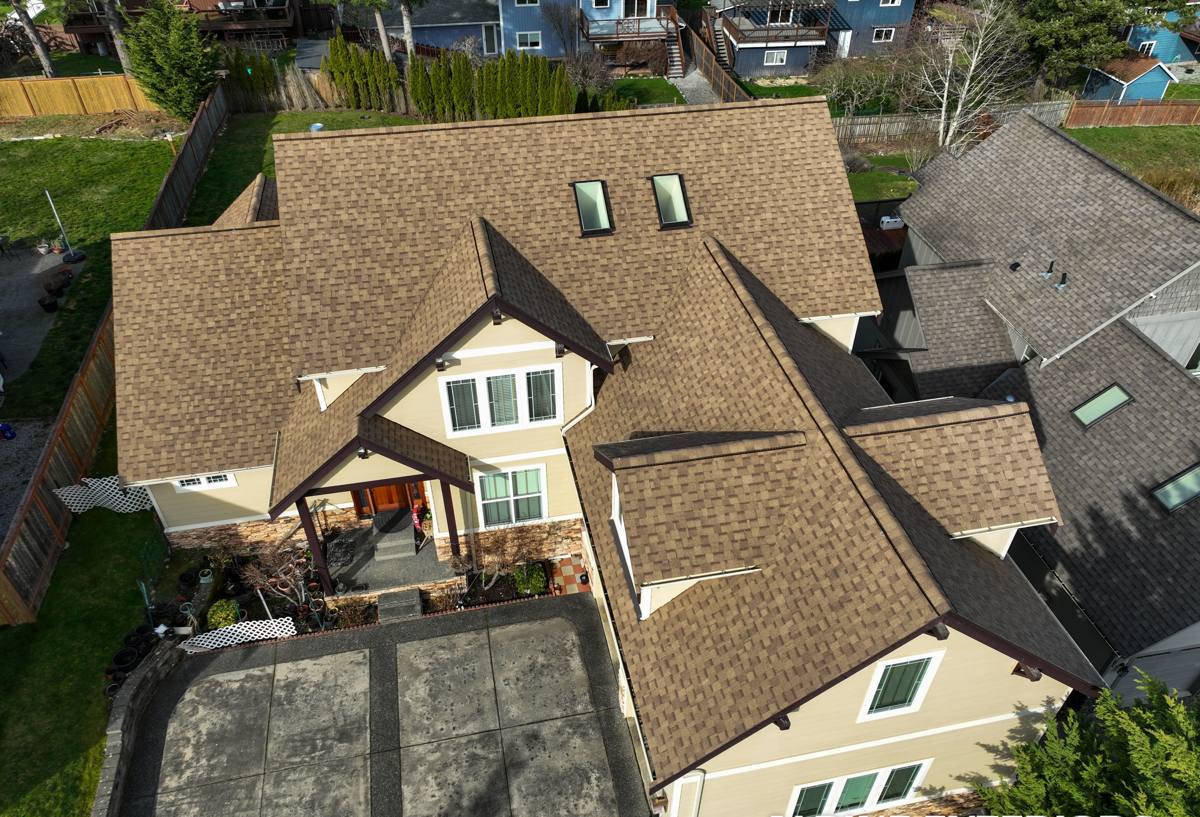
What the Local Climate Actually Does to a Roof
It helps to be specific about the stresses a roof faces here, because they're different from what a roof in a drier inland climate deals with.
Salt Air and Corrosion
Even set back from the water, Sedro-Woolley gets enough marine air drift that unprotected or poorly coated metal fasteners and flashing can start corroding years before the panels themselves show wear. This is almost always a fastener and flashing problem, not a "the metal roof failed" problem — which is why fastener quality and coating matter as much as the panel choice.
Moss and Sustained Moisture
Skagit County's tree cover and long wet season mean moss gets a real foothold on any roof surface that stays damp and shaded for weeks at a time. Moss holds moisture against the roofing material, and on aging asphalt shingles that moisture works its way under the mat over time. Metal doesn't give moss the same foothold, but valleys, low-slope sections, and areas that stay shaded still need to be detailed so water and debris don't sit and accumulate.
Driving Rain and Wind-Driven Water
Rain here doesn't always fall straight down. Storms off the water push rain sideways under eaves, around chimneys, and into any flashing detail that was cut corners on. A metal roof sheds bulk water well, but the seams, penetrations, and edge details are where a marginal install actually fails.
Metal Panel Types We Install
Not every metal roofing product is a good fit for every home, budget, or roofline. Here's how the main options compare for a typical Sedro-Woolley residential re-roof.
| Panel Type | Typical Lifespan | Best For | Trade-Offs |
|---|---|---|---|
| Standing seam (concealed fastener) | 40-60+ years | Homes wanting the fewest long-term maintenance items and the cleanest look | Higher upfront cost; needs an experienced crew for tight seams and flashing |
| Exposed-fastener panel (ribbed/corrugated steel) | 25-40 years | Budget-conscious replacements, outbuildings, simpler rooflines | Fastener gaskets age and need periodic inspection, especially in salt air |
| Stone-coated steel (shake or tile profile) | 40-50 years | Homeowners who want a traditional shingle or shake look with metal's durability | More installation steps; coating integrity matters for long-term corrosion resistance |
For most Sedro-Woolley homes dealing with salt air and heavy rain, we lean toward standing seam or a quality stone-coated steel system, since both minimize the exposed fastener points where corrosion and leaks tend to start. That said, the right call depends on your roofline, budget, and how long you plan to stay in the home — we'll walk through the honest trade-offs during the estimate rather than push one product for every job.
What a Correct Metal Roof Installation Actually Involves
The panels get the attention, but most metal roof failures trace back to what's underneath and around them, not the metal itself.
Underlayment and Moisture Barrier
A synthetic, high-temperature underlayment rated for metal roofing goes down first. In a climate with this much sustained rain, this layer is the actual water barrier if wind ever drives moisture past the panel seams — it's not optional, and it's not a place to use a generic felt product.
Ventilation
Metal roofs can run hotter and colder at the surface than shingles, which means attic ventilation has to be right to avoid condensation building up on the underside of the panels. We check existing intake and exhaust venting as part of every estimate, not just add it as an afterthought.
Fastener and Flashing Detail
This is the step that matters most in a salt-air, high-rain environment. Fasteners need coatings rated for corrosion resistance, and every penetration — vents, chimneys, skylights — needs flashing that's formed and sealed for this specific climate, not a generic one-size approach.
Panel Layout and Seaming
On standing seam systems, panel runs and seam mechanics need to account for thermal expansion — metal panels expand and contract more than shingles across our temperature swings, and a seam that's too tight or clips that are fastened wrong will eventually buckle or work loose.
Signs Your Current Roof Needs Attention
Some of these apply to any roof type; a few are specific to what we see on older roofs in this part of Skagit County.
- Moss buildup that returns within a season or two of cleaning, especially on shaded, low-slope sections
- Granule loss or bald patches on asphalt shingles, particularly on the roof faces that catch the most driving rain
- Rust streaking or corrosion around existing metal flashing, vents, or fasteners
- Soft spots, sagging, or visible daylight in the attic around roof penetrations
- Water stains on interior ceilings that appear or worsen after wind-driven storms
- A roof that's approaching or past its material's expected service life, especially if it was installed with builder-grade materials
None of these automatically mean you need a full replacement — some are repair-level issues. But they're worth a real inspection rather than guessing, especially before another wet season sets in.
Our Process, Start to Finish
1. On-Site Estimate
We walk the roof (or inspect from the ground and attic where a walk isn't safe or necessary), check ventilation, look at existing flashing and decking condition, and talk through panel options that fit your home and budget.
2. Written Scope and Materials
You get a clear breakdown of the panel type, underlayment, flashing approach, and any decking repair or ventilation work included — no vague line items.
3. Tear-Off and Deck Inspection
Old roofing comes off and the decking gets inspected before anything new goes down. Soft or water-damaged decking gets flagged and addressed before the new roof goes on top of it — covering up bad decking is how "new roofs" fail early.
4. Underlayment, Flashing, and Panel Install
Installed in the sequence and with the fastener/flashing details covered above, matched to this climate rather than a generic spec sheet.
5. Final Walkthrough and Cleanup
We walk the finished roof with you, confirm the details that matter (seams, flashing, ventilation), and clear the site of old material and debris.
Cost Factors for a Sedro-Woolley Metal Roof
Pricing depends on your specific roof, but these are the variables that move the number most:
| Factor | Why It Matters |
|---|---|
| Panel type (exposed-fastener vs. standing seam vs. stone-coated) | Material and labor cost vary significantly; standing seam requires more skilled labor time |
| Roof pitch and complexity | Steep or cut-up rooflines with multiple valleys and penetrations take longer and need more flashing work |
| Decking condition | Rot or soft decking found during tear-off adds repair cost before the new roof can go on |
| Existing ventilation | Adding or correcting intake/exhaust venting is sometimes needed and adds to scope |
| Access | Tree cover, steep lots, or limited staging space can affect labor time |
We don't quote a job sight-unseen for exactly this reason — a flat roof with easy access and a straightforward panel choice costs meaningfully less than a steep, cut-up roof needing decking repair. The estimate is where we sort out which factors actually apply to your home.
Living With a Metal Roof Here: Maintenance Reality
One of the honest selling points of metal roofing in this climate is how little routine maintenance it needs compared to asphalt shingles or wood-based products, but "little" isn't "none."
- Clear debris (needles, leaves, branches) from valleys and around penetrations once or twice a year, especially on tree-shaded lots
- Check exposed-fastener systems periodically for gasket wear, since that's the most common long-term maintenance item
- Keep gutters clear so water isn't backing up against roof edges during heavy rain events
- Have flashing and sealant points inspected every few years, particularly if the roof is exposed to direct salt air drift
Why Hire a Crew That Already Works Sedro-Woolley
Roofing crews that mostly work drier, inland climates size ventilation, underlayment, and flashing differently than the job calls for here. A crew that regularly works Skagit County homes already knows which details matter for salt air corrosion, which roof sections in this area tend to hold moss and moisture, and how local wind-driven rain actually behaves against a roofline — not from a manual, but from doing the work here repeatedly. That local pattern recognition is what separates a roof that looks right on install day from one that's still performing correctly ten years in.
If you're weighing a metal roof for your Sedro-Woolley home, we're happy to take a look and give you a straight answer on what it needs and what it will cost — no pressure, no upsell. Use the form below to request a free estimate.