 Anacortes Siding
 Roofing in Bow: A Different Set of Conditions Than Inland Skagit County
Bow sits close to Samish Bay and the water routes that feed salt-laden air inland across this stretch of Skagit County. Homes here deal with a combination that inland roofs rarely see all at once: salty marine air that accelerates corrosion on exposed metal, driving rain that comes in sideways off the water during winter storms, and a moss season that stretches for most of the year thanks to shade, moisture, and mild temperatures. A roof installed without those three factors in mind will underperform its warranty, sometimes by a decade or more.
New roof installation is not a one-size-fits-all job. The right approach for a home in Bow accounts for wind exposure off the bay, tree cover common to the area, and the fact that a roof here rarely gets a long dry stretch to fully shed moisture between rain events. That changes material choices, fastener specs, and ventilation design from what you'd spec on a roof twenty miles inland.
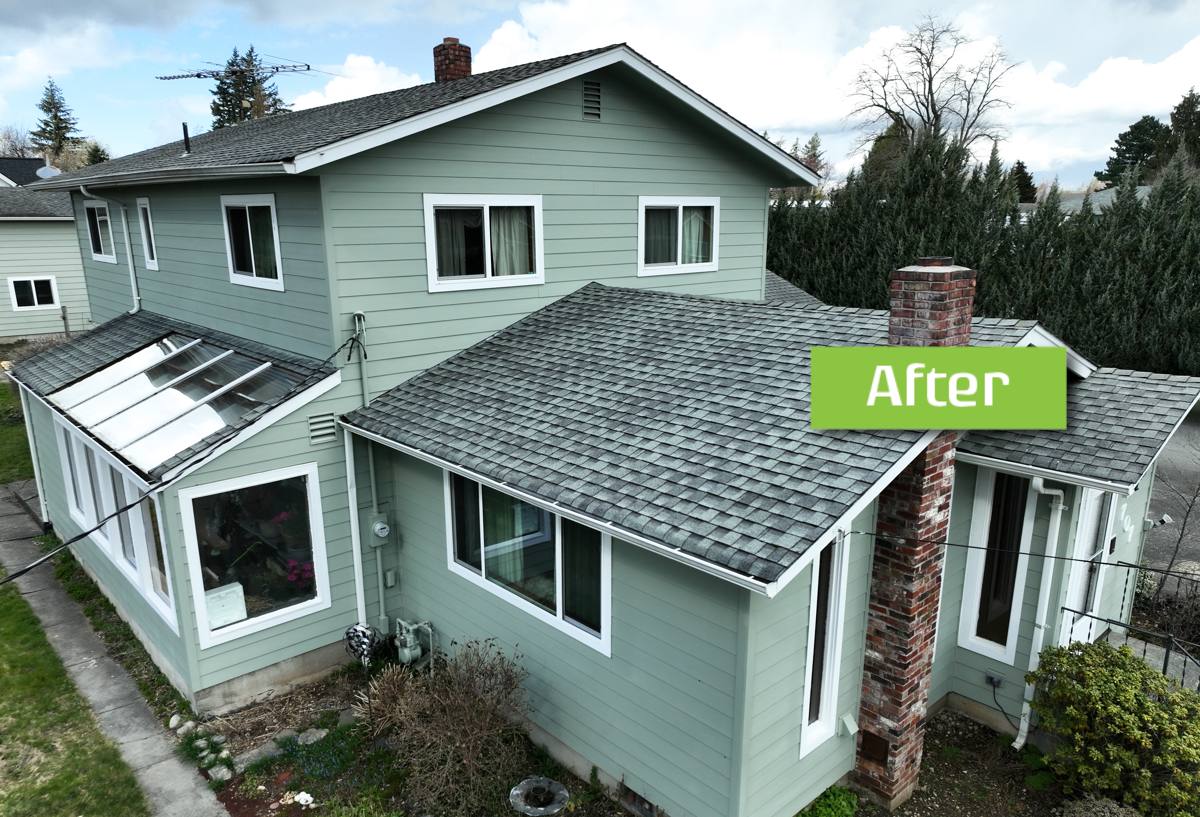
What Bow Homes Actually Need From a New Roof
Corrosion Resistance
Salt air oxidizes exposed steel fasteners, flashing, and hardware faster than it does further from the water. On a new install, that means using stainless or high-grade coated fasteners at flashing points, corrosion-resistant drip edge, and metal components rated for coastal exposure rather than standard-grade hardware meant for drier, inland installs.
Water Management, Not Just Water Shedding
Driving rain doesn't just fall straight down — wind pushes it sideways and up under shingle tabs, around vents, and into valleys. A correctly installed roof in this climate leans on redundant water barriers: high-quality underlayment, properly lapped ice-and-water shield at eaves and valleys, and step flashing installed with real overlap rather than the minimum code allows. The goal is a roof that stays dry even when wind-driven rain is hitting it from an angle for hours at a time.
Moss and Organic Growth Control
Long moss seasons mean roofs here need physical defenses built in from day one — proper slope-appropriate materials, zinc or copper strips at the ridge where appropriate, and enough attic ventilation to keep the roof deck temperature and moisture in a range that discourages growth. Moss isn't just cosmetic; its root structure holds moisture against the roofing material and lifts shingle edges over time, which shortens the life of an otherwise sound roof.
Material Choices That Make Sense for This Location
There's no single "best" roofing material for every home — the right choice depends on the home's roof pitch, budget, and how much maintenance the owner wants to take on. Here's how the common options stack up for a Bow, Anacortes property specifically.
| Material | Coastal/Moss Performance | Maintenance Level | Typical Lifespan Here |
|---|---|---|---|
| Architectural asphalt shingle | Good with proper ventilation and algae-resistant granules | Low to moderate | 20–30 years |
| Standing seam metal | Excellent once properly coated/fastened for salt exposure | Low | 40–50+ years |
| Composite/synthetic shake | Good; resists moisture absorption better than wood | Low | 30–50 years |
| Cedar shake | Requires diligent upkeep in a moss-prone, damp climate | High | 20–30 years with upkeep |
We're honest with homeowners about trade-offs rather than pushing one product. Cedar shake, for example, can look great, but in a climate with a long moss season and consistent moisture, it demands more regular cleaning and treatment to reach its full lifespan — that's a maintenance commitment, not a flaw in the product, and it's worth knowing about before you commit to it.
What a Correct Installation Actually Involves
A new roof is more than shingles nailed to a deck. The steps that get skipped on a rushed job are usually the ones that determine whether a roof lasts 15 years or 30 in this climate.
- Tear-off and deck inspection — removing the old roofing down to the deck and checking for soft spots, rot, or delamination caused by long-term moisture exposure, which is common on older Skagit County roofs that have seen decades of wet winters.
- Deck repair — replacing any damaged sheathing before anything new goes down. Installing new roofing over a compromised deck just hides a problem that will resurface.
- Ice-and-water shield at vulnerable points — eaves, valleys, and roof-to-wall intersections get a self-adhering waterproof membrane, not just standard felt, since these are the areas most exposed to wind-driven rain.
- Synthetic underlayment across the field — a durable, water-resistant layer across the whole roof deck as a backup barrier under the primary roofing material.
- Flashing at every penetration and transition — chimneys, skylights, vent pipes, and sidewalls all get properly formed and lapped flashing, which is where the majority of roof leaks in this region actually originate.
- Ventilation balancing — intake at the eaves and exhaust at the ridge sized to the attic volume, so moist air doesn't sit against the underside of the deck and encourage rot or moss-friendly conditions.
- Final material installation — shingles, metal panels, or shakes installed to manufacturer spec and fastening pattern, not shortcuts to save time.
- Cleanup and final walkthrough — magnetic sweep for nails, debris removal, and a walk-through so you understand what was done and what to expect going forward.
How Our Process Works
We keep the process straightforward because a new roof is already a big decision without added confusion.
1. On-Site Assessment
We look at the existing roof, the deck condition where visible, attic ventilation, and any specific exposure concerns tied to the property's location — trees, wind direction off the bay, and how much direct weather the roof takes.
2. Written Estimate
You get a clear, itemized estimate covering material, labor, and any deck repair contingencies, explained in plain language — no vague allowances buried in fine print.
3. Scheduling Around Weather
Roofing in this part of Skagit County means working around rain windows. We plan installs to minimize the time the deck is exposed and use tarping protocols if weather shifts mid-project.
4. Installation
Tear-off, deck repair as needed, underlayment, flashing, and final material — done by a crew, not subcontracted out piecemeal to whoever's available that week.
5. Final Walkthrough and Documentation
We review the completed work with you and provide documentation for warranty purposes, including material and workmanship coverage details.
Why a Crew That Already Works Bow Matters
Roofing crews that work across a wide range of unrelated climates tend to install to a generic spec. A crew that regularly works Bow and the surrounding Anacortes area already knows which fastener grades hold up against the salt air, which flashing details actually stop wind-driven rain instead of just meeting code minimums, and how much ventilation a roof here really needs to fight moss growth rather than just delay it. That local pattern recognition shows up in fewer callbacks and a roof that performs the way it's supposed to for its full expected lifespan.
It also means realistic scheduling. A crew unfamiliar with this area's weather patterns may underestimate how often rain windows shift a project timeline. We build that into our planning from the start instead of treating it as a surprise.
Signs Your Bow Home May Need a New Roof Soon
- Granules collecting in gutters or at downspout outlets in noticeable amounts
- Visible moss growth on the roof surface, especially in shaded areas facing north
- Curling, cupping, or cracked shingles, particularly on slopes with the most sun exposure
- Daylight visible through the roof deck from inside the attic
- Water stains on interior ceilings or in the attic near valleys or penetrations
- Soft or spongy spots when walking the roof, indicating deck rot underneath
- A roof approaching or past 20–25 years old with no major work done
- Rusting flashing or fasteners visible around vents, chimneys, or valleys
What Affects the Cost of a New Roof
Every roof is priced based on its specifics, but a few factors consistently move the number in either direction for homes in this area.
| Factor | Why It Matters |
|---|---|
| Roof size and pitch | Steeper roofs take longer to work safely and require more material overlap |
| Number of penetrations | Every vent, skylight, and chimney needs custom flashing work |
| Deck condition | Hidden rot or soft sheathing found during tear-off adds repair scope |
| Material selection | Asphalt, metal, and composite products carry different material and labor costs |
| Ventilation upgrades needed | Older homes often need added intake or exhaust vents to meet current standards |
| Access and site conditions | Tree cover, driveway access, and staging space affect labor time |
We break these factors out in every estimate so you know exactly what's driving the price, rather than getting a flat number with no explanation behind it.
Get a Free, No-Pressure Estimate
If your roof in Bow is showing its age, dealing with persistent moss, or just due for a real inspection, we're glad to take a look. The form below gets you a straightforward, no-pressure estimate from a crew that already understands what this part of Skagit County asks of a roof.