 Anacortes Siding
 Decking Built for Skyline's Waterfront Climate
Skyline sits close enough to the water that homes here take a different kind of weathering than decks a few miles inland in Skagit County. Salt-laden air off the Sound and Rosario Strait settles into wood grain, metal fasteners, and any gap where moisture can sit. Add Anacortes' long stretch of driving rain and the moss season that follows it, and a deck built with the wrong materials or the wrong details starts showing problems within a few seasons — not decades. Composite decking, installed correctly, is one of the more reliable answers to that combination, but "correctly" is doing a lot of work in that sentence. A lot of composite deck complaints we hear about started as installation shortcuts, not product failures.
This page covers what we've learned installing and repairing decks in and around Skyline: what the climate actually does to a deck over time, what a proper composite installation involves, and how our process is set up to account for the specific conditions of this neighborhood rather than a generic Pacific Northwest install.
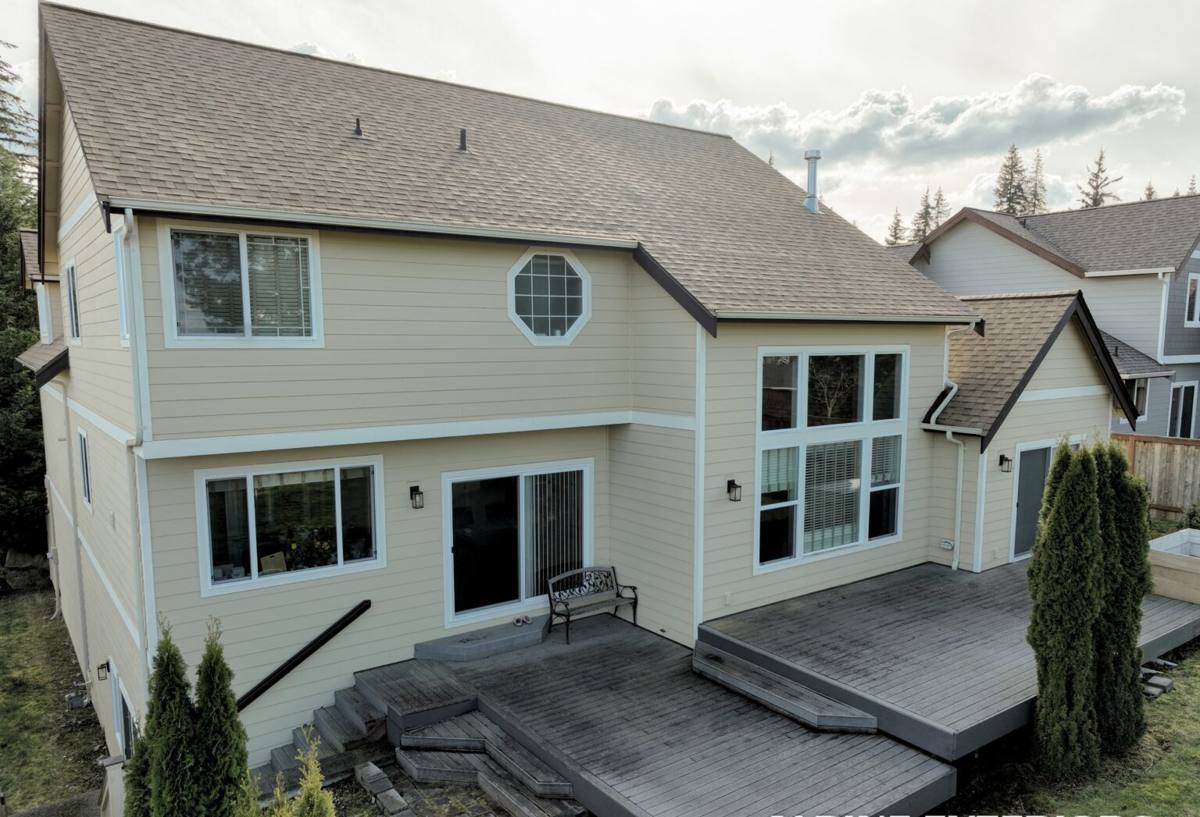
What Salt Air, Rain, and Moss Actually Do to a Deck
Salt Air and Corrosion
Salt exposure accelerates corrosion in fasteners, joist hangers, and any exposed hardware. On a deck built with the wrong grade of screws or hangers, you'll see rust streaks bleeding through the decking surface within a couple of years — and once a fastener starts corroding, it's losing holding strength even if it looks fine from above. Homes in Skyline that face open water or prevailing wind off the Sound see this faster than homes tucked further back into tree cover.
Driving Rain and Moisture Intrusion
Anacortes doesn't get the heaviest rainfall in the state, but the rain that does fall often comes sideways off the water, driven by wind. That means moisture gets pushed into places a calm, straight-down rain never would — under rail post bases, behind fascia boards, into end-grain cuts that weren't sealed. Composite boards themselves resist water absorption far better than wood, but the framing underneath, the fasteners, and any cut edges are still vulnerable if they're not detailed properly.
The Long Moss Season
Shaded, north-facing, or tree-covered sections of a deck in this area can stay damp for months at a stretch during fall and winter. That's exactly the condition moss and algae need. On wood decking, sustained dampness under a moss layer accelerates rot. On composite, it's less structurally dangerous but still a real problem — moss holds moisture against the board surface, can stain some cap materials, and makes the deck slippery and unsafe underfoot. Airflow, drainage, and board selection all affect how bad this gets.
Why Composite Makes Sense for This Neighborhood
We're not going to claim composite decking is maintenance-free — no exterior product installed on Fidalgo Island is. But compared to wood, a quality composite board holds up better against the specific stresses Skyline homes deal with:
- It doesn't absorb water the way wood does, so it's less prone to swelling, cupping, and splintering from repeated wet-dry cycles.
- It won't rot, which matters most in the shaded, slow-drying sections of a deck where moss tends to establish.
- Modern capped composite boards resist staining better than wood, which helps against the organic buildup that comes with a long moss season.
- It doesn't need annual staining or sealing, which is a real advantage for homeowners who aren't up on a ladder or crawling around a deck every spring.
The trade-off is upfront cost and the fact that composite is less forgiving of poor installation than wood — gaps, fastening, and drainage details all need to be right the first time because composite doesn't "breathe" or self-correct the way wood sometimes does.
What a Correct Composite Installation Actually Involves
The Substructure Comes First
Composite decking is only as good as what's underneath it. In a climate with this much moisture exposure, we pay close attention to:
- Joist spacing appropriate to the board manufacturer's specs — composite often requires tighter spacing than wood, especially on angled or picture-frame layouts.
- Joist tape or a comparable moisture barrier on top of framing, so water that reaches the substructure doesn't sit directly against untreated wood.
- Corrosion-resistant fasteners and hardware rated for coastal exposure, not standard hot-dip galvanized hardware that will start showing rust streaks within a few years near salt air.
- Proper ledger board flashing where the deck attaches to the house, since this is one of the most common points of hidden water intrusion.
Drainage and Airflow Underneath
Decks built low to the ground or over patios need a real plan for where water goes. We grade the substructure, maintain clearance for airflow, and where a deck sits over living space or storage, install proper under-deck drainage rather than letting water pool against ledger boards and posts. Stagnant, poorly drained sections are exactly where moss and mildew take hold first.
Fastening and Expansion
Composite boards expand and contract with temperature more than most homeowners expect. Hidden fastener systems and gapping need to account for this, especially on longer runs. Get the gapping wrong and you'll see boards buckle, or gaps close up entirely during warm stretches and open too wide during cold snaps.
Cut Edges and Post Details
Any cut end of a composite board should be capped or sealed per the manufacturer's installation guide — an exposed cut edge left unsealed on a deck this close to the water is a shortcut that shows up as swelling or discoloration at board ends within a season or two. Rail posts and stair stringers get the same attention, since these are common weak points for water tracking into the structure.
Comparing Common Decking Options for This Climate
| Material | Moisture Resistance | Maintenance | Typical Lifespan Here | Notes for Skyline Conditions |
|---|---|---|---|---|
| Pressure-treated wood | Moderate — absorbs water, prone to swelling | Annual staining/sealing recommended | 10-15 years | Needs consistent upkeep to resist rot and moss staining near the water |
| Cedar | Naturally rot-resistant but still absorbs moisture | Regular sealing to maintain color and resistance | 15-20 years | Good appearance, but salt air accelerates graying and checking without upkeep |
| Capped composite | High — minimal absorption, resists rot | Occasional cleaning, no staining/sealing | 25-30+ years | Best overall fit for driving rain, salt air, and moss exposure if installed correctly |
| Uncapped composite (older generation) | Lower than capped composite — more prone to surface moisture and staining | More frequent cleaning | 15-20 years | We generally steer clients toward capped boards for this climate given the moss and algae exposure |
Our Process for Skyline Deck Projects
1. On-Site Assessment
We look at sun exposure, wind direction, existing drainage, and how close the deck sits to the water or open air, since that determines how aggressive the moss and salt exposure will be on different parts of the structure.
2. Substructure Evaluation or Rebuild
If we're replacing an existing deck, we check the ledger, posts, and footings before anything new goes down. A new composite surface on a compromised substructure just hides the problem instead of fixing it.
3. Material Selection
We walk through board options, colors, and price tiers honestly, including where a mid-tier capped composite makes more sense than a premium line for a given budget and exposure level.
4. Installation
Framing, moisture barrier, fastening, and finish work follow the manufacturer's specifications for coastal and high-moisture installs, not a generic install sheet.
5. Final Walkthrough
We go over gap spacing, drainage points, and basic seasonal care so you know what (if anything) needs attention going into the wet months.
Seasonal Care Checklist for Skyline Decks
- Sweep debris off the deck surface regularly in fall — wet leaves left in place are a primary moss and stain source.
- Rinse salt residue off the surface periodically if the deck faces open water or takes direct wind off the Sound.
- Check that gutters and downspouts near the deck are directing water away from posts and ledger connections.
- Keep planters and rugs off the surface for extended periods, especially in shaded areas — they trap moisture underneath.
- Inspect railing posts and stair connections once a year for movement or signs of water tracking at the base.
- Clean composite boards with a soft brush and mild soap a couple of times a year rather than a pressure washer on aggressive settings, which can damage the cap layer.
Permits and Practical Considerations
Deck projects in Anacortes and unincorporated Skagit County areas near Skyline may require permitting depending on the height, size, and attachment to the home — this is something we confirm and handle as part of scoping the job rather than something you need to chase down yourself. Height above grade, guardrail requirements, and stair geometry all factor into what's required, and getting this right up front avoids problems at resale.
Why a Crew That Already Works Skyline Matters
A deck built by someone unfamiliar with this specific stretch of coastline often looks fine for the first year or two before the shortcuts show up — corroding fasteners, moss taking over a shaded corner, boards buckling because gapping wasn't set for local temperature swings. We've seen what actually fails here versus what holds up, and we build to account for salt air, driving rain, and a moss season that runs longer than most installers plan for. That local pattern recognition is the difference between a deck that needs attention every year and one that doesn't.
If you're considering a new composite deck or need to know whether an existing one is worth repairing versus replacing, we're happy to take a look. Estimates are free and there's no pressure — just an honest read on what your deck needs given its exposure and condition. Use the form below to get in touch.