 Anacortes Siding
 Windows in Flounder Bay Have a Harder Job Than Most
Flounder Bay sits close enough to the water that its homes take a different kind of weather beating than houses further inland in Skagit County. Salt-laden air works on metal components, driving rain off Rosario Strait and the surrounding waterways pushes moisture sideways into wall assemblies, and a long, damp moss season keeps everything shaded and wet for weeks at a time. A window that's installed correctly shrugs all of that off for decades. A window that's installed with shortcuts — even a good window from a good manufacturer — can start leaking, fogging, or rotting the framing around it within a few winters.
This page is specifically about window installation for homes in and around Flounder Bay. We're not going to give you a generic "why replace your windows" pitch. We're going to walk through what this particular stretch of Anacortes coastline demands from a window install, what a correct job actually involves, and how we handle it when we're out at your property.
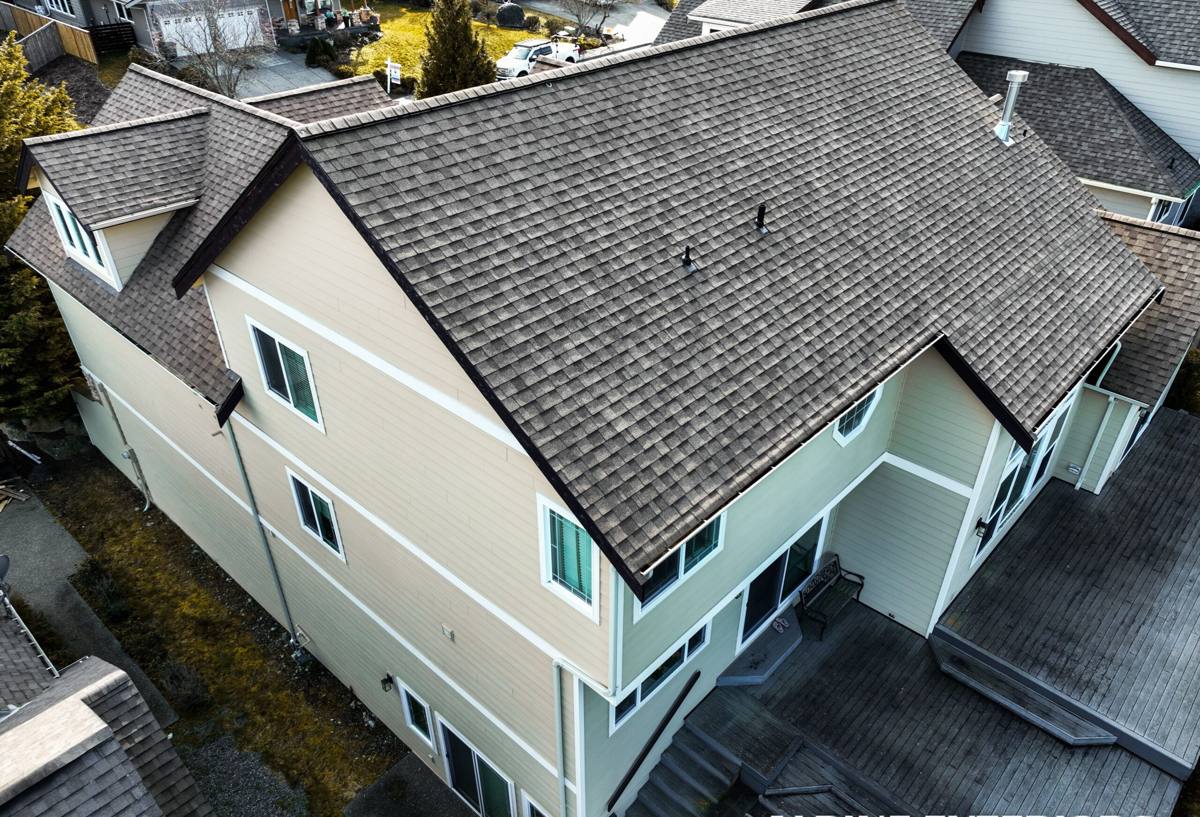
What Flounder Bay's Climate Actually Does to a Window Installation
Salt Air and Metal Hardware
Homes closer to the water deal with airborne salt that settles on hardware, fasteners, and exposed metal trim. Over time this accelerates corrosion on lower-grade hinges, cranks, and screws. It's not usually the window sash itself that fails first — it's the small metal parts holding it together and the fasteners anchoring it to the frame. We pay attention to hardware and fastener quality specifically because of this, not because a spec sheet told us to.
Driving, Wind-Driven Rain
Anacortes gets rain that doesn't just fall — it's pushed sideways by wind coming off the water. That matters enormously for window installation because a huge share of window leaks aren't failures of the window itself; they're failures of the flashing and sealant detail around the window opening. Wind-driven rain finds any gap in that detail and forces water behind the trim, where it's invisible until you've got soft framing or a stain on an interior wall.
Moss Season and Prolonged Dampness
Skagit County's moss season isn't just a roof problem. Shaded, north-facing walls and window sills that stay damp for extended stretches create the exact conditions wood rot and mildew need. Sills, sashes, and the trim around a window are all vulnerable if the install doesn't manage water runoff and give surfaces a chance to dry.
What a Correct Window Installation Involves
Whether it's one replacement window or a full house, the fundamentals don't change. A window install is really two jobs stacked together: setting the window itself, and building a water-management system around the opening that keeps moisture out for the life of the window.
- Removing the old window and inspecting the rough opening for rot, soft wood, or prior water damage before anything new goes in
- Repairing or rebuilding any damaged framing found during that inspection — never installing over a compromised opening
- Installing a proper drainage plane and flashing system (sill pan, jamb flashing, and head flashing) so any water that gets past the exterior trim drains back out instead of pooling
- Setting the window level, plumb, and square, then securing it per the manufacturer's fastening schedule
- Insulating the gap between the window frame and the rough opening correctly — not overpacked, not left empty
- Sealing the exterior with the right sealant in the right locations, leaving the bottom of the window able to drain rather than sealing it into a bathtub
- Finishing interior and exterior trim, and testing operation of every sash before we consider the job done
Skip the flashing detail or seal the bottom of the window shut, and you can install the best window on the market and still get a leak. This is the part of the job that doesn't show up in a product brochure, and it's where most installation failures actually originate.
Our Process for a Flounder Bay Window Job
1. On-Site Assessment
We start by looking at your home's actual exposure — which walls face the water and prevailing wind, where moss and moisture have historically been a problem, and the condition of the existing window openings. This tells us where to be most careful with flashing and drainage detail.
2. Honest Scope and Estimate
We'll tell you plainly if we expect to find rot or damage once we open up an opening, and we'll walk you through what that repair looks like and roughly what it adds to the job before we start, not after. We'd rather over-communicate this than surprise you mid-project.
3. Careful Removal and Opening Prep
Old windows come out carefully to protect interior and exterior finishes. Every rough opening gets inspected before a new window goes in — this is non-negotiable, because installing a new window into a compromised opening just guarantees a repeat problem in a few years.
4. Installation with Full Flashing Detail
This is where we spend the extra time that matters in this climate. Sill pans, properly lapped flashing, and correct sealant placement aren't optional add-ons for us — they're the standard install, every time, regardless of window brand or price point.
5. Final Check and Walkthrough
We test every window's operation, check the exterior finish work, and walk the job with you before we call it complete.
Choosing the Right Window for a Waterfront-Adjacent Home
Not every window is a great fit for Flounder Bay's conditions. We steer homeowners toward materials and hardware that hold up to salt exposure and sustained moisture, and we're upfront about the maintenance trade-offs of different options rather than pushing whatever has the best margin.
| Factor | What to Consider in This Climate |
|---|---|
| Frame material | Vinyl and fiberglass resist salt corrosion better than uncoated aluminum; wood needs consistent maintenance to hold up to prolonged dampness |
| Hardware finish | Corrosion-resistant hardware matters more here than in drier inland areas — cheap hardware is often the first thing to fail |
| Glazing | Dual or triple-pane with a quality seal reduces interior condensation, which is common in our damp, cooler months |
| Sill design | A sloped sill that sheds water outward performs better than a flat sill in wind-driven rain |
| Finish/coating | Factory-applied, marine-rated, or salt-air-rated exterior finishes hold color and resist pitting longer near the water |
We're not going to tell you a specific brand is "bad" — most reputable manufacturers make products that perform fine when installed correctly. What we will tell you honestly is when a particular product's maintenance requirements, moisture behavior, or installation sensitivity make it a worse fit for a home that's exposed to salt air and driving rain, versus one that's more sheltered.
Signs Your Current Windows Are Losing the Fight
Homeowners often wait too long on window problems because early symptoms look minor. In a climate like this one, minor symptoms tend to compound faster than they would inland.
- Fogging or condensation between panes, which usually means a failed seal
- Soft or discolored trim or sill wood, especially on walls facing prevailing weather
- Drafts you can feel even with the window fully latched
- Difficulty opening, closing, or locking a sash that used to operate smoothly
- Visible gaps, cracked or missing caulk, or paint failure around the frame
- A musty smell near a window that intensifies during wet stretches
Any one of these on its own isn't necessarily an emergency. Several of them together, or any sign of soft framing, is worth a professional look before the next wet season makes it worse.
Why It Matters That We Already Work in Flounder Bay
There's a real difference between a crew that installs windows generally and a crew that's spent time on homes specifically exposed to Flounder Bay's mix of salt air, wind-driven rain, and shaded, moss-prone conditions. We already know which wall orientations tend to take the worst weather here, which materials hold up and which struggle, and where past installations in this area have failed when the flashing detail was skipped. That's knowledge you can't get from a product spec sheet — it comes from doing the work in this specific location, on this specific coastline, in Skagit County's specific weather pattern.
It also means we're a known, local option if something needs attention after the install — not a crew that did one job in the area and moved on.
Timing a Window Project Around Our Weather
Window installation can be done in most seasons, but there are practical reasons to plan ahead rather than wait until a problem is urgent. Scheduling around the wetter months reduces the window of exposure during the install itself, and getting ahead of moss season means your new windows and their surrounding trim have already had a chance to fully cure and seal before the dampest stretch of the year sets in. If you're already seeing early warning signs, it's worth getting an assessment sooner rather than waiting for the next round of driving rain to make the problem worse.
Get an Honest Look at Your Windows
If you're in Flounder Bay or elsewhere around Anacortes and want a straight answer on whether your windows need attention, we're happy to come take a look. We'll give you an honest assessment, a clear scope of work, and a free, no-pressure estimate — use the form below to get started.