 Anacortes Siding
 Why West Anacortes Siding Takes a Different Kind of Beating
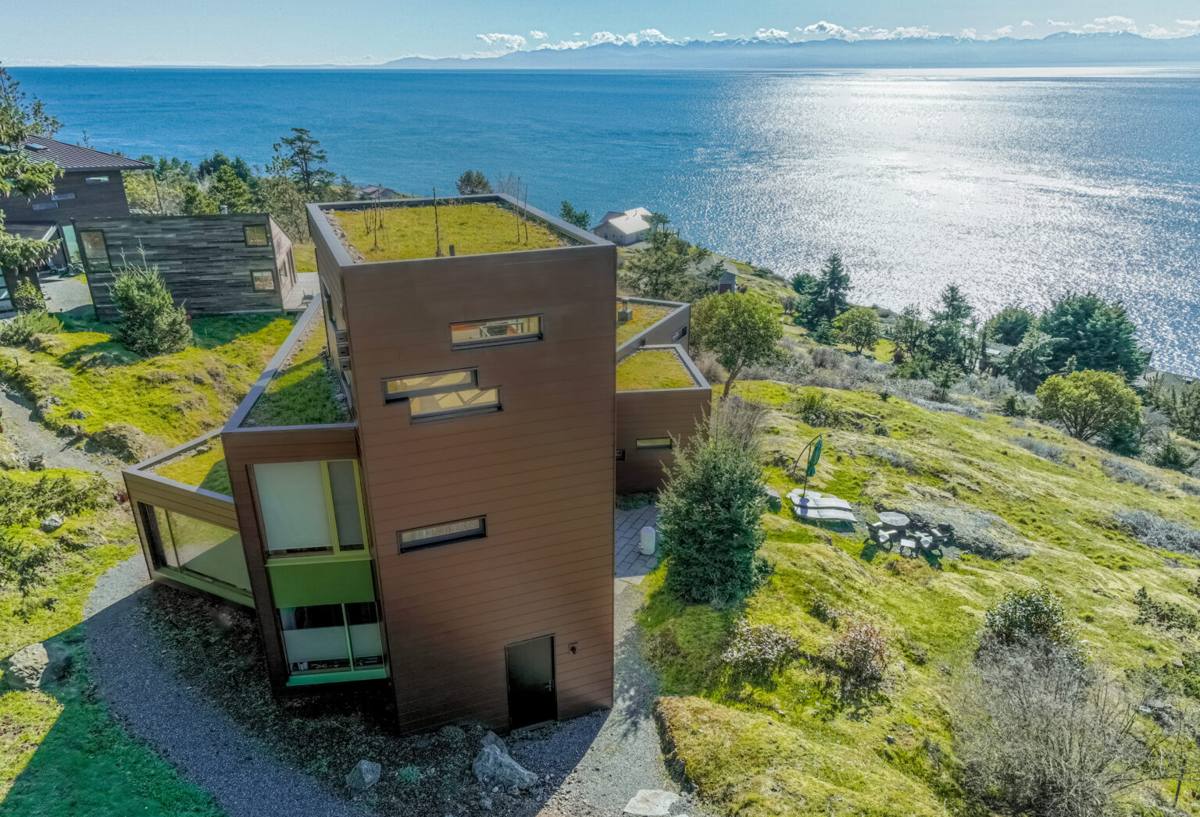
West Anacortes sits closer to open water than most of Skagit County — facing Rosario Strait and Guemes Channel on Fidalgo Island, with less tree cover breaking the wind than you'll find further inland. That location is beautiful, and it's also hard on a house. Siding here deals with salt-laden air, wind-driven rain that hits walls at an angle instead of just falling straight down, and a moss season that runs long even by Pacific Northwest standards. Any siding product you put on a West Anacortes home has to handle all three at once, year after year, not just survive one bad winter.
Salt Air and Wind-Driven Rain
Salt air isn't just a coastal cliché — airborne salt accelerates corrosion on fasteners, hardware, and unprotected paint film, and it works faster on surfaces facing open water. Combine that with wind-driven rain, which forces moisture into laps, seams, and fastener penetrations that would stay dry in a calmer inland setting, and you get a wall assembly that's wet more often and dries out more slowly than the same house a few miles east.
The Long Moss Season
Shaded, north- and west-facing walls in this part of Skagit County can stay damp for months at a stretch between fall and spring. That's exactly the environment moss and algae need to take hold. On the wrong siding material, moss growth isn't just cosmetic — it holds moisture against the surface, which shortens the life of paint and, on some products, the substrate underneath it.
What This Exposure Does to the Wrong Siding Choice
We've seen what happens when the wrong product goes up on a house exposed to Rosario Strait weather. Wood-based sidings absorb moisture at cut edges and fastener holes, and once water gets behind the surface coating, rot follows — often invisibly, until a soft spot shows up during a routine repaint. Vinyl siding expands and contracts more than people expect in a climate with this much temperature swing between summer sun and winter rain, and its seams are a natural place for wind-driven moisture to find a way behind the panel. Paint on any exterior surface fails faster here than it would inland, simply because the wall is wet more often.
None of that means those products are broken everywhere — plenty of them perform fine in calmer, drier climates. It means West Anacortes isn't that climate, and a siding decision made for a different environment tends to show its weaknesses here sooner rather than later.
Why We Install Only James Hardie Fiber Cement in This Area
We standardized on James Hardie siding company-wide, and nowhere does that decision matter more than on a marine-exposed property like the ones we work on in West Anacortes.
Fiber Cement Doesn't Rot
James Hardie siding is cement-based, not wood-based. It doesn't absorb water the way wood or wood-composite products do, and it won't rot from the inside out the way a saturated wood substrate will. In a climate where walls stay damp for extended stretches, that's not a minor feature — it's the difference between a siding system that ages gracefully and one that's quietly failing behind the paint.
ColorPlus Finish Holds Up to Salt and UV
James Hardie's ColorPlus Technology is a factory-applied, baked-on finish, not a field-applied paint job. It's engineered to resist fading and hold its color longer than standard field paint, which matters in a location where salt air and UV exposure both work against a painted surface. It also means touch-up and repainting cycles are less frequent than with site-painted siding.
HZ5 Engineering for This Climate
James Hardie manufactures its siding in different HardieZone formulations for different climates. The HZ5 configuration is built for regions that see more moisture and freeze exposure — which describes western Skagit County far better than it describes a dry inland climate. That engineering shows up in the backer composition and the installation specs we follow, not just in the marketing.
Non-Combustible
Fiber cement doesn't burn the way wood siding does. It's not the primary reason most homeowners call us, but it's a real, practical advantage of the material and one more reason we don't hedge between product lines.
What a Correct Installation Actually Involves Here
James Hardie siding is only as good as the installation behind it. A rushed or generic install can undercut everything the product is engineered to do, and in a high-exposure location like West Anacortes, installation mistakes show up faster than they would in a milder climate.
Clearance and Flashing
Correct ground clearance, deck and roof-line flashing, and kick-out flashing at roof-to-wall intersections keep bulk water from ever reaching the siding's bottom edge or getting trapped behind it. These details matter on every house, but they matter more where wind-driven rain regularly hits the wall at an angle.
Drainage Plane and Rainscreen Considerations
Behind the siding, a properly lapped weather-resistive barrier — and, on more exposed elevations, a drainage gap — gives any moisture that does get past the siding a way to drain and dry instead of sitting against the sheathing. On walls facing open water, we pay closer attention to this than we would on a sheltered inland elevation.
Fastening, Gaps, and Cut Edges
James Hardie's installation instructions specify fastener type, placement, and spacing, along with joint gaps and sealant details. Field-cut edges need to be painted or sealed before installation, not after — an easy step to skip and an easy one to check for. None of this is exotic, but skipping any of it is exactly how a good product ends up with a preventable problem years down the road.
Cost and Planning Factors for a West Anacortes Project
Every house is different, but these are the factors that most often move the scope and cost of a James Hardie project on a marine-exposed home in this area.
| Factor | Why It Matters in West Anacortes | What It Means for Your Project |
|---|---|---|
| Wall orientation | Elevations facing Rosario Strait or Guemes Channel take more direct wind-driven rain and salt exposure than sheltered walls | May warrant extra flashing detail or drainage-plane attention on exposed sides |
| Existing sheathing condition | Long-term moisture behind failing siding can damage sheathing before it's visible from outside | Sheathing repair, if needed, is priced separately once old siding is off |
| Board profile | Lap siding and shingle-style siding have different material and labor requirements | Shingle detailing generally costs more per square foot than standard lap |
| Trim and fascia scope | Salt air and moss exposure age trim as fast as field siding | Including trim in the same project avoids a mismatched, half-finished look |
| Site access | Lot layout, driveway access, and staging space affect crew efficiency | Tighter or sloped sites can add time compared to open, easy-access lots |
How We Handle a Job From Estimate to Finish
Our process doesn't change because a house sits closer to the water — if anything, we're more careful about a few specific checks.
Assessment
We walk the exterior, look at wall orientation relative to prevailing wind and rain, and check for signs of existing moisture problems — soft spots, staining, or moss buildup that suggests water is sitting somewhere it shouldn't.
Tear-Off and Inspection
Once the old siding comes off, we inspect the sheathing and weather-resistive barrier underneath. This is the point where hidden moisture damage from years of the wrong siding or failed flashing becomes visible, and it's addressed before anything new goes up — not covered over.
Installation to Spec
We install James Hardie siding to the manufacturer's published specifications for clearance, fastening, flashing, and joint treatment, adjusted for the specific exposure of each elevation.
Final Walk-Through
Before we call a job done, we walk it with the homeowner, check the details that matter most in this climate — flashing, clearances, caulked joints — and answer any questions about caring for the finished siding.
Living With James Hardie Siding in a Moss-Prone Climate
James Hardie siding doesn't rot the way wood does, but any exterior surface in western Skagit County will collect some moss and algae over time on shaded elevations — that's the climate, not a defect in the product. Periodic gentle cleaning (avoiding high-pressure washing that can force water behind laps) and keeping gutters and downspouts clear so water isn't sheeting down the wall both go a long way toward keeping ColorPlus finish looking like new for years longer.
Why a Crew That Already Works West Anacortes Matters
Siding installation instructions are written by the manufacturer, but applying them well depends on understanding the specific house in front of you. A crew that regularly works West Anacortes has already seen how wind and rain behave on this side of Fidalgo Island, which elevations tend to take the worst of it, and where moisture problems most commonly show up on homes of this vintage and construction type in the area. That local pattern recognition doesn't replace following the spec — it's what makes following the spec count for something on a house that's actually going to be tested by this exact climate.
Questions to Ask Before You Hire a Siding Contractor Here
- Do they install James Hardie siding as a specialty, or as one option among several competing products?
- Will they inspect and address sheathing condition before installing new siding, not just cover it over?
- Can they explain their flashing and clearance details specific to wind-driven rain exposure?
- Do they follow James Hardie's published fastening and joint-gap specifications rather than generic practices?
- Have they worked on homes in West Anacortes or similarly exposed parts of Skagit County before?
If your West Anacortes home's siding is showing moss, peeling paint, soft spots, or just years of wear from salt air and driving rain, we're happy to take a look and talk through what correct James Hardie installation would involve for your specific walls. Estimates are free, there's no pressure, and the form below is the easiest way to get one scheduled.