 Anacortes Siding
 Building Decks for West Anacortes Conditions
West Anacortes sits close enough to the water that salt air is part of daily life, not an occasional nuisance. Combine that with Skagit County's long wet season and the moss that comes with it, and a deck built to generic specs is going to show problems years before it should — soft spots, corroded fasteners, slick surfaces, and finishes that fail early. A deck built correctly for this specific neighborhood accounts for all of that from the framing up, not just at the surface.
This page covers what a deck actually needs to hold up here, how we build them, and what to expect if you're planning a new deck or replacing one that's failing.
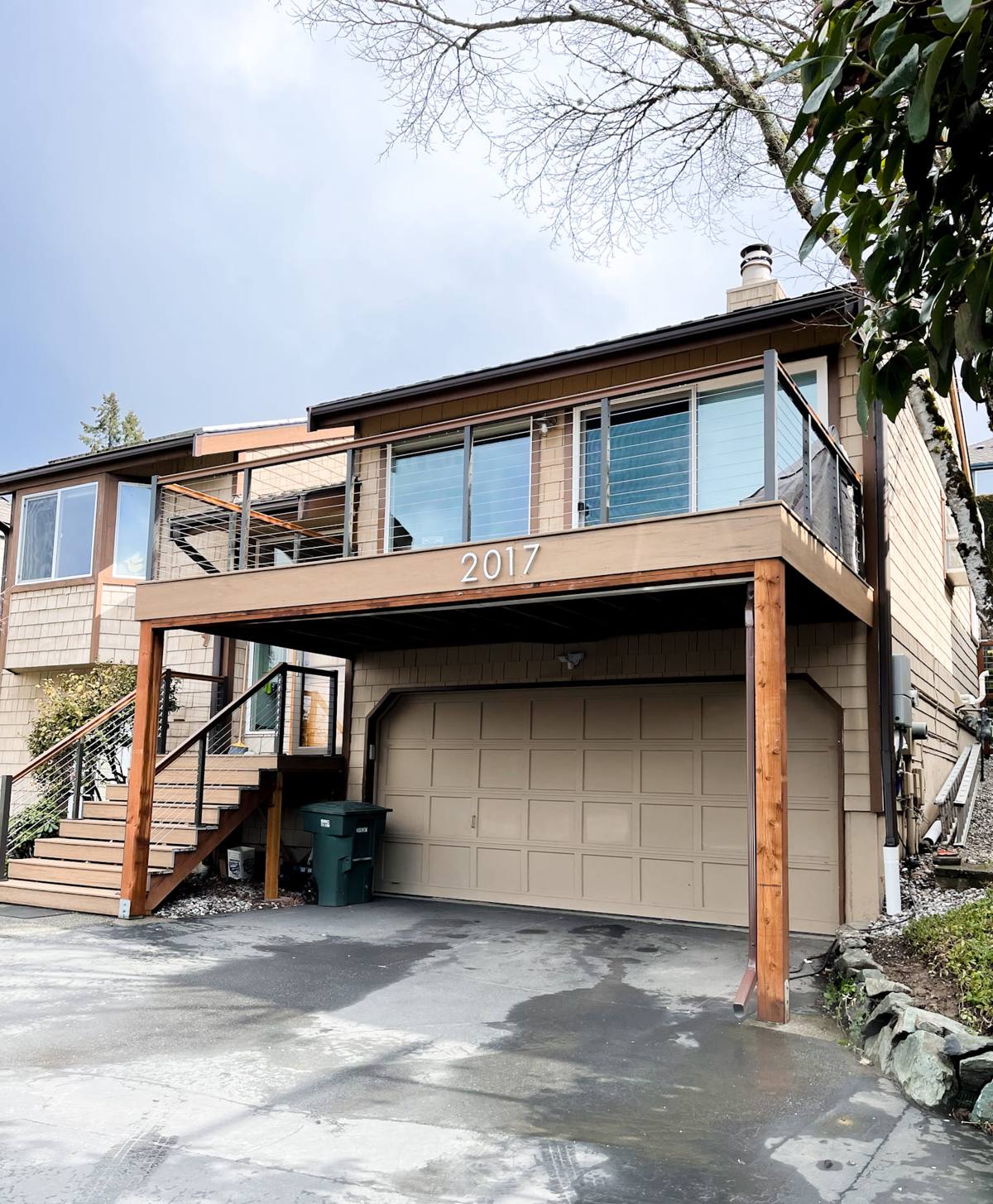
What Salt Air and Driving Rain Do to a Deck
Homes in West Anacortes deal with a combination of stresses that inland decks rarely see at the same intensity:
- Salt-laden air accelerates corrosion on fasteners, brackets, and any exposed metal hardware — even "corrosion resistant" fasteners can fail early if the wrong grade is used.
- Driving rain pushed by wind off the water gets under railings, into end-grain cuts, and behind ledger boards if flashing isn't done right, leading to hidden rot long before the surface looks bad.
- Moss and algae growth during the wet months make decking surfaces slick and, over time, hold moisture against the wood or composite longer than it should sit.
- UV and moisture cycling — even with our relatively mild summers, wood and finishes go through repeated wet-dry cycles that open up joints and checking in lower-grade lumber.
None of these problems are dramatic on their own. They're cumulative. A deck that gets the details right the first time avoids most of them; a deck that skips those details ends up needing board replacement, refinishing, or a full rebuild years ahead of schedule.
Where the Framing and Structure Matter Most
Fasteners and Hardware
This is the single biggest point of failure we see on older decks near the water. Standard galvanized fasteners corrode faster in salt air than most homeowners expect, and once a joist hanger or ledger bolt starts rusting, it's compromising structural connections you can't see from the surface. We use fasteners and structural hardware rated for coastal exposure — this costs more up front and is worth every dollar over the life of the deck.
Ledger Attachment and Flashing
Where the deck attaches to the house is the most water-vulnerable connection on the whole structure. Correct flashing — installed in the right order relative to the house's water-resistive barrier — keeps driving rain from working its way behind the ledger board and into the rim joist. This is easy to get wrong and hard to inspect once the deck is built, which is exactly why it needs to be done right the first time.
Footings and Posts
Skagit County's soil moisture and freeze-thaw cycling (mild but real) mean footing depth and post-base hardware need to be sized correctly, not minimized to save a bit of concrete. Post bases that hold the post above standing water and off direct soil contact add years to the structure's life.
Choosing Decking Material for This Climate
There's no single "best" decking material — the right choice depends on how much maintenance you're willing to do and what you're trying to spend. Here's how the common options actually perform in a salt-air, high-moss environment:
| Material | Moss/Algae Resistance | Maintenance | Typical Lifespan Here |
|---|---|---|---|
| Pressure-treated wood | Low — needs regular cleaning and sealing | Annual cleaning, periodic re-sealing | 10-15 years with upkeep |
| Cedar | Moderate — natural oils help but fade over time | Periodic oiling/staining | 15-20 years with upkeep |
| Composite decking | Good — but still needs periodic washing in moss season | Low — occasional wash-down | 25-30+ years (per manufacturer warranty) |
| PVC/capped composite | Best — fully capped surface sheds moisture | Lowest — wash-down only | 25-30+ years (per manufacturer warranty) |
For homeowners who want the lowest long-term maintenance in a moss-prone, salt-air setting, capped composite is generally the most sensible investment even though the upfront cost is higher. For homeowners who prefer the look and feel of real wood and are willing to do the seasonal upkeep, cedar with a quality finish schedule holds up well — it just needs a real maintenance commitment, not a "set it and forget it" mindset.
Railings and Fasteners on the Visible Surface
Railing hardware sees the same corrosion exposure as structural fasteners, and it's more visible when it starts to rust or streak the decking below it. We spec railing systems and visible hardware with the same coastal-duty standard as the structural connections — this is one of those details that's cheap to get right during construction and expensive to fix after the fact.
Surface Traction and Moss Management
Moss buildup on a deck surface isn't just cosmetic — a slick deck during our long wet season is a real fall hazard, especially on stairs. A few things reduce the problem at the design stage:
- Decking profiles with grooved or textured surfaces shed water faster and resist moss buildup better than smooth-face boards.
- Adequate gapping between boards allows drainage and airflow, which slows moss and mildew growth.
- Deck orientation and any nearby shade from trees or the house affect how much moisture sits on the surface — something worth discussing during design if your lot has heavy tree cover.
- A basic seasonal cleaning routine (a stiff brush and a deck-safe cleaner before the wet season sets in) goes a long way regardless of material.
Our Deck Building Process
- On-site assessment — we look at the house's ledger location, existing water management (gutters, grading), sun/shade exposure, and any structural constraints specific to the lot.
- Design and material selection — we walk through decking material, railing style, and layout based on your budget and how much maintenance you want to take on long-term.
- Permitting — most deck projects in Anacortes require a permit, especially anything attached to the house or built above a certain height. We handle this as part of the process.
- Framing — footings, posts, beams, and joists built to coastal-duty fastener and hardware standards, with correct ledger flashing.
- Decking and railing installation — surface material and railing system installed per manufacturer spec, which matters for warranty coverage.
- Final walkthrough — we go over care and maintenance specific to the material you chose, so you know what seasonal upkeep (if any) is expected.
New Build vs. Deck Replacement
Not every project is a new deck from scratch. A lot of our West Anacortes work is replacing decks that are structurally tired — rotted ledger connections, rusted-through hardware, or decking that's been patched one too many times. If your existing deck's framing is sound, we can sometimes replace just the surface decking and railings, which costs less than a full rebuild. But if the ledger flashing was never done right or the framing has hidden rot, patching the surface just delays a bigger problem. Part of our assessment is being honest with you about which situation you're in.
Cost Factors to Expect
Deck pricing varies a lot based on size, material, height off the ground, and site access, so we won't quote a number without seeing the project. What generally moves the price:
| Factor | Why It Matters |
|---|---|
| Decking material | Composite/PVC costs more upfront than wood but less in long-term maintenance |
| Height and footing depth | Taller decks need more substantial framing and footings, adding cost |
| Railing style | Cable, glass, and metal railing systems cost more than standard wood or composite balusters |
| Site access | Difficult access for equipment and material delivery can add labor time |
| Permit and inspection requirements | Attached, elevated, or larger decks typically require more inspection steps |
A Pre-Project Checklist for Homeowners
If you're planning a deck project in West Anacortes, here's what's worth thinking through before you get quotes:
- How much seasonal maintenance are you realistically willing to do — none, or a bit of upkeep for a different look and lower material cost?
- Is your current deck (if you have one) showing soft spots, rust streaks, or gaps at the house connection? These are signs to get it inspected before you decide on repair vs. replace.
- Do you know where your property lines and setbacks are? This affects deck size and placement.
- Is the deck attached to the house, or freestanding? This changes the permitting and flashing requirements.
- Do you want built-in features (benches, planters, stairs to grade) that should be part of the design from the start rather than added later?
Why Local Experience with This Neighborhood Matters
A crew that mostly builds decks inland doesn't always think about coastal-duty fasteners as a default — it's an upgrade they might not mention unless asked. A crew that works West Anacortes regularly treats it as standard practice, because we've seen what happens to decks built without it. That local pattern recognition — knowing which details actually matter for this specific stretch of Skagit County versus which are optional elsewhere — is the real value of hiring someone who already works this area.
If you're planning a new deck or need an honest look at whether your current one needs repair or replacement, we're happy to come take a look. The estimate is free, there's no pressure, and you'll get a straight answer about what your deck actually needs.