 Anacortes Siding
 Roofing Built for West Anacortes, Not Just Skagit County in General
West Anacortes sits close enough to the water that homes here take a different kind of weather beating than roofs a few miles inland. Salt-laden air moves off Rosario Strait and Fidalgo Bay, driving rain comes in sideways during fall and winter storms, and the tree cover that gives the neighborhood its character also means shade, damp air, and a moss season that can run most of the year. Asphalt shingle roofing is still the right choice for most homes here on cost and performance, but it has to be installed and detailed with this specific exposure in mind. A shingle roof spec'd for a dry inland town and installed without adjustment will show its age in West Anacortes years before it should.
This page covers what a correctly built and maintained asphalt shingle roof looks like for this specific area, what our process involves, and what to watch for as the roof ages.
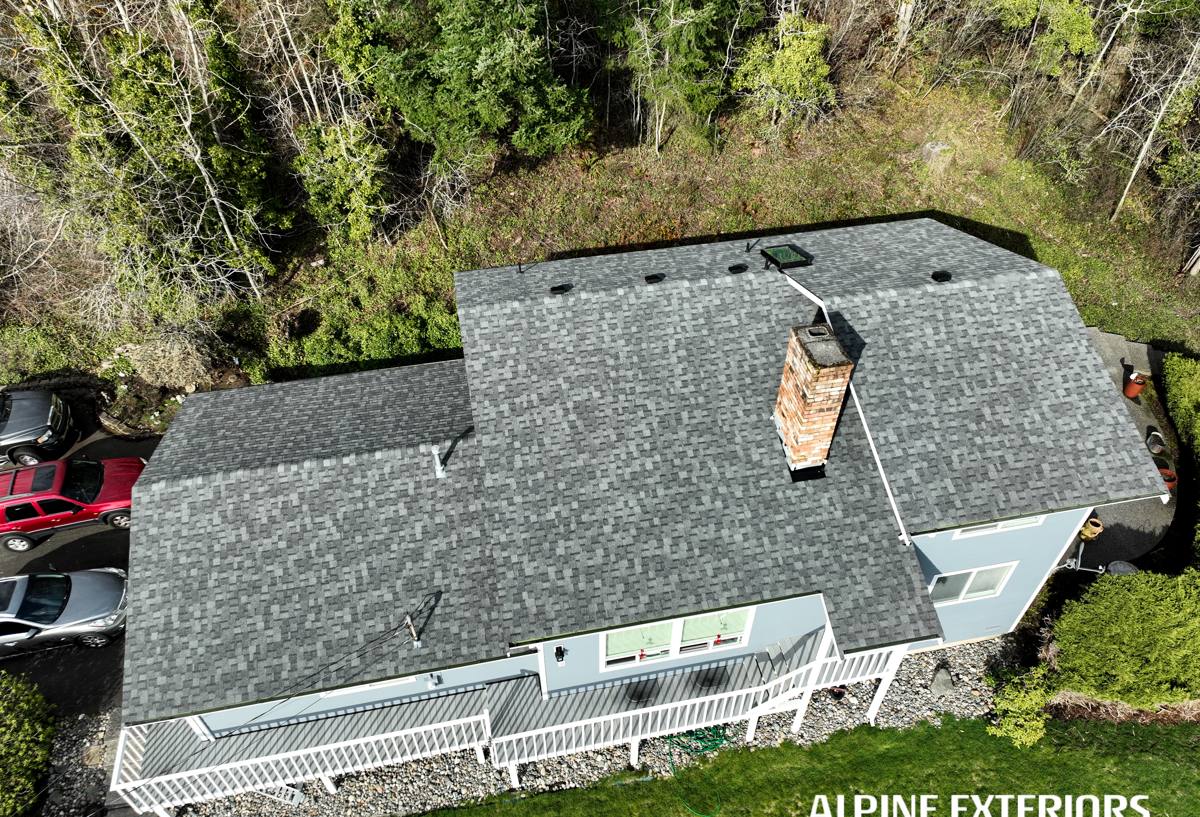
How Salt Air, Rain, and Moss Attack a Shingle Roof
Salt Air and Metal Components
Asphalt shingles themselves tolerate salt exposure reasonably well, but the metal components tied into the roof system do not. Nails, flashing, drip edge, and vent housings corrode faster near the water than they would a few miles inland. Cheap or mismatched fasteners are usually the first thing to fail on a coastal-influenced roof, showing up as rust streaks and eventually as loosened shingles at the exact spots where wind and rain do the most damage.
Driving Rain and Wind-Driven Water
Anacortes storms rarely come straight down. Wind pushes rain sideways and up under shingle tabs, into valleys, and around penetrations like plumbing vents and chimneys. A roof that would perform fine in calm rain can leak in West Anacortes if the underlayment, flashing, and shingle overlap weren't installed with wind-driven water specifically in mind.
Moss, Algae, and Shade
Mature tree cover is part of what makes West Anacortes attractive, but it also means roofs stay damp longer after rain and get less direct sun to dry out. That combination is exactly what moss and algae need to establish. Once moss roots into a shingle's surface, it lifts granules and holds moisture against the shingle mat, accelerating wear well beyond what the shingle's rated lifespan assumes.
What a Correctly Installed Shingle Roof Includes Here
A roof built for this neighborhood is more than shingles nailed to plywood. The details underneath and around the shingles matter as much as the shingle brand.
Underlayment and Ice-and-Water Protection
We use synthetic underlayment across the full roof deck rather than older felt products, because it holds up better to the intermittent wet-dry cycling common here. Eaves, valleys, and any low-slope transitions get self-adhered ice-and-water membrane, which matters less for ice in this climate and more as a second line of defense against wind-driven rain finding its way under the shingle field.
Flashing and Penetrations
Every place a roof plane meets a wall, chimney, skylight, or vent pipe is a potential entry point for water. We use corrosion-resistant flashing at these transitions and step-flash sidewalls rather than relying on caulk or roof cement as the primary seal. Caulk has its place as a secondary detail, but it is not a substitute for correctly lapped flashing.
Ventilation and Attic Moisture
Balanced intake and exhaust ventilation keeps the attic dry and close to outdoor temperature, which does two things: it protects the roof deck from moisture damage from the inside, and it prevents the shingle mat from cooking on hot afternoons or trapping condensation on cold, damp mornings — both common conditions here.
Fastening and Wind Resistance
We follow manufacturer nailing patterns exactly, including nail count and placement in high-wind zones, rather than the minimum a shingle warranty technically allows. Under-nailed shingles are one of the most common causes of premature blow-off, and it's not something you can see from the ground once the roof is finished.
Signs a West Anacortes Roof Needs Attention
- Granules collecting in gutters or at downspout outlets, which signals shingle surface wear
- Dark streaking or green-black patches, usually algae, on north-facing or shaded slopes
- Visible moss growth, especially along ridges, valleys, and areas that stay shaded most of the day
- Curling, cupping, or lifted shingle tabs, particularly on slopes exposed to prevailing wind
- Rust staining around vent boots, flashing, or exposed fasteners
- Daylight visible through the roof deck from inside the attic, or damp insulation after a storm
- Sagging in the roofline between rafters, which can indicate deck moisture damage
- Missing or damaged shingles after a windstorm, even if no leak has shown up yet
Any one of these on its own isn't necessarily an emergency, but they're worth a professional look before the next wet season rather than after a leak shows up on a ceiling.
Our Process for a West Anacortes Roof
- On-site inspection. We walk the roof and attic, note slope exposure, shading, existing ventilation, and any current moisture or moss issues specific to the property.
- Scope and written estimate. You get a clear breakdown of tear-off, deck repair allowances if needed, underlayment, flashing, shingle selection, and ventilation work — no vague line items.
- Tear-off and deck inspection. Old roofing comes off down to the deck so we can actually see the plywood or plank sheathing underneath, not guess at its condition from above.
- Deck repair as needed. Any soft, delaminated, or water-damaged sheathing gets replaced before anything goes back down. This is not an area to shortcut on a coastal property.
- Underlayment, ice-and-water membrane, and flashing installation. Installed to manufacturer spec with attention to wind-driven rain paths specific to the property's orientation.
- Shingle installation. Correct nailing pattern, proper exposure, and attention to valleys and penetrations.
- Ventilation check and correction. We confirm intake and exhaust are balanced, adding or adjusting vents where the existing setup falls short.
- Final walkthrough. We review the finished roof with you, including care and moss-prevention guidance specific to your property's shading and slope.
Shingle Options and How They Compare
Most West Anacortes homes are well served by mid- to upper-tier architectural (laminate) shingles rather than the thinnest 3-tab products, largely because of the wind and moisture exposure discussed above. The table below is a general comparison, not a price quote — actual cost depends on roof size, pitch, tear-off scope, and deck condition.
| Shingle Type | Typical Lifespan | Wind Rating | Best Fit |
|---|---|---|---|
| 3-tab standard | 15-20 years | Lower | Budget-driven projects, outbuildings, less exposed roofs |
| Architectural / laminate | 25-30 years | Moderate to high | Most West Anacortes homes; balances cost and durability |
| Algae-resistant (copper-granule) architectural | 25-30 years | Moderate to high | Shaded lots, north-facing slopes, moss-prone properties |
| Premium / designer laminate | 30-40 years | High | Higher-exposure sites, homeowners prioritizing longevity |
For shaded lots — common in West Anacortes — we generally recommend algae-resistant shingles as a standard upgrade rather than an optional extra, since the copper-infused granules meaningfully slow algae and moss colonization compared to standard granules.
What Actually Drives Cost on a Project Like This
| Factor | Why It Matters |
|---|---|
| Roof size and number of planes | More area and more valleys/hips mean more material and labor time |
| Existing deck condition | Rot or delamination found during tear-off adds repair scope |
| Number of layers to remove | Tear-off of multiple old layers takes longer than a single layer |
| Roof pitch and access | Steep or hard-to-access roofs require more safety setup and time |
| Shingle tier selected | Algae-resistant and premium products cost more per square but last longer |
| Ventilation upgrades needed | Adding or correcting intake/exhaust vents is a smaller add-on when bundled with a full re-roof |
Maintaining a Shingle Roof in This Climate
Even a well-installed roof needs some upkeep in West Anacortes' conditions. Keep gutters and downspouts clear so water isn't backing up under the eave line during heavy rain. Have overhanging branches trimmed back where practical to reduce shading and debris buildup, since both feed moss growth. If moss does establish, it should be treated and gently removed rather than power-washed — aggressive pressure washing strips granules and shortens shingle life faster than the moss itself would. A periodic visual check from the ground, or a professional inspection every few years, catches most issues while they're still a minor repair rather than a full re-roof.
Why a Crew That Already Works West Anacortes Matters
Roofing decisions that look fine on paper — underlayment choice, ventilation balance, shingle tier — play out differently depending on a specific roof's slope, shade, and exposure to weather off the water. A crew that regularly works this neighborhood has already seen how different lots here hold moisture, which slopes tend toward moss first, and where wind-driven rain typically finds its way into a roof system. That local pattern recognition shows up in the details: where we add ice-and-water membrane beyond the minimum, which shingle tier we actually recommend for a shaded lot, and how we set up ventilation for a specific roof rather than a generic spec sheet.
If your roof is showing wear, due for replacement, or you're just not sure what condition it's in, we're happy to take a look. Reach out for a free, no-pressure estimate using the form below.