 Anacortes Siding
 Roofing Built for the Skagit Valley, Not a Catalog Climate
Sedro-Woolley sits in the Skagit River valley, tucked between farmland and forested foothills, and that setting shapes what a roof has to deal with here. It's wetter and shadier than a lot of towns on the I-5 corridor, with heavy tree canopy in many neighborhoods and a long stretch of the year where roofs simply don't get much direct sun to dry out between storms. Add in the marine-influenced weather that moves up the Skagit corridor from the Salish Sea, and you get a climate that's tough on roofing in a specific, predictable way: not violent storms, but relentless dampness, moss, and slow moisture intrusion that shows up as rot years before anyone notices a leak.
A roof replacement in Sedro-Woolley isn't just about swapping old shingles for new ones. It's about building an assembly — decking, underlayment, ventilation, flashing, and the roof covering itself — that's matched to a place where roofs stay damp longer than the manufacturer's install guide probably assumes.
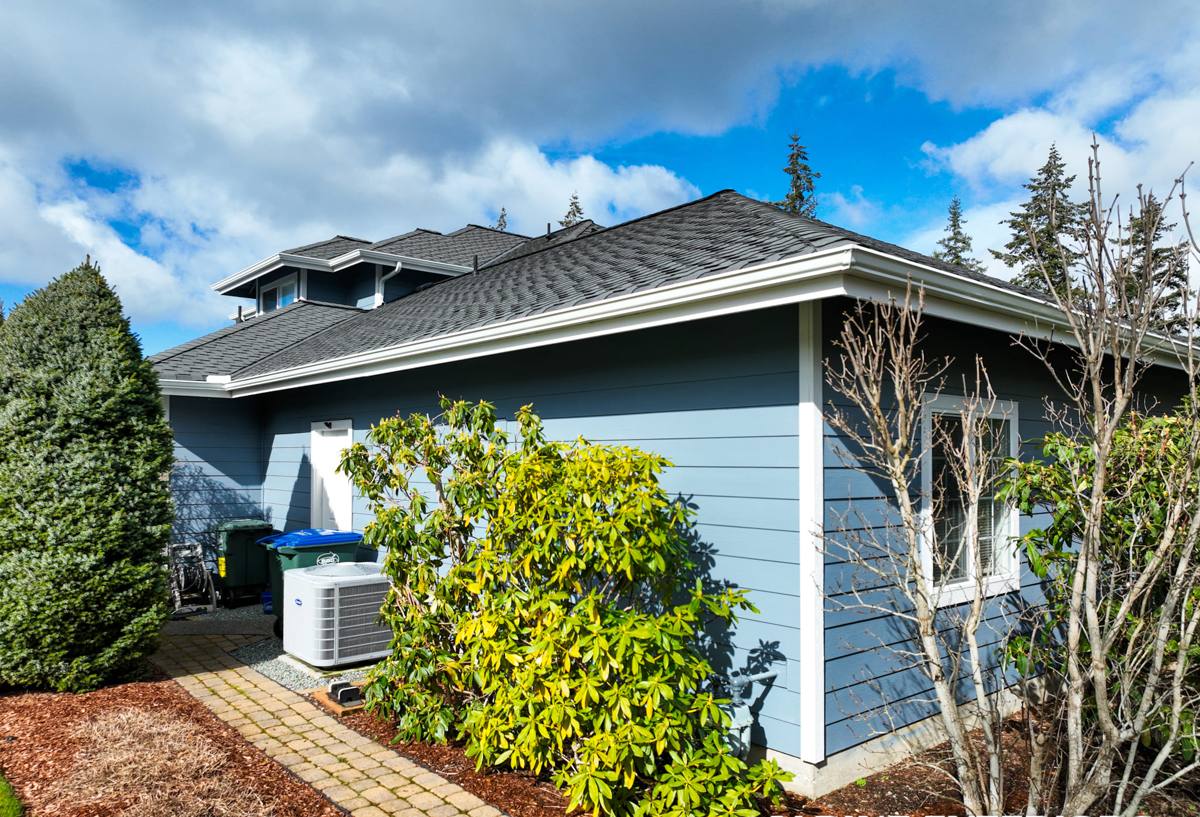
What Skagit County Weather Actually Does to a Roof
Moss and Organic Growth
Shaded, north-facing slopes and roofs under or near tree cover are where we see moss take hold fastest. Moss isn't just cosmetic — it holds moisture against the roofing material, works its way under shingle tabs and shakes, and lifts edges as it grows. Over a few seasons that turns into granule loss, soft spots, and eventually water finding its way into the decking.
Driving Rain and Wind-Driven Moisture
Sedro-Woolley doesn't get hammered by hurricanes, but it does get long runs of steady, wind-pushed rain, especially in fall and winter. That kind of weather tests flashing, valleys, and any place where two roof planes or a roof and a wall meet. A roof can shed a straight-down rain shower just fine and still leak the first time rain comes in sideways against a poorly flashed chimney or dormer.
Slow Drying Time
Because of the tree cover and cloud cover common to this part of Skagit County, roofs here can stay damp for days after a storm passes. That extended moisture exposure is harder on roofing materials and on the wood underneath than a shorter, more intense storm followed by sun. It's a big part of why ventilation and underlayment choices matter more here than they would in a drier climate.
Signs a Sedro-Woolley Roof Needs Replacing, Not Patching
- Granules collecting in gutters or at downspout outlets, especially after wind or rain
- Moss or dark streaking covering more than isolated patches of the roof
- Shingles that are cupping, curling at the edges, or cracking when walked on
- Soft or spongy spots underfoot, or sagging visible from the ground
- Daylight visible through the attic roof deck, or damp insulation below it
- Repeated leaks around the same valley, chimney, or skylight despite past patch repairs
- A roof already past 20-25 years old for composition shingle, or showing wear well before that age
One or two of these on their own might mean a targeted repair is enough. Several at once, or a roof that's already had multiple patch jobs in the same spots, usually means the underlying materials are worn out across the board and a repair is just delaying the inevitable.
What a Correct Roof Replacement Involves Here
Tear-Off and Deck Inspection
We remove the old roofing down to the deck rather than layering over it. That's the only way to actually see the condition of the sheathing underneath — and in a damp climate like this, it's common to find soft or delaminated plywood around old flashing points or valleys that looked fine from above. Any compromised decking gets replaced before anything new goes down; roofing over bad wood just guarantees an early failure.
Underlayment Suited to a Wet Climate
The underlayment is the roof's backup plan if water gets past the surface layer — and in a place where roofs stay wet longer, that backup plan matters more than usual. We use synthetic or self-adhered underlayment products appropriate to the roof pitch and exposure, with extra attention (and often ice-and-water-shield-type membrane) at eaves, valleys, and any low-slope transitions where water lingers longest.
Ventilation That Actually Balances
Trapped attic moisture is one of the fastest ways to rot a roof deck from underneath, and it's easy to get wrong. A correct install balances intake at the eaves with exhaust at the ridge so air actually moves through the attic space instead of just swirling near one vent. We check existing ventilation during the estimate rather than assuming it's adequate just because vents are present.
Flashing, Valleys, and Penetrations
Most roof leaks in this climate don't start in the open field of the roof — they start at a transition: a chimney, a skylight curb, a wall intersection, a valley. We fabricate and install flashing at every one of these points rather than relying on roofing cement or shortcuts, since caulk and mastic are a maintenance item, not a permanent fix.
Material Installed to Spec
Every roofing material has a manufacturer install spec — nailing pattern, exposure, starter course, ridge cap method. Following it isn't optional if you want the warranty to actually mean something. We install to that spec, not to whatever's fastest.
Comparing Roofing Options for a Sedro-Woolley Home
| Material | Typical Lifespan | How It Handles This Climate |
|---|---|---|
| Architectural composition shingle | 25-30 years | Good moss resistance with algae-resistant granules; most common, cost-effective choice for the area |
| Standard 3-tab shingle | 15-20 years | Lower upfront cost but less durable against wind-driven rain and moss over time |
| Metal (standing seam or panel) | 40-60 years | Sheds moisture and moss very effectively; higher upfront cost, good long-term value |
| Cedar shake | 20-30 years with upkeep | Traditional look but needs regular maintenance to manage moss and moisture in a damp climate |
We'll walk through these trade-offs honestly during an estimate. A lot of it comes down to how much shade and tree cover your specific roof deals with, how long you plan to stay in the home, and what you're comfortable maintaining.
Why We Frame Cedar Shake Trade-Offs the Way We Do
Cedar shake has real appeal — it's a classic look for the Pacific Northwest — but it's also the material most sensitive to the exact conditions Sedro-Woolley has in spades: shade, dampness, and slow drying. That's not a knock on cedar as a product; it's a maintenance reality. Shake roofs in shaded, moisture-heavy settings need more frequent moss treatment and inspection than the same roof would in a drier, sunnier location. We'll install cedar shake for homeowners who want it and understand that upkeep commitment, but we'll always tell you upfront what that commitment looks like rather than let you find out after the fact.
Our Process for a Roof Replacement
- On-site inspection. We walk the roof and attic, note the condition of decking, flashing, ventilation, and any problem areas, and take measurements.
- Written estimate. You get a clear scope of work and price — what's being torn off, what materials are going on, and what's included.
- Material selection. We talk through the options above based on your home, budget, and how much moss/shade exposure your roof deals with.
- Scheduling. We plan around weather windows, since a roof replacement needs a reasonably dry stretch to do properly — timing matters more here than in drier climates.
- Tear-off and install. Old roofing comes off, the deck gets inspected and repaired as needed, and the new system goes on to manufacturer spec.
- Final walkthrough. We review the finished roof with you, including ventilation, flashing points, and any warranty paperwork.
Why Local Experience in Sedro-Woolley Matters
A crew that only sees a given roof style occasionally is guessing at how it'll hold up. A crew that works Skagit County roofs regularly already knows which valleys tend to collect debris, which north-facing slopes need extra moss protection, and how long a given underlayment actually holds up under this area's rain patterns. That familiarity shows up in fewer callbacks and a roof that's built for the conditions it'll actually face, not generic conditions from a manufacturer's national install guide.
It also matters for something simpler: being available. A roof problem that shows up mid-winter in a wet stretch doesn't wait for a contractor to drive in from out of the area. Working locally means we can get eyes on a problem, or a scheduled replacement, without that lag.
Cost Factors for a Roof Replacement
| Factor | Why It Affects Cost |
|---|---|
| Roof size and pitch | More square footage and steeper pitches mean more material and labor time |
| Number of layers to remove | Tearing off multiple old layers costs more than a single layer |
| Decking condition | Rotted or soft sheathing found during tear-off requires replacement before install |
| Roof complexity | Valleys, dormers, chimneys, and skylights each add flashing work |
| Material choice | Composition shingle, metal, and cedar shake carry different material and labor costs |
| Access and site conditions | Steep driveways, tree cover, or tight lot access can affect staging and labor time |
Because of these variables, we don't quote roof replacements over the phone — an accurate number requires seeing the actual roof, not a general square-footage estimate.
Maintaining a New Roof in This Climate
- Have gutters cleaned at least twice a year so water doesn't back up under the roof edge
- Trim back tree limbs that shade the roof or drop debris onto it
- Schedule moss treatment before growth becomes visible from the ground, not after
- Have the roof inspected after any major windstorm, even if nothing looks obviously wrong
- Keep an eye on attic ventilation — blocked soffit vents undo the benefit of good roofing materials
None of this replaces a quality install, but it does extend the life of one. A roof built right for this climate and then left completely unmaintained will still wear out faster than it should.
Get a Straightforward Estimate
If your roof is showing moss buildup, granule loss, or age it's due for a look — no pressure, no hard sell, just an honest read on whether it needs a full replacement or can hold with a repair. Use the form below to request a free estimate for your Sedro-Woolley home.