 Anacortes Siding
 Board & Batten Siding in Conway: A Style Built for This Corner of Skagit County
Conway sits low in the Skagit River delta, tucked between the water, the farmland, and the weather that rolls in off the Sound. It's a different exposure than the bluffs and rockier ground closer to Anacortes proper — more open, more wind-driven rain, more standing moisture in the air for more of the year. Board and batten siding has a long history in exactly this kind of setting, because the vertical lines and raised battens were originally a practical answer to water running down a wall, not just a look. That history still matters. The style only performs the way it's supposed to when the material underneath it and the way it's installed both respect what this specific stretch of Skagit County throws at a house.
This page is about that one job, done right, for homes in and around Conway: what the climate demands, what a correct installation actually involves, and why we only put board and batten on a house in James Hardie fiber cement — never in vinyl, engineered wood, or anything else.
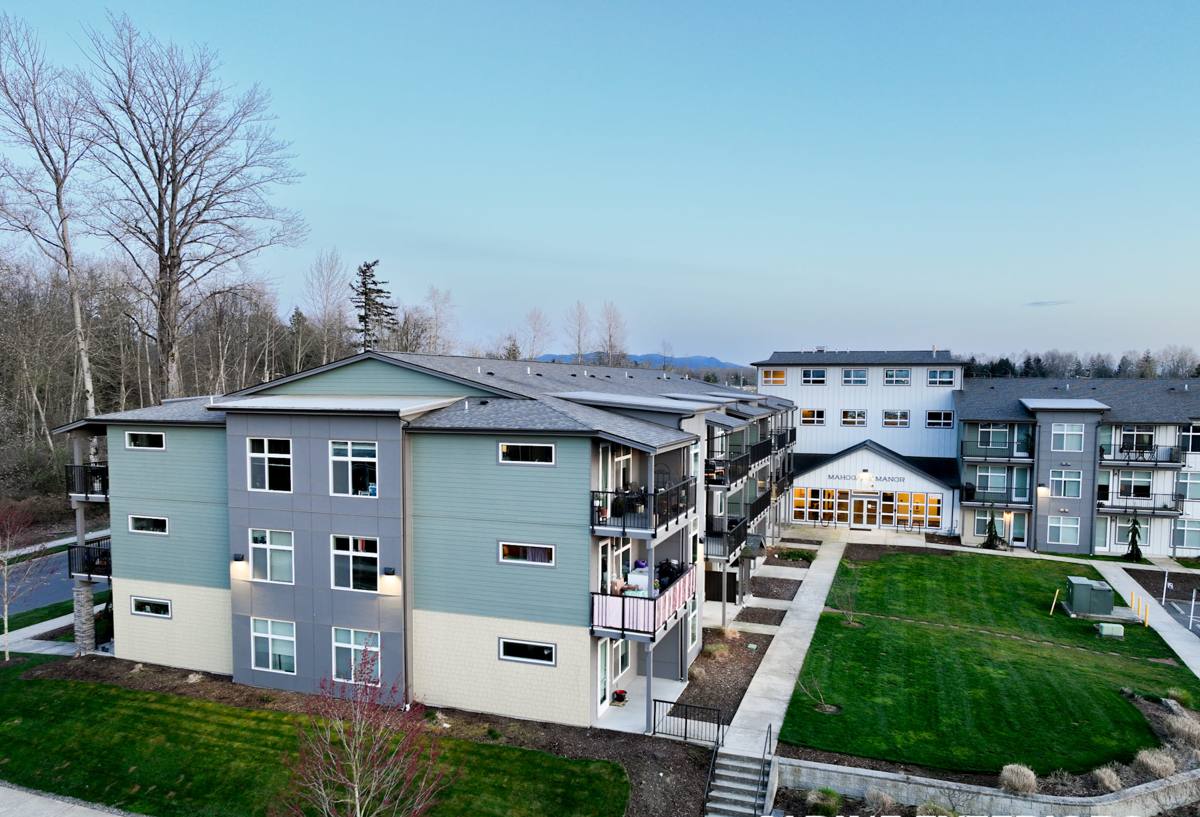
What Board & Batten Actually Is (and Why the Material Matters More Than the Look)
Board and batten is a vertical siding profile: wide flat panels or boards installed side by side, with a narrower strip — the batten — covering each seam. The vertical lines read as a clean, modern-farmhouse look, which is a big part of why it's popular on Skagit Valley homes, barns-turned-residences, and newer builds going for a Pacific Northwest exterior. But the profile itself is just geometry. What actually determines whether that wall holds up for twenty-plus years in Conway's climate is the material behind the look — how it handles moisture, how it's fastened, and how the seams are protected.
A lot of the board and batten siding sold today is engineered wood or vinyl, marketed on the same clean vertical lines we're describing here. We don't install either on a Conway home, for reasons we get into below. The short version: this profile has more seams and more edge exposure than lap siding, which makes material choice and installation quality matter even more than usual.
What Conway's Climate Does to Vertical Siding
Three things define exterior wear in Conway and the surrounding Skagit County lowlands:
- Salt air. Proximity to Skagit Bay and the Sound means airborne salt is a constant, low-level presence, even a few miles inland. It accelerates corrosion on exposed fasteners and finishes that aren't built to shrug it off.
- Driving rain. Storms here don't just fall straight down — wind pushes rain sideways into walls, which is exactly the condition board and batten's vertical seams need to be detailed for. A seam that sheds water fine in a calm rain can still take on moisture when the wind is behind it.
- A long moss and algae season. Cool, damp, and shaded conditions for much of the year mean anything that traps or holds surface moisture — bad caulking, absorbent substrates, tight-to-grade installations — becomes a growth surface faster than it would somewhere drier.
None of these are unusual for western Washington. But board and batten's seam-heavy profile is less forgiving of them than a lapped horizontal siding would be, which is why the material and the install both need to be right, not just close.
Why We Install Board & Batten Only in James Hardie Fiber Cement
We get asked, fairly often, why we won't do board and batten in vinyl or engineered wood — both are cheaper up front, and both are widely available. Here's the honest trade-off, not a sales pitch.
Vinyl board and batten looks fine on day one. But vinyl expands and contracts with temperature more than fiber cement, and on a vertical profile with battens fastened over seams, that movement shows up over time as slight warping, gapping at the battens, or a visibly "loose" look at the edges. It's also a petroleum-based product, which means it's combustible — a real consideration for a wildfire-adjacent state even in a relatively wet corner of it.
Engineered wood board and batten (OSB-based products) performs well when it's kept perfectly sealed, but the moment a cut edge, a fastener hole, or a seam loses its factory coating — which happens with normal weathering, especially in a climate like Conway's — that exposed edge is wood fiber, and wood fiber that takes on water swells and eventually breaks down. In a climate with this much sustained moisture and this long a wet season, that's not a hypothetical; it's a maintenance clock that starts the day the siding goes up.
James Hardie fiber cement doesn't have either problem. It's cement, sand, and cellulose fiber — dimensionally stable, non-combustible, and it doesn't rot or swell from water exposure the way wood-based products do. Hardie's ColorPlus factory finish is baked on and warrantied against fading and peeling, which matters a lot when battens are catching salt air and UV at a dozen different angles across a facade. That combination — a substrate that doesn't degrade from moisture and a finish that doesn't need repainting on the schedule wood siding does — is why it's the only material we put up in this profile.
What a Correct Board & Batten Installation Involves
Weather Barrier and Rainscreen
Every board and batten job starts underneath the siding, not at it. A properly lapped weather-resistive barrier goes on first, and on a vertical profile in a wind-driven-rain climate like Conway's, we install furring strips to create a rainscreen gap — a small air space behind the siding that lets any moisture that does get past the surface drain and dry out instead of sitting against the sheathing.
Panel Layout and Fastening
Hardie panels are installed to the manufacturer's specified fastener pattern and spacing, with corrosion-resistant fasteners — non-negotiable in a salt-air environment where standard fasteners will show rust streaks within a few seasons. Battens are set to cover panel seams fully and fastened into framing, not just into the panel, so the whole assembly moves as one unit rather than working loose.
Flashing, Trim, and Transitions
The failure points on any vertical siding are almost always at the transitions: window and door openings, the bottom termination near grade, roof-to-wall junctions, and inside/outside corners. Each of these gets proper metal or trim flashing installed to shed water outward and downward, not into the wall assembly. On a job in Conway's lowland moisture, we pay particular attention to the bottom termination — keeping siding clearance off grade and hardscape so splash-back and standing moisture don't sit against the panel edge.
Caulking and Sealant
Sealant is used at penetrations and select trim joints, but it's a backup layer, not the primary water management strategy — a wall that depends on caulk staying perfect for twenty years is a wall that's going to leak eventually. Correct flashing and lapping do the real work; sealant fills the gaps.
Board & Batten vs. Other Siding Profiles for a Conway Home
| Factor | Board & Batten (Hardie) | Lap Siding (Hardie) |
|---|---|---|
| Look | Vertical lines, farmhouse/modern feel | Traditional horizontal, widest range of home styles |
| Seam exposure | More vertical seams to detail correctly | Fewer, simpler horizontal laps |
| Rainscreen importance | High — vertical profile benefits most from drainage gap | Moderate — laps naturally shed water |
| Best fit | Gables, accent walls, full facades wanting a distinct look | Whole-home coverage, resale-neutral choice |
| Maintenance (Hardie) | Low — same ColorPlus finish, more trim lines to inspect | Low — fewer trim intersections overall |
Both profiles perform well in fiber cement when installed correctly. Board and batten simply asks more of the installer, because there's more edge and seam detail per square foot of wall.
Our Process, From Estimate to Finished Wall
- On-site assessment of the existing siding, sheathing condition, and any moisture damage already present — common on older Conway-area homes that have taken decades of the local weather on their original siding.
- A written scope covering tear-off, weather barrier, rainscreen furring, panel and batten layout, flashing details, and the specific Hardie product and ColorPlus color selected.
- Installation following James Hardie's published fastening and clearance specifications — the standard that keeps the warranty intact.
- Final walkthrough covering trim lines, corners, and grade clearance before we call the job finished.
Why a Crew That Already Works Conway Matters
Conway isn't a huge community, but it has real variation in exposure — some homes are more sheltered by trees and terrain, others sit more open to wind off the delta. A crew that's already worked this specific area has a feel for how much rainscreen detailing a given lot needs, where moss tends to establish first on a wall, and how grade and drainage around a home typically behave through a wet Skagit County winter. That's not something you get from a general regional install crew doing a one-off job — it's built from repetition on this ground specifically.
Simple Maintenance That Keeps Board & Batten Looking Right
- Rinse the exterior once or twice a year to keep salt residue and moss spores from building up, especially on north-facing and shaded walls.
- Keep gutters clear so overflow doesn't run down the wall face at concentrated points.
- Trim back vegetation that shades siding or holds moisture against it.
- Do a visual check of caulking at trim joints and penetrations every couple of years — not because it's the primary defense, but because it's the cheapest thing to catch early.
- Keep an eye on grade level near the foundation; landscaping and mulch that creep up over time can reduce the siding's clearance from moisture.
If you're weighing board and batten for a home in Conway, or replacing siding that's already showing what a few decades of this climate can do, we're happy to take a look and put together a straightforward, no-pressure estimate — just fill out the form below.