 Anacortes Siding
 Why Skyline's Climate Is Hard on Siding
Skyline sits close enough to the water that salt-laden air is part of daily life, and that air doesn't just corrode metal — it works on paint film, caulk joints, and any siding material with a weak moisture skin. Add in Anacortes' long stretch of wet months, where driving rain comes in sideways off Rosario Strait and Guemes Channel, and you've got a material stress test that runs nine or ten months a year. Wood-adjacent lots and shaded north sides in the neighborhood also grow moss and algae faster than sun-exposed stretches of Skagit County, which matters because moss holds moisture against a wall long after the rain stops.
None of this is unique to one house on one street — it's the baseline for the whole area. But it does mean that generic siding advice written for a dry inland climate doesn't fully apply here. What holds up in Skyline needs to handle constant moisture cycling, resist salt-driven finish breakdown, and not give moss anything to grab onto.
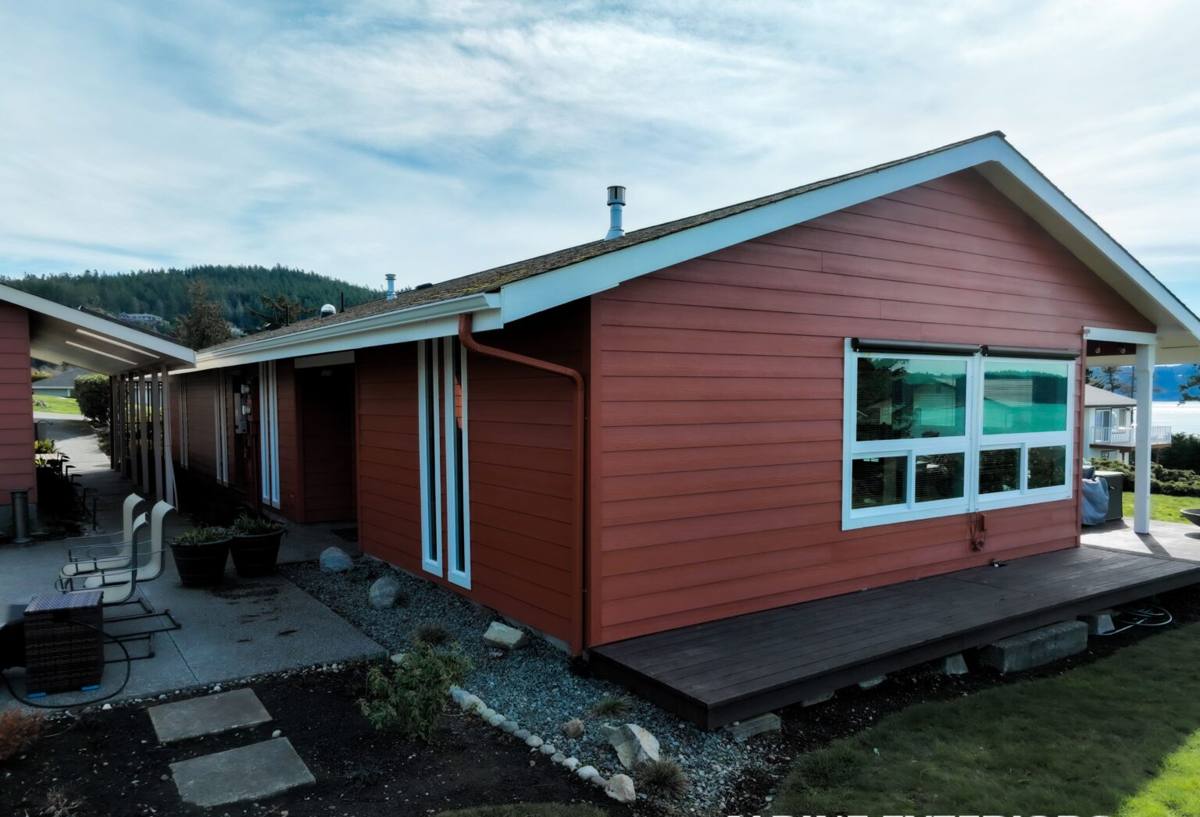
What Salt Air and Moss Season Actually Do to a Wall
- Salt air: accelerates fastener corrosion and breaks down lower-grade paint finishes faster than inland exposure, leading to chalking and color fade years ahead of schedule.
- Driving rain: pushes water sideways under laps, around trim, and into any gap in flashing or caulk — the failures show up as soft spots and staining months or years after the water first got in.
- Moss and algae: hold surface moisture against the cladding, which is hard on any product that isn't dimensionally stable or that swells when wet.
- Temperature swings between wet nights and sunny afternoons: stress caulk joints and paint film, which is why joint quality at install time matters more here than in milder climates.
This is also the core of why we standardized on James Hardie fiber cement and stopped installing wood-based and vinyl products years ago. Fiber cement doesn't swell, rot, or feed moss the way wood-based siding can, and it holds a factory-applied finish far longer than field-applied paint does in this kind of exposure.
What a Correct Fiber Cement Installation Involves
Fiber cement is only as good as the installation behind it. James Hardie engineers exact specifications for clearances, fastening, and flashing, and skipping any of them is how a good product ends up with a bad reputation it didn't earn. A correct job in a wet, salt-exposed area like Skyline includes:
Moisture Management Behind the Cladding
A weather-resistive barrier (WRB) goes on the sheathing first, lapped correctly from the bottom up so water sheds outward instead of behind the barrier. Rainscreen furring or a drainable house wrap gives incidental moisture a path to drain and dry instead of sitting against the back of the siding — a detail that matters more here than in a drier region because the wall assembly stays damp for longer stretches.
Clearances and Flashing
Hardie specifies minimum clearances from grade, roof lines, decks, and any horizontal surface, plus flashing at every window, door, and penetration. In a driving-rain climate, these clearances aren't a formality — they're the difference between water running off the wall and water wicking up into the bottom edge of a board.
Fastening and Joint Treatment
Corrosion-resistant fasteners, correct nailing patterns, and properly treated butt joints all matter more near salt air than they would forty miles inland. Joints get sealed with a compatible sealant rather than caulked and painted over as an afterthought.
Factory Finish, Not Field Paint
ColorPlus factory-applied finish is baked on under controlled conditions and holds color and adhesion far longer than field-applied paint exposed to salt air and UV. Field-painted cut edges still get treated with Hardie's edge sealer to keep raw material from wicking moisture.
Our Process on Skyline Projects
- On-site assessment: we walk the exterior, check for existing moisture damage, note sun/shade exposure and moss patterns, and identify problem areas like low clearances or aging trim.
- Tear-off and sheathing check: we remove the old siding and inspect the sheathing underneath for rot or soft spots before anything new goes up — this is the step that catches problems a surface inspection can't.
- WRB and flashing installation: a new weather-resistive barrier and flashing package go in to Hardie's moisture-management specifications, adjusted for the exposure of that particular wall.
- Fiber cement installation: HardiePlank, board, or panel goes up per manufacturer spec — correct clearances, fastening, and joint treatment throughout.
- Trim and detail work: corners, window and door trim, and any transitions get finished so water has a clear path off the wall, not into it.
- Final walkthrough and cleanup: we review the finished work with the homeowner and clear the site of debris and old material.
Why a Crew That Already Works Skyline Matters
Siding crews that mostly work drier, inland jobs sometimes treat coastal Skagit County like any other install — same clearances, same wrap, same schedule. A crew that's actually worked Skyline knows which walls take the worst of the wind-driven rain, which shaded sides grow moss fastest, and how the temperature and moisture cycle here is different from a job forty minutes inland. That local pattern recognition shows up in small decisions — extra attention on a north-facing wall, a slightly different flashing detail at a low-clearance spot — that a generic approach can miss. It also means fewer surprises with local permitting and inspection timelines through the City of Anacortes and Skagit County, since we're not learning that process on your project.
Choosing the Right Hardie Product Line for This Exposure
James Hardie makes climate-engineered HZ formulations, and the right choice for Skyline depends on the specific wall's sun, wind, and moisture exposure rather than a blanket rule for the whole house.
| Factor | Standard Exposure Walls | High Wind/Salt/Shade Walls |
|---|---|---|
| Typical Skyline location | South and west walls with good sun exposure | North walls, shaded lots, walls facing open water/wind |
| Moisture cycling | Dries out between rain events | Stays damp longer, more moss/algae risk |
| Finish consideration | ColorPlus finish performs well with standard maintenance | Same finish, but joint sealant and rainscreen detailing matter more |
| Installation emphasis | Standard clearances and fastening | Extra attention to flashing, clearances, and drainage path |
In practice, most Skyline homes end up with the same Hardie product across all elevations for a consistent look — the difference is in installation detailing on the exposed sides, not in mixing product lines on one house.
Signs a Skyline Home Needs Siding Replacement
- Visible moss or algae growth that keeps coming back after cleaning
- Soft, spongy spots when you press on the siding, especially near the bottom edge or around windows
- Paint or finish that's chalking, peeling, or fading unevenly across different walls
- Warping, buckling, or gaps opening up at seams and corners
- Water stains or discoloration on interior walls near exterior corners
- Rising energy bills that suggest the wall assembly isn't holding heat the way it used to
- Siding that's original to a home built more than 20-25 years ago, especially wood-based or older composite products
Cost Factors Specific to This Kind of Project
| Factor | Why It Affects Cost |
|---|---|
| Existing sheathing condition | Rot found during tear-off means repair before new siding goes on |
| Wall exposure | High-exposure walls need more careful flashing and drainage detailing |
| House complexity | Corners, dormers, and multiple roof lines add trim and flashing work |
| Product selection | Plank profile, panel size, and factory finish color all affect material cost |
| Access | Steep lots, tight setbacks, or limited staging area can add labor time |
We give honest, project-specific numbers after seeing the house — broad ranges quoted before an inspection rarely hold up once the sheathing is exposed.
Caring for Fiber Cement Siding After Installation
Correctly installed Hardie siding is low-maintenance, not no-maintenance. A yearly rinse to knock off salt residue and moss spores, prompt attention to any caulk joint that starts to fail, and keeping gutters clear so water doesn't sheet down the wall all go a long way toward getting the full lifespan out of the material. None of this is heavy work — it's the kind of upkeep that takes an afternoon and prevents the slow moisture problems that are much more expensive to fix later.
Homes in Skyline and the surrounding Anacortes area deal with more of this moisture stress than most, which is exactly why we don't cut corners on the installation details that keep water out in the first place. If you're weighing a siding replacement and want a straight answer about what your home actually needs, we're glad to take a look and put together a free, no-pressure estimate.