 Anacortes Siding
 Siding Replacement Built for Similk Beach Conditions
Similk Beach sits close enough to the water that homes there take a different kind of weather beating than a house a few miles inland in Anacortes proper. Salt-laden air off the bay, wind-driven rain that finds every gap in a wall system, and a long, damp moss season that runs from fall through spring — all of it works against siding that wasn't built or installed with that specific exposure in mind. A siding replacement here isn't just a cosmetic upgrade. It's a decision about how the house will hold up against moisture and salt for the next twenty or thirty years.
We work Similk Beach regularly as part of our Anacortes service area, and the patterns repeat from house to house: south and west-facing walls that take the brunt of storms off the water, north-facing walls that stay shaded and damp long enough to grow moss on siding, trim, and gutters, and fastener heads or seams that corrode faster near the shoreline than they would a few miles inland. Any siding replacement plan for this neighborhood has to account for all three.
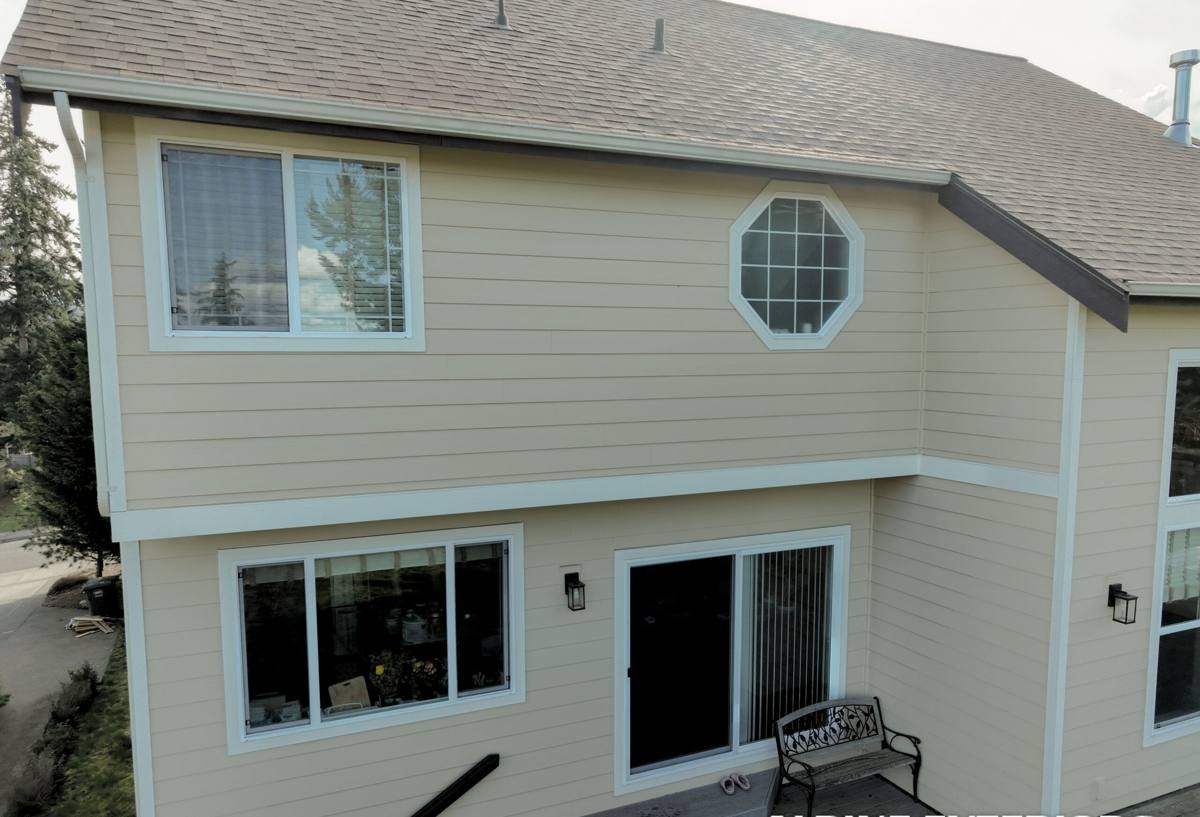
Why Salt Air and Moisture Change the Calculus
Salt Air's Effect on Materials
Airborne salt is corrosive to exposed metal fasteners, flashing, and hardware, and it accelerates the breakdown of some paint films and coatings over time. It doesn't just affect the siding panel itself — it affects everything attached to it. That's why fastener selection and flashing detail matter as much as the siding material in a shoreline-adjacent job like this one.
Moss Season and Moisture Retention
Skagit County's wet season keeps north-facing and shaded walls damp for extended stretches. Moss and algae take hold on surfaces that stay wet, and once established, they hold moisture against the wall longer than bare siding would. That sustained moisture is what eventually causes problems at seams, butt joints, and the bottom edge of the siding near grade — the areas where water lingers longest.
Driving Rain and Wind Exposure
Homes with a clear line to the water get wind-driven rain that behaves differently than a normal vertical rainfall. It gets pushed sideways and upward under laps and around trim, which means the water-resistive barrier, flashing, and lap installation behind the siding matter just as much as the siding itself.
What We Install and Why
We install James Hardie fiber cement siding exclusively — we don't install vinyl, LP SmartSide, cedar, primed spruce, or other fiber cement brands like Allura or Cemplank. That's a deliberate standard, not a sales pitch, and it matters more in a location like Similk Beach than it would somewhere drier and further from the water.
- Fiber cement doesn't rot, and it isn't a food source for the moisture-loving fungi that cause rot in wood-based siding.
- It's non-combustible, which matters given the dry-season wildfire risk that the broader Pacific Northwest has seen in recent years.
- Hardie's factory-applied ColorPlus finish is baked on and warranted against fading and cracking — a meaningful advantage over field-applied paint in a climate that gives paint a hard time.
- Hardie engineers regional HZ5 product formulations specifically for wetter, harsher climates like ours in western Washington.
Vinyl siding can warp and become brittle with age and temperature swings, and its seams and J-channels give wind-driven rain more opportunities to work behind the cladding over time. LP SmartSide is a wood-strand product with an engineered treatment, but it remains wood-based, meaning it's more sensitive to sustained moisture exposure than fiber cement if installation details or maintenance ever slip. Cedar and primed spruce require an ongoing maintenance commitment — refinishing, caulking, and vigilant moisture management — that most homeowners underestimate until the siding is already showing damage. None of those trade-offs disappear because a house is well-built; they just get more visible on a lot exposed to salt air and driving rain like the ones near Similk Beach.
What a Correct Siding Replacement Involves Here
Replacing siding on a home in this location is not a matter of stripping the old material and nailing up new panels. The work that happens underneath the siding is what determines whether the new installation actually performs.
Tear-Off and Substrate Inspection
Once the old siding comes off, we inspect the sheathing for hidden rot, especially around window and door openings, at wall penetrations, and near grade — the classic spots where past water intrusion shows up first. Any damaged sheathing gets replaced before anything new goes on; covering over compromised substrate just hides a bigger problem.
Water-Resistive Barrier and Flashing
A correctly lapped weather-resistive barrier, proper window and door flashing, and correctly integrated kick-out flashing at roof-wall intersections are what actually keep wind-driven rain out of the wall assembly. This is the part of the job that's invisible once the siding goes back on, and it's also the part most likely to be rushed by crews unfamiliar with this kind of exposure.
Fastener and Hardware Selection
Near the water, we pay closer attention to corrosion-resistant fasteners and hardware than we would on an inland job. Cutting corners here shows up years later as rust streaking and loosened panels.
Hardie-Specific Installation Requirements
James Hardie siding has manufacturer-specified clearances from grade, roofing, and decks, specific fastener patterns, and caulking and painting requirements at cut edges. Installing it correctly — to spec — is what keeps the product warranty valid and what actually delivers the performance the material is designed for.
Similk Beach Siding Replacement Checklist
- Full removal of old siding and inspection of sheathing for hidden rot or moisture damage
- Repair or replacement of any compromised sheathing before new siding goes on
- New or repaired water-resistive barrier, correctly lapped and taped
- Properly flashed windows, doors, and roof-wall intersections
- Corrosion-resistant fasteners appropriate for a shoreline-adjacent property
- James Hardie panels, trim, and fasteners installed to manufacturer specification
- Sealed and painted cut edges per Hardie's installation guidelines
- Final walk-through covering maintenance expectations for this specific site
Cost Factors for a Similk Beach Home
Every siding replacement quote depends on the specifics of the house, but a few factors tend to move the number more in a location like this than they would elsewhere.
| Factor | Why It Matters Here |
|---|---|
| Hidden sheathing damage | Homes exposed to driving rain and long moss seasons are more likely to have moisture damage discovered once old siding comes off |
| Wall height and water exposure | Walls facing the water or prevailing wind may need extra flashing detail and fastener attention |
| Trim and detail complexity | Homes with more corners, dormers, and penetrations require more flashing and cut-edge sealing labor |
| Access and site conditions | Waterfront and hillside lots can add setup and material-staging time compared to a flat, easy-access lot |
| Siding profile and finish choice | Hardie's plank, shingle, and panel lines carry different material and labor costs |
We won't know which of these apply to your home until we look at it in person, which is why we walk every property before giving a number rather than quoting off a phone call.
Why a Crew That Already Works Similk Beach Matters
A contractor who mainly works drier, inland neighborhoods can install siding correctly by the book and still miss the details that matter most here — the flashing detail that handles wind-driven rain, the fastener choice that resists salt corrosion, the awareness of which walls need extra attention because they face the water. A crew that regularly works this stretch of the Anacortes coastline has already seen what fails on these homes and adjusts the installation accordingly, rather than learning it on your project.
We also know this area well enough to set realistic expectations: which walls will need more frequent moss treatment, how the ColorPlus finish holds up against salt exposure over time, and what maintenance routine actually keeps a Hardie installation looking and performing the way it should for a home this close to the water.
Maintenance After Installation
James Hardie siding is low-maintenance, not no-maintenance, and that distinction matters more in a moss-prone, salt-air environment. A periodic soft wash to remove algae and moss buildup — particularly on shaded, north-facing walls — keeps the surface from holding moisture longer than it should. Keeping gutters clear and checking caulking at trim joints every year or two catches small issues before they become bigger ones. None of this is heavy labor, but skipping it entirely is where problems tend to start, regardless of how good the original installation was.
Getting Started
If your Similk Beach home is due for a siding replacement, we're glad to come take a look, walk the exterior with you, and explain what we're seeing and why. There's no pressure and no cost for that visit — just a straightforward look at your home's specific exposure and a plan for what correct James Hardie installation would involve. Use the form below to request a free estimate.