 Anacortes Siding
 West Anacortes' Climate Is Hard on Siding
West Anacortes sits close to open saltwater, on the exposed side of Fidalgo Island where wind off Rosario Strait and the surrounding Salish Sea hits homes directly. That combination of salt air, driving rain, and a long Pacific Northwest moss season puts more stress on exterior siding here than in more sheltered parts of Skagit County. If your siding is starting to look tired, discolored, or soft in spots, the climate is very likely a bigger factor than the age of the house.
Salt-laden air is corrosive. It works on fasteners, trim, and any exposed wood fiber over years of exposure, and it accelerates the breakdown of paint films faster than inland siding sees. Driving rain — the kind that comes in sideways off the water rather than falling straight down — pushes water into laps, seams, and butt joints that would stay dry in a calmer climate. And moss, which thrives in our wet, mild winters, holds moisture directly against the siding surface for months at a time, which is exactly the condition that rots wood-based products and stains anything with a weak factory finish.
None of this means West Anacortes homes need something exotic. It means the siding, the water-resistive barrier behind it, and the flashing details around it all need to be right for a marine climate — not just installed to a minimum code standard.
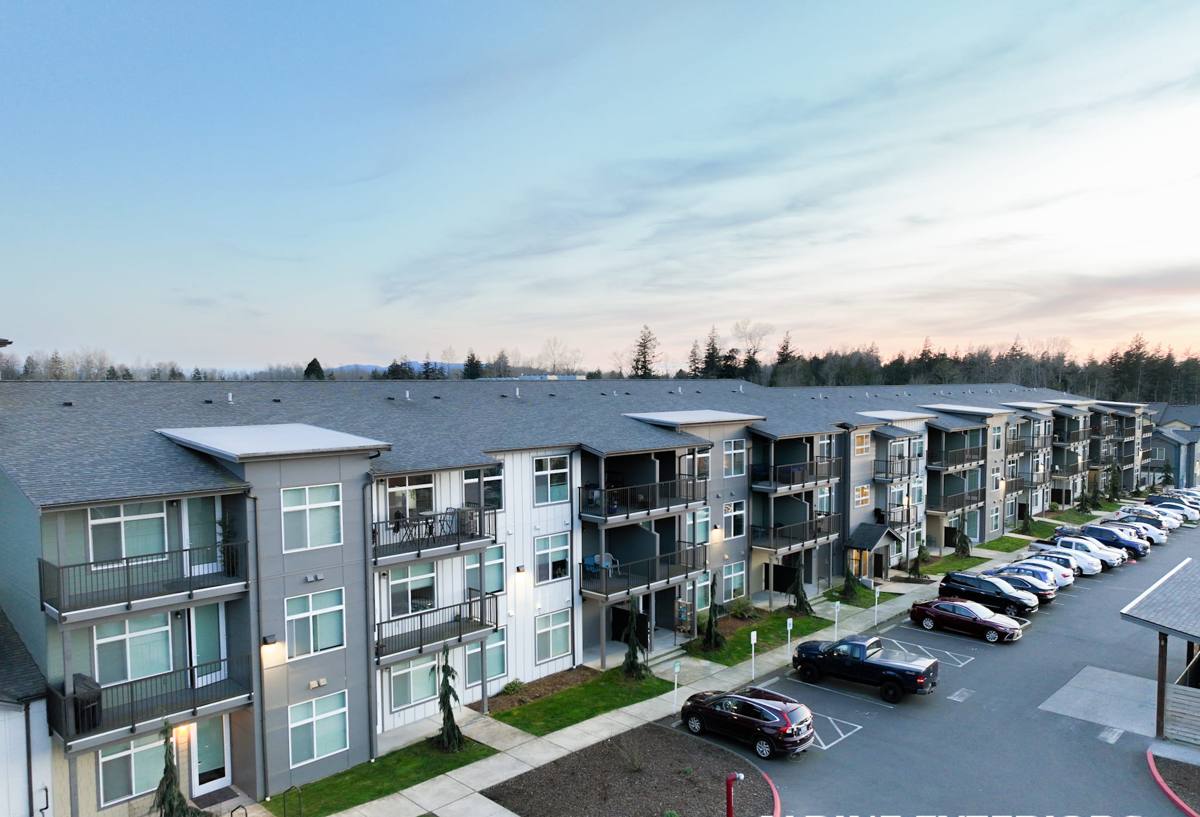
Signs It's Time to Replace, Not Patch
Not every siding problem calls for a full replacement, but in a climate this demanding, patch jobs often mask a bigger issue underneath. Here's what tells us a West Anacortes home needs a real replacement rather than a repair:
- Soft, spongy, or bouncy spots when you press on the siding, especially near the bottom courses
- Moss or algae growing directly on the siding surface, not just on the roof or in shaded corners
- Paint that won't hold anymore — chalking, peeling, or needing repainting every few years
- Boards that have visibly warped, cupped, or separated at the seams
- Gaps opening up around window and door trim, or at butt joints between panels
- Visible rot or staining at the bottom few feet of wall, a common sign of splash-back and poor drainage
- Wood or wood-composite siding that's past 20-25 years old and was never fully repainted or resealed on schedule
If you're seeing two or three of these at once, the underlying sheathing and water-resistive barrier are usually already compromised, and a repaint or spot repair just buys a short delay before the same problems return.
What a Correct Siding Replacement Actually Involves
Swapping old boards for new ones is the visible part of the job, but it's not the part that determines whether the siding lasts. A correct replacement in a wet, salt-exposed climate like Skagit County's coastline includes several steps that don't show up in a photo but matter a great deal over the next 30 years:
Tear-off and inspection
Old siding comes off down to the sheathing so we can actually see what's underneath — rot, water staining, or damaged framing that needs to be addressed before anything new goes up. Covering over a hidden problem is how a siding job fails early.
Water-resistive barrier and flashing
A weather-resistive barrier goes over the sheathing, and flashing is installed correctly at every window, door, and penetration — the places where wind-driven rain actually gets in. This detail work matters more in West Anacortes than almost anything else, because it's the layer that keeps water out even when it does get past the siding face.
Fastening and clearances
Fiber cement siding has a manufacturer-specified nailing pattern, fastener type, and minimum clearance from grade, decks, and roof lines. Skipping or shortcutting these isn't just a warranty issue — it's how moisture finds its way behind the siding in the first place.
Finish and trim
Trim, corners, and caulking are finished according to the manufacturer's specification, not general carpentry habit. On a factory-finished product, over-caulking or caulking joints that are supposed to stay open actually traps moisture instead of shedding it.
Why We Only Install James Hardie Fiber Cement
We install one siding product: James Hardie fiber cement. We don't offer vinyl, LP SmartSide or other engineered wood composites, cedar, or generic fiber cement brands, and that's a deliberate standard, not a limited catalog. Each of the alternatives has real strengths, but none of them hold up as well, as maintenance-free, or as predictably as Hardie fiber cement in a climate that combines salt air, wind-driven rain, and heavy moss growth.
| Material | Salt Air / Coastal Wear | Moisture & Rot Risk | Moss/Algae Resistance | Ongoing Maintenance |
|---|---|---|---|---|
| Vinyl | Can fade and become brittle over time | Low rot risk, but seams and gaps let water behind it | Moderate — surface can hold organic growth | Low, but limited repair options once damaged |
| Wood-composite (e.g. engineered wood) | Edges and cut ends are vulnerable to moisture intrusion | Higher — wood fiber core can swell or rot if the finish fails | Moderate to high in shaded, damp areas | Regular inspection and repainting/resealing required |
| Cedar | Natural material, but weathers and grays under salt exposure | Higher without diligent sealing and upkeep | High — organic material is a natural host for moss | High — refinishing on a recurring schedule |
| James Hardie fiber cement | Non-combustible, engineered for coastal and marine exposure | Low — cement composition doesn't rot or swell like wood | Low — factory finish resists staining and organic growth | Low — occasional rinse, no repainting cycle with ColorPlus finish |
James Hardie also builds climate into the product itself. Their HardieZone system engineers separate formulations for different parts of the country, and Western Washington falls into the moisture-focused HZ10 zone rather than the freeze-thaw zone used inland. That means the boards going on a West Anacortes home are formulated for exactly the kind of damp, salt-air, high-moss conditions this area sees every winter — not a generic national spec. Combined with the factory-applied ColorPlus finish, which is baked on rather than field-painted, you get color and finish that holds up to UV and salt exposure far longer than a job-site paint job would.
Our Process for a West Anacortes Siding Replacement
- On-site assessment — we walk the exterior, check the current siding and trim, and look for signs of moisture or rot before writing a proposal.
- Sheathing and structure check — once tear-off begins, we inspect what's underneath and flag anything that needs repair before new siding goes on.
- Water-resistive barrier and flashing — installed at every window, door, and penetration point, sized and lapped correctly for wind-driven rain.
- Siding installation — James Hardie panels or lap siding installed to the manufacturer's fastening, clearance, and joint specifications.
- Trim and finish work — corners, trim boards, and caulking finished per spec, using ColorPlus-matched products where visible seams require it.
- Cleanup and walkthrough — job site cleared of old material and debris, followed by a walkthrough so you know what was done and what to expect going forward.
Cost Factors for Siding Replacement
Every home is different, and we won't quote a number without seeing the house, but these are the main things that move the price up or down on a typical West Anacortes project:
| Factor | Why It Matters |
|---|---|
| Home size and wall area | More square footage of siding and trim means more material and labor |
| Condition underneath the old siding | Rotted sheathing or framing found during tear-off adds repair scope before new siding can go up |
| Number of stories and roof lines | Multi-story homes and complex rooflines require more staging, cutting, and detail work |
| Trim and accent complexity | Board-and-batten accents, window trim, and corner detailing add labor beyond flat wall panels |
| Site access | Water-facing lots, tight side yards, or steep grades can slow staging and material handling |
| Product selection within the Hardie line | Panel vs. lap siding, plank width, and finish options carry different material costs |
Why Local Experience in West Anacortes Matters
A crew that already works this side of the island knows what a general contractor from farther inland might not think to check — which walls take the worst of the wind-driven rain, where moss builds up fastest through the winter, and how badly salt air can chew through unprotected fasteners and trim over a decade. That local knowledge shows up in small decisions during installation: extra attention to flashing on water-facing walls, fastener choices that hold up to salt exposure, and honest guidance on which areas of a home need the most protection.
It also means we're not guessing at how Skagit County's coastal weather behaves — we're accounting for it up front, in the same way we would on any home we've worked on nearby.
Living With Hardie Siding Through Moss Season
One of the practical benefits of switching to fiber cement in this climate is how little upkeep it asks for compared to wood-based siding. You're not on a repainting cycle, and the material itself doesn't feed moss and algae the way wood fiber does. That said, a few simple habits keep it looking its best through a wet Skagit County winter:
- Rinse the siding down once or twice a year, especially on shaded or north-facing walls where moss tends to collect
- Keep gutters clear so water isn't overflowing and running down the siding face
- Trim back shrubs and trees that keep siding shaded and damp longer than the rest of the house
- Check caulking at trim joints periodically, since caulk (not the siding itself) is usually the first thing to need attention over time
That's a manageable list, and it's a lot shorter than what wood or wood-composite siding typically asks for in this climate.
If your West Anacortes home's siding is showing its age or you're just planning ahead, we're happy to take a look and walk you through what a replacement would actually involve for your house. There's no pressure and no cost to get our honest read on where things stand — use the form below to request a free estimate.