 Anacortes Siding
 Siding Repair for Cap Sante's Waterfront Exposure
Cap Sante sits right where the marina meets the hillside above it, which means homes here take weather from two directions at once: salt-laden air rolling off the water and driving rain pushed sideways by wind funneling through the channel. That combination is harder on exterior siding than most inland Skagit County neighborhoods ever see. A siding repair call in this part of Anacortes isn't the same job as one three miles inland, and treating it that way is how homeowners end up calling the same contractor back a year later.
This page is about siding repair specifically for Cap Sante — what the local climate does to siding, what a repair has to get right to actually hold, and how we approach it differently because we work this area regularly.
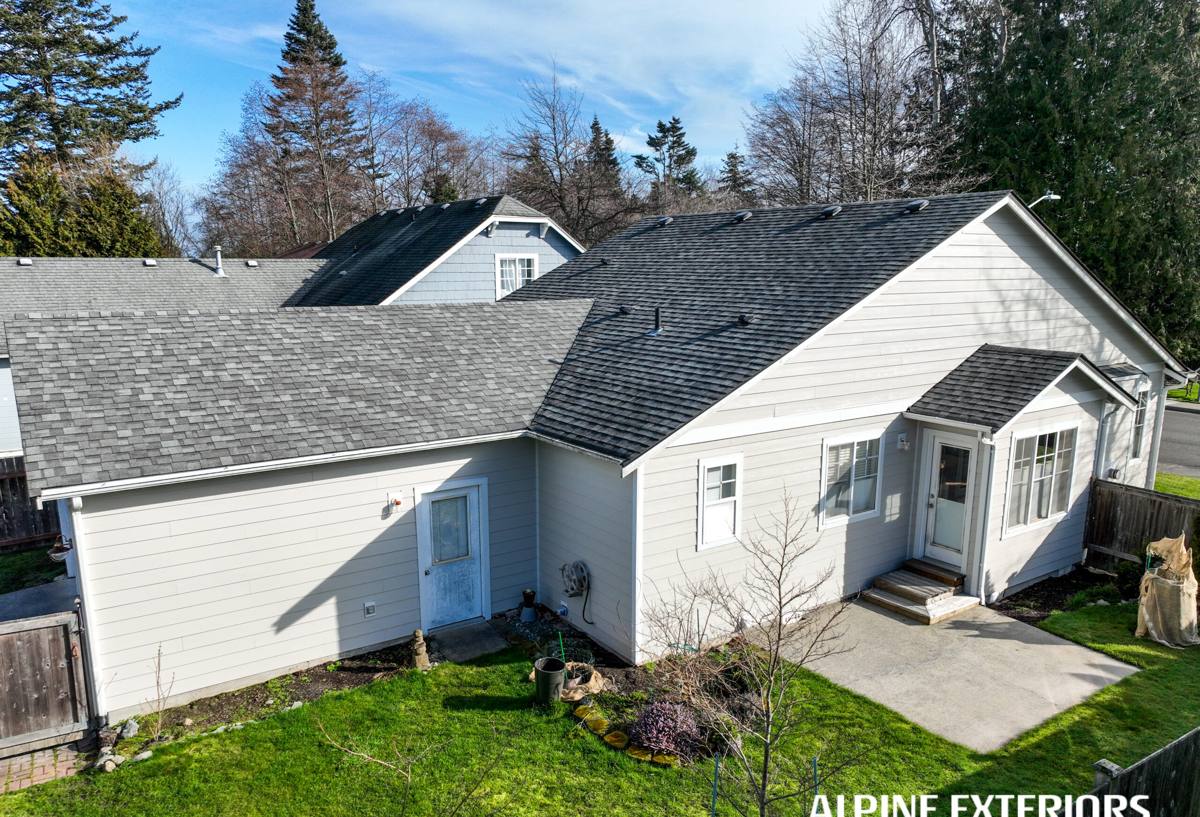
What Salt Air, Rain, and Moss Actually Do to Siding Here
Three things drive most of the siding damage we get called out for in Cap Sante, and they compound each other:
Salt air and corrosion
Airborne salt from the marina and Rosario Strait settles on exterior surfaces and accelerates corrosion of fasteners, trim flashing, and any exposed metal. On siding, that shows up as rust bleed staining around nail heads, corroded J-channel or corner trim, and fastener failure that lets panels work loose over time. It's a slower process than storm damage, but it's constant, and it's worse the closer a home sits to the water.
Driving rain and wind-driven moisture
Wind off the strait doesn't just bring rain — it pushes it sideways and up under laps, trim, and butt joints that would stay dry in a calmer setting. Siding systems rely on gravity and overlap to shed water; wind-driven rain defeats both if the original installation didn't account for it. This is where poor flashing details and undersized overlaps turn into real water intrusion instead of just cosmetic wear.
The long moss season
Western Washington's wet stretch runs long, and Cap Sante's tree cover and hillside shade keep siding damp longer after a rain than a fully exposed lot would. Moss and algae take hold on north- and shade-facing walls, and once established they hold moisture against the siding surface, degrade paint or factory finish, and — on the wrong substrate — soften the material underneath. A repair that doesn't address the moisture source just gives the moss somewhere new to grow back.
Common Repair Calls We See in This Neighborhood
- Rust staining and streaking around fastener heads and metal trim
- Soft, swollen, or delaminating siding at grade, under gutters, or near downspouts
- Cracked or missing caulk at butt joints and trim, letting water track behind the siding
- Moss and algae buildup on shaded or north-facing walls
- Warped or buckled panels from wind exposure or poor original fastening
- Damage around window and door trim where flashing was skipped or done wrong the first time
- Impact damage from storm debris, especially on wind-exposed elevations
What a Correct Repair Actually Involves
A lot of "siding repair" in this trade is really just patch-and-paint: cut out the bad section, nail up a replacement piece, caulk the edges, call it done. That works for a season. It rarely works for five years in a spot like Cap Sante, because it doesn't address why the siding failed in the first place.
Find the actual water path first
Before we touch a panel, we're looking at what's behind it — flashing at windows and trim, the condition of the water-resistive barrier, whether kick-out flashing exists where a roof meets a wall, and whether the damage is isolated or a symptom of a bigger moisture problem. Replacing a rotten section of siding without fixing the flashing behind it just buys time.
Match the existing material and finish
If your home is already sided in fiber cement, matching profile, exposure, and finish is straightforward and the repair blends in. If it's sided in something else — vinyl, LP SmartSide, cedar, or a primed wood product — we'll tell you honestly what a patch can and can't accomplish on that material, since our crews install and stand behind James Hardie fiber cement specifically, not the range of products we're sometimes asked to patch.
Detail the edges, not just the field
Most repair failures happen at the seams — where new meets old, where siding meets trim, where a butt joint sits. Correct caulking (the right product, tooled properly, not just squeezed into a gap) and correctly lapped flashing at those transitions matter more to how long the repair lasts than the patch itself.
Repair or Replace? A Cost-Factor Comparison
| Factor | Points Toward Repair | Points Toward Replacement |
|---|---|---|
| Extent of damage | Isolated to one or two sections/elevations | Recurs across multiple walls or the whole exposure |
| Underlying material | Fiber cement, sound elsewhere | Wood, LP, or vinyl showing widespread wear or moisture damage |
| Cause of damage | Isolated impact or fastener issue | Systemic flashing or water-barrier failure |
| Age of siding | Under 10-15 years, otherwise in good shape | Original install past its practical service life |
| Moss/algae pattern | Surface growth, cleanable | Growth tied to trapped moisture and soft substrate |
Most Cap Sante homes we look at land somewhere in the middle, which is exactly why an honest on-site assessment matters more than a phone quote. We'll tell you straight when a repair makes sense and when it's throwing money at a symptom.
Our Process, Start to Finish
- On-site assessment — we look at the damage, the flashing behind it, and the rest of the elevation, not just the spot you called about.
- Honest scope — a clear explanation of what's actually wrong, what a repair will and won't fix, and a straightforward price range.
- Correct tear-out — removing only what needs to come out, without disturbing sound material or the weather barrier behind it.
- Flashing and moisture-barrier correction — fixing the actual water path before any new siding goes up.
- Matched replacement material — profile, exposure, and finish matched as closely as the existing siding allows.
- Proper sealing and detailing — caulking, fastening, and trim work done to hold up to wind-driven rain, not just look finished.
- Walkthrough — we show you what was done and why, before we consider the job finished.
Why We Only Install James Hardie — Even on Repair Work
We install one siding system: James Hardie fiber cement. It's not a marketing preference — it's what holds up to the conditions Cap Sante actually throws at a home. Fiber cement doesn't rot, doesn't feed moss the way wood fiber can, and its ColorPlus factory finish resists the fading and moisture staining that plain paint struggles with in a marine climate. James Hardie's HZ product lines are engineered around climate zones like ours, and the warranty is transferable if you sell the home — a real consideration on the water side of Anacortes where turnover happens.
When we're repairing an existing Hardie installation, this means we can match material, profile, and finish confidently, and the repair holds up the same way the original siding does. When the existing siding is a different product, we won't pretend a patch makes it perform like fiber cement — we'll give you a straight answer on what's realistic now and what full replacement would solve for good.
Why Hiring a Crew That Already Works Cap Sante Matters
Siding repair here isn't generic. A crew that hasn't worked this stretch of Anacortes waterfront can miss things that are obvious once you've seen them a dozen times: which elevations take the worst wind-driven rain, where moss reliably comes back because of tree shade, how fast fasteners corrode this close to the marina, and what flashing details actually hold up rather than just meeting minimum code. That local pattern recognition is the difference between a repair that lasts and one that's back on the schedule next winter.
It also means straight answers on permitting and code requirements specific to Skagit County and the City of Anacortes, and a crew that's used to working around the tighter lots, slopes, and access conditions common on the hill above the marina.
Signs Your Cap Sante Home Needs a Siding Repair Call
- Rust streaks running down from fastener heads or metal trim
- Soft or spongy siding when you press on it near the ground or under windows
- Persistent moss or algae that comes back within a season of cleaning
- Cracked, shrunken, or missing caulk at joints and trim
- Peeling or bubbling paint concentrated on one wind- or shade-exposed wall
- Visible gaps, buckling, or panels that have pulled away from the wall
- Water stains on interior walls near exterior corners or window headers
If your siding shows one or more of these, it's worth having someone look at what's happening behind the surface, not just what's visible from the driveway.
If you're seeing any of this on a Cap Sante home, we're happy to take a look and give you a straight assessment — no pressure, no upsell, just an honest read on what your siding needs. Use the form below to request a free estimate.