 Anacortes Siding
 Siding Installation Built for Bow's Coastal Climate
Bow sits low and close to the water in Skagit County, wedged between farmland, tidal flats, and shoreline air that moves inland with every weather system off the Salish Sea. That combination — salt-laden moisture, near-constant winter rain, and shade pockets that never fully dry out — is harder on exterior siding than most homeowners realize until they're dealing with soft trim, streaked paint, or a wall section that's gone spongy behind the surface. Siding installation in Bow isn't the same job as siding installation in a drier inland town, and treating it that way is how premature failures happen.
This page covers what siding installation actually needs to account for in Bow specifically, what a correct install looks like from the framing out, and how our process works for homeowners in this part of Skagit County.
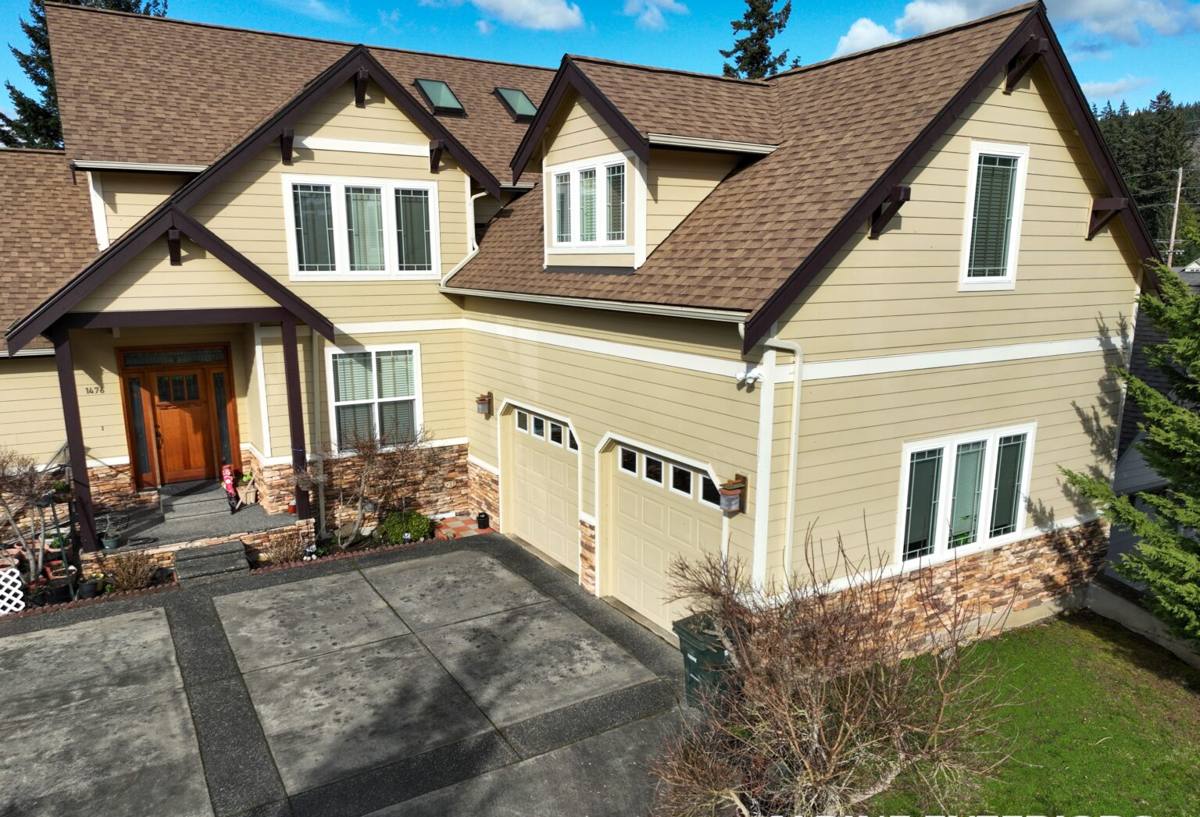
What Bow's Climate Actually Does to Siding
Three conditions define siding performance out here, and they compound each other:
Salt Air
Proximity to Samish Bay and the surrounding tidal water means airborne salt is a constant, low-grade presence — not just after storms. Salt accelerates the breakdown of paint films, corrodes exposed metal fasteners and flashing, and speeds up the general weathering of anything not built to shed moisture cleanly. Siding materials and fasteners that aren't rated for coastal exposure age faster here than the same products would forty miles inland.
Driving Rain
Skagit County gets a long, wet season, and Bow's open, low-lying position means wind-driven rain hits siding at an angle rather than falling straight down. That matters because a lot of siding failures aren't from water landing on a wall — they're from water being pushed sideways into laps, seams, and butt joints that weren't detailed to handle it.
Moss and Shade
Tree cover, fence lines, and the general dampness of the region mean north- and west-facing wall sections often stay damp for days at a stretch during the fall and winter. That's exactly the condition moss and mildew need to take hold, and it's why siding on the shaded side of a Bow home almost always shows wear before the sunnier sides do.
None of this means siding in Bow is doomed to fail early. It means the material and the installation both have to be chosen and executed with this environment in mind — not treated as an afterthought.
Signs a Bow Home Needs Siding Attention
- Paint that's chalking, peeling, or losing adhesion faster than the manufacturer's stated repaint interval
- Soft or spongy spots when you press on siding near the bottom courses or around window trim
- Persistent green or black staining that returns within weeks of cleaning
- Visible gaps, warping, or buckling in lap siding, especially on walls facing prevailing weather
- Rising energy bills with no other explanation, suggesting the wall assembly behind the siding is no longer doing its job
- Fastener heads bleeding rust through the paint — a sign the fasteners weren't corrosion-rated for this climate
Any one of these on its own might just mean routine maintenance. Two or three together, especially on a home more than 15-20 years old, usually means the siding system itself has reached the end of its useful life.
Why We Only Install James Hardie Fiber Cement
We standardized on James Hardie fiber cement siding for every job we do, including in Bow, for reasons that come directly from what this climate does to a building envelope over time.
Fiber cement is non-combustible and dimensionally stable — it doesn't swell, cup, or rot the way wood-based products can when they take on moisture repeatedly over a wet Skagit County winter. James Hardie's HZ5 product line is engineered specifically for climates with freeze-thaw cycling and sustained damp conditions, which describes this part of Washington accurately. The factory-applied ColorPlus finish is baked on under controlled conditions, which gives it better adhesion and fade resistance than field-applied paint — a real advantage in an area where salt air is already working against paint longevity.
We don't install vinyl, LP SmartSide, primed wood, or other fiber cement brands. That's not a knock on every homeowner who has one of those products already — it's a standard we hold for what we put on a house ourselves, because we've seen how each of those materials performs (or doesn't) in exactly this kind of coastal, high-moisture environment over a full service life. Fiber cement that's manufactured for the climate, finished at the factory, and backed by a strong transferable warranty is what we're willing to stand behind.
What a Correct Installation Actually Involves
The material is only part of the equation. A large share of siding failures we get called out to inspect trace back to installation shortcuts, not product defects. For Bow specifically, a correct install means:
Water Management Behind the Siding
A properly lapped weather-resistant barrier, correctly integrated flashing at every window, door, and penetration, and a drainage plane that lets any moisture that gets behind the siding find its way back out instead of sitting against the sheathing. In a climate with this much wind-driven rain, the barrier system matters as much as the siding itself.
Fasteners and Hardware
Corrosion-resistant fasteners rated for the exposure, driven to the manufacturer's specified depth and pattern — not overdriven, which crushes the material and creates a water entry point, and not underdriven, which leaves the board loose and prone to movement.
Clearances and Gaps
Proper clearance at the bottom of the siding from grade, decks, and roof lines, plus correctly sized gaps at butt joints and trim to allow for expansion without trapping moisture. Skipping these clearances is one of the most common reasons we see rot show up first at the base of a wall.
Caulking and Sealant Placement
Sealant belongs at specific joints, not everywhere. Over-caulking traps moisture inside the assembly just as effectively as under-caulking lets it in. Following James Hardie's fastening and finishing guidelines matters more in wet climates than in dry ones, because there's less margin for error.
Cost Factors for Siding Installation in Bow
Every home is different, so we don't quote firm numbers without seeing the job. But these are the variables that actually move the price on a Bow siding installation:
| Factor | Why It Matters |
|---|---|
| Home size and wall complexity | More corners, dormers, and roof lines mean more cutting, flashing, and labor time |
| Extent of existing damage | Rotted sheathing or framing found once old siding comes off adds repair scope before new siding goes on |
| Siding profile and accessories | Lap width, trim details, and soffit/fascia work change material and labor totals |
| Access and site conditions | Steep grades, tight setbacks, or limited equipment access common on some Bow lots affect labor time |
| Color and finish selection | Factory ColorPlus finishes vs. field-applied paint carry different material costs |
The most common budget surprise isn't the siding itself — it's what gets found underneath old siding once it's removed. A home that's had ongoing moisture intrusion in this climate often needs some sheathing or framing repair before new siding can go on correctly, and a straightforward crew will tell you that up front rather than after the fact.
Our Process, Start to Finish
- Walkthrough and assessment — we look at the current siding, trim, and any visible signs of moisture problems, and talk through what you're seeing from the inside of the home too
- Written estimate — scope, product selection, and pricing laid out clearly, with any likely repair contingencies flagged in advance
- Tear-off and inspection — old siding comes off and the sheathing and framing get inspected before anything new goes up
- Weather barrier and flashing — the water management layer goes in correctly the first time, since it's the part you won't see again once siding is installed
- Hardie installation — installed to manufacturer specification for fastening, clearances, and joint treatment
- Final walkthrough — we go over the finished work with you before calling the job done
Maintenance That Keeps Bow Siding Performing
Correctly installed fiber cement siding needs far less upkeep than wood or vinyl, but "less" isn't "none" — especially in this climate:
- Rinse siding annually, and more often on shaded, moss-prone walls, to keep organic growth from taking hold
- Keep gutters clear so overflow isn't running down wall sections during heavy rain events
- Trim back vegetation and tree limbs that keep siding shaded and damp longer than necessary
- Inspect caulking at trim and penetrations every year or two and re-seal where it's cracked or pulled away
- Address any paint or finish wear promptly rather than letting it sit through another wet season
Why Hiring a Crew That Already Works in Bow Matters
Siding installed to a generic standard can still fail in a specific climate. A crew that regularly works this stretch of Skagit County already knows which wall orientations need extra attention to flashing, how much clearance actually holds up against driving rain off the water, and where moss and shade cause the most trouble on homes in this area. That familiarity shows up in the details — the ones that don't get noticed until years later, when a well-detailed install is still holding up and a rushed one isn't.
If you're weighing a siding replacement on a Bow home, we're glad to take a look and put together a straightforward estimate — no pressure, no sales script, just an honest read on what your home needs. Use the form below to get started.