 Anacortes Siding
 Ship Harbor's Marine Climate and What It Does to Siding
Homes near Ship Harbor sit close enough to the water that the exterior of a house takes on a different job than it would a few miles inland. Salt-laden air, wind-driven rain off the Sound, and a long stretch of overcast, damp months every year mean the siding isn't just a finish — it's the first line of defense against corrosion, moisture intrusion, and the moss and mildew that thrive in Skagit County's wet season. Siding that's marginal in a dry inland climate can fail fast here, and siding that's installed correctly can go decades without a callback.
Salt Air and Corrosion
Airborne salt accelerates corrosion on anything metal — fasteners, flashing, trim, and hardware. It also breaks down cheaper coatings and finishes faster than a standard product warranty assumes, because most of those warranties were written with a general climate in mind, not a shoreline one. The practical result is that material choice and fastener choice matter more here than they do a few miles inland.
Wind-Driven Rain and Wall Assemblies
Rain near the water rarely falls straight down. Wind pushes it sideways and up under laps, around trim, and into any gap in the water-resistive barrier. A siding job that looks fine from the curb can still be letting water behind the cladding if the flashing details and overlaps weren't done to spec. That's a slow, hidden kind of damage — it shows up as rot in the sheathing or framing long after the siding itself still looks new.
Moss, Shade, and Trapped Moisture
Anacortes gets a long moss season, and shaded north- and west-facing walls near tree lines hold moisture longer than open, sun-exposed walls. Moss and algae aren't just cosmetic — where they take hold, they keep the wall assembly damp for longer stretches, which is exactly the condition that lets rot and mold get started behind or under the siding if the assembly wasn't built to shed water properly in the first place.
What Correct Siding Installation Requires in This Environment
"Correct" siding installation is a system, not just nailing boards to a wall. In a coastal, high-moisture climate like Ship Harbor's, every layer of that system earns its keep.
Water Management Behind the Siding
A weather-resistive barrier goes on first, lapped correctly from the bottom up so water sheds outward instead of tracking behind the barrier at every seam. Flashing goes around every window, door, and penetration, integrated with the barrier — not just caulked over the top of it. Where two planes meet, or where the siding meets trim, roofing, or a deck ledger, that's where a rushed job shows itself first, usually a few years down the road.
Fastening and Fastener Selection
Fasteners need to be corrosion-resistant and sized and spaced to the manufacturer's specification, not just "close enough." Near salt air, stainless steel or high-quality coated fasteners matter more than they would inland — a fastener that starts rusting can telegraph a stain through the face of the siding and eventually loosen its grip on the board.
Clearances That Get Skipped
Siding needs proper clearance from grade, from roof lines, and from decks and patios so it isn't sitting in standing water or getting splash-back off hard surfaces during heavy rain. These clearances are easy to shortcut on a tight lot or during a fast remodel, and they're one of the first things we check on an existing home before we ever talk about new siding.
Why We Only Install James Hardie Fiber Cement
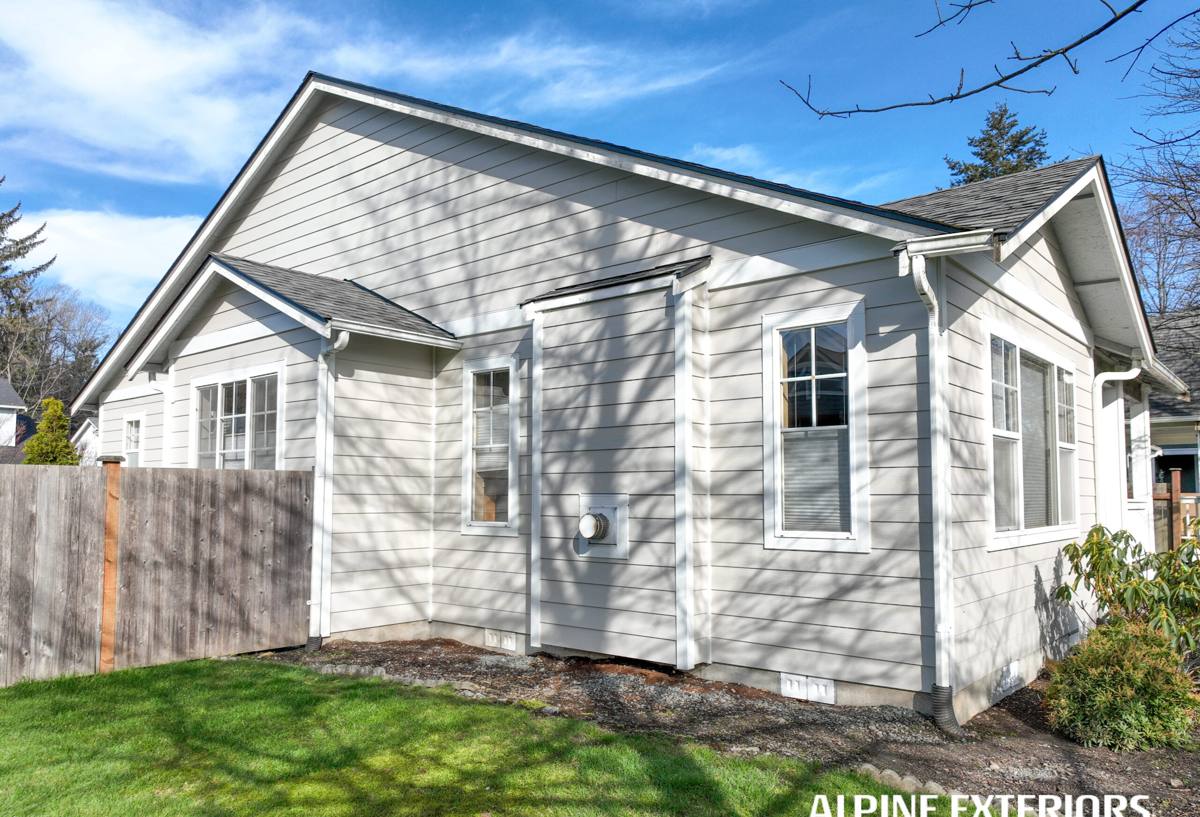
We install one siding product: James Hardie fiber cement. Not because it's the cheapest option on the market, but because it's the one we're willing to stand behind on a Ship Harbor home. Fiber cement is non-combustible and dimensionally stable, so it doesn't expand and contract with moisture the way wood-based products can, and it doesn't warp or become brittle from the freeze-thaw and wet-dry cycling that's normal here in the Pacific Northwest. Hardie's HZ5 product line is engineered specifically for climates like ours — more humid, wetter winters — with a formulation built to resist moisture-related damage better than their standard formulation. The ColorPlus factory-applied finish is baked on under controlled conditions, which gives it better fade and wear resistance than field-applied paint, and it comes with its own finish warranty on top of the product warranty. We've made a standard of installing only this product, on every job, so that what we put on a home is something we know how to install right and are comfortable warrantying.
Comparing How Siding Materials Hold Up Near the Water
Homeowners near Ship Harbor often ask how the material options actually differ once you account for salt air and constant moisture, not just sticker price. Here's the honest comparison.
| Material | Behavior in Salt Air / Damp Climate | Long-Term Maintenance |
|---|---|---|
| James Hardie fiber cement | Non-combustible, dimensionally stable, engineered HZ5 line for wetter climates | Occasional rinse; caulk joints checked periodically; factory finish resists fade |
| Vinyl siding | Can warp or become brittle with temperature swings; seams are a moisture entry risk over time | Low upkeep but color fades and can't be repainted easily; panels crack in impacts |
| Wood / cedar (including primed spruce) | Absorbs moisture, prone to rot and moss growth in shaded, damp conditions typical here | Regular repainting or restaining; ongoing moisture and pest monitoring |
| LP SmartSide / other engineered wood | Wood-strand core is more moisture-sensitive than fiber cement; edge sealing is critical | Manufacturer requires strict maintenance schedule to preserve warranty coverage |
Our Ship Harbor Installation Process
The steps don't change from job to job, because skipping one is exactly how the problems above start.
1. On-Site Assessment
We walk the exterior, check existing siding and trim for rot or moisture damage, and look at drainage, grade clearances, and any areas that stay shaded or damp longer than the rest of the house.
2. Tear-Off and Sheathing Check
Old siding comes off and the sheathing underneath gets inspected. Anything soft, stained, or damaged gets flagged and addressed before anything new goes up — covering a moisture problem with new siding just hides it.
3. Weather-Resistive Barrier and Flashing
A new barrier is installed and properly lapped, with flashing integrated at every window, door, and penetration before the first piece of siding goes on.
4. Hardie Installation to Spec
Fastening pattern, spacing, and clearances follow the manufacturer's installation instructions, which is also what keeps the product warranty valid.
5. Trim, Caulking, and Finish Detail
Joints and transitions get sealed with the right materials, and touch-up on any field cuts matches the factory ColorPlus finish.
6. Final Walkthrough
We go over the finished work together, point out anything you should keep an eye on, and answer questions about care going forward.
What to Look For When Hiring a Siding Contractor Near Ship Harbor
A siding job on a shoreline-adjacent home leaves less room for error than an inland job, so it's worth vetting a contractor a little harder before signing anything.
- Ask whether the crew has worked on homes specifically in Ship Harbor or comparable Fidalgo Island/waterfront settings — not just siding in general.
- Confirm they inspect and address sheathing damage before installing new siding, not just cover over the existing wall.
- Ask which fasteners they use and whether they're rated for coastal, corrosion-prone conditions.
- Get clarity on how flashing is integrated at windows, doors, and roof transitions — this is where most water problems start.
- Confirm the manufacturer's installation instructions are being followed to the letter, since that's usually what keeps a product warranty enforceable.
- Ask about licensing, insurance, and whether they'll provide a written warranty on their labor, separate from the manufacturer's product warranty.
Cost Factors for Siding Installation in Ship Harbor
Every home is different, so we won't quote a number without seeing the house, but these are the factors that actually move the price.
| Factor | Why It Matters |
|---|---|
| Condition of existing sheathing | Rot or moisture damage found during tear-off needs repair before new siding can go on |
| Home size and wall complexity | More corners, dormers, and trim details mean more labor and material cutting |
| Siding profile and finish | Lap width, texture, and ColorPlus color selection affect material cost |
| Access and site conditions | Slopes, tight setbacks, or limited equipment access near the water can add labor time |
| Trim and detail work | Window and door surrounds, fascia, and transitions add both material and labor |
Maintaining Your New Siding in a Salt Air, Moss-Prone Climate
Fiber cement holds up well here, but a little seasonal attention keeps it looking and performing its best. A yearly rinse-down removes salt residue and organic buildup before it has a chance to feed moss or algae growth. Keeping gutters clear and downspouts directed away from the foundation reduces the splash-back and standing water that stress the bottom courses of siding. On shaded sides of the house, trimming back vegetation that keeps a wall damp longer than the rest of the home goes a long way toward preventing moss from getting a foothold in the first place. Caulked joints and trim intersections are worth a periodic visual check, since that's where a small gap can eventually let water behind the assembly.
Why Local Experience Matters
A crew that regularly works Ship Harbor and the surrounding Anacortes area already knows which walls take the worst of the wind-driven rain, how long the moss season really runs in Skagit County, and what a marine climate does to fasteners and finishes over time. That's not something you can fully account for from a generic installation checklist — it comes from having done the work on homes in this exact setting and having watched how they hold up over the years that follow.
If you're planning a siding project for a home near Ship Harbor, we're glad to take a look and talk through what your house actually needs — no pressure, no obligation. Request a free estimate using the form below.