 Anacortes Siding
 Building Decks for Ship Harbor's Coastal Conditions
Ship Harbor sits close to Anacortes's western waterfront, where homes take a steady dose of salt-laden wind off the water, driving rain through the fall and winter, and long stretches of gray, damp weather that keep everything from lawns to deck boards perpetually shaded and slow to dry. A deck built here works harder than the same deck would twenty miles inland. Salt air accelerates corrosion in fasteners and hardware. Standing moisture and shade feed moss and algae growth on horizontal surfaces. And the freeze-thaw swings common to Skagit County winters stress any joint that wasn't detailed correctly the first time.
We build and repair decks throughout Anacortes, but Ship Harbor properties get a specific approach: corrosion-resistant fasteners as a baseline rather than an upgrade, drainage details that assume the deck will get wet and stay wet longer than the manufacturer's spec sheet assumes, and framing that accounts for the way salt spray finds every exposed edge of metal on a structure near the water.
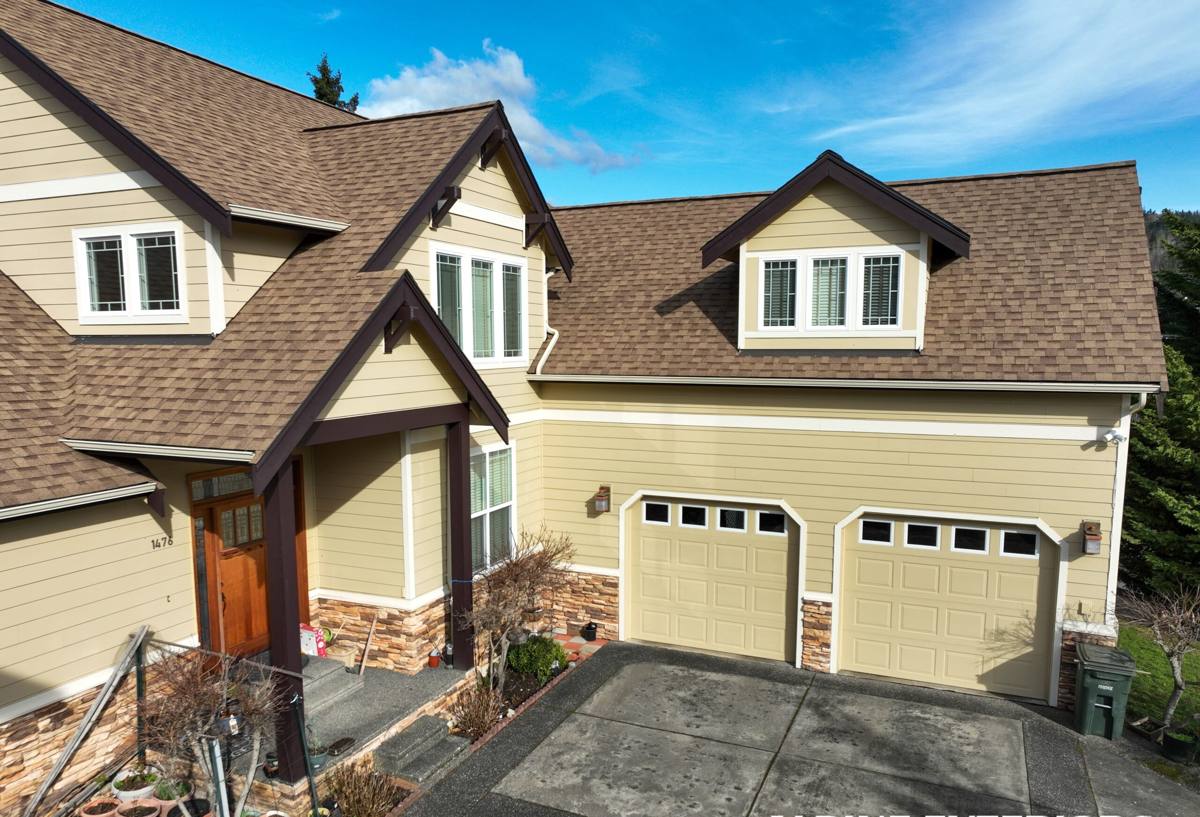
What Local Homes Actually Need From a Deck
Corrosion-Resistant Hardware, Not Just Treated Lumber
Pressure-treated lumber resists rot, but it doesn't protect the fasteners holding it together. In a marine-influenced environment like Ship Harbor, standard galvanized screws and joist hangers can start showing rust streaks within a couple of seasons. We use stainless steel or heavy hot-dip galvanized fasteners rated for coastal exposure, and we match hardware to the treated lumber's chemical makeup so the two don't corrode each other — a detail that gets skipped more often than it should.
Drainage That Assumes Rain, Not Hopes Against It
A deck built for Anacortes needs to shed water fast and keep it moving away from the house. That means proper ledger board flashing where the deck meets the siding, a slight pitch away from the structure, gapped decking boards sized to the material, and joist tape over framing members so water doesn't pool and soak into end grain. Skip any one of these and you're looking at premature rot, mold behind the ledger, or a slick, moss-prone surface within a year or two.
Moss and Algae Resistance
Anacortes's moss season isn't a minor annoyance — shaded, damp decks here grow moss and green algae film that makes boards slippery and, over time, holds moisture against the surface. Material choice, board spacing, and site exposure (how much sun and airflow the deck actually gets) all affect how much upkeep a deck demands. We talk through this with every Ship Harbor homeowner before recommending a material, because the "low-maintenance" label on composite decking still means something different in a shaded, salt-air lot than it does elsewhere.
Choosing a Decking Material for This Climate
There's no single right answer — it depends on budget, how much maintenance you're willing to do, and how much direct weather exposure the deck gets. Here's how the common options actually perform in Ship Harbor's conditions:
| Material | Moisture & Salt Air Performance | Moss/Algae Tendency | Maintenance |
|---|---|---|---|
| Pressure-treated lumber | Good rot resistance with proper sealing; hardware is the weak point | Moderate — needs periodic cleaning and re-sealing | Annual cleaning, re-stain/seal every 2-3 years |
| Cedar | Naturally rot- and insect-resistant, but softer and needs sealing near salt air | Moderate to high in shade without upkeep | Re-stain or oil every 1-2 years |
| Composite decking | Excellent — doesn't absorb moisture or rot | Can still grow surface algae in deep shade; cleans off easily | Occasional washing, no sealing/staining |
| PVC/capped polymer | Excellent — fully moisture- and salt-resistant | Lowest of the group | Occasional washing only |
Composite and PVC decking cost more upfront but eliminate the sealing and staining cycle that wood needs — worth factoring in if the deck sits in shade or gets heavy spray off the water. Cedar and treated lumber cost less initially and give a natural look many owners prefer, but they need real upkeep to hold up here. We'll walk the site with you and give an honest read on which trade-off fits your situation rather than pushing whichever material has the best margin.
Framing and Structure: Where Decks Actually Fail
Most deck failures aren't about the decking boards — they're about what's underneath. The framing, ledger attachment, footings, and connections are what determine whether a deck is safe and long-lasting, and they're also what's easiest to under-build if a crew is cutting corners.
- Ledger attachment: lag-bolted or through-bolted to the house framing, never nailed, with flashing that directs water away from the wall assembly
- Footings: sized and set to local frost depth and soil conditions, not guessed at
- Joist hangers and hardware: corrosion-rated and correctly nailed with hanger-specific fasteners, not whatever nails were on hand
- Post bases: set above grade on proper post base hardware so end grain never sits in standing water
- Guardrails and stairs: built to current code height and baluster spacing, especially on elevated decks common on sloped Ship Harbor lots
On a sloped or waterview lot, elevation changes and drainage patterns matter more than on a flat inland site. We grade the ground under and around the deck as part of the build so water has somewhere to go instead of pooling against footings.
Permits and Local Code
Most new decks and many deck replacements in Anacortes require a building permit through the city or Skagit County, depending on the property, and elevated decks often need engineered plans for footings and guardrails. We handle the permit application and coordinate inspections as part of the job — it's not an add-on. Skipping the permit might save time upfront, but it creates real problems at resale, with insurance claims, and if the structure is ever questioned after a storm.
Our Process on a Ship Harbor Deck Project
- Site visit and assessment: we look at sun/shade exposure, wind and spray direction, existing drainage, and how the deck ties into the house
- Material and design conversation: honest trade-offs on decking material, railing style, and layout based on your budget and how much upkeep you want to do
- Permitting: we prepare and submit the application, including engineered footing or guardrail plans where required
- Demolition and disposal of the old deck, if this is a replacement, with attention to what condition the framing and ledger area are in underneath
- Framing: footings, ledger flashing, joists, and hardware installed to code and to the corrosion standard the site needs
- Decking, railing, and finish work, including any sealing or staining the material calls for
- Final walkthrough and inspection so you know exactly what maintenance the deck needs going forward
What to Check Before You Hire a Deck Contractor
Decks are structural work, not just carpentry — a poorly built one is a safety issue, not just a cosmetic one. Before you sign a contract, it's worth confirming:
- They're pulling the required permit, not suggesting you skip it
- They specify the fastener and hardware grade in writing, not just the decking brand
- They can explain how the ledger will be flashed and attached
- They've worked on waterfront or near-waterfront properties in Skagit County before and can talk specifically about salt air and drainage
- The quote breaks out material, framing, and finish work rather than one lump number
- They carry liability insurance and can provide proof
Maintaining a Deck in Ship Harbor's Climate
Even a well-built deck needs some seasonal attention here. A few habits go a long way toward protecting the investment:
- Sweep and rinse the deck regularly through fall and winter to keep moss and leaf debris from sitting on the surface
- Check and clear gaps between boards so water keeps draining instead of pooling
- Inspect ledger flashing and railing connections once a year for signs of movement or corrosion
- Re-seal or re-stain wood decking on the schedule the material needs — don't wait until it's visibly gray or dry
- Keep nearby vegetation trimmed back so the deck gets what sun and airflow it can
We're happy to talk through a simple maintenance schedule specific to whichever material you choose when the project wraps up.
Why Local Experience Matters for This Job
A deck built to a generic inland spec doesn't hold up the same way in Ship Harbor. We know which fastener grades actually last near this shoreline, how much pitch and drainage a deck needs to handle Anacortes's rain totals, and what the Skagit County and city permit process actually requires before work starts — not after an inspector flags it. That local familiarity is the difference between a deck that needs real attention in three years and one that's still solid in fifteen.
If you're planning a new deck or need to replace one that's showing its age, we'd be glad to take a look and put together a straightforward, no-pressure estimate. Fill out the form below and we'll get in touch to schedule a visit.