 Anacortes Siding
 Why Window Performance Matters in Sedro-Woolley
Sedro-Woolley sits far enough up the Skagit Valley that the weather isn't quite the same as it is on the water in Anacortes, but it isn't dramatically different either. You get the same wet, marine-influenced air moving up the valley, the same long stretch of gray, drippy months where humidity stays high for weeks at a time, and enough temperature swing between summer afternoons and winter nights to put real stress on window seals and frames. Add in valley fog that settles overnight and burns off slow, and you have a climate that's tough on any window that wasn't built or installed with moisture management in mind.
Old, single-pane or early double-pane windows in this area tend to show their age in predictable ways: fogged glass between panes (a sign the seal has failed), drafts you can feel standing near the frame on a cold morning, condensation pooling on the interior sill, and heating bills that creep up every winter as the house works harder to hold heat. Energy-efficient window replacement addresses all of that at once — but only if the product and the installation are matched to the conditions the house actually faces, not just picked off a showroom floor.
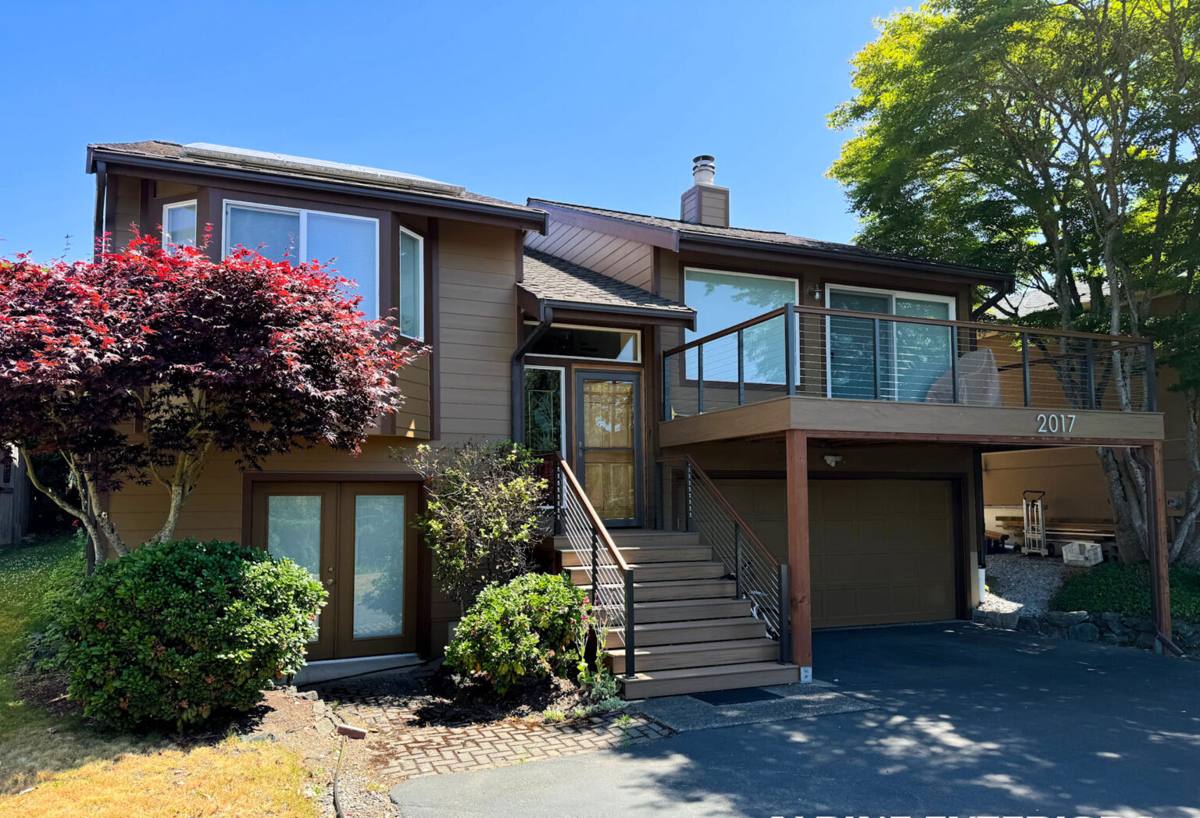
What "Energy-Efficient" Actually Means for a Skagit County Home
The term gets used loosely in advertising, so it's worth being specific about what actually makes a window perform well here.
Glass Package
Most homes in this area do well with a dual-pane, low-E coated unit with an argon gas fill. The low-E coating reflects radiant heat back into the room in winter and blocks excess solar heat gain in summer, which matters even in a mild climate because it reduces the swing your HVAC system has to manage. Triple-pane glass is available and does offer better performance, but for most Sedro-Woolley homes the cost premium isn't justified by our climate — that's a call worth making based on your specific house, budget, and which walls take the most weather, not a blanket upsell.
Frame Material
Vinyl, fiberglass, and clad-wood frames all perform reasonably well thermally. The bigger differentiator in this climate is how the frame handles moisture and temperature cycling over years, not just its day-one R-value. A frame that expands and contracts a lot with temperature swings puts repeated stress on the seal between frame and glass, and on the seal between frame and wall — and repeated stress is exactly what causes the slow leaks that show up two or three winters later.
Installation Detail
This is the part that gets skipped when a job is rushed, and it's the part that determines whether a good window actually performs like one. Flashing, sill pan drainage, backer rod and sealant at the perimeter, and proper shimming all matter more to real-world performance than the sticker on the glass. A well-installed mid-range window will outperform a premium window installed carelessly, every time, in a climate like ours.
How the Local Climate Shows Up in Window Failures
We see the same patterns repeat across Skagit County homes, and Sedro-Woolley is no exception:
- Seal failure from sustained humidity: long stretches of damp air work into imperfect seals faster than short, sharp storms do — it's the duration of exposure, not just the intensity.
- Wood rot at the sill and jamb: older wood-frame windows that weren't flashed correctly let water track behind the trim, and by the time it's visible on the interior, the framing underneath has often been wet for a season or more.
- Moss and organic buildup around exterior trim: Skagit Valley's long moss season isn't just a roof problem — moss holds moisture against window trim and siding longer than open air would, which accelerates rot and paint failure right at the window perimeter.
- Condensation between panes: a clouded or fogged section of glass means the gas fill has escaped and the seal is gone — this is a manufacturing/installation-age issue, not something that can be cleaned or fixed short of replacing the unit.
- Drafts around the sash: weatherstripping breaks down faster with repeated wet-dry cycling, and older aluminum or early vinyl frames were often not engineered for the number of moisture cycles a marine-influenced climate puts them through.
What a Correct Installation Looks Like
Whether we're replacing one window or doing a full-house upgrade, the sequence matters more than the brand name on the glass:
- Remove and inspect: old window comes out, and we check the framing underneath for rot, soft wood, or existing water damage before anything new goes in. Skipping this step is how new windows get installed over hidden problems.
- Repair the opening: any compromised framing gets addressed now — sealing a new window into a damaged opening just delays the same failure.
- Install sill pan flashing: creates a drainage path so any water that does get past the exterior seal has somewhere to go besides your wall cavity.
- Set and shim the window: level, plumb, and square, with proper shimming so the frame isn't under stress that will fatigue the seals early.
- Seal the perimeter: backer rod and quality sealant at the exterior, insulation at the interior gap — done correctly, not just caulked over.
- Flash and integrate with siding: the window has to work with the water management of the wall around it, not as an isolated component. This is where a crew that also does siding has an advantage — we're not guessing how the window interacts with the cladding.
- Final check: operation, seal, and a visual once-over before we call it done.
Window Types We Commonly Install
| Type | Best For | Consideration in Our Climate |
|---|---|---|
| Vinyl, dual-pane, low-E/argon | Most standard replacements | Good value, low maintenance, solid moisture tolerance when installed correctly |
| Fiberglass frame | Larger openings, higher wind/moisture exposure | More dimensionally stable through temperature swings; higher upfront cost |
| Clad-wood | Homes wanting a wood interior look | Needs a sound exterior clad shell — we're careful about seams where moisture can find a way in |
| Triple-pane | North-facing walls, rooms with persistent cold/draft complaints | Best thermal performance but rarely cost-justified across a whole house here |
Full-House Replacement vs. Targeted Repairs
Not every home needs every window replaced at once, and we won't tell you otherwise. If a handful of windows show seal failure or rot while the rest of the house is sound, targeted replacement makes sense both financially and practically. If the whole house is the same age and one window is failing, the rest are usually not far behind — in that case, doing them in phases (worst-exposure walls first) or all at once, budget depending, tends to save money over spreading the labor out across many separate visits.
Signs It's Time to Replace Rather Than Repair
- Fogging or moisture visible between the panes of the glass itself
- Soft or discolored wood at the sill, jamb, or surrounding trim
- Persistent drafts even with weatherstripping in reasonable shape
- Windows that are difficult to open, close, or lock properly
- Visible daylight or gaps around the frame from outside
- Noticeably higher heating costs compared to similar-sized homes nearby
Cost Factors for Sedro-Woolley Homeowners
Pricing varies a lot based on window count, size, frame material, and how much repair work the opening needs — we won't quote a number without seeing the house. In general terms, the factors that move the price most are:
| Factor | Why It Affects Cost |
|---|---|
| Frame material | Vinyl is typically the most affordable; fiberglass and clad-wood cost more upfront |
| Number of openings | Per-unit cost usually drops somewhat with larger jobs due to shared setup/labor |
| Framing condition | Rot or water damage found during removal adds repair time before the new unit goes in |
| Window size and type | Large picture windows, bays, and custom shapes cost more than standard double-hung sizes |
| Siding integration | Homes needing new flashing or trim work at the same time cost more than a straightforward swap |
Why a Crew That Already Works in Skagit County Matters
Window installation isn't just a glass-and-frame swap — it's a water management job. A crew that's worked houses throughout Anacortes and up through Sedro-Woolley has already seen how this specific stretch of Skagit County weather finds the weak points in a wall: where moss builds up, where driving rain hits hardest depending on wall orientation, and how long moisture sits before it dries out in our climate. That's not something you can fully learn from a manual — it comes from doing the work here, on houses like yours, season after season. It also means we're set up to handle the siding and trim work around the window as part of the same job when needed, instead of treating the window as an isolated component that someone else has to tie in later.
Maintaining Your New Windows
Energy-efficient windows are lower-maintenance than older units, but "low-maintenance" isn't "no-maintenance" in this climate:
- Clear moss and debris from surrounding trim and sills periodically, especially through the wet season
- Check and clear weep holes on vinyl frames so water can drain out rather than pool
- Inspect exterior caulking annually and touch up if it's cracking or pulling away
- Wipe down tracks and hardware to keep operation smooth and prevent grime buildup from holding moisture
- Watch for any new fogging between panes — report it early, since it's a seal issue that won't resolve itself
If your Sedro-Woolley home has drafty, fogged, or aging windows, we're happy to take a look and give you an honest assessment of what needs replacing now versus what can wait. Fill out the form below for a free, no-pressure estimate.