 Anacortes Siding
 Why Roof Replacement Works Differently in Similk Beach
Similk Beach sits close to the water on Fidalgo Island, and that proximity changes how a roof ages. A home a few miles inland in Skagit County might get another five or six years out of an aging roof. A home closer to the shoreline in Similk Beach, exposed to salt-laden air, driving rain, and wind coming straight off the water, often can't say the same. The same asphalt shingles, the same flashing details, the same underlayment choices simply don't hold up as long here.
Add in the tree cover that shades a lot of these lots, and you get a long moss season that starts earlier and lasts longer than it would on a roof with full sun exposure. None of this means every roof in the area is in trouble. It means the decision to repair versus replace has to account for conditions that a generic roofing checklist doesn't cover.
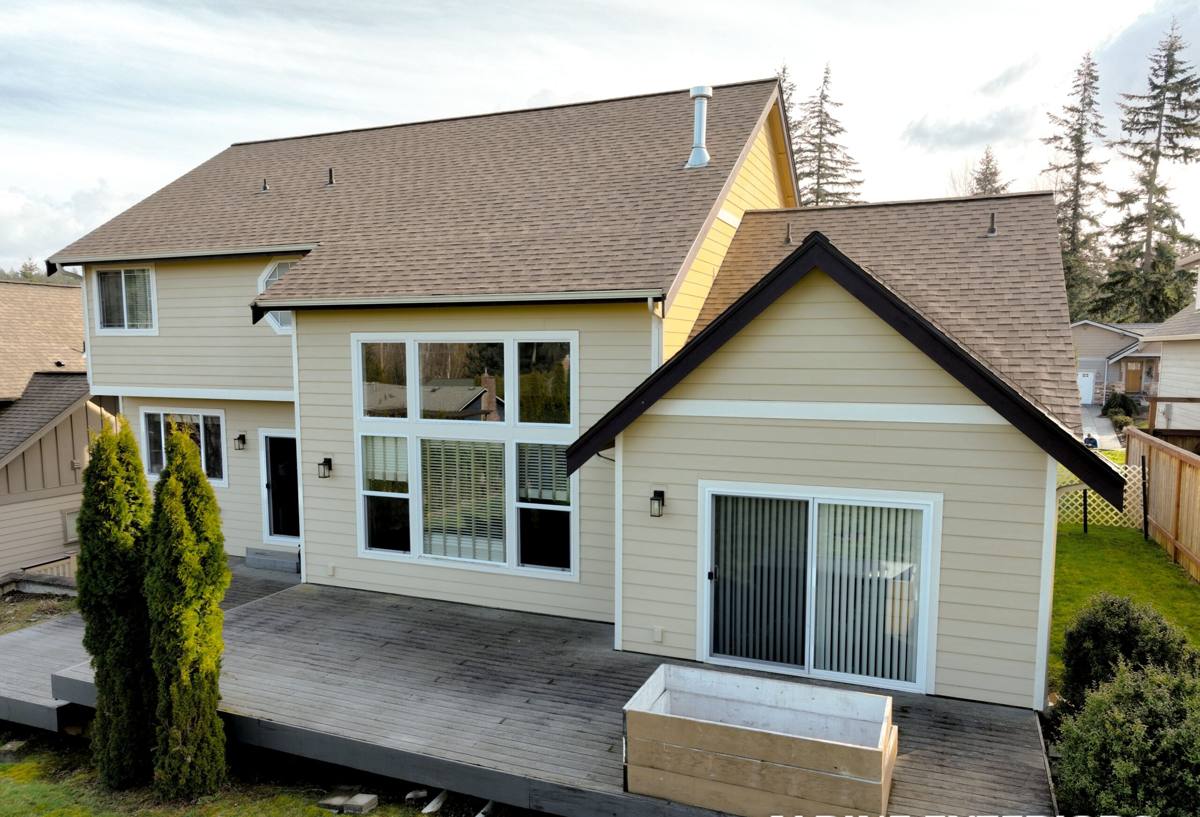
Signs a Roof Needs Replacing, Not Just Repairing
Homeowners often call us after a leak, but the leak is usually the last symptom, not the first. By the time water is coming through the ceiling, the roofing system has typically been failing for a while. Here's what we look for during an inspection to tell the difference between a roof that can be patched and one that needs to come off.
- Granule loss heavy enough that you can see bare, shiny patches on the shingles
- Moss growing under the shingle tabs, not just on the surface — this lifts shingles and breaks their seal
- Soft or spongy spots when walking the roof, which usually means the decking underneath is wet or rotting
- Repeated leaks in the same general area even after a repair
- Shingles curling, cupping, or cracking, especially on slopes that face the prevailing wind and rain
- Rusted or failing flashing around chimneys, vents, and valleys
- A roof approaching or past the expected service life of its material
One or two of these on their own might point to a repair. Several at once, especially combined with an older roof, usually means replacement is the more honest recommendation — and the more cost-effective one over time, since chasing repairs on a failing roof rarely stays cheap.
Why Moss Damage Gets Underestimated
Moss looks cosmetic, but it isn't. Once it establishes itself under a shingle edge, it holds moisture against the roofing material and the decking below it, and it physically lifts shingles just enough to let wind-driven rain get underneath. In a climate where it rains sideways as often as it rains straight down, that's a real problem, not a minor one. By the time moss is visible from the ground, it's usually been working on the roof from underneath for a season or more.
What a Correct Roof Replacement Involves
A roof replacement isn't just swapping old shingles for new ones. Done right, it's a full system, and every layer matters more in a coastal, moss-prone climate than it would somewhere drier.
Tear-Off and Deck Inspection
We remove the old roofing down to the deck rather than layering over it. That's the only way to actually see the condition of the plywood or OSB underneath — and on homes near the water, we routinely find soft or delaminated decking around old flashing points and valleys that wouldn't show up any other way.
Underlayment and Water Barrier
Given how much wind-driven rain this area sees, we treat underlayment as a real line of defense, not a formality. Self-adhering ice-and-water barrier goes in the vulnerable spots — eaves, valleys, around penetrations — with synthetic underlayment across the rest of the field.
Flashing Details
Most roof leaks that aren't caused by an obviously failed roof trace back to flashing — around chimneys, skylights, dormers, and where a roof plane meets a wall. Salt air accelerates corrosion on cheaper or thinner flashing metal, so we don't cut corners here.
Ventilation
A roof that can't breathe traps moisture in the attic, which shortens the life of the decking and the shingles from underneath. We check intake and exhaust ventilation as part of every replacement, not as an upsell.
Roofing Material Comparison for This Area
There's no single "best" roofing material for every home — it depends on the house, the budget, and how much maintenance you want to take on. Here's an honest look at how the common options hold up under Similk Beach conditions specifically.
| Material | Moss resistance | Salt-air durability | Typical lifespan | Maintenance |
|---|---|---|---|---|
| Architectural asphalt shingle | Moderate (better with algae-resistant granules) | Good with quality flashing/fasteners | 25–30 years | Periodic moss removal, gutter care |
| Standing seam metal | High — little surface for moss to grip | Very good with coastal-rated coatings | 40–50+ years | Low; occasional inspection of fasteners/seams |
| Cedar shake | Low without regular treatment | Fair; needs consistent upkeep near salt air | 20–25 years with maintenance | High; treatment and moss control required |
| Composite/synthetic shingle | Good | Good | 30–50 years depending on product | Low to moderate |
We're candid with clients about cedar shake specifically: it can look great, but in a climate with this much sustained moisture and moss pressure, it demands a maintenance schedule most homeowners don't keep up with, and skipping that upkeep shortens its life fast. That's not a knock on the material — it's just a maintenance-burden tradeoff worth knowing before you choose it.
Our Roof Replacement Process
- Inspection and estimate — we walk the roof, check the attic, and document the actual condition before recommending anything.
- Written scope — materials, underlayment type, flashing details, and ventilation plan spelled out before work starts, no surprises added later.
- Tear-off — full removal down to the deck, with debris contained and hauled off the same day whenever possible.
- Deck repair — any soft or damaged decking gets replaced before anything goes back down.
- Underlayment and flashing — installed per the plan, with extra attention at valleys, penetrations, and wall intersections.
- Roofing installation — installed to manufacturer specification, not shortcut fastening patterns.
- Final walkthrough — we inspect the finished roof with you and go over warranty paperwork before we consider the job done.
Cost Factors for a Similk Beach Roof Replacement
We won't quote a number without seeing the roof, but these are the variables that actually move the price up or down on a real estimate.
| Factor | Why it matters |
|---|---|
| Roof pitch and access | Steeper roofs and difficult site access (common on sloped, wooded, or waterfront lots) take more time and safety equipment |
| Number of existing layers | Tearing off multiple layers of old roofing costs more in labor and disposal than a single layer |
| Decking condition | Rot or moisture damage found during tear-off means replacement plywood/OSB, which isn't visible until the old roofing is off |
| Material choice | Asphalt, metal, and composite options carry different material and labor costs, as shown above |
| Ventilation upgrades | Adding or correcting intake/exhaust ventilation protects the new roof but adds to the scope |
| Roof complexity | Valleys, dormers, chimneys, and skylights all add flashing work and time |
Moss, Algae, and Long-Term Roof Health
A new roof isn't maintenance-free in this climate, and we'd rather tell you that up front than let you assume otherwise. A few habits go a long way toward getting the full expected life out of a new roof here:
- Keep gutters and valleys clear of needles and debris, especially under overhanging trees
- Choose algae-resistant shingles if you're going with asphalt — they cost a little more up front and pay it back in appearance and shingle life
- Have overhanging branches trimmed back so the roof gets more sun and airflow, which slows moss growth
- Schedule a professional moss removal and inspection every couple of years rather than waiting until it's visibly heavy
- Avoid pressure washing shingles yourself — it strips granules and can void manufacturer warranties
Why Hiring a Crew That Already Works in Similk Beach Matters
Roofing crews that mostly work drier, inland areas don't always plan for what a shoreline-adjacent roof in Skagit County actually deals with year-round. A crew that regularly works Similk Beach and the surrounding Anacortes area knows to spec heavier corrosion-resistant fasteners and flashing, to plan installation around the wetter stretches of the year rather than fighting them, and to build in the ventilation and underlayment detail this climate actually calls for instead of treating it as an upsell. That local experience shows up less in the sales pitch and more in whether the roof is still doing its job in year fifteen.
It also matters for the practical side of the job — knowing how to stage material and equipment on tighter waterfront-adjacent lots, and being familiar with the permitting and inspection process through the relevant local building department, so the job doesn't stall on paperwork.
Questions to Ask Before You Hire a Roofer
- Are you licensed and insured to work in Washington, and can you provide proof?
- Will you tear off down to the deck, or is a layover being proposed?
- What underlayment and flashing materials are included, specifically?
- How will you handle decking repair if you find damage once the old roof is off?
- What does the workmanship warranty cover, and for how long?
- Do you have experience with homes in this specific area, and can you explain how that changes your approach?
A contractor who answers these clearly and specifically, without vague reassurances, is usually one worth trusting with the job.
If your roof in Similk Beach is showing its age or you're just not sure whether it needs a repair or a full replacement, we're glad to take a look and give you a straight answer. Fill out the form below for a free, no-pressure estimate.