 Anacortes Siding
 Roofs on March Point Take a Different Kind of Beating
March Point sits out on a peninsula along Fidalgo Bay, which means homes there don't get the benefit of the tree cover and terrain that shelter a lot of in-town Anacortes properties. Roofs here are exposed on more sides, for more of the year, to wind coming straight off the water. That exposure shows up as three separate problems layered on top of each other: salt air working on every piece of exposed metal, wind-driven rain that doesn't behave like a normal rainstorm, and a moss season that, in this part of Skagit County, is closer to year-round than seasonal.
None of that is unusual for the Puget Sound shoreline, but it does mean a roof repair here has to account for things a repair fifty miles inland doesn't. A patch that would hold fine in a drier, calmer spot can fail within a season or two out on the point if it wasn't built with salt and wind in mind.
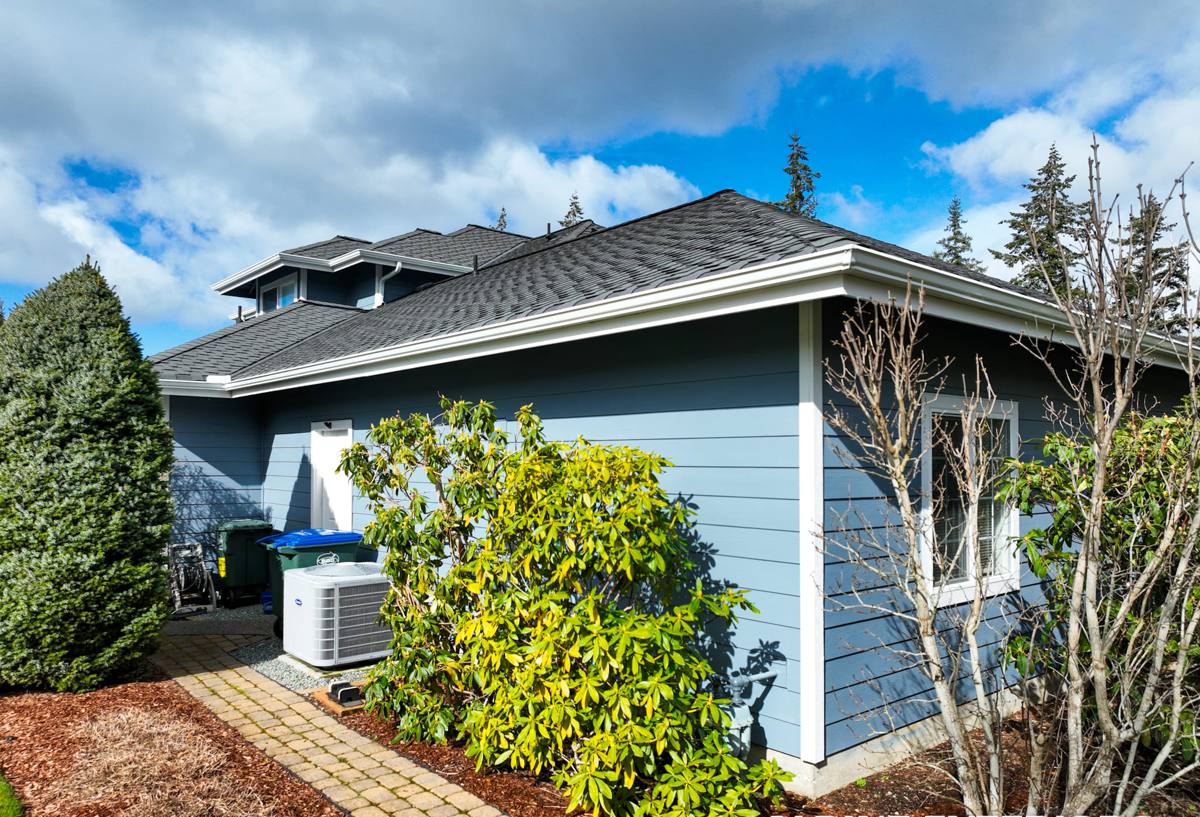
Signs a March Point Roof Needs Repair
Most roof problems don't start as a dramatic leak — they start small and get ignored because they're easy to miss from the ground. Worth checking for, or asking us to check for during an inspection:
- Water stains, discoloration, or soft drywall on interior ceilings, especially near exterior walls or chimneys
- Heavy granule buildup in gutters and downspouts (a sign shingles are wearing down faster than they should)
- Moss mats forming on north-facing slopes, in valleys, or along the shaded edge of the roofline
- Shingle edges that are curling, cupping, or lifting, particularly at eaves and rakes where wind gets underneath them
- Rust streaks or visibly corroded flashing, fasteners, or vent caps
- Daylight or damp insulation visible from inside the attic
- Cracked, dried out, or missing rubber boots around plumbing vent pipes
- Debris or moss clogging valleys, which holds water against the roof deck instead of letting it drain
Any one of these on its own might not be urgent. Two or three together, especially combined with an interior stain, usually means water has already found a way in and the roof needs attention before it turns into a decking or framing repair.
What a Correct Repair Actually Involves
Finding the Real Source, Not Just the Symptom
Water rarely enters where it shows up inside the house. A stain on a ceiling can trace back to a flashing failure several feet away, moss holding moisture against a valley, or a fastener that backed out during a windstorm. A repair that just tars over the spot where the leak appeared usually fails again within a year or two, because the actual entry point was never addressed. Every repair we do starts with tracing the water path, not patching the symptom.
Flashing Done Right
Flashing failures are the single most common cause of roof leaks we see in this area, and salt air accelerates their failure. Step flashing along walls and chimneys, counter-flashing, valley metal, and kick-out flashing at roof-to-wall transitions all need to be installed in the correct order relative to the roofing material — not just caulked over the top. Caulk is a short-term fix; correctly lapped and integrated flashing is the long-term one.
Dealing With Moss the Right Way
Moss on a shaded, damp roof in Skagit County isn't a matter of if but when. The wrong way to deal with it is scraping or pressure-washing, which tears granules off the shingle surface and shortens its life. The right way is gentle removal, treatment to slow regrowth, and — where the moss has already lifted or damaged shingles underneath — replacing that section rather than just clearing the surface and leaving compromised material in place.
Matching Materials and Blending Repairs
A repair should be hard to spot. That means matching shingle type, color, and profile as closely as the market allows, and tying new material into the old correctly so the repaired section sheds water the same way the rest of the roof does. A mismatched patch isn't just a cosmetic issue — poorly integrated shingles are often where the next leak starts.
Common Repairs We Handle Around March Point
| Issue | Typical Cause | What the Repair Involves |
|---|---|---|
| Leak at chimney or wall | Failed or missing step/counter-flashing | Remove and rebuild flashing system, reseal correctly, replace damaged shingles |
| Moss buildup on north slopes | Persistent shade and dampness | Careful removal, treatment, replace shingles lifted or damaged underneath |
| Leak around a vent pipe | Cracked or UV-degraded rubber boot | Replace boot, check surrounding shingles for wind or moss damage |
| Lifted shingles near eaves | Wind uplift, weakened adhesive strip, corroded fasteners | Re-secure or replace affected shingles with wind-resistant fastening |
| Clogged, water-holding valley | Moss and debris trapping moisture | Clear valley, inspect valley metal and underlayment, repair as needed |
| Rusted flashing or fasteners | Long-term salt air exposure | Replace with corrosion-resistant materials appropriate to the coastline |
Our Process, Start to Finish
- Inspection. We get on or over the roof (safely, and only when conditions allow) and document what we find, including areas that look fine now but are trending toward a problem.
- Honest estimate. You get a written explanation of what's actually wrong, what we recommend, and why — not just a price. If a repair is a reasonable fix rather than a full replacement, we'll say so.
- The work itself. Materials matched, flashing rebuilt where needed, moss cleared and treated, everything tied back into the existing roof correctly.
- Cleanup. Old material and debris hauled off, magnetic sweep of the work area for stray fasteners.
- Walkthrough. We show you what was done and go over any warranty coverage on the work before we leave.
Repair vs. Replacement: Making the Right Call
Not every problem roof needs a new roof, and not every roof worth saving should keep getting patched. A few things weigh into that call:
| Factor | Leans Toward Repair | Leans Toward Replacement |
|---|---|---|
| Roof age | Under roughly two-thirds of expected shingle lifespan | Near or past expected lifespan for the material |
| Extent of damage | Localized — one slope, one flashing area, one valley | Widespread granule loss, curling, or moss across most of the roof |
| Repair history | First or second repair on this roof | Multiple past repairs in different spots, suggesting general wear |
| Decking condition | Solid, no soft spots found during inspection | Soft or delaminated decking found under damaged sections |
We'll tell you honestly which side of that line your roof falls on. A repair that's really just delaying an inevitable replacement isn't a good use of your money, and we'd rather say that up front than sell you a patch we know won't hold.
Why It Matters That We Already Work March Point
A crew that's worked this stretch of shoreline knows things a roofer coming from inland doesn't have to think about: which slopes take the worst of the wind off the bay, how fast moss comes back on a shaded north face out here compared to a yard with more sun, and why a fastener or flashing spec that's fine forty minutes inland isn't the right call this close to salt water. That's not guesswork — it's the result of doing this work on this coastline, on roofs facing the exact same exposure yours does.
It also means fewer surprises on the logistics side — knowing what weather windows are realistic for the work, and, where the scope of a repair requires it, handling the permit conversation with the city or county as part of the job rather than as an afterthought.
Materials We Use and Why
On a site this exposed, material choice matters as much as workmanship. A few standards we hold to on March Point repairs:
- Corrosion-resistant fasteners — stainless or hot-dip galvanized, not standard-coated fasteners that start rusting within a few seasons of salt exposure
- Self-adhered underlayment in valleys and along eaves, where wind-driven rain is most likely to be forced back up under the shingle course
- Algae-resistant shingle options where a full section is being replaced, to slow the return of moss and staining on shaded slopes
- Properly lapped metal flashing instead of caulk-dependent fixes, since caulk is the first thing salt air and UV break down
None of these choices are exotic — they're just the standard we hold ourselves to, because we've seen what happens when a repair is built for a milder climate than the one it's actually sitting in.
Get an Honest Look at Your Roof
If you're seeing moss building up, a stain that showed up after the last windstorm, or you just want a second opinion before committing to a full re-roof, we're glad to come take a look. Estimates are free, there's no pressure attached, and if the honest answer is a small repair instead of a bigger job, that's what we'll tell you. Use the form below to get started.