 Anacortes Siding
 Guemes Island Roofs Face a Different Set of Problems
Guemes Island sits just across the water from Anacortes, reached by a short ferry ride, and that setting shapes what a roof deals with here. Homes are exposed to salt-laden air coming off the Salish Sea, driving rain that blows in sideways during winter storms, and a moss season that can run from early fall through late spring in this corner of Skagit County. None of that is unique to any one house on the island — it's the baseline every roof out there has to handle, year after year.
A roof repair company that mostly works inland, or mostly works in drier climates, doesn't always plan for that combination. Salt air accelerates corrosion on fasteners, flashing, and gutter systems faster than people expect. Constant moisture keeps moss and algae established almost year-round instead of just a few months. And wind off the water finds every loose shingle tab or lifted flashing edge a lot faster than it would on a sheltered inland lot.
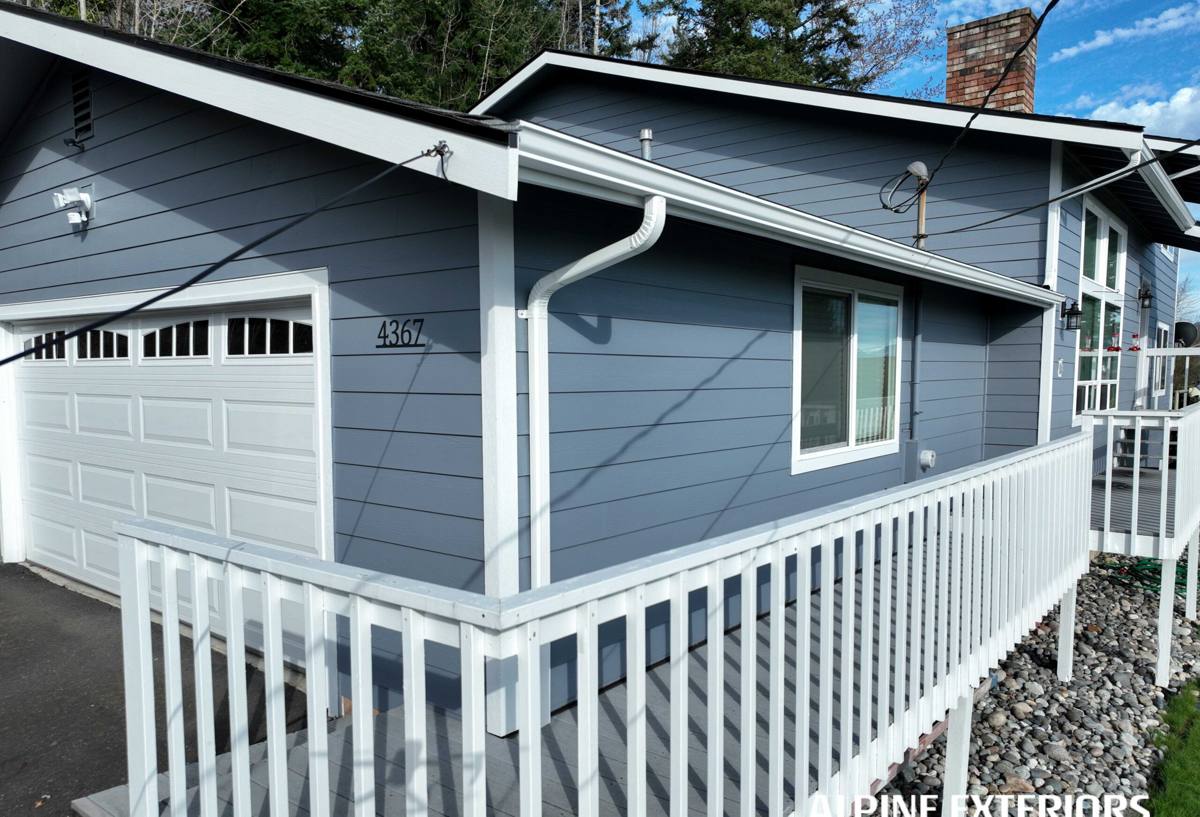
Signs a Guemes Island Roof Needs Attention
Most roof problems don't start as leaks — they start small and get missed because nobody's up there looking. On an island property, where a contractor visit takes more planning than a quick drop-by, it pays to catch these early instead of waiting for a drip in the ceiling.
- Moss or dark streaking building up on north-facing slopes or anywhere shade lingers
- Granules collecting in gutters or at the base of downspouts
- Curling, cracked, or lifted shingle tabs, especially on wind-exposed slopes
- Rust staining or corrosion around flashing, vent boots, or metal valleys
- Soft spots, sagging, or discoloration on interior ceilings near exterior walls
- Daylight visible through the roof deck from inside an attic or crawlspace
- Gutters pulling away from the fascia or overflowing during heavy rain
Any one of these on its own might not mean much. Two or three together, especially after a hard winter, usually means it's time for a closer look before the next storm season.
What Moss and Salt Air Actually Do to a Roof
Moss
Moss doesn't just look bad — it holds moisture against the roofing material long after the rest of the roof has dried out. Over time that constant dampness works shingle granules loose, softens the mat underneath, and can lift edges enough for wind-driven rain to get underneath. On shaded or north-facing sections common to wooded island lots, moss can re-establish within a season or two of being cleared if the underlying cause — overhanging branches, poor airflow, aging shingles — isn't addressed.
Salt Air
Salt in the air off the water accelerates corrosion on anything metal — nail heads, flashing, gutter hangers, vent caps. A fastener that would hold up for decades a few miles inland can start showing rust streaks and weakening within a handful of years this close to the water. That's why the hardware we use for repairs on Guemes Island properties leans toward corrosion-resistant fasteners and flashing rather than standard-grade material, even when it costs a little more up front.
What a Correct Roof Repair Involves
A repair that actually holds up out here is more than swapping a few shingles. It means understanding why that section failed in the first place and fixing the cause, not just the symptom.
- Inspection first. We look at the whole roof plane, not just the spot that's leaking — a leak at one location often traces back to a flashing failure or moss buildup somewhere else entirely.
- Identify the real cause. Wind-lifted shingles, failed flashing, worn pipe boots, and moss-driven granule loss all look similar from the ground but call for different fixes.
- Match materials properly. Replacement shingles, flashing, and fasteners need to match the existing roof's age, profile, and exposure — mismatched or lower-grade repair material tends to fail again faster than the surrounding roof.
- Address the water path, not just the hole. Water rarely enters exactly where it shows up inside. A proper repair traces the path back to the actual entry point, which is often flashing at a wall, chimney, or valley rather than the shingle directly above the stain.
- Check ventilation. Poor attic airflow traps moisture and accelerates deck rot and moss growth from underneath, so we look at intake and exhaust venting as part of any repair, not as an afterthought.
Where Roofing Meets Siding — Our Angle on This
As a siding contractor, we spend most of our time on the wall system, but the wall and the roof are not separate problems — they meet at the same flashing, the same trim, and the same water paths. A lot of the leaks and rot we get called out for on Guemes Island homes aren't roof failures at all; they're flashing failures where a roof edge meets a wall, a chimney, or a dormer. That's the exact intersection we deal with every day on siding jobs, which is why our roof repair work leans heavily on flashing, kickout details, and roof-to-wall transitions — the spots most likely to leak on a coastal home, and the spots a roofing-only crew or a siding-only crew can each miss when they're only thinking about one system.
Repair or Replace: How We Help You Decide
Not every roof problem needs a full replacement, and not every roof is worth repairing indefinitely either. We'll give a straight answer based on the roof's age, condition, and how widespread the damage is — not a sales pitch toward the bigger job.
| Factor | Leans Toward Repair | Leans Toward Replacement |
|---|---|---|
| Roof age | Under roughly 15 years, or a newer roof with isolated damage | Nearing or past the typical lifespan for its material |
| Extent of damage | Localized to one slope, valley, or penetration | Spread across multiple slopes or recurring in the same spots |
| Moss/moisture history | First real moss problem, addressed early | Repeated moss cycles with granule loss and soft decking |
| Flashing condition | Isolated flashing failure with sound roofing around it | Widespread corrosion or failed flashing throughout |
| Underlying decking | Solid, no soft spots found during inspection | Soft, spongy, or visibly rotted decking |
When a roof is close to the line, we'll walk through both options honestly, including what a repair buys in time versus what a replacement resets. On a coastal, moss-prone property, that timeline matters more than it would somewhere drier, since deferred problems tend to compound faster here.
Materials and Fasteners We Use for Coastal Exposure
The material itself matters less than how it's installed and what it's held together with. For Guemes Island repairs, we favor corrosion-resistant fasteners and flashing over standard-grade hardware, and we're deliberate about sealant and underlayment choices around penetrations, since those are the spots that take the most abuse from wind-driven rain. We're not tied to one shingle brand — asphalt composition shingles remain the most practical repair match for most existing island roofs, since matching the existing material is usually more important for a repair than switching to something new. Metal roofing repairs follow the same logic: matching profile and fastener type to what's already there, with attention to where dissimilar metals might cause galvanic corrosion near salt air.
Our Process for Guemes Island Jobs
Working on an island adds a logistics layer that a mainland job doesn't have, so we plan around it instead of treating it as a surprise mid-project.
- One thorough visit for assessment. We aim to gather everything we need — measurements, photos, material notes — in a single trip so we're not making repeat crossings just to plan the job.
- Materials staged before the crew crosses. Once a repair is scoped, we order and stage materials ahead of time so the work crossing is a work crossing, not a supply run.
- Weather windows matter more here. Wind and ferry conditions can affect scheduling, so we build some flexibility into repair timelines rather than promising a fixed date regardless of conditions.
- Clean, contained work. Debris and old material get bagged and hauled back off the island rather than left behind for a separate cleanup trip.
- Clear, honest write-up. You get a plain explanation of what we found, what we fixed, and what to watch going forward — not a stack of jargon.
Maintenance That Extends a Repair's Life
A good repair holds up a lot longer with a little upkeep between visits, especially given how long moss season runs in this part of Skagit County.
- Clear overhanging branches that keep roof sections shaded and damp
- Have moss treated or removed before it re-establishes heavily, rather than after
- Keep gutters and downspouts clear so water doesn't back up under shingles or fascia
- Have flashing and vent boots checked every couple of years, since they wear out faster than the shingles around them
- Address small leaks right away — a slow drip that sits all winter does far more damage than the same leak caught in October
If you're dealing with a leak, moss buildup, or storm damage on a Guemes Island roof, we're glad to take a look and give you a straight assessment — no pressure, no upsell. Reach out for a free estimate using the form below.