 Anacortes Siding
 Why Mount Vernon Roofs Wear Differently
A roof in Mount Vernon doesn't fail the same way a roof does further inland or up in the mountains. The combination that gets homes here is specific: moisture-laden air moving off the Salish Sea, long stretches of driving rain that comes in sideways more often than straight down, and a moss season that can run eight or nine months out of the year in shaded, north-facing sections of a roof. None of these things is dramatic on its own. Together, over ten or fifteen years, they add up to soft decking, lifted shingle edges, and granule loss that shows up as bald patches long before a homeowner expects to be shopping for a new roof.
Salt-tinged air moving up the Skagit River valley accelerates corrosion on exposed metal — nails, flashing, vent stacks — faster than dry-climate fastener specs assume. Add in Skagit County's rainfall pattern, where a "dry spell" often just means lighter drizzle instead of a downpour, and you get roofs that rarely get a real chance to fully dry out between storms. Moss loves exactly that environment. Once it gets a foothold in shaded valleys or under overhanging trees, it holds water against the roofing material and works its way under shingle tabs, which is where slow leaks usually start.
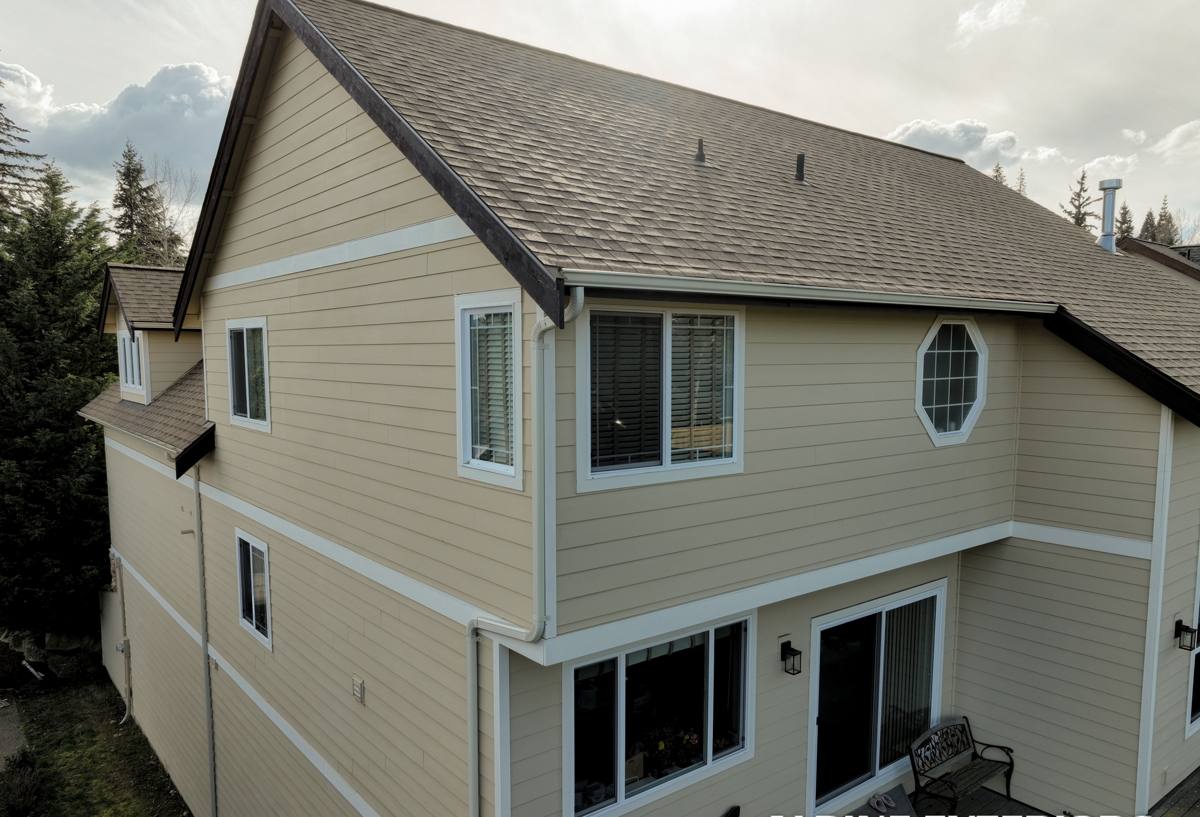
Signs a Mount Vernon Roof Needs Replacement, Not Just Repair
Not every roof problem means a full tear-off. But there's a point where patching becomes a waste of money, and it's worth knowing where that line sits before you pay for repairs that won't hold.
- Granule loss heavy enough that you can see bare, shiny patches on multiple slopes, not just one spot
- Shingles that are cupping, curling, or cracking across large sections rather than isolated tabs
- Soft or spongy decking you can feel when walking the roof, usually found near valleys or eaves
- Moss or algae staining that keeps coming back within a season or two of cleaning
- Daylight visible through the roof deck from inside the attic, or water staining on rafters
- A roof already past 20–25 years old (standard asphalt composition) showing any of the above
- Multiple past repairs in different areas — a sign the whole roofing system is aging out together
If a roof is showing two or three of these at once, repair work tends to become a cycle of chasing leaks instead of solving the underlying problem, which is a roofing system nearing the end of its service life.
What an Actual Roof Replacement Involves
Tear-Off and Deck Inspection
A proper replacement starts with full tear-off down to the decking — not a layover, where new shingles go on top of old ones. Layovers are cheaper and faster, but they trap moisture, hide deck problems, and shorten the life of the new roofing material. Once the old roofing is off, the decking gets inspected board by board. Any plywood or sheathing that's soft, delaminated, or water-stained gets replaced before anything new goes down. This is the step that gets skipped by crews trying to hit a low bid, and it's the one that matters most in a wet climate like this one.
Underlayment and Water Barriers
Given how much rain Skagit County sees, underlayment choice isn't a place to cut corners. Synthetic underlayment holds up better than old-style felt paper in wet, repeated-exposure conditions, and ice-and-water shield membrane belongs at eaves, valleys, and around any roof penetration — chimneys, vent stacks, skylights — where water concentrates and wind-driven rain can work its way backward under standard shingle coverage.
Flashing and Penetrations
Flashing failure, not shingle failure, causes most of the leaks we get called out for. Step flashing at walls, counter-flashing at chimneys, and properly sealed boots at every pipe penetration all need to be replaced as part of the job, not reused from the old roof. Reused flashing is one of the most common shortcuts in cheap re-roofs, and it's almost always where the next leak shows up.
Moss and Algae Considerations
In shaded, north-facing, or tree-covered sections — common on wooded Mount Vernon lots — we factor moss resistance into the material and detailing choices, not just the shingle itself. Zinc or copper strips near the ridge, proper drip edge, and adequate slope drainage all reduce how fast moss can re-establish after the new roof goes on.
Material Options for This Climate
There's no single "best" roofing material — the right choice depends on budget, roof pitch, how much shade the property gets, and how long the homeowner plans to stay in the house. Here's how the common options actually perform in Skagit County's conditions:
| Material | Typical Lifespan | Moss/Moisture Behavior | Maintenance Load |
|---|---|---|---|
| Architectural asphalt shingle | 25–30 years | Moderate moss resistance; benefits from zinc strips | Low to moderate |
| 3-tab asphalt shingle | 15–20 years | More vulnerable to moss and granule loss | Moderate |
| Standing seam metal | 40–50+ years | Sheds water fast; naturally moss-resistant on steep slopes | Low |
| Synthetic/composite shake | 30–50 years | Good moisture resistance if installed with proper venting | Low to moderate |
| Cedar shake (natural) | 20–30 years with upkeep | Requires regular treatment to resist moss and rot in this climate | High |
We're upfront that natural cedar, while attractive, carries a real maintenance burden in a climate this wet — it needs periodic treatment and inspection to avoid the moisture and moss problems that shorten its life here. That's a trade-off we lay out honestly rather than talk homeowners out of a look they want; it's just something to budget for if cedar is the direction you choose.
Our Process, Start to Finish
- On-site inspection: We walk the roof (weather permitting) and the attic, checking decking, ventilation, flashing, and current material condition — not just a drive-by estimate.
- Written estimate: A clear breakdown of material, labor, tear-off, disposal, and any deck repair contingencies, so there are no surprise line items later.
- Scheduling around weather: Given how much rain this area gets, we plan tear-off days around forecast windows and stage materials to minimize how long a roof sits open.
- Tear-off and deck repair: Old roofing removed, decking inspected and replaced where needed, debris hauled and disposed of daily — not left piled on the property.
- Underlayment, flashing, and material installation: Installed to manufacturer spec and local code, with extra attention to valleys, eaves, and penetrations.
- Ventilation check: Intake and exhaust venting verified or corrected as part of the job (see below — this is easy to skip and shouldn't be).
- Final walkthrough: We review the finished roof with the homeowner and go over warranty coverage before considering the job done.
Ventilation and Moisture: The Part You Don't See
A new roof installed over a poorly ventilated attic will fail early, no matter how good the shingles are. Trapped heat and moisture in the attic cause condensation on the underside of the decking, which rots sheathing from the inside — a problem that has nothing to do with the roofing material itself and everything to do with balanced intake and exhaust airflow. In a climate as damp as Skagit County's, this matters more than it does in drier regions, because there's less opportunity for excess moisture to simply evaporate off. Part of doing a roof replacement correctly is checking soffit intake vents aren't blocked by insulation and that ridge or box venting is sized right for the attic volume — not just replacing what was up there before.
What Drives the Cost of a Roof Replacement
Every roof is priced individually, but the factors that move the number up or down are consistent:
| Factor | Why It Matters |
|---|---|
| Roof pitch and complexity | Steeper roofs and more valleys/dormers mean more labor and material waste |
| Number of existing layers | Tearing off two layers of old roofing costs more than one |
| Decking condition | Rotted or soft sheathing found during tear-off adds material and labor |
| Material choice | Asphalt, metal, and composite shakes carry different material and labor costs |
| Access and site conditions | Steep lots, limited driveway access, or tall trees affect staging and disposal |
| Ventilation upgrades needed | Correcting inadequate soffit or ridge venting adds a modest line item, but prevents future rot |
Broadly, homeowners in this area should expect a range that runs from moderate for a straightforward asphalt shingle replacement on a simple roof, up to considerably more for steep, complex rooflines or premium materials like standing seam metal. We won't give a real number without seeing the roof — anyone who quotes a firm price over the phone without an inspection is guessing.
Why Local Experience in Mount Vernon Matters
A crew that works Skagit County roofs regularly already knows which details matter here: how much ice-and-water shield to use given the rainfall pattern, which shaded lots need extra moss mitigation, and how local wind and rain direction affect where flashing and underlayment need reinforcement. That's not something you learn from a general roofing spec sheet — it's learned from doing the work in this specific climate, on this specific type of housing stock, repeatedly. A crew unfamiliar with the area might build a roof that's technically correct on paper but under-detailed for how much sustained moisture exposure it will actually see.
Local experience also means knowing what local permitting and inspection expects, and having a realistic sense of how weather windows here actually work for scheduling tear-off days — not promising a start date that gets pushed repeatedly once the crew realizes how often rain interrupts the schedule.
Protecting Your Roof After Installation
A correctly installed roof still benefits from basic upkeep in this climate. A few habits go a long way toward getting the full lifespan out of a new roof:
- Keep gutters clear of debris so water isn't backing up under the eaves during heavy rain
- Trim back overhanging branches to reduce shade and debris buildup that feeds moss growth
- Have moss growth addressed early with proper roof-safe treatment rather than pressure washing, which can strip granules
- Check the attic once a year for signs of condensation, staining, or musty odor
- Have flashing and penetrations visually checked after major storms, especially high-wind events
- Don't ignore small leaks — in this climate, they rarely stay small for long
If you're weighing repair versus replacement, or just want an honest read on how much life is left in your current roof, we're happy to take a look. The estimate is free, there's no pressure attached to it, and you'll get a straight answer about what your roof actually needs — use the form below to get started.