 Anacortes Siding
 Why March Point Puts Different Demands on Siding
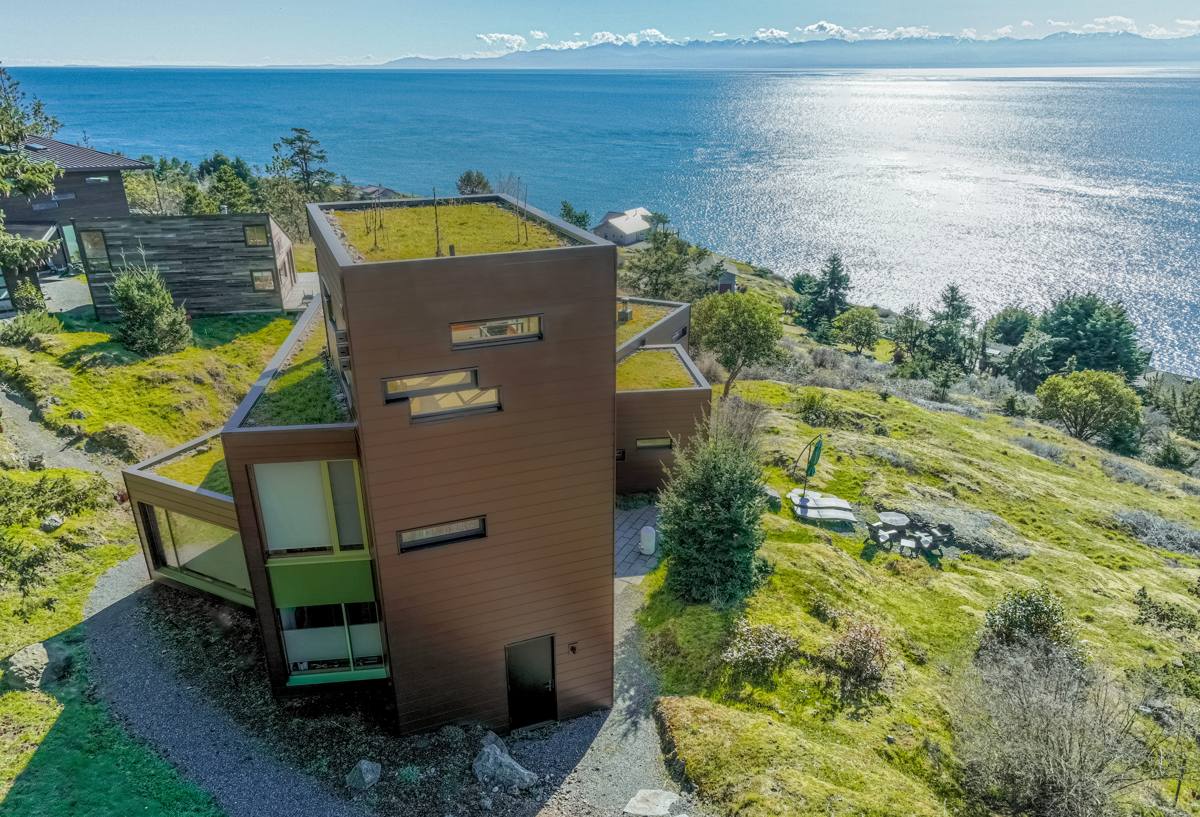
March Point sits out on its own peninsula, with water close on multiple sides and very little in the way of tree cover or terrain to break the wind coming off the bay. That combination — salt-laden air, near-constant exposure to driving rain off the water, and long stretches of gray, damp weather every fall through spring — is a tougher environment for exterior siding than most inland Skagit County neighborhoods see. Homes here take a steady beating that shows up as premature caulk failure, paint that won't hold, and moss and mildew that creep across north- and west-facing walls almost every winter.
We install exclusively James Hardie fiber cement siding, and March Point is one of the areas where that decision matters most. This page walks through what the climate out here actually does to siding, what a correctly installed Hardie system needs to hold up to it, and how our process is built around the realities of this specific stretch of the Anacortes area.
What Salt Air and Driving Rain Actually Do to a House
Salt Air
Airborne salt doesn't just sit on the surface — it works its way into any gap, seam, or porous material and accelerates corrosion of metal fasteners, flashing, and trim. On wood-based or engineered wood siding products, salt exposure combined with moisture speeds up swelling, delamination, and edge deterioration, especially at cut ends and butt joints. Paint films also break down faster under salt exposure, which is why homes closer to the water often need repainting far more often than homes even a few miles inland.
Driving Rain
Wind-driven rain doesn't fall straight down — it gets pushed sideways into wall assemblies, seams, and any place where flashing or caulking is even slightly imperfect. Out on a peninsula like March Point, with open exposure and few windbreaks, siding takes rain at an angle far more often than siding on a sheltered inland lot. That means water-resistive barriers, flashing details, and joint treatment matter more here — sloppy work that might survive for years in a sheltered neighborhood can fail within a season or two out here.
Moss Season
Skagit County's long wet season, typically running from October through April or later, keeps north- and west-facing siding damp for extended stretches. That moisture, combined with shade and lack of direct sun exposure, is exactly what moss and mold need to establish themselves. Siding that absorbs moisture — or that has coatings prone to failure — gives moss a foothold that spreads and traps even more water against the wall.
Why We Standardized on James Hardie for This Climate
We made a deliberate decision years ago to install only James Hardie fiber cement siding, and we don't install vinyl, LP SmartSide, Cemplank, Allura, primed spruce, or cedar. That's not a marketing position — it's a standard we hold because of what we've seen happen to other products in marine and high-moisture climates like this one.
- Non-combustible core: Hardie's fiber cement composition doesn't rely on wood fiber or resin binders that can degrade with sustained moisture exposure.
- ColorPlus factory finish: A baked-on finish applied under controlled conditions holds color and resists fading and chalking far better than field-applied paint, which is especially valuable where salt air accelerates paint breakdown.
- HZ5 product engineering: Hardie's HZ5 line is engineered for wetter, harsher climate zones — which is the right specification for a coastal Skagit County location, not an inland or arid one.
- Dimensional stability: Fiber cement doesn't swell, warp, or delaminate the way wood-based products can when they take on repeated moisture cycles.
- Strong transferable warranty: A meaningful, transferable warranty matters more in a marine climate where premature failure is a real risk with the wrong product or installation.
None of this means other products are without merit in the right setting. It means that for a peninsula environment like March Point, where salt exposure and wind-driven rain are constants rather than occasional events, we've concluded fiber cement with a factory finish is the right tool for the job — and we'd rather turn down work than install something we don't believe will hold up here.
What Correct Installation Requires Out Here
James Hardie siding performs to its rated lifespan only when it's installed to spec — and on an exposed site like March Point, the margin for error is smaller. A correct installation includes:
| Detail | Why It Matters on March Point |
|---|---|
| Weather-resistive barrier, properly lapped | Blocks wind-driven rain from reaching the sheathing even when it's pushed sideways under pressure |
| Correct flashing at windows, doors, and penetrations | These are the first points where driving rain finds a way in if flashing is skipped or reversed |
| Proper fastener spacing and type | Corrosion-resistant fasteners, set correctly, resist the accelerated corrosion salt air causes |
| Minimum clearance from grade, decks, and roof lines | Keeps the bottom edge of siding from sitting in standing moisture during the wet season |
| Caulking only where Hardie specifies it | Over-caulking traps moisture behind the board; under-caulking lets it in — both cause problems here faster than inland |
| Correct panel and joint gaps per manufacturer spec | Allows for expansion without stressing joints that would otherwise crack and let water behind the siding |
Every one of these details is in Hardie's published installation instructions. The difference between a siding job that looks fine at handoff and one that actually performs for decades in this climate almost always comes down to whether the crew followed those details precisely, especially at the vulnerable points — corners, penetrations, and the bottom courses closest to grade.
Signs Your March Point Home's Siding Is Already Struggling
- Moss or dark streaking concentrated on the north or west-facing walls
- Paint that's peeling, chalking, or has lost adhesion within just a few years of application
- Soft spots, swelling, or visible warping at panel edges and butt joints
- Caulk lines that have cracked, shrunk, or pulled away from the siding
- Rust staining running down from fastener heads or metal trim
- Visible gaps or separation at corners and around window and door trim
Any of these on their own might be minor. Several together, especially on a home's water-facing side, usually point to a moisture management problem in the wall assembly rather than just cosmetic wear — and that's worth a proper inspection before it turns into sheathing or framing damage.
Our Process for March Point Siding Projects
1. On-Site Assessment
We walk the exterior, check exposure on each elevation, and look at what's actually happening at grade, around penetrations, and at existing trim and flashing. Homes on this peninsula don't all face the same direction relative to the water, so exposure varies house to house — the assessment reflects your specific site, not a generic checklist.
2. Product and Line Selection
We spec the Hardie product line and ColorPlus finish appropriate to the home's exposure and your preferences, and we explain the reasoning rather than just handing you a quote.
3. Tear-Off and Sheathing Check
Old siding comes off and we inspect the sheathing underneath. In a marine climate, this step matters — hidden moisture damage behind failing siding is common enough that we don't skip it, and we'll show you what we find before covering it back up.
4. Weather Barrier and Flashing
This is the step that determines how the house performs in driving rain for the next several decades, and we don't rush it. Every window, door, and penetration gets flashed per Hardie's and the water-resistive barrier manufacturer's specifications.
5. Installation to Spec
Fastener spacing, clearances, joint treatment, and caulking are all done to Hardie's published requirements — not "close enough," but to spec, because that's what the warranty and the climate both require.
6. Final Walkthrough
We walk the finished job with you, point out the details we followed and why, and make sure you know what maintenance (if any) to expect going forward.
Why Local Experience on This Peninsula Matters
A crew that's worked March Point before already knows how exposed certain elevations get, how the wet season here behaves compared to more sheltered parts of Anacortes, and which installation details can't be shortcut on a site like this. That's different from general siding experience — it's familiarity with how this specific stretch of Skagit County's coastline treats a house over time. It also means we're not learning on your home; we're applying what we've already seen work (and what we've seen fail) on similar homes nearby.
We're a local Anacortes-based crew, and we stand behind our installation work with the manufacturer's product warranty backing the material itself. That combination — correct installation plus a strong warranty — is what actually protects you long-term, not just at the moment the job wraps up.
Cost Factors for a March Point Hardie Project
| Factor | How It Affects Your Project |
|---|---|
| Home size and elevation complexity | More corners, dormers, and roof lines mean more flashing and cutting labor |
| Extent of existing damage | Rot or sheathing repair discovered during tear-off adds scope |
| Product line and finish selection | Lap siding, panel systems, and trim combinations vary in material cost |
| Site access | Waterfront and hillside lots can add setup and material-handling time |
| Existing trim and detail work | Matching or upgrading trim, fascia, and soffit work adds scope beyond field siding |
We don't publish blanket pricing because these factors genuinely change project cost from house to house — but we'll give you a clear, itemized number after we've actually looked at your home, not a generic estimate pulled from a average.
Get a Straight Answer on Your March Point Home
If your siding is showing wear from salt exposure, driving rain, or moss buildup, it's worth having someone look at it before small problems become expensive ones. We'll walk your home, tell you honestly what we see, and explain what a correct James Hardie installation would involve for your specific exposure — no pressure, no generic sales pitch. Use the form below to request a free estimate.