 Anacortes Siding
 Roof Repair Built for La Conner's Weather
La Conner sits low along the Swinomish Channel, close enough to the water that salt air, standing moisture, and shade from mature trees all work against a roof at the same time. Homes here don't fail because the materials were bad — they fail because Skagit County's climate is relentless in ways that don't show up on a builder's spec sheet. Long wet stretches from fall through spring keep roof surfaces damp for days at a stretch, and that dampness is what starts every problem we get called out for: moss colonies, soft decking, and slow leaks that show up as a stain on a ceiling months after the water actually got in.
A roof repair here isn't just patching a hole. It's addressing why that spot failed in the first place — usually moisture that had nowhere to go, or a small mechanical failure (a lifted shingle, a cracked boot, a rusted-out flashing seam) that widened over one or two wet seasons. We treat every repair call as a chance to check whether the surrounding roof has the same problem brewing, because in this climate it usually does.
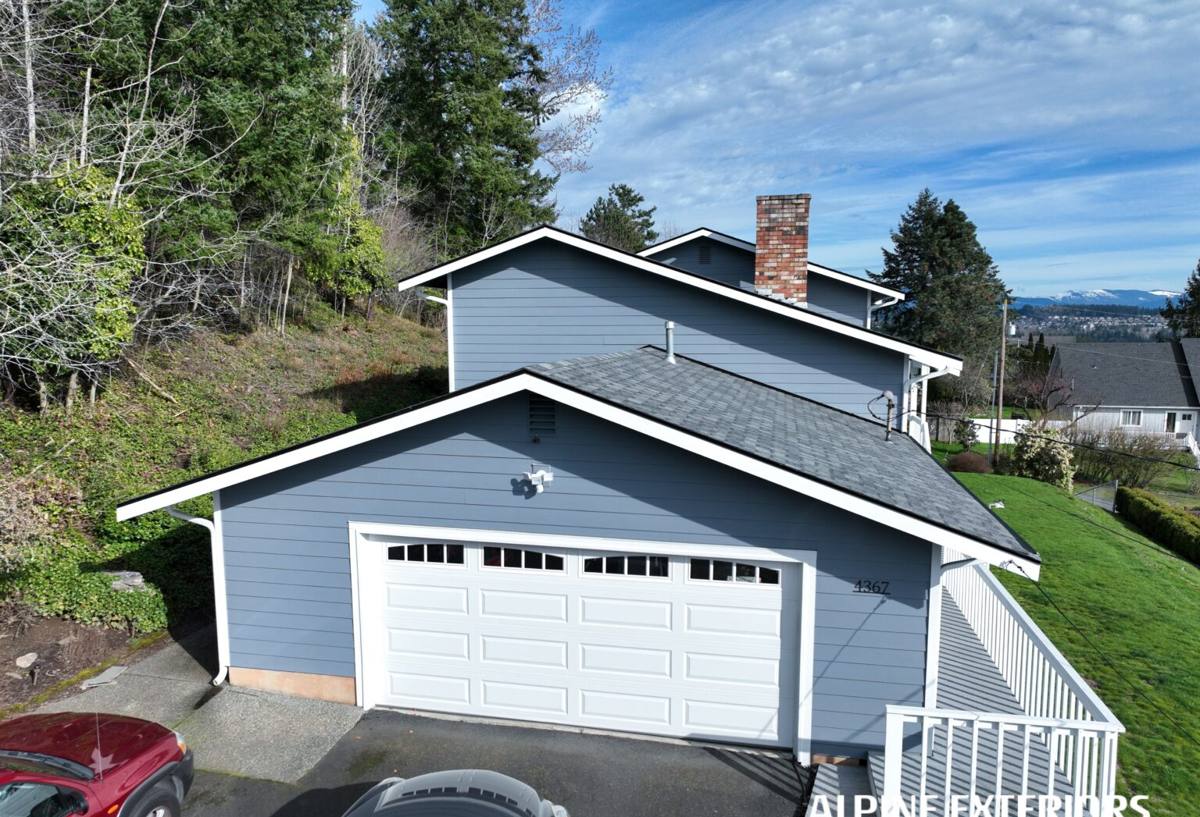
What Local Homes Actually Need
Moss Is a Structural Issue, Not Just a Look
Moss on a La Conner roof isn't cosmetic. It holds water against the shingle or shake surface long after rain stops, which accelerates granule loss on composition roofs and rot on cedar. Moss mats also work their way under shingle tabs and lift them, creating entry points for wind-driven rain. A moss-covered roof that "just needs cleaning" often has soft spots underneath once we get up there.
Salt Air and Fasteners
Proximity to the channel and the broader Salish Sea means airborne salt reaches roofs here more than it would twenty miles inland. Salt accelerates corrosion on exposed metal — nail heads, flashing, gutter fasteners, vent caps. A repair that reuses corroded fasteners or thin flashing is a repair that fails again in a year or two. We specify corrosion-resistant fasteners and flashing metals on every job in this area, not just when a customer asks.
Driving Rain and Wind-Driven Water
Storms coming off the water often bring rain sideways, not straight down. That matters for repair work because a patch that would hold up to vertical rain can still leak under wind-driven rain if the underlayment lap, flashing overlap, or shingle exposure isn't right. Repairs in this area need to be detailed for wind-driven conditions, not textbook-average ones.
What a Correct Roof Repair Involves
A repair done right has a diagnosis step before any material goes back on the roof. Skipping that step is the single biggest reason repairs fail early.
- Locate the actual entry point. Water travels along decking and rafters before it shows up as a stain, so the visible damage inside is rarely directly above the real leak.
- Check the decking condition. Any plywood or board sheathing that's gone soft or delaminated gets cut out and replaced — patching over compromised decking just delays a bigger repair.
- Address the cause, not just the symptom. If moss caused the failure, we deal with the moss and the drainage path, not just the hole it created.
- Match materials and technique to what's already there. Mixing incompatible shingle types, or nailing over versus proper tear-back, creates new weak points.
- Rebuild flashing details correctly. Most leaks near chimneys, skylights, valleys, and wall intersections are flashing failures, not shingle failures — flashing is where a repair either holds for years or fails again by next winter.
- Verify with a real inspection, not a guess. We check the fix from both the roof surface and, where accessible, the attic or interior side before calling the job done.
Signs You Likely Need a Repair, Not a Full Replacement
- A stain that appears in the same spot after every heavy rain, but hasn't spread
- One or two areas of lifted, cracked, or missing shingles on an otherwise sound roof
- Moss concentrated in a shaded section rather than covering the whole roof
- Flashing that's visibly rusted, gapped, or pulling away around a chimney, vent, or skylight
- A roof under 15–20 years old with isolated damage from wind or debris
If several of these apply across most of the roof at once, or the decking is soft in multiple areas, that's usually a sign the roof is past the point where repair makes sense — we'll tell you honestly which situation you're in before we recommend anything.
Repair vs. Replacement: How We Help You Decide
| Factor | Leans Toward Repair | Leans Toward Replacement |
|---|---|---|
| Age of roof | Under 15 years, or a newer roof with isolated damage | Nearing or past expected lifespan for the material |
| Extent of damage | Localized — one slope, one penetration, one storm event | Spread across multiple slopes or recurring in different spots |
| Decking condition | Solid, dry decking found on inspection | Soft, delaminated, or stained decking in several areas |
| Moss/algae extent | Confined to shaded sections, surface-level | Widespread, thick growth with granule loss underneath |
| Flashing condition | Isolated failure at one penetration | Corroded or undersized flashing throughout |
We walk every homeowner through where their roof lands on this table before we quote anything. If a repair genuinely solves the problem, that's what we'll recommend — we don't upsell replacements a roof doesn't need.
Why a Crew That Already Works La Conner Matters
Roofing crews who mostly work drier, inland climates tend to under-detail flashing and underlayment because they rarely have to answer for wind-driven rain or sustained moss pressure. A crew based in Anacortes and working across Skagit County sees La Conner conditions constantly — the same channel humidity, the same shaded lots, the same salt exposure — and that shapes how we detail every repair by default, not as an upgrade.
There's also a practical side: local crews know which roof types and ages are common in this area, show up faster when a leak is active, and aren't learning the region's quirks on your roof for the first time. Repair work especially benefits from that familiarity, since diagnosing a leak correctly the first time saves you from paying for the same fix twice.
Our Process for a La Conner Repair Call
- Initial assessment: We inspect the roof surface, the suspected leak area, and accessible attic space to trace the actual water path.
- Honest scope and estimate: You get a clear explanation of what's failing, why, and what it will take to fix it — repair or replacement, whichever actually applies.
- Repair work: Decking replacement where needed, correct flashing rebuild, matched roofing material, and proper fastening for this climate's wind and moisture load.
- Cleanup and moss treatment: Where moss contributed to the failure, we address it and can advise on ongoing prevention so it doesn't recur in the same spot.
- Final check: We confirm the fix holds under real conditions, not just a visual check from the ground.
Maintenance That Extends a Repair's Life
A good repair can still fail early if the rest of the roof isn't maintained around it. In this climate, a few habits make a real difference:
- Keep gutters and downspouts clear — La Conner's fall leaf drop combined with heavy rain overwhelms clogged gutters fast, backing water up under the roof edge
- Have moss treated before it establishes thick mats, especially on north-facing or tree-shaded slopes
- Trim back overhanging branches that keep sections of roof shaded and damp longer than the rest
- Get flashing checked every few years, since it's the first thing salt air and freeze-thaw cycles degrade
- Address small leaks immediately — a stain that seems minor now is decking damage that gets more expensive every wet season it's ignored
Materials We Use for Repairs in This Climate
For composition shingle roofs, we match the existing shingle line where possible and use corrosion-resistant fasteners regardless of what was originally installed, since standard fasteners don't hold up long-term this close to the water. For cedar shake roofs, common in older homes in the area, repairs require matching the existing exposure and butt spacing carefully — get that wrong and the new shakes shed water differently than the surrounding roof, creating a new weak point right next to the old one. For flashing, we use materials selected for salt-air corrosion resistance rather than the cheapest option that meets code, because flashing is the part of a roof repair most likely to determine whether the fix lasts five years or fifteen.
We don't push specialty coatings or one-size-fits-all "roof sealant" products as a substitute for proper repair. They can mask a leak temporarily, but they don't address decking damage or failed flashing, and they often make a later proper repair harder by hiding the actual extent of the problem underneath.
Get an Honest Look Before You Decide Anything
If you're dealing with a leak, missing shingles, or heavy moss on a La Conner roof, the first step is a straightforward inspection — not a sales pitch. We'll tell you plainly whether you're looking at a repair or something bigger, and what it will take either way. Reach out for a free, no-pressure estimate using the form below.