 Anacortes Siding
 Why Flounder Bay Roofs Take Extra Punishment
Flounder Bay sits close to the water on Fidalgo Island, and that waterfront position is a mixed blessing for the roofs up there. The same exposure that gives the view also gives the roof a harder job. Wind off the water hits with fewer obstructions than it does further inland in Anacortes, rain comes in at an angle instead of falling straight down, and salt-laden air settles on every exposed surface year-round. None of that means a roof is doomed — it means the roof, the flashing details, and the fasteners all need to be chosen and installed with that exposure in mind, and it means storm damage tends to show up in specific, predictable places once you know where to look.
This page is about one job: repairing storm damage on Flounder Bay roofs correctly, not just patching over the visible problem. A lot of storm repair calls we get started as a small leak that a quick patch didn't actually solve, because the patch addressed the symptom instead of the underlying wind or water intrusion path.
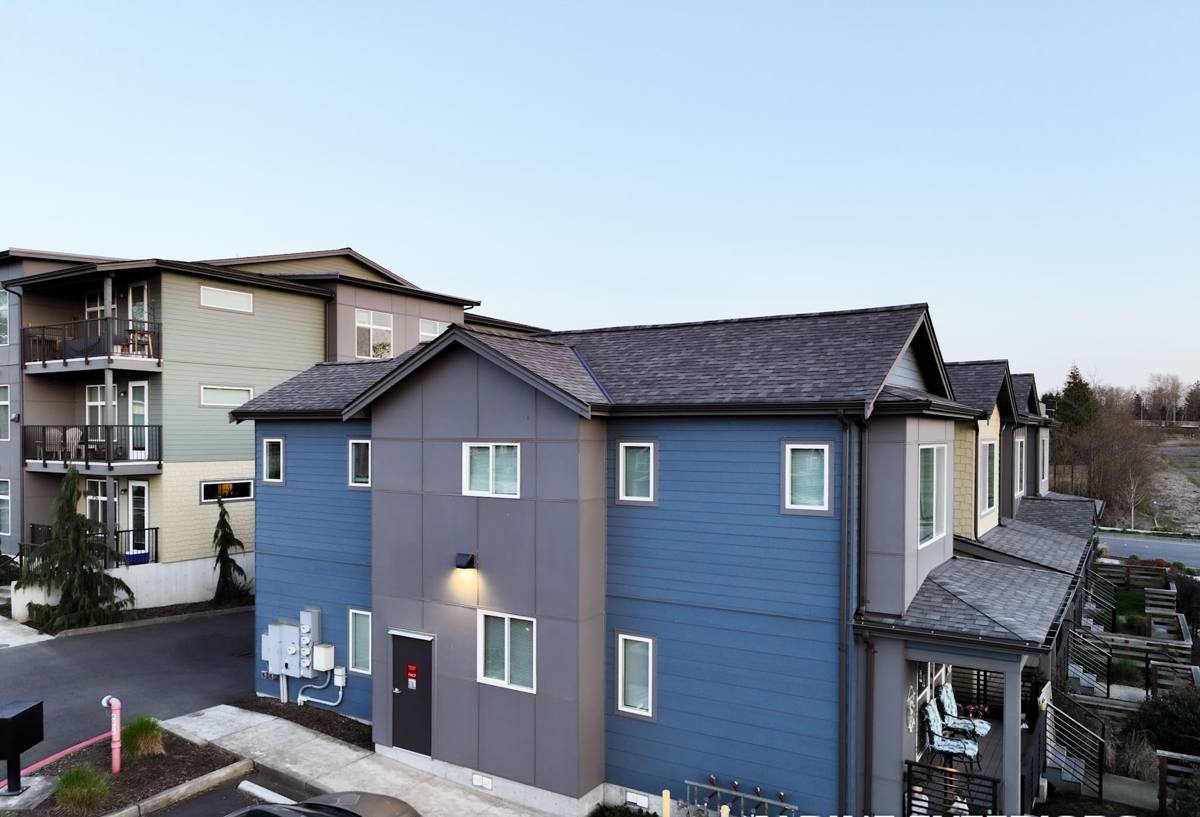
What Storm Damage Actually Looks Like on a Flounder Bay Roof
Wind Damage
Wind rarely rips a roof apart in one dramatic event. More often it lifts the edge of a shingle or shake just enough to break the seal, then works that spot a little further open with every subsequent storm. By the time a homeowner notices a leak, the wind damage that started it may have happened weeks or months earlier. Ridge caps, hip lines, and the roof edges closest to open water exposure are the first places we check.
Debris Impact
Branches and wind-driven debris cause more localized damage — cracked shingles, dented metal flashing, or a puncture through the roofing material itself. These are usually easier to spot but often get missed if the debris that caused them has already blown off the roof or been cleared away before an inspection.
Water Intrusion Signs
Interior signs of storm damage — a stain on a ceiling, a musty smell in an attic, peeling paint near a roofline — often show up in a different spot than the actual roof breach, because water travels along the underlayment or framing before it drips through drywall. Chasing the interior stain back to its real source on the roof is a big part of doing this job correctly.
Salt Air, Rain, and Moss: The Three-Part Climate Problem
Skagit County's marine climate is generally mild, but "mild" doesn't mean easy on a roof. Three factors compound on a waterfront property like the ones in Flounder Bay, and each one makes the others worse.
A Long Moss Season
Western Washington's wet season runs long, and shaded, north-facing roof slopes near mature trees can stay damp for months at a stretch. Moss and algae take hold in that dampness, and as they grow they lift shingle edges and hold moisture directly against the roofing material. A storm hitting a moss-compromised roof does more damage than the same storm hitting a clean one, because the moss has already loosened the shingles' grip.
Driving Rain
Rain that comes in nearly horizontal during a windstorm finds its way under flashing and shingle laps that would shed straight-down rain without issue. This is why flashing detail — not just shingle quality — is often the deciding factor in whether a roof leaks during a storm.
Salt Air Corrosion
Proximity to the water means metal roofing components — flashing, fasteners, gutters, vent boots — corrode faster than they would a few miles inland. A fastener that rusts and loses its grip is a wind-damage risk waiting for the next storm. This is one of the most overlooked factors in storm repair: replacing damaged material with the same standard-grade fasteners just resets the clock on the next failure.
What a Correct Storm Repair Involves
A proper storm damage repair isn't just about covering the hole. It typically involves:
- Identifying every point of damage, not just the one that caused the visible leak — a single storm often creates more than one weak spot
- Checking the underlayment and decking beneath the damaged shingles or shakes for saturation or rot before covering anything back up
- Matching replacement materials as closely as possible in type, weight, and where reasonable, color and age
- Re-flashing any penetration or transition near the damaged area, not just replacing shingles around it
- Confirming proper fastener count and placement, since under-fastening is a common cause of repeat wind damage
- Documenting the damage and the repair with photos, which matters if an insurance claim is involved
Skipping any of these steps is how a "repair" ends up needing a second repair after the next windstorm.
Our Storm Damage Repair Process
- Inspection. We walk the roof (or use a drone when pitch, height, or condition makes that safer) and inspect from the ground and attic as well. We're looking for the full extent of damage, not just the spot that's leaking now.
- Written assessment. You get a clear, plain-language explanation of what's damaged, what caused it, and what repair options make sense — no pressure toward a full roof replacement if a targeted repair is genuinely the right call.
- Temporary protection if needed. If a roof is actively letting water in and a full repair can't happen immediately, we can install temporary protection to stop further interior damage while materials or scheduling are sorted out.
- Repair. We remove and replace only the compromised materials, re-flash as needed, and check fastening throughout the repaired section — not just at the obvious damage point.
- Final walkthrough. We show you what was done and why, and flag anything else on the roof worth keeping an eye on, even if it wasn't part of this repair.
Materials We Use for Waterfront Exposure
Not every roofing material or fastener handles salt air and driving rain equally well. When we're repairing a roof in Flounder Bay, we account for that exposure in what we recommend, even for a repair rather than a full replacement.
| Component | Standard Choice | Better for Waterfront Exposure |
|---|---|---|
| Fasteners | Standard galvanized | Stainless steel or hot-dip galvanized rated for coastal use |
| Flashing | Standard aluminum | Heavier-gauge aluminum or corrosion-resistant coated metal |
| Shingle/shake type | Standard grade | Algae-resistant (AR-rated) shingles on shaded or north-facing slopes |
| Vent boots | Standard rubber | UV- and weather-stable synthetic boots that resist cracking sooner |
We'll always explain the trade-offs — the more corrosion-resistant options cost more up front, and for a small, isolated repair it doesn't always make sense to upgrade the whole section. But on ridge lines, valleys, and anywhere fasteners are exposed to weather directly, we lean toward the more durable option, because a second callout after a fastener failure costs more than doing it right the first time.
Insurance and Storm Claims — What Homeowners Should Know
Many storm damage repairs in this area involve a homeowners insurance claim, and a few things make that process go smoother:
- Photograph visible damage as soon as it's safe to do so, before any tarping or temporary repair
- Get an inspection promptly — insurers often want documentation that ties damage to a specific storm event, not gradual wear
- Ask for a written scope of repair, not just a verbal estimate, since adjusters generally want an itemized description
- Understand that insurers cover storm damage, not pre-existing wear like moss deterioration or an aging roof nearing the end of its service life — a good inspection will honestly separate the two
We're happy to provide documentation that supports your claim, but we work for you, not the insurance company — our job is an honest assessment of what's actually storm damage versus what was already a maintenance issue.
Why a Crew That Already Works Flounder Bay Matters
Storm damage repair has a time-sensitivity that a lot of roofing work doesn't. A damaged roof left open to weather for days or weeks turns a repair into a much bigger job involving decking, insulation, or interior finishes. A crew already familiar with Flounder Bay's roof pitches, common construction styles, and typical wind exposure patterns can assess and respond faster than a crew coming in cold, and doesn't need to guess at how the area's marine exposure affects material choices.
Local familiarity also matters for the less obvious things — knowing which slopes in the neighborhood tend to hold moss longest, what wind direction tends to cause the most lifted-shingle calls after a storm, and how the City of Anacortes and Skagit County permitting process works for anything beyond a like-for-like repair.
After the Storm: A Homeowner Checklist
- Check the attic or top-floor ceiling for new staining, dampness, or a musty smell
- Look at gutters and downspouts for granules, debris, or disconnected sections
- Scan the roofline from the ground for obviously lifted, cracked, or missing shingles
- Note any large branches that came down near the house, even if they missed the roof
- Avoid walking the roof yourself after a storm — wet, damaged roofing is a fall hazard
- Call for an inspection promptly rather than waiting to see if a small leak gets worse
Reducing Storm Damage Risk Between Storms
A roof that's well maintained going into storm season handles wind and rain far better than one that's already compromised by moss or aging flashing. Keeping tree limbs trimmed back from the roofline, clearing moss before it takes hold rather than after, and having flashing and fastener condition checked every year or two are the simplest ways to keep a normal windstorm from turning into an emergency repair. None of this is glamorous work, but it's the difference between a roof that shrugs off a storm and one that doesn't.
If a recent storm has left you with a leak, missing shingles, or just some peace of mind you'd like to check on, we're glad to take a look. Reach out for a free, no-pressure estimate using the form below.