 Anacortes Siding
 Flounder Bay's Climate Is Harder on Siding Than Most of Anacortes Realizes
Flounder Bay sits close enough to the water that its homes live with conditions most inland Skagit County properties never deal with. Salt-laden air drifts off the marina and the strait year-round, and it doesn't just make outdoor furniture look tired — it accelerates corrosion on fasteners, breaks down caulking faster, and works into any gap in a siding system that isn't sealed correctly. Add in driving rain that comes sideways off the water during fall and winter storms, and siding here takes on moisture loads that a repair crew working a dry inland neighborhood simply doesn't plan for.
Then there's shade. Mature evergreens and the marine humidity that hangs over waterfront lots in this part of Anacortes create long moss and algae seasons — often eight or nine months of the year when siding surfaces stay damp longer than they dry. Moss holds moisture against the siding face, and if it's not addressed, it eventually finds every seam, nail hole, and cut edge that isn't properly sealed. A siding repair in Flounder Bay has to account for all three of these factors at once — salt, wind-driven rain, and sustained moss growth — not just patch the visible damage.
Signs Your Siding Needs Repair, Not Just a Fresh Coat of Paint
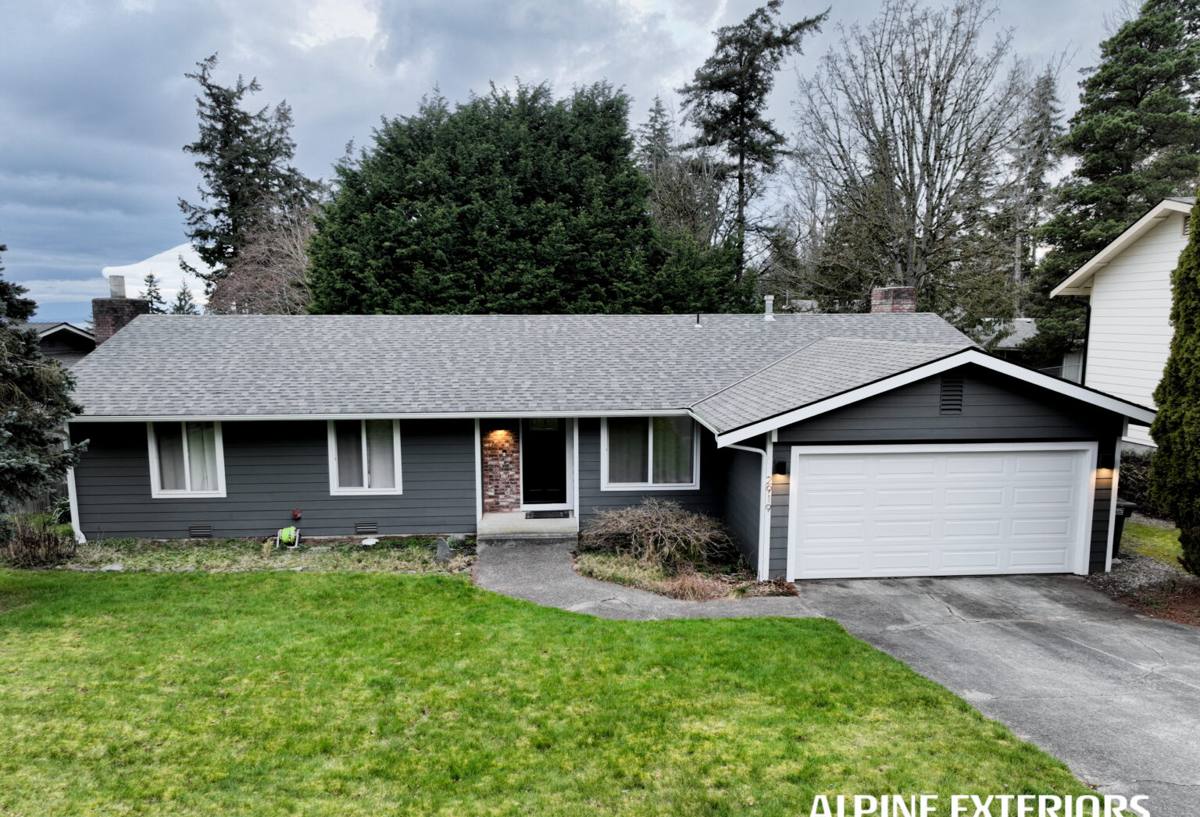
Homeowners often call us about paint peeling and end up needing a repair instead, because peeling paint is usually a symptom of moisture already inside the siding system rather than a standalone cosmetic issue. Here's what we tell people to watch for between inspections:
- Cracked, split, or delaminating boards, especially near corners and window trim
- Soft or spongy spots when you press on the siding, which usually means the substrate underneath is compromised
- Persistent moss or dark algae staining that comes back within weeks of cleaning
- Visible gaps at seams, butt joints, or trim where caulking has shrunk or failed
- Paint that's bubbling, cracking, or peeling in a localized area rather than uniformly across a wall
- Buckling or waviness in a section of siding, which often points to trapped moisture or a fastening problem
- Staining or discoloration low on the wall near grade, which can indicate splash-back or drainage issues
- A noticeable draft or a jump in heating costs without an obvious cause
Any one of these can be a minor fix if it's caught early. Left alone through another wet Anacortes winter, most of them turn into sheathing or framing repairs, which cost significantly more than the siding work itself.
What a Correct Siding Repair Actually Involves
Finding the Real Cause, Not Just Patching the Symptom
The most common mistake in siding repair — whether it's a homeowner's DIY patch or a rushed contractor job — is replacing the damaged piece without figuring out why it failed. If water got behind a board because of a flashing gap above a window, or because caulking failed at a butt joint, swapping the board without fixing the entry point just buys a year or two before the same spot fails again. Every repair we do starts with tracing the moisture path, not just identifying the visible damage.
Matching Material and Finish
A repair that doesn't match the surrounding siding in profile, reveal, and color sticks out immediately, and it also creates a weak point where old and new material meet. We source materials that match the existing installation as closely as possible, and where we're repairing James Hardie siding, we work within the manufacturer's ColorPlus color range so the factory finish blends rather than requiring a field repaint of the whole wall.
Restoring the Water-Resistive Barrier and Flashing
Behind every properly installed siding system is a water-resistive barrier and a flashing sequence that directs water down and out, away from the wall assembly. A real repair means pulling back enough siding to inspect and, where needed, repair that barrier — not just butting new siding up against whatever's underneath. Skipping this step is the single biggest reason repairs fail early in a marine-exposed area like Flounder Bay.
Fastening and Caulking to Spec
Salt air is hard on fasteners that aren't corrosion-resistant, and it's hard on caulking that isn't rated for exterior, UV, and moisture exposure. We fasten and seal to the standards the material manufacturer specifies, not to whatever's fastest, because a repair that fails again in three years isn't actually a repair — it's a deferred replacement with extra steps.
Repair or Replace? How We Make the Call
Not every damaged section needs full replacement, and not every home is a good candidate for a patch-and-move-on repair. We look at a handful of factors before recommending either path:
| Factor | Leans Toward Repair | Leans Toward Replacement |
|---|---|---|
| Extent of damage | Isolated to one or two wall sections | Recurring across multiple elevations |
| Age of existing siding | Under 15-20 years, otherwise sound | Near or past expected service life |
| Underlying sheathing | Dry, structurally intact | Soft, stained, or showing rot |
| Material availability | Matching product still obtainable | Discontinued profile or color |
| Exposure severity | Sheltered wall, moderate wind/rain | Direct marine exposure, repeated failures |
Homes directly exposed to wind off the water tend to show up more often in that right-hand column, simply because the conditions are harder on every material and every seam. That's not a reason to assume the worst before we've looked — plenty of Flounder Bay homes need targeted repair work, not a full re-side. But it is why we walk the whole exterior before quoting a fix to one wall.
Why Material Matters More on a Waterfront Repair
We install and repair James Hardie fiber cement siding exclusively, and on a property like this, the reasoning is practical rather than a sales pitch. Fiber cement doesn't swell, rot, or provide the same moisture-retentive surface that wood-based products can when they stay damp for extended stretches, which matters directly during a Skagit County moss season that runs most of the year in shaded, waterfront-adjacent lots. It's also non-combustible, holds a factory-applied ColorPlus finish that resists the fading and chalking that field-painted materials show first, and carries a strong transferable warranty when installed to the manufacturer's specifications.
Vinyl siding is lighter and less expensive to buy, but it expands and contracts significantly with temperature swings, can become brittle over time, and doesn't offer the same repair flexibility — cracked or warped panels often need full-run replacement because color-matching aged vinyl is difficult. Engineered wood products like LP SmartSide perform reasonably in dry climates but are more sensitive to sustained moisture exposure at cut edges and seams, which is exactly the kind of stress a marine environment creates. We don't say any of that to knock those products across the board — they have legitimate uses — but we made a standard for our own crews and stand behind it, and Hardie is what we recommend and repair on homes in this kind of exposure.
Our Flounder Bay Siding Repair Process
- Inspection and diagnosis — we walk the affected area and the surrounding wall assembly to trace the actual cause, not just the visible damage.
- Written scope and estimate — you get a clear breakdown of what's being repaired, what materials are used, and why, before any work starts.
- Material sourcing and color matching — we confirm profile and finish match against your existing siding before ordering.
- Repair execution — damaged material comes out, the barrier and flashing get inspected and corrected, and new siding goes in fastened and sealed to spec.
- Cleanup and walkthrough — we clear debris and go over the finished work with you before we consider the job done.
Why Hiring a Crew That Already Works This Neighborhood Matters
Siding repair looks similar on paper everywhere, but the details that make it hold up change with exposure. A crew that's already worked homes near the water in Anacortes knows what a butt joint looks like after five years of salt air versus five years in a sheltered inland yard. That experience shows up in small decisions — where extra flashing attention pays off, which fastener spec actually holds up, how much clearance to leave at grade — that don't show up on a materials list but make the difference between a repair that lasts and one that doesn't.
There's also a practical side to local familiarity: knowing the seasonal rhythm of the area means scheduling repairs before the wettest stretch of the year rather than during it, and understanding how quickly moss returns on shaded, waterfront-adjacent walls means building realistic maintenance guidance into the job rather than a generic one-size-fits-all recommendation.
Keeping Repaired Siding Healthy Through Moss Season
A correct repair gives you a durable fix, but a little upkeep keeps it that way. Simple habits go a long way in this climate:
- Rinse siding surfaces gently once or twice a year to knock back algae and moss buildup before it takes hold
- Trim back overhanging branches and vegetation that keep siding shaded and damp longer than necessary
- Check caulking at trim, seams, and penetrations annually and touch it up before it fully fails
- Keep gutters clear so overflow doesn't run directly down wall surfaces
- Address any new soft spots, staining, or paint bubbling promptly rather than waiting for the next dry season
None of this requires special equipment or a big time commitment — it's the difference between a repair that lasts its full expected life and one that starts showing the same problems again in a few years.
If you're seeing any of the warning signs above on a Flounder Bay property, or you just want a second opinion on whether a section needs repair or replacement, we're glad to take a look. Request a free, no-pressure estimate using the form below and we'll walk the exterior with you and lay out exactly what we'd recommend and why.