 Anacortes Siding
 Flounder Bay's Climate Is Not Kind to Siding
Homes around Flounder Bay sit close to the water on the west side of Fidalgo Island, which means they take on a combination of stresses that inland Anacortes and Skagit County homes see less of. Salt-laden air off the bay works into seams, fastener heads, and any gap in a paint film. Wind-driven rain off the Strait of Juan de Fuca and Rosario Strait doesn't just wet a wall — it pushes moisture sideways and upward under laps that were never built to handle it. And the long gray stretch from fall through spring keeps north-facing and shaded walls damp long enough for moss and algae to take hold and stay.
None of this is unique to one street or one house. It's a function of being close to open water in this part of Washington. The practical result is that siding choices and installation details that work fine in a drier, more sheltered part of the county fall short here — sometimes within a few years, not a few decades.
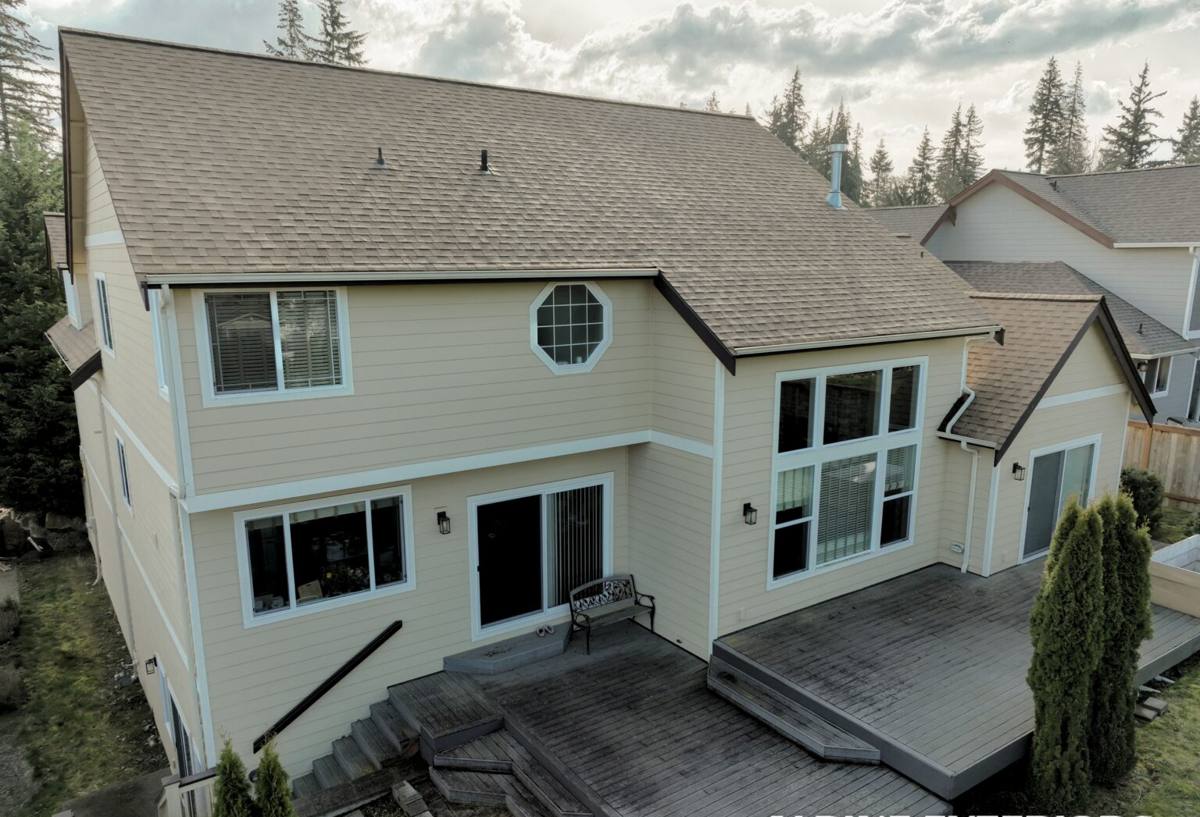
What Siding Actually Needs to Do Near the Water
Resist Moisture Without Trapping It
The goal isn't to make a wall waterproof — no siding material fully achieves that. The goal is to shed the water that hits the wall and let anything that gets behind the siding dry out quickly. That means the siding material itself has to tolerate repeated wetting and drying without swelling, delaminating, or losing its bond to its factory finish, and the installation behind it has to give moisture a path out.
Hold a Finish Under Salt Exposure
Salt air is hard on paint. Field-applied paint on wood or engineered wood siding chalks and fades faster near open water, and once the finish starts to fail, the substrate underneath is exposed to exactly the moisture cycle described above. A factory-applied finish that's baked on and warrantied against fading holds up dramatically better in this kind of exposure than anything painted after the fact.
Resist Moss and Algae Growth
Shaded, north-facing walls near the water stay damp for extended stretches, which is exactly what moss and algae need to establish. Siding that has some resistance built into its finish, combined with a wall assembly that dries properly, needs far less pressure-washing and re-coating over its life than siding that doesn't.
Why We Install Only James Hardie Fiber Cement
We standardized on James Hardie fiber cement siding and don't install vinyl, LP SmartSide, or other engineered wood products, and Flounder Bay is a good example of why. Fiber cement is a non-combustible cement, sand, and cellulose fiber product that doesn't absorb and release moisture the way wood-based siding does, and it doesn't soften, sag, or expand and contract with humidity the way vinyl does. Hardie's ColorPlus factory finish is baked on in a controlled environment and backed by its own finish warranty, which matters more here than in a drier climate because the finish is doing more work, more often.
Hardie also builds region-specific product engineering into its lineup — its HZ5 formulation is engineered for the wetter, harsher climates found in the Pacific Northwest, as distinct from the HZ10 formulation built for hot, humid, freeze-prone climates elsewhere in the country. That distinction is exactly the kind of detail that separates a siding job that holds up on Fidalgo Island from one that was installed with a warmer, drier climate in mind.
How Fiber Cement Compares for a Coastal Anacortes Home
| Factor | Fiber Cement (James Hardie) | Vinyl | Wood / Engineered Wood |
|---|---|---|---|
| Salt air / finish durability | Factory-baked finish, warrantied against fading | Field color can chalk and fade; not repainted | Field-applied paint fades and chalks faster near water |
| Moisture behavior | Doesn't swell or rot; engineered for wet climates (HZ5) | Doesn't absorb water but expands/contracts with heat | Absorbs moisture at cut edges and seams; prone to swelling |
| Moss / algae resistance | Resistant finish, holds up with normal washing | Can host growth in shaded, damp areas | Prone to growth if finish fails or drying is slow |
| Fire resistance | Non-combustible | Combustible, can melt/deform near heat | Combustible |
| Typical maintenance | Periodic wash, no repainting for finish life | Low upkeep but limited repair options if damaged | Repainting/re-coating on a recurring cycle |
What a Correct Installation Involves Here
Fiber cement siding is only as good as the wall assembly behind it. On a Flounder Bay home, we pay particular attention to a handful of details that matter more here than they would further inland:
- Drainage plane and rain screen gap: a properly installed weather-resistive barrier with a gap behind the siding lets any water that gets past the cladding drain and dry instead of sitting against the sheathing.
- Flashing at every penetration: windows, doors, hose bibs, light fixtures, and deck ledgers all need correctly lapped flashing so wind-driven rain can't work its way in around them.
- Proper fastener placement and spacing: Hardie's installation specs call for specific nail placement, spacing, and clearance from panel edges; getting this wrong is one of the most common causes of early siding failure, regardless of which climate it's installed in.
- Correct clearance from grade, decks, and roof lines: siding installed too close to grade, a deck surface, or a roofline holds moisture against the bottom edge and defeats the material's own durability.
- Caulking and joint treatment done to spec, not just "sealed": Hardie specifies where sealant is and isn't appropriate; over-caulking a wall can trap moisture just as easily as under-caulking lets it in.
Every one of these is standard Hardie installation practice, not something specific to us — but skipping any of them tends to show up faster on a home exposed to salt air and driving rain than it would somewhere sheltered.
Our Process on a Flounder Bay Home
Assessment
We start by walking the exterior and looking at how the existing siding has actually held up — where moss has established, where paint or finish has failed first, where water staining shows up at trim and penetrations. That tells us which walls are taking the most weather and where the wall assembly likely needs the most attention, not just the siding itself.
Removal and Wall Prep
Once the old siding is off, we check the sheathing and framing underneath for any moisture damage that wasn't visible from outside. This is often where problems that were quietly developing behind failed siding actually get found and corrected, before new material goes over them.
Weather Barrier and Rain Screen
We install the weather-resistive barrier and rain screen system correctly the first time, since this layer does most of the real work of keeping a wall dry over the long run — the siding itself is the second line of defense, not the only one.
Hardie Installation to Spec
Panels or planks go on following James Hardie's published installation instructions for fastening, spacing, and flashing, using the HZ5 product engineered for this climate.
Trim, Caulking, and Cleanup
Trim and joint treatment are finished to Hardie spec, and the site is cleaned up — cut dust, packaging, and debris don't get left for the homeowner to deal with.
Living With Fiber Cement Siding in a Salt Air, High-Moss Climate
Correctly installed Hardie siding is genuinely low-maintenance compared to the alternatives, but "low-maintenance" isn't "no-maintenance" — especially this close to the water. A short list of what actually keeps it looking right:
- Rinse the siding down once or twice a year with a garden hose or low-pressure wash to keep salt residue and airborne grime from building up.
- Keep an eye on shaded, north-facing walls where moss is most likely to establish, and treat it early rather than letting it get established in the finish.
- Trim back vegetation and shrubs that keep a wall shaded and damp longer than it needs to be.
- Check caulking at trim and penetrations periodically — sealant is the one part of the assembly that does wear out and needs occasional attention.
- Walk the exterior after major wind and rain events and look for anything that's come loose, especially around vents, light fixtures, and trim.
Rough Cost Factors to Expect
Every home is different, but the factors that move the price on a Flounder Bay project are fairly consistent: the amount of wall area and complexity of the roofline and trim, how much of the existing wall assembly needs repair once old siding comes off, the Hardie product line and profile selected, and access around the home. A waterfront lot with limited staging space or steep grade can add time compared to a straightforward flat lot. We give a firm number after we've actually looked at the home — not before.
Why Local Experience Matters for This Job
A crew that has worked on homes around Flounder Bay and elsewhere on Fidalgo Island already knows what wind-driven rain off the water does to a wall, which sides of a house take the worst of it, and where moss shows up first. That's not something you can fully substitute with a generic install checklist — it shapes which details get extra attention on a given home before problems ever show up. It also means we're not learning Skagit County's weather on your project.
If you're planning a siding replacement on a Flounder Bay home, we're happy to take a look and put together a straightforward, no-pressure estimate — no obligation, just an honest read on what your home actually needs. Fill out the form below to get started.