 Anacortes Siding
 Building New in Edison? The Windows Are Where Most Callbacks Start
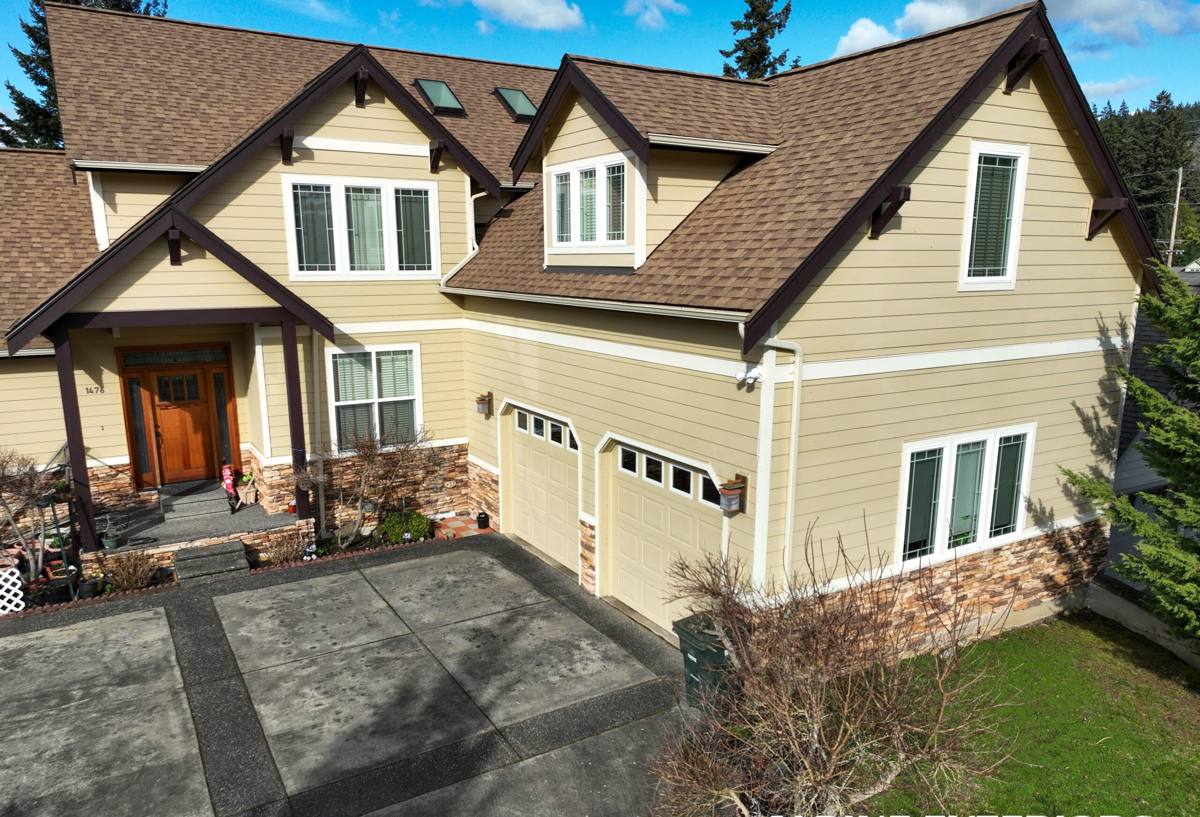
Edison sits in the flats between Bow Hill and the Samish tide flats, close enough to salt water and open farmland that wind-driven rain isn't an occasional event — it's a design condition. When a new home or shop building goes up out here, the window installation is one of the few steps that determines whether the building stays dry for the next 30 years or starts showing stains and soft trim within five. New-construction windows are set into a wall that doesn't have any history yet — no old flashing to fight, no failed sealant to dig out — which means there's no excuse for getting it wrong. We install new-construction windows for builders and owner-builders working in Edison and the surrounding Anacortes/Skagit County area, and we treat the flashing details as the actual scope of work, not an afterthought to setting the unit.
What Edison's Climate Actually Does to a Window Opening
Edison doesn't get hit with the wind that the more exposed parts of Fidalgo Island see, but it sits low and open, with long sightlines across farmland and tideflats that let wind-driven rain travel a long way before it hits a wall. Combine that with Skagit County's wet fall-through-spring stretch and the moss and algae growth that comes with shaded, damp siding, and you get a few specific failure patterns around windows:
- Wind-driven rain intrusion at the sill and jambs, especially on walls facing open fields or water, where wind can push water sideways and even slightly upward against poorly lapped flashing.
- Slow rot at the sill pan when water gets behind the window and has nowhere to drain, which is invisible from outside until the trim or siding starts to fail.
- Moss and organic growth around window trim on north- and shade-facing walls, which holds moisture against the wood or fiber cement longer than it should sit.
- Condensation-driven staining on interior sills and lower sashes during cold, damp stretches if the window's thermal performance doesn't match the assembly around it.
None of this is unique to any one product — it's a function of how the opening is built. That's why our focus on new-construction jobs is the wall assembly around the window as much as the window itself.
Why New Construction Is Different From a Replacement
On a replacement, we're working with an existing opening and trying to minimize disruption to finished siding and interior trim. On new construction, the wall isn't finished yet — which is actually the best possible time to get the water management right, because every layer is accessible. A new-construction window has a nailing flange that gets integrated directly into the weather-resistive barrier (WRB) with a proper shingle-lap sequence. Done correctly, water that reaches the wall runs down and over each layer without ever getting a path behind it. Done sloppily — flange taped flat instead of lapped, sill pan skipped, corners patched with caulk instead of flashing — the window looks fine on install day and starts leaking in two or three winters, usually right when the trim or siding installer has moved on and it's hard to say whose work failed.
What a Correct New-Construction Window Install Involves
There's a sequence to this, and skipping steps is the single most common cause of window leaks in newer Skagit County homes. Our process on Edison-area new builds follows this order on every opening:
- Rough opening check. Confirm the opening is square, level, and sized correctly to the window's actual dimensions with proper shim gap — before any flashing goes on.
- Sill pan flashing. A sloped or back-dammed sill pan so any water that gets past the window has a path back out, not a place to pool.
- WRB integration at the jambs and head in proper shingle-lap order — sill first, then jambs, then head — so every layer drains onto the one below it, never the reverse.
- Setting the window plumb, level, and square, fastened per the manufacturer's schedule, with shims placed correctly so the frame doesn't bow under fastening pressure.
- Head flashing with drip cap installed and integrated over the WRB, not just caulked to the surface.
- Sealant at the right joints only — sealant is a backup layer to correct flashing, not a substitute for it. We don't rely on caulk to do a flashing detail's job.
- Interior air sealing at the rough opening perimeter, which matters for energy performance and for keeping warm, moist interior air from condensing inside the wall cavity.
Every one of those steps is inspectable at the time it's done and invisible once siding goes on. That's exactly why it has to be done right the first time — there's no coming back to fix a sill pan after the siding's up without tearing into finished work.
A Quick Checklist for Owner-Builders and GCs
If you're a builder or owner-builder in Edison managing your own trade sequence, this is what to confirm before your window installer moves on to the next opening:
- Sill pan is sloped or back-dammed, not flat
- WRB laps sill-first, then jambs, then head — never head-first
- Head flashing sits over the WRB with a drip edge, not tucked under and caulked
- Nailing flange is fully fastened per the window manufacturer's schedule
- No caulk substituting for a missing flashing layer at corners
- Rough opening was air-sealed on the interior side before insulation went in
- Window is plumb, level, and square — check with a level, not by eye
Product Choices for a Marine-Exposed Build
We install a range of vinyl, fiberglass, and composite window lines, and for new construction the more relevant decision than brand is frame material and glazing package, matched to how exposed the wall is.
| Frame Material | Behavior in Salt Air / Wet Climate | Where It Makes Sense in Edison |
|---|---|---|
| Vinyl | No corrosion risk from salt air, good value, moderate lifespan; quality varies a lot by manufacturer | Most standard openings, budget-conscious new builds |
| Fiberglass | Very stable in temperature swings, strong resistance to moisture and UV, holds paint well | Larger openings, south/west exposures, longer-term ownership |
| Aluminum-clad wood | Attractive interior finish but exterior aluminum can pit or corrode faster in salt-influenced air without diligent maintenance | We flag this trade-off honestly rather than recommend it for exposed farmland or waterfront walls |
| Composite | Blends stability of fiberglass-type materials with lower cost than premium wood-clad options | Mid-range builds wanting durability without the wood-clad price |
We're not going to tell a homeowner a given brand is bad — most major manufacturers make a serviceable product. What we will tell you honestly is that some frame materials handle a damp, salt-tinged, moss-prone climate like Skagit County's with less long-term maintenance than others, and we'll walk through that trade-off before you commit rather than after.
Glazing and Energy Performance for Skagit County Winters
Edison doesn't get brutal cold, but it gets long stretches of damp, low-temperature weather where interior condensation on window glass and sills becomes a real complaint if the glazing package is mismatched to the house. For new construction we typically discuss:
- Low-E coatings tuned for the Pacific Northwest's mix of heating-season and moderate-cooling needs
- Double vs. triple pane based on the specific wall's exposure and the homeowner's energy priorities — triple pane isn't automatically the right call for every opening, and we'll say so if it isn't
- Gas fill and spacer type, which affects long-term seal performance more than most homeowners realize
The glazing package is a conversation worth having at the framing stage, not after the windows are ordered — swapping specs mid-build costs time and money that's avoidable with an early estimate.
Why It Matters That We Already Work in Edison
A crew that only occasionally works this part of Skagit County has to relearn the local conditions on your job — how exposed a given wall really is once the trees leaf out or drop, which walls actually take the worst of the wind-driven rain off the flats, how much moss pressure to expect on shaded north sides. We work new-construction and replacement window jobs throughout Anacortes and the surrounding Skagit County communities, including Edison, so we're not guessing at how this specific stretch of coastline and farmland behaves. That local pattern recognition is what catches a marginal detail — a wall facing the wrong direction for a standard flashing sequence, a shaded corner that's going to grow moss no matter what — before it becomes a problem instead of after.
Coordinating With Your Builder or GC
New-construction window work happens inside someone else's schedule — the framer needs to move on, the siding crew is waiting on us to finish, the WRB has to be installed correctly before either of us can proceed. We're used to working inside a GC's sequence in Edison and the wider Anacortes area: showing up when the rough openings are ready, flashing and setting windows to a standard the siding crew can build off cleanly, and documenting the flashing sequence with photos before it's covered, since that's the only way to verify the work once the wall is closed up.
What This Typically Costs
New-construction window pricing depends on window count, size, frame material, glazing package, and how many openings are on exposed vs. sheltered walls. Rough, honest ranges for the Skagit County area run from a few hundred dollars per opening for standard vinyl units in a straightforward wall, up to well over a thousand per opening for larger fiberglass or composite windows with upgraded glazing on complex or highly exposed elevations. Whole-house new-construction window packages vary widely enough that we don't quote from a range — we walk the plans or the framed structure and price the actual openings.
Get an Estimate Before Your Windows Are Ordered
If you're framing a new build or addition in Edison or anywhere around Anacortes, the best time to loop us in is before window orders go out — we can review the plans, flag any openings that need extra attention for wind or moss exposure, and make sure the flashing sequence is planned before the WRB goes up. Use the form below for a free, no-pressure estimate.